

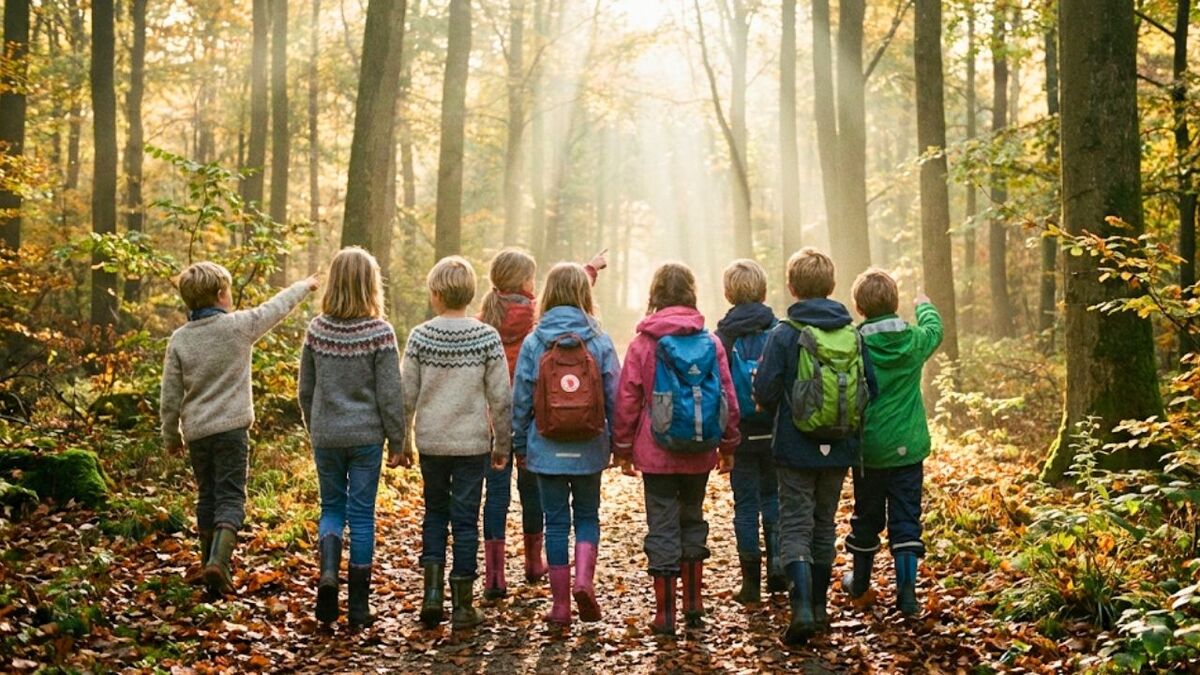
3 forest ideas you can implement tomorrow – no preparation, no materials
Free 35 Survival Hacks you'll love!
You will get 35 easy-to-implement survival hacks so that you don't have to stand aimlessly in the forest from tomorrow when things get tough. Take your skills to the next level!
DOWNLOAD HERE FOR FREE👉 The key facts from this guide
- If you ever want to head into the woods spontaneously with kids and have zero time to prepare, these three game ideas will be your lifesaver!
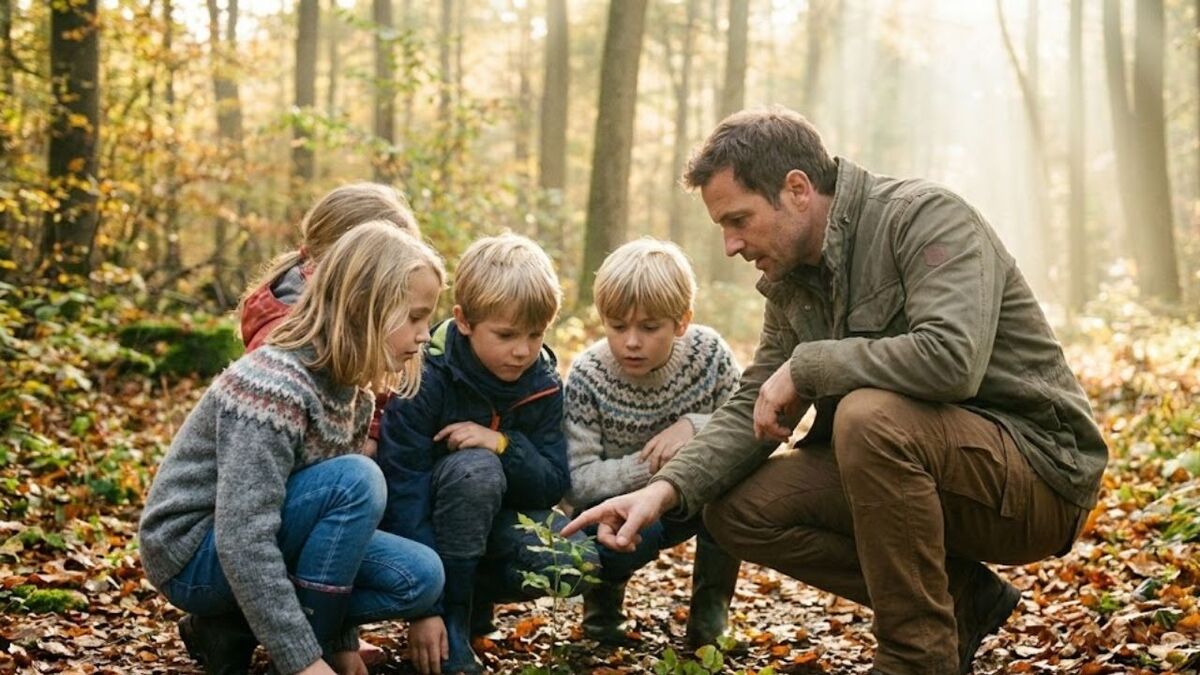
- In "Tree Friend," you blindfold a child and lead them to a tree to explore it with all their senses – the children almost always find "their" tree again afterward and develop a deep connection to nature.
- "Nature Memory" is a fantastic way to train the senses: you lay out a few natural objects, the children memorize them, and then search for the exact same items themselves – even the smallest details in the forest suddenly become important.
- With the "Animal Walk," let the children sneak or hop through the woods like their favorite animals without revealing which creature they are; this naturally sparks deep conversations about nature and its inhabitants afterward.
- These games work so well because they require very little talking, engage all the senses, and create unforgettable experiences that stick with children for a long time.
- Just pick one of these brilliant ideas and try it out on your next trip – you'll see how enthusiastic the kids get while discovering nature almost by accident!
You’re standing at the edge of the forest tomorrow morning with a group of children.
The plan from yesterday? Disappeared somewhere between lunch and the third coffee. The material you intended to bring? Still lying on the kitchen table at home.
Now what?
Now you need exactly this: Three ideas that work. Always. Without preparation. Without equipment. Just you, the children, and the woods.
I have been using these three games for years – with children's groups, with adults, with my own boys. They are so simple that you can memorize them in five minutes. And so effective that children still talk about them weeks later.
Let's go.
1. The Tree Friend
What you do
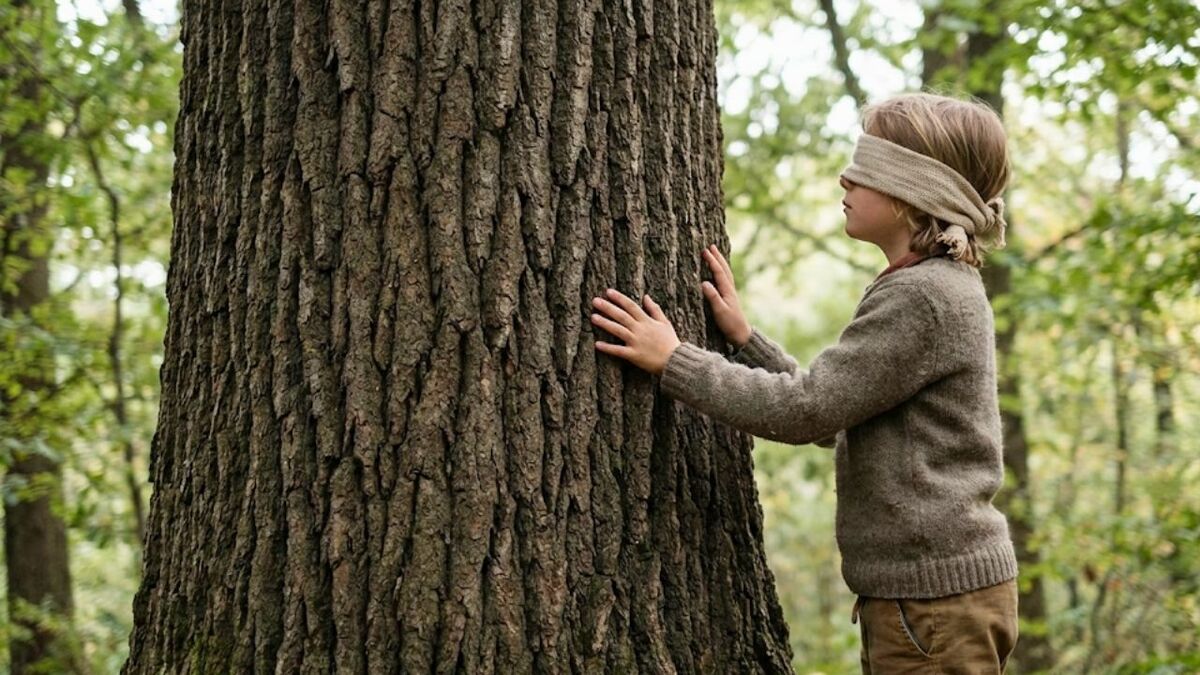
Blindfold a child – with a cloth, a hat, or they simply close their eyes.
Then lead them via a circuitous route to a tree. Not the nearest one. Take a little detour, spin around once, make it a bit exciting.
Once at the tree, the child is allowed to:
- Feel the bark
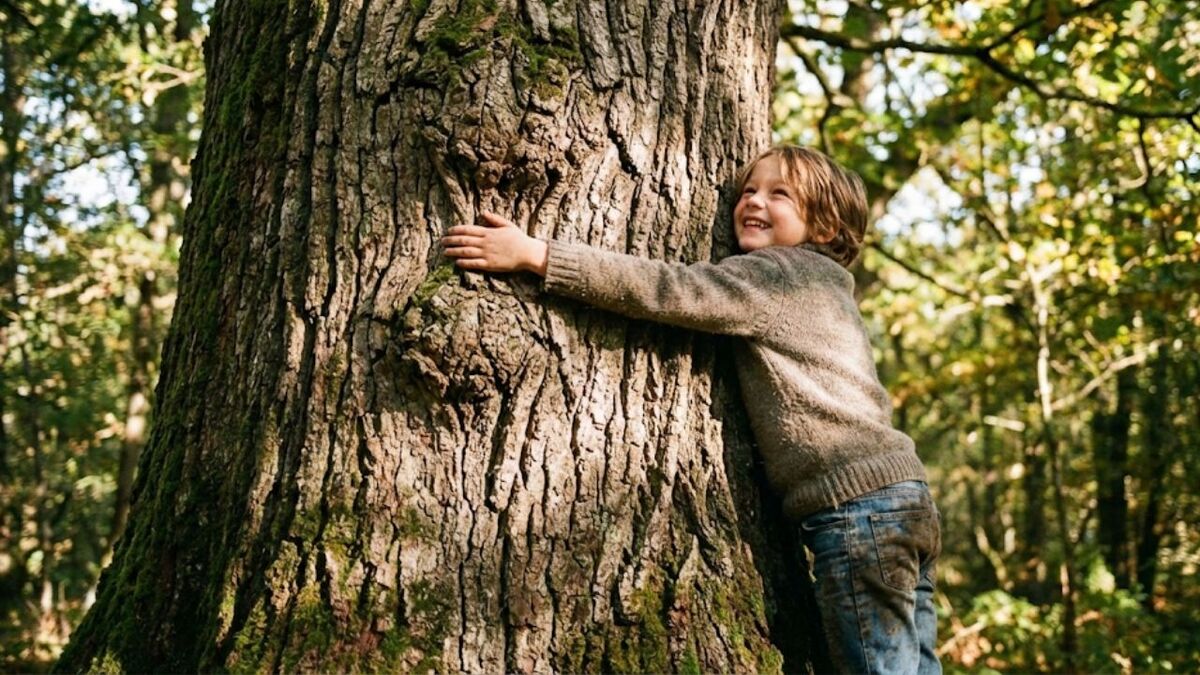
- Hug the trunk (how thick is it?)
- Smell it
- Listen to hear if it makes a sound
- Perhaps even feel the roots on the ground
Then lead the child back to the starting point, remove the blindfold, and ask:
"Can you find your tree again?"
Why it works
When we close our eyes, our other senses wake up.
Suddenly, children feel things they otherwise overlook: The ridges in the bark. The difference between rough oak and smooth beech. The smell of resin. The coolness of the trunk on the north side.
And then something magical happens: The child finds their tree again. Almost always. Sometimes on the first attempt, sometimes on the third – but they find it.
And from that moment on, this child has "their" tree in the forest.
I have seen children come to me weeks later and say, "Martin, can we go to my tree?"
That is nature connection. Not explained, but experienced.
Variations
- For older ones: Two children work together – one leads, one searches. Then swap roles.
- For groups: All children are led to different trees simultaneously (requires several adults or older children as guides).
- In winter: Works just as well – the bark even feels more intense when it is cold.
- More difficult: The child must not only find the tree but also describe it before opening their eyes. "My tree has deep ridges and is so thick I can't wrap my arms all the way around it."
2. Nature Memory
What you do
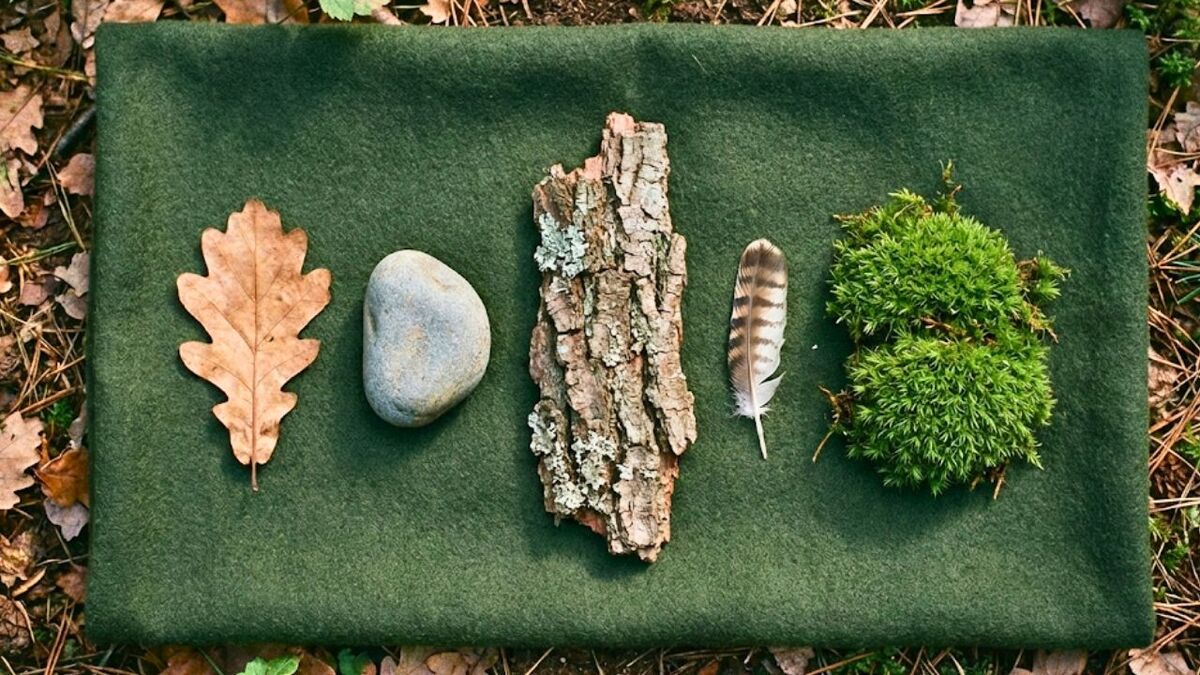
Collect five items from the forest and place them on a cloth or a clear patch on the ground:
- A leaf
- A stone
- A piece of bark
- A feather
- Some moss
The children look closely for 30 seconds.
Then cover everything with a cloth.
Now the task is: Collect exactly these five items and arrange them in the same way.
Why it works
This game trains so much more than just memory.
The children must:
- Look closely (Which leaf was that? Oak or beech?)
- Remember (Where was the stone? Right or left?)
- Search and find (Is there even any moss here?)
- Work together (Who gets what?)
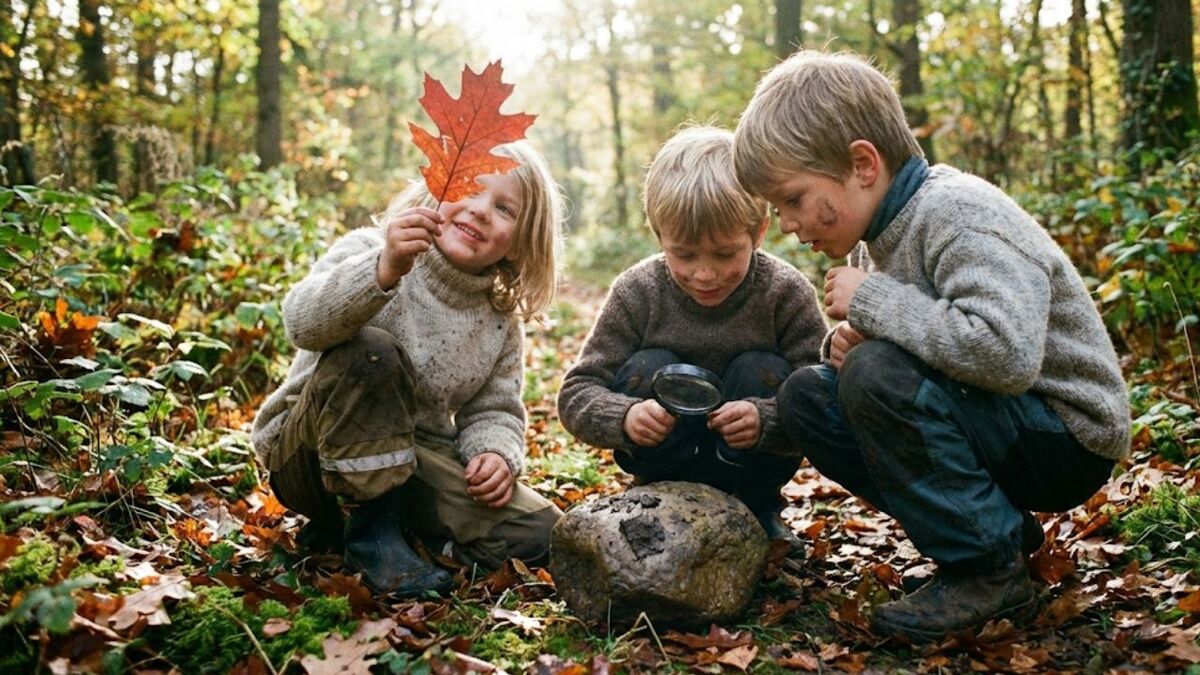
And quite incidentally, they get to know the things in the forest. Not because you are giving them a lecture – but because they are holding the items in their own hands.
I once saw a child search for the perfect stone for 20 minutes. "But that one was a bit flatter, Martin!" That is a level of attention you cannot force.
Variations
- Easier: Only three objects for younger children.
- More difficult: Seven or eight objects. Or: The children are only allowed to look for five seconds.
- In teams: Two groups compete against each other. Who is faster?
- With a twist: While the children are searching, secretly remove an object or swap it. "What is different?"
- Advanced: The children set up a memory layout themselves for another group.
Tip for group work
Split the group and give each child a task:
- "You search for the leaf."
- "You remember where everything lies."
- "You are the timekeeper."
This way everyone is involved, and there is no chaos.
3. The Animal Walk
What you do
The rules are simple:
"Move through the forest like an animal. But don't say which animal you are – the others have to guess."
Then let the children go.
What happens then
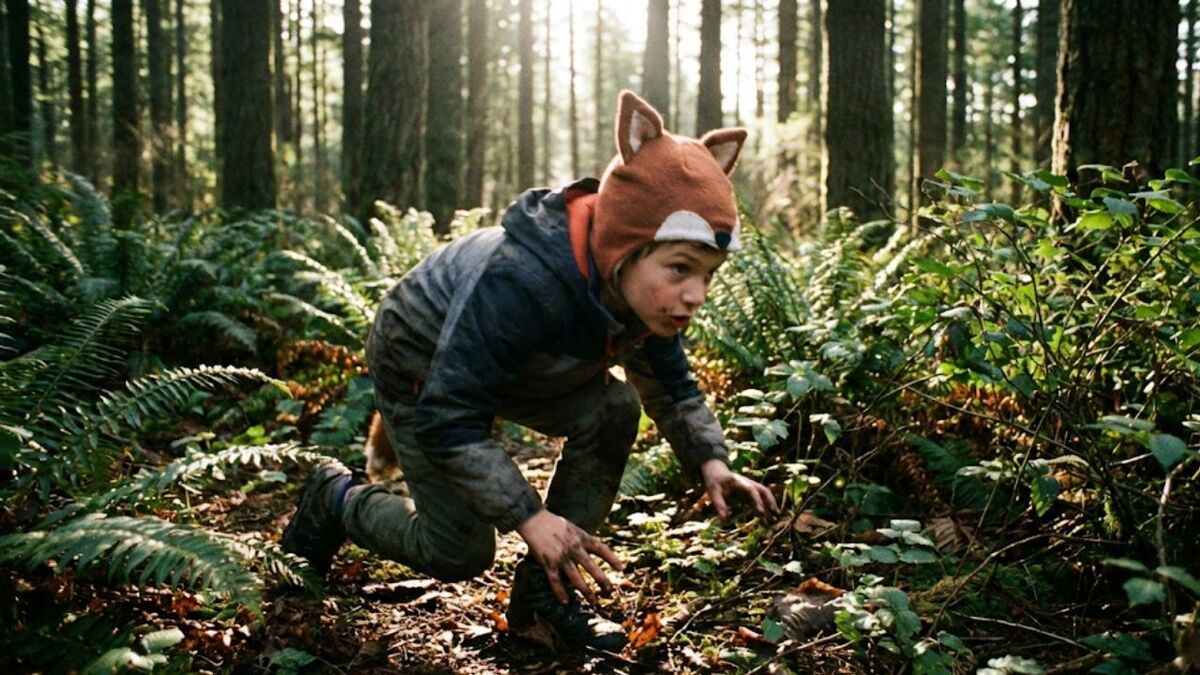
Suddenly, foxes are sneaking through the undergrowth.
Hares are hopping over roots.
Deer are strutting past you.
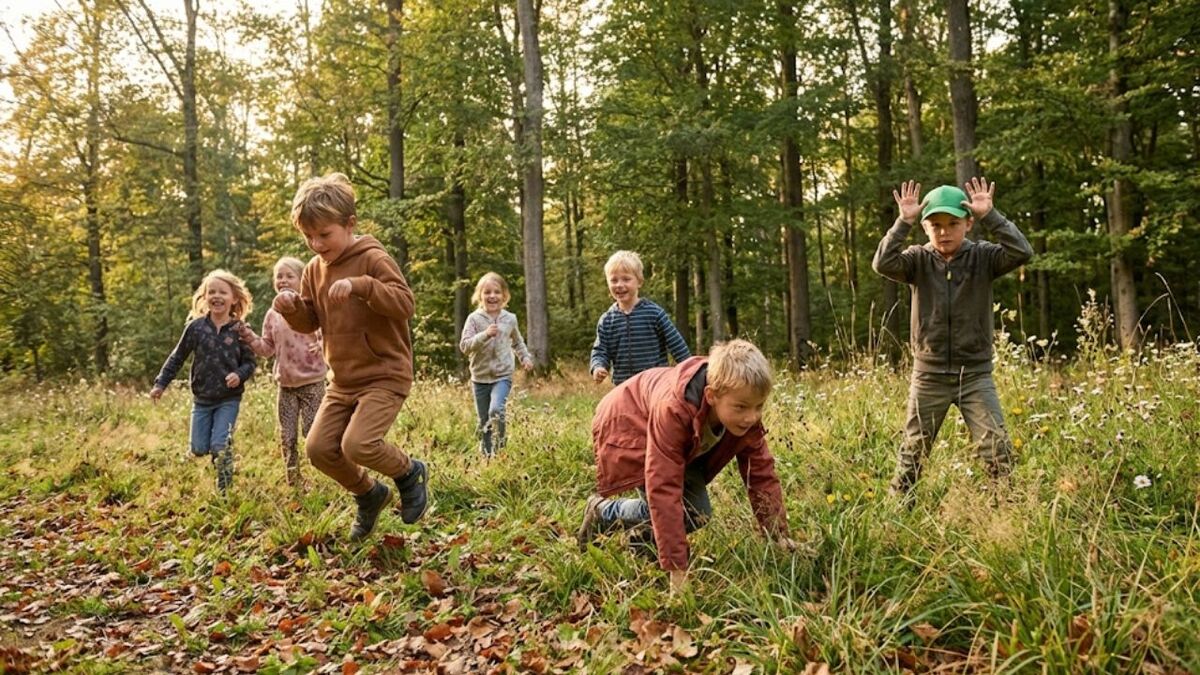
Some children become birds and flap their arms. Others become snails and move forward agonizingly slowly.
And then comes the best part: The conversations afterward.
The questions that open everything up
Once everyone has let off steam, sit together and ask:
- "What makes the fox a fox?"
- "Why does the hare hop like that?"
- "How does a deer move differently than a wild boar?"
- "Which animal was the hardest to imitate? Why?"
I promise you: This creates the best conversations.
Children start to think: Why does the fox sneak? Because it is hunting. Why does the hare hop? Because it is fleeing. Why is the deer so cautious? Because it is always on the lookout.
Suddenly we are talking about predator and prey. About camouflage. About survival in the forest. Not because I am giving a lecture – but because the children come up with it themselves.
This is Coyote Teaching in its purest form.
Variations
- With sounds: The animals are also allowed to make noises. A croaking raven. A grunting wild boar.
- In slow motion: Everyone moves very slowly. How would a snail portray a fox?
- Predator and prey: One child is the fox, the others are mice. The fox tries to sneak up on them.
- Blind: With closed eyes – how does a bat orient itself?
What these three games have in common
I have thought for a long time about why exactly these three ideas work so well.
Here is what I believe:
They need no explanation. You say one sentence, and the children know what to do. No rulebook, no material, no preparation.
They address all senses. Touch, smell, sight, hearing, movement. Children don't learn by listening – they learn by experiencing.
They end with stories. Every child goes home with their own story. "I found my tree!" "I was a sneaking fox!" "I discovered the moss!" That sticks.
They make you redundant. In the best sense. You provide the spark, and then everything happens by itself. You don't have to animate, drive, or entertain. You can simply stand by and watch.
And that is exactly what nature pedagogy is for me.
Not running through programs. But opening up spaces.
Try it out
Pick one of the three ideas.
Just one.
And do it during your next forest day.
Not perfectly. Not thoroughly planned. Just do it.
And then write to me about what happened. I look forward to every message.
If you want more
These three ideas are a beginning.
If you want to dive deeper – if you want to receive new inspiration every week for a whole year, are looking for a community of like-minded people, and want to deepen your own connection to nature – then check out Wildimpuls.
This is my year-long program for everyone who understands wilderness and nature pedagogy not just as a job, but as a way of life.
52 weeks. Weekly missions. Live meetings. A supportive community.
You can find more info at wildimpuls.de
PS: Save this post for your next forest day. Or send it to someone who could use it.

Author of the guide
Martin Gebhardt
Hey, I'm Martin. On my blog, you will learn the basics and numerous details about living in the wild. I think survival, bushcraft and the good life in nature are the keys to happiness. Find me here on Instagram or on YouTube. You can find more about my mission on the About Me page.
Was this guide helpful?
13 people found this guide helpful.
5.00 out of 5 points (13 Ratings)
Comments (0)
This post may contain affiliate links. So if you click on the links and make a purchase, I will receive a small commission at no additional cost to you. Click here, to learn more about it.