

Warm feet in winter: That recommends the community
Free 35 Survival Hacks you'll love!
You will get 35 easy-to-implement survival hacks so that you don't have to stand aimlessly in the forest from tomorrow when things get tough. Take your skills to the next level!
DOWNLOAD HERE FOR FREE👉 The key facts from this guide
- Why feet get cold: They are far from the heart and lose warmth to the cold ground. A good winter shoe must insulate and at the same time leave enough space for blood to circulate.
- Buy shoes larger: At least 1-2 sizes larger than in summer. This promotes blood circulation and leaves room for warming insoles and thick socks.
- Layer socks: A thin layer directly on the foot, over it a thick one made of wool or merino wool. The air layer in between insulates, and merino wool keeps the feet dry.
- Movement warms: Your body produces warmth when walking, which also reaches your feet. Whoever stands for a long time freezes – no matter what shoe.
- Don't forget calves: Leg warmers under trousers improve blood circulation in the feet. Simple trick, big effect.
- There isn't "the one" winter shoe: But the right one for every situation. The shoe is important – but the technique around it just as much.
I once asked a question in the FIAB-Mail (my newsletter).
"Which shoes guarantee you warm AND dry feet in winter?"
To be honest, I expected a few answers. Maybe five or six recommendations.
What came back was a small flood.
Over twenty people replied. With specific models, with experiences from daily stable work, from thousand-kilometer hikes with a dog, from the Alps, and from the mud right outside the front door.
Here you can find the complete survey with all comments (in German) – it’s worth taking a look through them.
And the best part: It wasn't just about brands and models. It was about real practical tricks that I have never read anywhere else before.
Today, I am sharing everything with you.
Why do feet actually get cold?
Before we talk about shoes, a quick look at the physics behind it. Because if you understand why feet get cold, you also understand why some tricks work – and others don't.
Your feet are far away from your heart. The blood that arrives there has traveled a long way. When your body needs to save heat, it first throttles the blood flow in the extremities – hands and feet first.
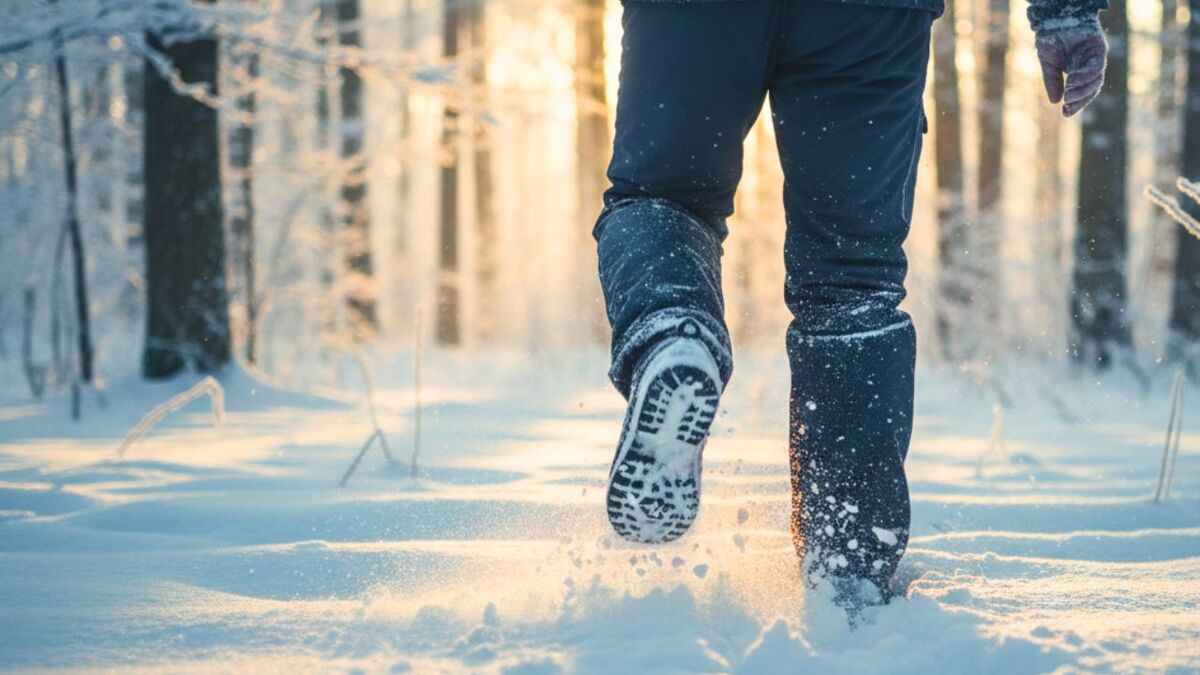
In addition: Your feet are standing on the ground. And the ground in winter is cold. Very cold. The heat is conducted downwards, which is physically unavoidable.
This means: A good winter shoe must be able to do two things.
- Insulate – keep the heat in and the cold out
- Leave room – so that the blood can circulate
And this is exactly where many people make the first mistake.
Before we talk about shoes: The golden rules
What surprised me when reading through the answers: Almost everyone agreed on a few points. Regardless of which shoes they wear.
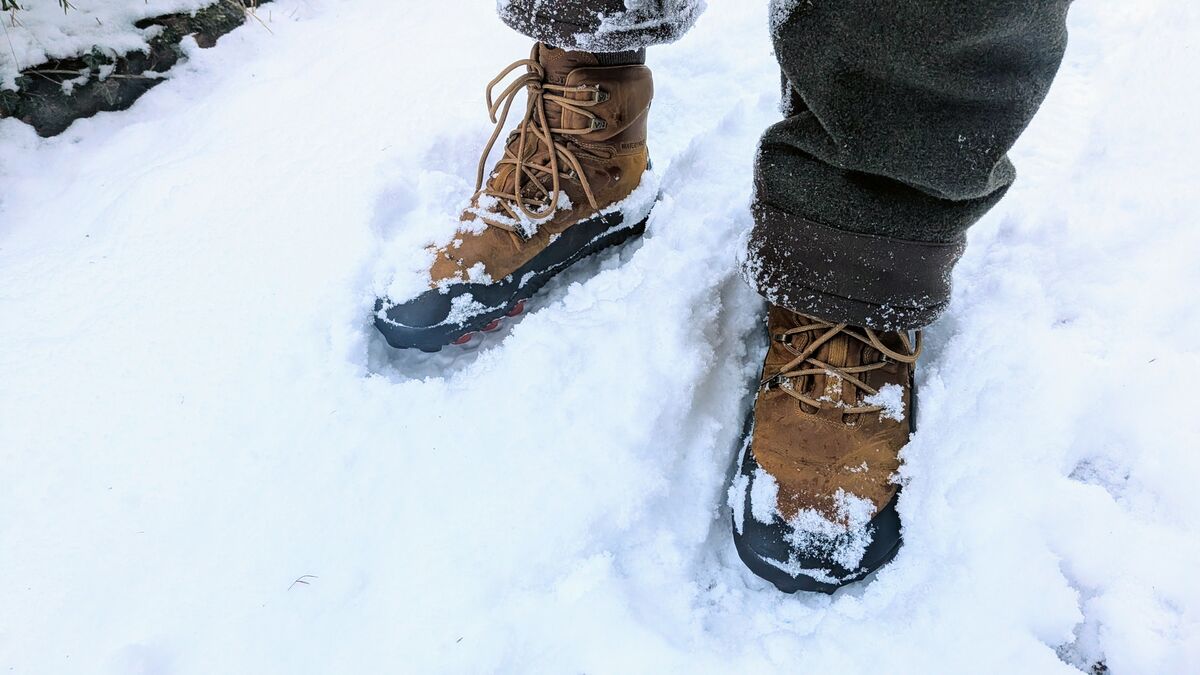
Rule 1: Buy your winter shoes larger
At least one size, better two. It sounds strange at first, but the explanation is simple: shoes that are too tight squeeze the feet together. Blood circulation is restricted. And then it gets cold – no matter how expensive the shoe was.
Larger shoes also provide space for a wool felt or cork insole and thick socks.
One reader put it this way:
"Shoes that are too tight always lead to cold feet because of restricted circulation."
Rule 2: The onion principle – for feet too
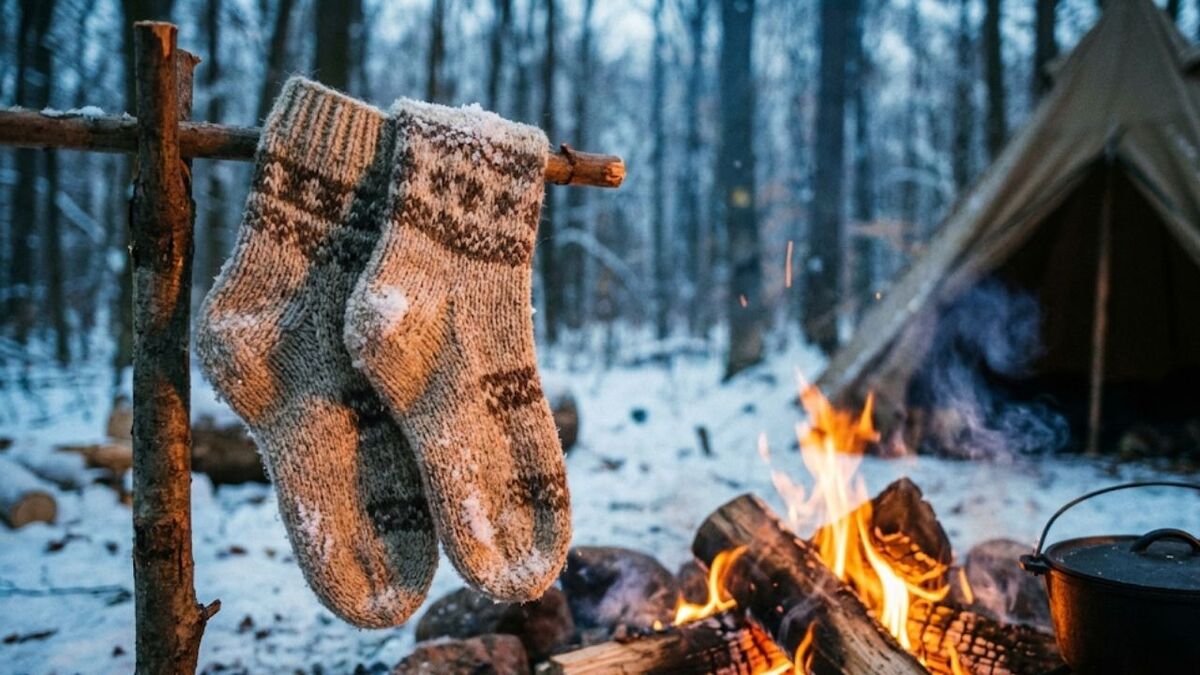
Several people wrote the same thing: A thin sock directly on the foot, with a thick one made of wool or merino wool over it. This often works better than a single mega-thick sock.
Why? The layer of air between the socks provides additional insulation. And merino wool has a special property: it can absorb up to 30% of its own weight in moisture without feeling wet. This keeps the feet dry – and dry means warm.
In my article on outdoor clothing I explain the onion principle in more detail.
Rule 3: Movement is your radiator
It sounds trivial, but it's easy to forget. Those who move have warm feet. Those who stand or sit for a long time freeze – no matter what shoe they wear.
Your body produces heat when moving. During a winter hike your heart pumps more blood through the body, including to the feet. As soon as you stand still, this mechanism dials down.

Rule 4: Don't forget the calves
A tip I hadn't heard before: wear leg warmers under your trousers. They keep the calves warm, and warm calves mean better circulation in the feet. Simple but effective. Long ski socks that go over the calves were also recommended.
One female reader wrote:
"For my muscular calves, normal knee-high socks don't fit, so I can wear thinner socks and still have warm legs."
Rule 5: The emergency blanket hack
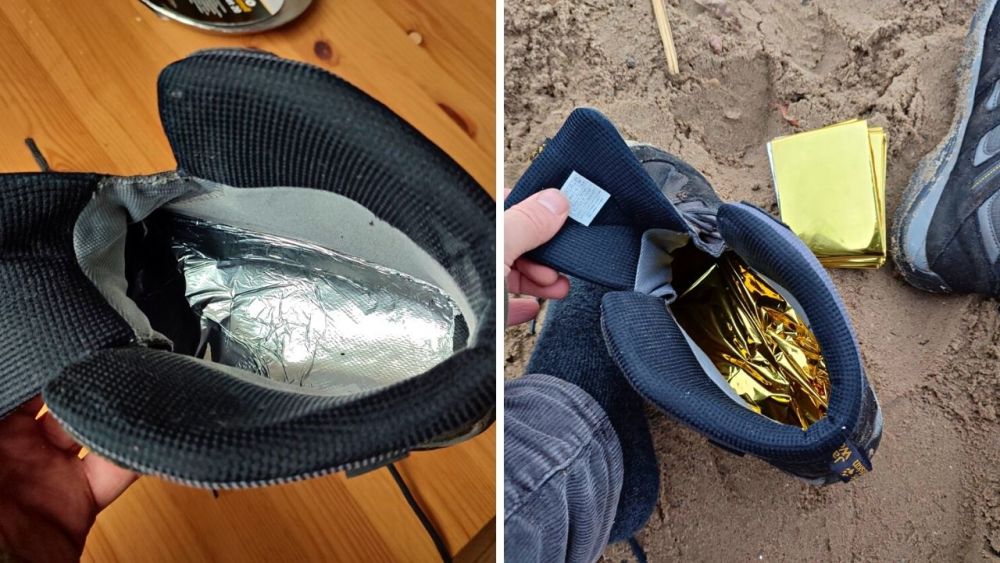
For everyone who has to stand passively outside for a long time – in a hunting blind, while waiting, or in the stable: Place a piece of emergency foil or aluminum foil under the insole. It reflects the heat back to the foot and blocks the cold from below.
This works because the reflective surface throws back the infrared radiation (i.e., your foot's heat) instead of conducting it into the ground. In my article on emergency blankets you will find even more such applications.
What the community wears
Now let's get specific. I have sorted the recommendations – by shoe type, not by price.
Barefoot shoes and minimal shoes
Yes, you read that right. Several people swear by barefoot shoes even in winter. The trick: choose the right models and adjust the size.
Barefoot shoes have a thin, flexible sole without a heel. That sounds like cold feet at first. But: natural foot movement promotes blood circulation. And many winter models now have insulating inner linings.
Vivobarefoot was mentioned most frequently.
Transparency note: I have a small cooperation with Vivobarefoot. With the code MARTIN15 you get a 15% discount on your purchase. However, I only recommend what I wear myself and find good.
I use two models myself:
-
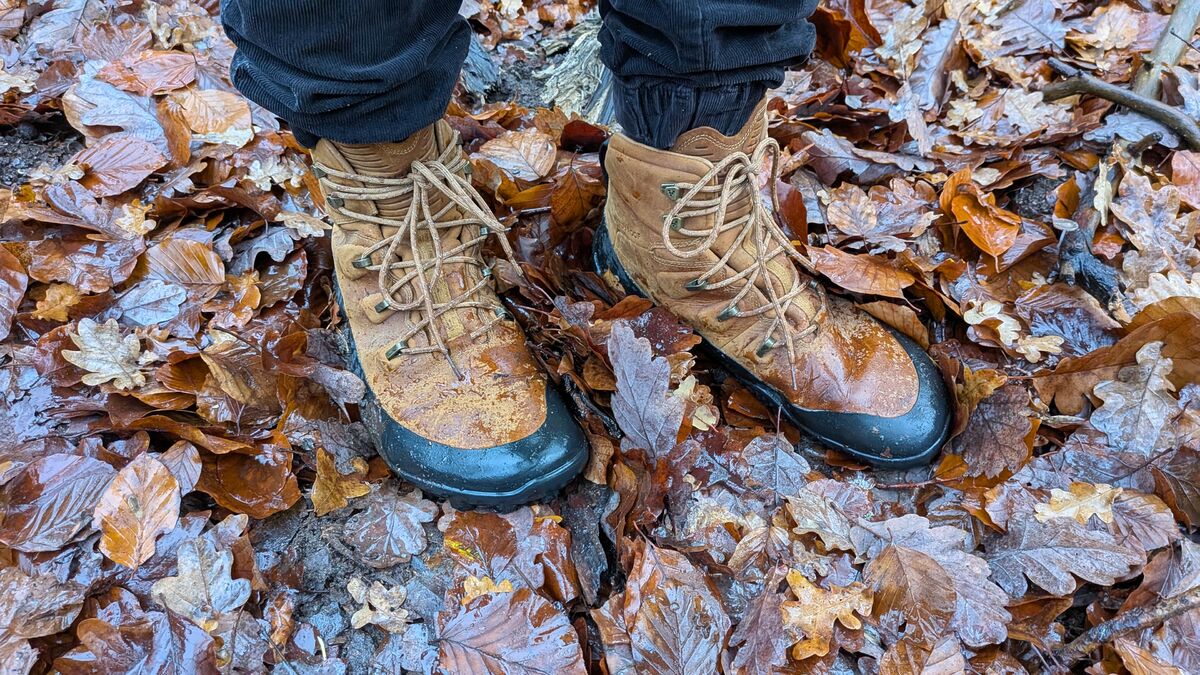
Tracker Forest ESC – my all-rounder for the forest. The Michelin sole grips on any surface, even on wet leaves and roots. The shoe is water-resistant (not waterproof), which is enough for me.
-
Tracker Winter III SG – my winter shoe for really cold days. With Thinsulate insulation and a warming inner lining. The SG sole (Soft Ground) is optimized for soft terrain.
One reader provided a detailed temperature breakdown:
| Temperature Range | Recommended Model |
|---|---|
| Down to about -8°C | Tracker II FG or Tracker ESC |
| -8°C to -20°C | Winter models with neoprene or insulation |
| Below -20°C | Gateway1 Pro Shooter or similar neoprene boots |
Other mentioned barefoot shoes:
- Freet Ibex – warm and comfortable as long as you keep moving. A cheaper alternative to Vivobarefoot.
- Senmotic Blizzard – leather, made in Germany, good ground feel. For everyone who values regional production.
- Hobibear Ash – the insider tip for a small budget. Cheap barefoot shoes from China, but surprisingly good according to the community. One reader wrote: "Feet stay dry and warm in mud and snow. I've never had that with any other shoes before."
Classic hiking boots
The classics. Proven, robust, the standard for many. Good hiking boots are an investment that pays off over years.
Lowa leads the list. The company has been producing in Bavaria since 1923 and has an excellent reputation for fit and durability.
- Renegade Warm GTX – recommended several times. A Gore-Tex membrane makes it waterproof, and the thermal insole is replaceable. Comfort temperature according to the manufacturer is down to -10°C.
- Tibet Evo GTX – the year-round shoe for demanding terrain. Stiffer than the Renegade, providing more support on the mountain.
One female reader wrote:
"I can bathe the shoes in puddles, my feet stay dry."
Meindl Island – mentioned as a proven duo in combination with Falke socks. Like Lowa, Meindl is a traditional Bavarian manufacturer. The Island is a classic trekking boot with good ankle support.
Haix for everyone who needs it robust. Haix originally comes from the professional sector – fire department, police, forestry. The shoes are designed for continuous use.
- Nature One GTX – the outdoor boot from Haix
- High Liability Defender – originally developed for emergency forces
- P9 – a robust all-rounder
One reader summed it up:
"When it comes to shoes that really have to withstand something and work, there's no way around Haix for me."
Here you can find my tips for shoe care – so that your investment lasts a long time.
Wellies and Neoprene Boots
For mud, snow, and daily stable work. Not the most elegant solution, but sometimes the most honest one.
The advantage: 100% waterproof. The disadvantage: Hardly any breathability. Your feet sweat, and sweat eventually gets cold.
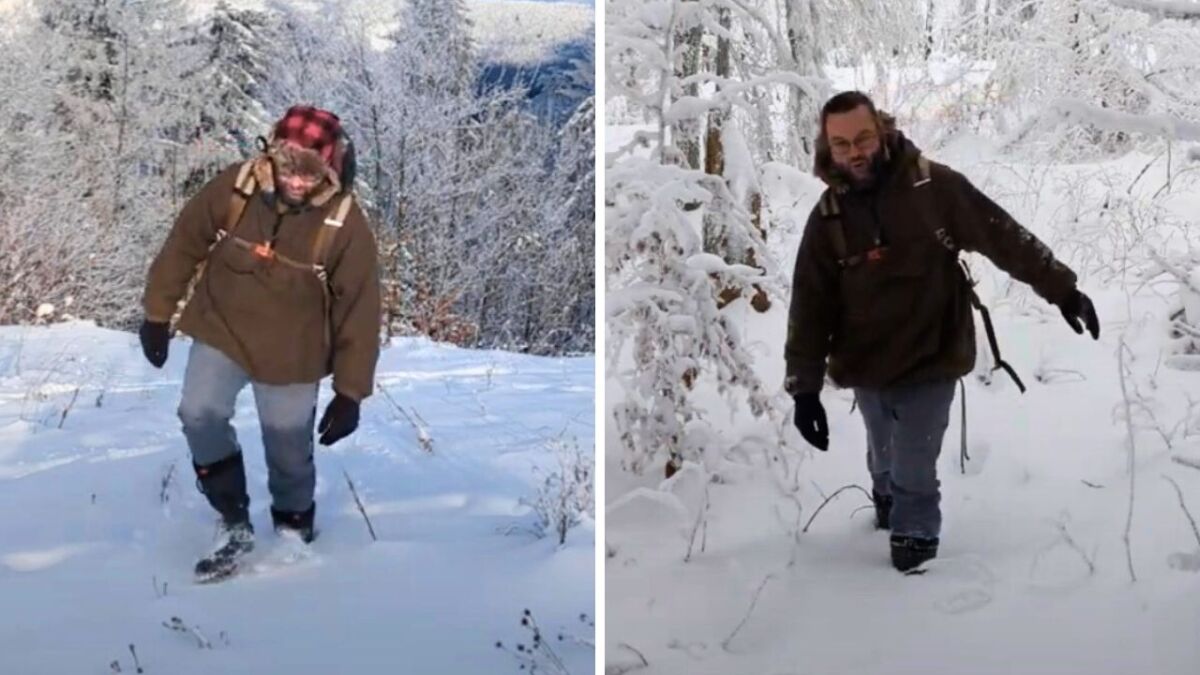
Gateway1 was described in great detail by a reader. This is a Scandinavian manufacturer specialized in hunting and outdoor boots.
- Woodwalker 18" – comfort temperature down to -20°C, 4mm neoprene shaft. According to the reader, "still super comfortable after a 20km dog walk."
- Pro Shooter 18" – down to -40°C, 7mm neoprene shaft with side zipper. "Heavy – 12 km were enough for me," the reader wrote honestly.
Muckboots by Strauss – warm, dry, uncomplicated. Originally developed for agriculture.
EVA Boots – for everyone working in the stable and standing for a long time. EVA (Ethylene-Vinyl Acetate) is a foamed material that insulates well and is lightweight.

The pragmatic approach
Several people wrote: There is no THE one winter shoe. Instead, there are different shoes for different situations.
One reader put it particularly well:
"In my opinion, there isn't just one winter shoe; it all depends on the weather/ground conditions."
That sounds like a lot of effort, but it's actually logical. You don't wear the same jacket for jogging as you do for sitting in a hunting blind. For an overnighter in winter you need different shoes than for a day hike.
Special case: Women and winter shoes
Several female readers wrote that they have less choice when it comes to winter shoes. Or that women's models are often less warm than men's models.
A few solutions from the community:
- Try men's models if foot size allows. This is often possible from size 40/41 (UK 6.5/7) upwards.
- With barefoot shoes, the models are often unisex.
- Heated socks or insoles as a supplement.
The honest truth
A few female readers wrote that they have not yet found a shoe that really keeps the feet warm when they are not moving.
This coincides with my experience.
At a certain point, only the following help:
- Heated socks or insoles (available from approx. €30–50 with battery)
- Really thick insulation (neoprene, lambskin)
- Chemical heat pads in the shoes
- Or simply: get up and start walking
Here you can find my tips on how to stay warm while camping in winter – much of this also applies to the feet.
For everyone who wants to sleep outside in winter: different rules apply there. In the sleeping bag, the shoes are off – and then only what you wear on your feet counts.
Avoiding blisters – even in winter
A topic that wasn't directly addressed in the survey but belongs here: blisters while hiking are also a problem in winter.
Especially when feet sweat (yes, that happens even in the cold) and the socks become damp, friction occurs.
The best prevention:
- Well-broken-in shoes (never go on a long tour with new shoes)
- Two pairs of socks (the friction happens between the socks, not on the skin)
- Keep feet dry (bring spare socks)

My conclusion
What I take away from this survey:
The shoe is important. But the technique around it is just as important.
Adjust the size. Layer socks. Upgrade insoles. Keep calves warm. And above all: stay in motion.
Thanks to everyone who shared their experiences. This is exactly what I love about this community – real knowledge, shared honestly.
If you have a tip yourself that I’ve forgotten: write to me. I’m happy to add it.
At a glance: The recommendations
| Category | Recommended Models | Price Range |
|---|---|---|
| Barefoot shoes | Vivobarefoot Tracker, Freet Ibex, Senmotic Blizzard | €100-250 |
| Budget Barefoot | Hobibear Ash | approx. €40-60 |
| Classic hiking boots | Lowa Renegade Warm GTX, Meindl Island | €180-280 |
| Robust boots | Haix Nature One GTX, High Liability | €150-250 |
| Neoprene boots | Gateway1 Woodwalker, Muckboots | €100-200 |
| Extreme cold | Gateway1 Pro Shooter | €200-300 |


Author of the guide
Martin Gebhardt
Hey, I'm Martin. On my blog, you will learn the basics and numerous details about living in the wild. I think survival, bushcraft and the good life in nature are the keys to happiness. Find me here on Instagram or on YouTube. You can find more about my mission on the About Me page.
Since this is a gear guide, here ...
🤝8 reasons to trust my recommendation
-
Practical Experience: I have tested most of the products I recommend under extreme conditions myself.
-
Independence: As a wilderness mentor, I am not tied to any specific brands - this means my recommendations are unbiased.
-
Expertise: My many years of experience allow me to understand the intricacies and details of various products that a layperson might overlook.
-
Target group understanding: I understand the needs and challenges of outdoor enthusiasts, from beginners to seasoned experts.
-
Quality focus: I attach great importance to quality and longevity. These are characteristics that are crucial in the wild.
-
Clear communication: I try to explain the pros and cons of each product clearly and understandably so that you can make an informed decision.
-
Currentness: I always keep my guides up to date and adapt them to new findings or products.
-
Community Feedback: I work in wilderness schools, teach courses myself, attend courses and am active in various outdoor and survival communities and therefore integrate the feedback and experiences of others into my recommendations.
So when I introduce the best survival knives or flashlights, you can be sure that every recommendation is based on solid experience and extensive knowledge.
Was this guide helpful?
13 people found this guide helpful.
5.00 out of 5 points (13 Ratings)
Comments (0)
This post may contain affiliate links. So if you click on the links and make a purchase, I will receive a small commission at no additional cost to you. Click here, to learn more about it.