

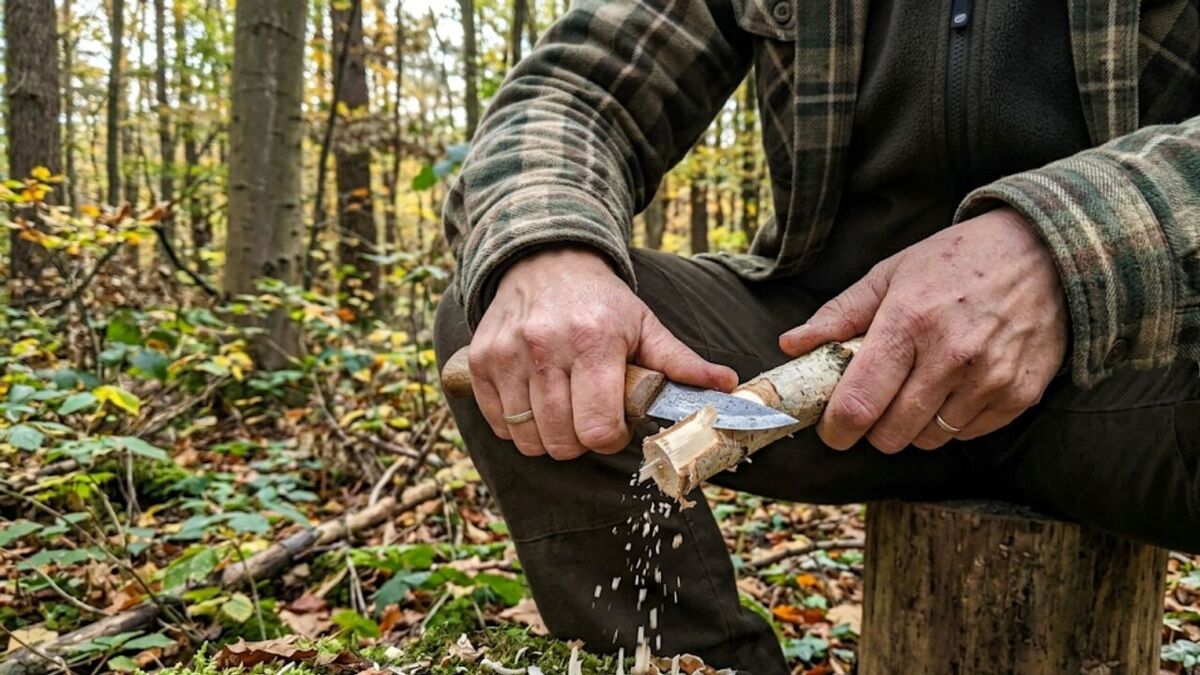
Poisonous woods when carving, at the campfire and in wilderness cooking – what you need to know
Free 35 Survival Hacks you'll love!
You will get 35 easy-to-implement survival hacks so that you don't have to stand aimlessly in the forest from tomorrow when things get tough. Take your skills to the next level!
DOWNLOAD HERE FOR FREE👉 The key facts from this guide
- Not all wood is harmless – some woods are problematic when carving, others when burning, and others when eating.
- Three terms, three meanings: Toxic (directly poisonous), allergen (immune reaction), irritant (skin/mucous membrane irritation).
- Yew is the classic – except for the red fruit flesh, everything is poisonous. No wood for spoons, cups, or children's toys.
- Robinia burns excellently – but the dust when carving is problematic. Flowers edible, rest poisonous.
- Never put oleander in the fire – the toxins remain in the smoke and irritate the respiratory tract.
- Needle tea yes, but correctly: Spruce, pine, fir, Douglas fir = safe. Yew, thuja, savin juniper = never.
- Elderberry only cooked: Raw berries contain cyanide precursors. At 80°C for 20 minutes they are safe.
I still remember it precisely.
It was one of my first carving courses. I had grabbed a beautiful straight branch – perfect size for a cooking spoon. The wood was light, fine-grained, worked wonderfully.
Only when I was almost finished did an older participant ask me: "Is that yew?"
I looked at him. Shrugged.
He looked at me. Said only: "I wouldn't eat with that."
Since then I try to identify every piece of wood before I work with it. Every single one.
Not out of fear. But because I understood: Most trees are harmless. But a few can cause real problems – when carving, at a campfire, or in wilderness cooking.
This guide gives you a sober overview. No fear-mongering. Just clear information.
Three concepts you should know
Before we get into individual woods, let me clarify three terms. They are often mixed up, but they mean different things.
Toxic (poisonous): A substance directly damages your body – organs, circulation, nervous system. Yew's taxine, for example. The effect is dose-dependent, but it affects everyone in principle.
Allergen: A substance triggers a reaction in your immune system. Asthma, skin eczema, hay fever. But: Only sensitized people react – and often to tiny amounts. And the reaction can become more severe with each contact.
Irritant: Dusts, juices, or oils irritate skin and mucous membranes directly – without an immune reaction. Simply through chemical-physical contact.
In practice, these categories often overlap. Yew wood is toxic and irritating. Robinia wood is weakly poisonous and allergenic. Beech wood dust is neither highly toxic nor classically allergenic.
Yes, you read that right.
More on that in a moment.
PART 1: Carving and woodworking – which woods cause problems?
When carving, there are essentially three types of hazards:
- Skin contact with juices or bark
- Fine dust when sanding or sawing (inhalation)
- Toxin intake through mouth or mucous membranes
It becomes particularly critical when you work in poorly ventilated spaces. The good news: With classic green wood carving using a knife, hardly any fine dust is produced. This is one of the reasons I value this method of woodworking so much.
Still: You should know about certain woods.
Yew (Taxus baccata) – the classic
Yew provides one of the finest carving woods available. Dense, fine-grained, resin-free. Ötzi even carried an unfinished yew bow with him.
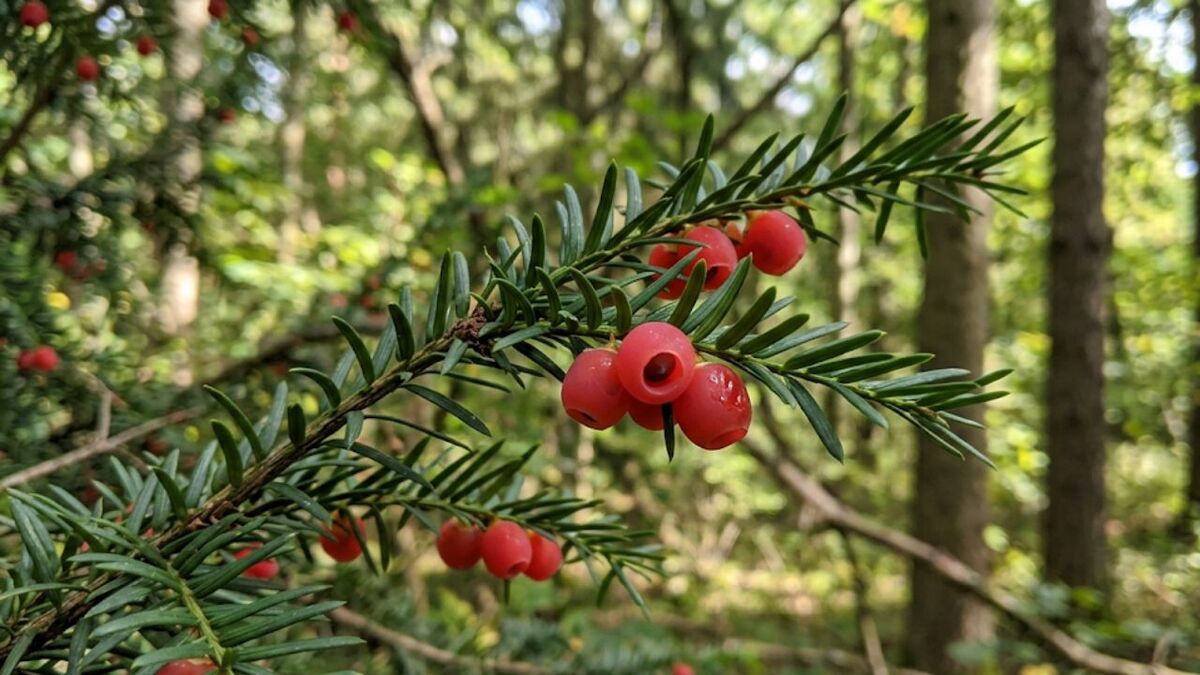
But: With the exception of the red seed coat (arillus), all plant parts are poisonous – including the wood. The alkaloids taxine A and B disrupt heart-circulation function. Just 50–100 g of needles can be fatal for adults (Gartenjournal).
What this means for you:
- Don't inhale wood dust – FFP2 mask when sanding
- Gloves when fresh sap is present
- Never use for eating utensils – no spoons, cups, or children's toys
The wood is beautiful. But it belongs in decorative work – not near your mouth.
More on identifying conifers: Identifying conifers: 5 species in one simple overview
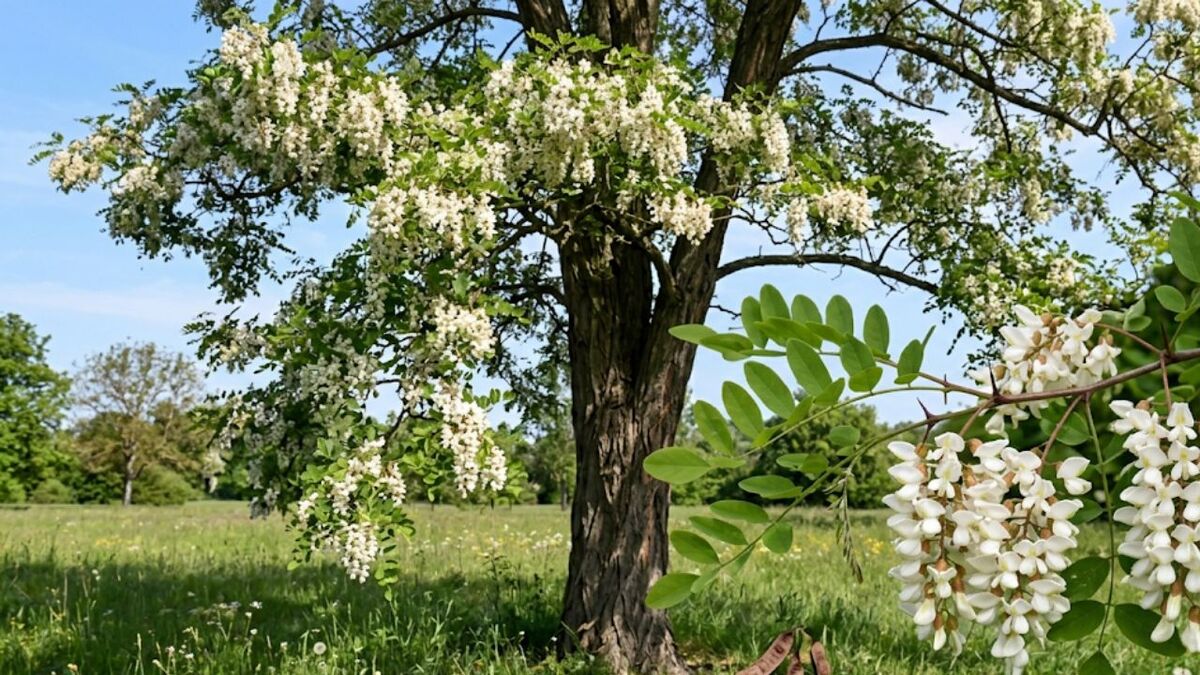
Robinia (Robinia pseudoacacia) – the underestimated problem
Robinia wood is extremely hard, tough, and durable. A European alternative to tropical hardwood. Ideal for outdoor structures.
When carving you immediately notice: This stuff fights back. Tools dull quickly. Green wood is somewhat easier than seasoned.
The problem: Bark, seeds, and wood contain toxalbumins (robin, phasin). The Baumpflegeportal explicitly points out that poisoning can occur when processing the wood by inhaling the dust.
My recommendation:
- Respiratory protection when sanding – mandatory
- No drinking vessels or spoons from robinia
- For structural wood and fence posts: perfect
Interesting: Robinia flowers are edible and make delicious syrup. The rest of the plant? Toxic.
Boxwood (Buxus sempervirens) – be careful with the dust
The hardest native wood. Used since antiquity for fine carved work – chess pieces, woodwind instruments, inlays.
The plant contains over 70 alkaloids. Highest concentration in leaves and bark. The Plantura magazine documents the toxicity in detail.
Relevant for carvers: The dust can cause skin irritation. Skin inflammation and mucous membrane irritation are documented with intensive processing.
So: Gloves, respiratory protection, good ventilation. And here too – no drinking vessels.
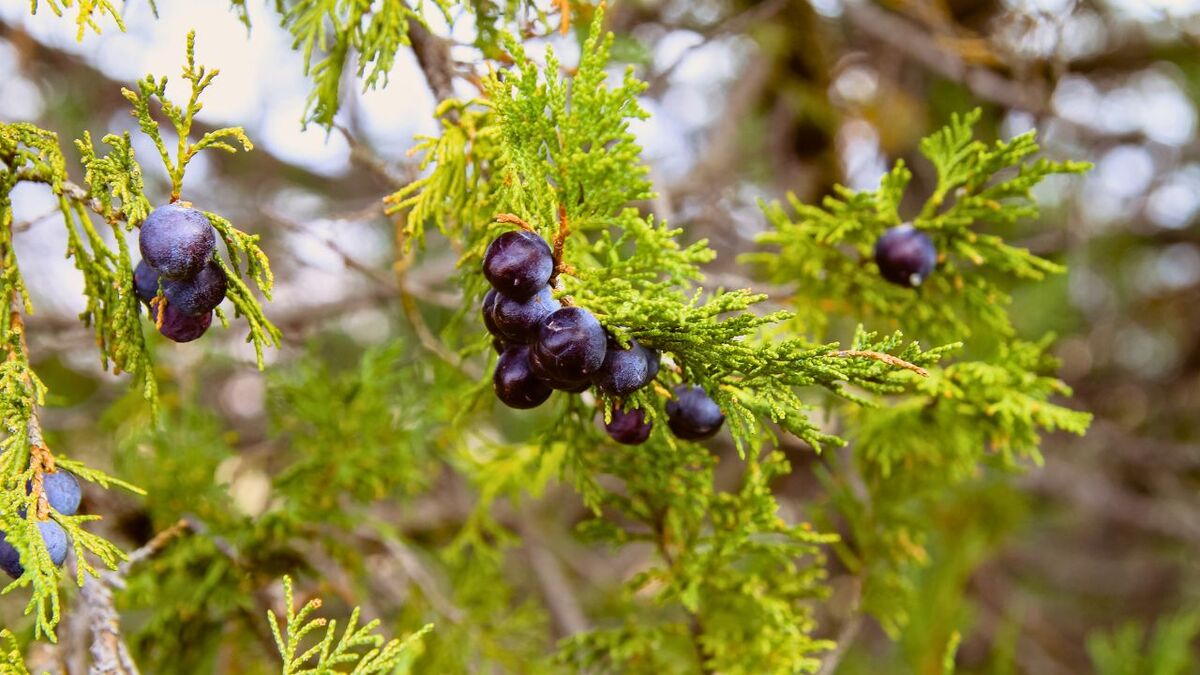
Savin (Juniperus sabina) – hands off
If you're in the Alpine region or in older gardens: Savin looks like a creeping juniper.
But it's not a harmless juniper.
The essential oil alone on the skin can cause blisters. A few drops of the oil are fatal for humans (Wikipedia: Savin).
Don't touch it. Don't carve it. Don't burn it. It's usually protected anyway.
Memory aid: "Juniper stings, savin doesn't!" – Juniper has sharp needles, savin has soft scale-like leaves like thuja.
Mezereon (Daphne mezereum) – a native contact poison
One of the most aggressive contact poisons in our flora.
Just touching fresh twigs can cause blisters and necrosis in sensitive people. The active substances mezerein and daphnetoxin are brutal (Poison Control Center Erfurt).
Completely unsuitable for carving. Also protected by law.
Other problematic candidates at a glance
Cherry laurel / Prunus laurocerasus: All parts contain prunasin – when crushed, cyanide forms. Fresh twigs smell like bitter almonds. Not carving wood.
Spindle tree (Euonymus europaeus): Highly toxic (cardioactive cardenolides). Poisonous Plant of the Year 2006. The wood is hard and elastic, but absolutely not for eating utensils.
Golden chain (Laburnum): All parts contain cytisine. 15–20 seeds can be fatal. If carving at all, then with full extraction and FFP3.
Thuja / Arborvitae: The essential oil contains up to 60% thujone – a nerve poison. Even repeated skin contact with the wood can cause eczema (CVUA Stuttgart).
The underestimated danger: Hardwood dust
Now comes something that few people know – and I was really very surprised too.
Beech and oak wood dust are classified as carcinogenic – IARC category 1, meaning "certainly carcinogenic to humans". Nasal mucous membrane cancer from hardwood dust is a recognized occupational disease (BK 4203) (Wikipedia: Hardwood dust).
This also applies to ash, birch, maple, and walnut.
The air limit value is 2 mg/m³ – and hobby workshops almost always exceed this.
What does this mean for you?
With classic green wood carving using a knife, the risk is minimal. You produce shavings, not fine dust.
But as soon as you regularly sand, saw, or use machines: extraction, mask, ventilation.
An FFP2 mask costs 50 cents. Surgery on your sinuses costs you your sense of smell.
Which woods are safe for spoons and eating utensils?
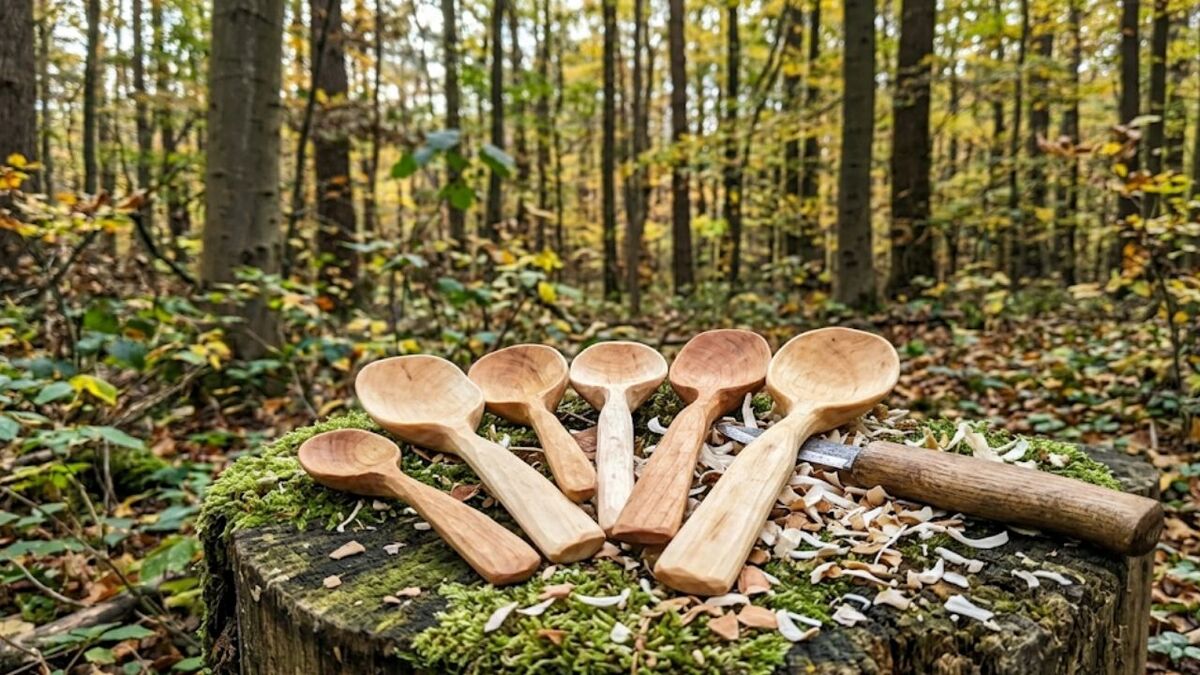
✅ Good for cooking spoons, bowls, cups:
- Birch – soft, pleasant to carve
- Maple – fine, neutral taste
- Beech – hard, durable
- Linden – very soft, perfect for beginners
- Willow – soft, readily available
- Alder – light, fine
- Hazel – tough, elastic
- Fruit trees (cherry, apple, pear, plum) – beautiful grain, food-safe
❌ Never for eating utensils:
Yew, boxwood, robinia, cherry laurel, spindle tree, golden chain, mezereon, thuja, buckthorn
More on carving: Carving spoons: The complete guide for beginners
PART 2: Fire and burning – what does NOT belong in a campfire?
Bad news first: Many warnings online are overgeneralized.
Good news: With a few real problem cases, you actually need to be careful.
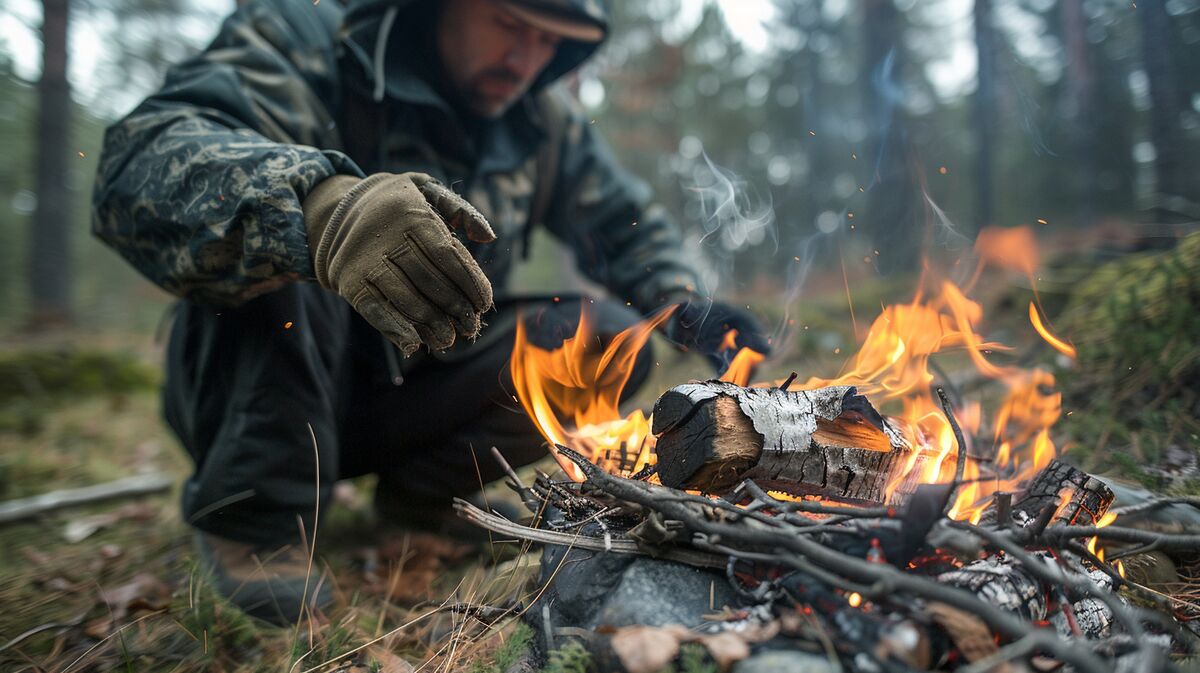
Oleander – the classic warning
All parts of oleander contain cardiac glycosides (oleandrin, neriin).
And here's the problem: The toxic effect remains in the smoke. The NaturaDB plant portrait documents that oleander smoke can cause breathing problems and conjunctivitis.
The popular scary story about scouts roasting their sausages on oleander skewers and dropping dead is an urban legend. But: The smoke is actually problematic.
So never burn oleander in a campfire. Not even to dispose of cuttings. The right way is household waste.
Savin and thuja – essential oils vaporize
Because of the high concentration of essential oils (sabinyl acetate, thujone), irritating to toxic components vaporize when burned.
A smoldering thuja pile in the garden is not a good idea.
Don't burn cuttings.
Yew – a differentiated view
Opinions differ here.
Two camps:
a) "Taxine decomposes completely at high temperatures, yew is safe to burn" – so argue stove and firewood websites (Hausjournal).
b) "Inhaling yew smoke is dangerous, the poison can remain in the smoke" – so say more critical voices.
My conclusion:
With clean combustion at high flame temperature (above 600°C in a closed stove), the alkaloids are thermally destroyed.
With smoldering fires, damp yew, or green branches, toxic aerosols can appear in the smoke.
Practice for bushcrafters: Well-seasoned yew (at least 2 years) in a hot, well-drawing fire is safe. Never put needles and green branches in a campfire. And generally: Avoid smoke.
Robinia – surprisingly good firewood
Now comes a surprise.
Robinia, which is so problematic when carving, is excellent as firewood.
With 2100 kWh/rm, it has one of the highest native heating values. It burns long, evenly, and with little spark formation (Kaminholz.org).
The toxins (lectins) are broken down during high-temperature combustion.
Even better: Robinia wood produces food-compatible smoke. It is used in smokers and grills and gives food a sweet note (Gartenjournal).
The only downside: Robinia needs high ignition temperature. So start with spruce or birch first.
More on making fire: How do I light a fire? [10 steps to success]
Fire bow (Bow Drill) – which woods work?
For friction fire, toxicity doesn't matter – density and structure do.
✅ Proven for beginners:
- Linden – very soft, ideal for beginners
- Willow – almost as good
- Poplar/Aspen – great results
❌ Unsuitable for beginners:
- Oak, beech, ash – too hard
- Resin-rich pine – sticks instead of forming powder
- Robinia – far too hard
- Yew – not only hard, but the fine dust ends up in your breathing air
⚠️ Never use:
Savin, mezereon, cherry laurel, oleander, golden chain – even if they technically worked, the dust produced is toxic.
More on this: Which wood for fire bow: A complete guide
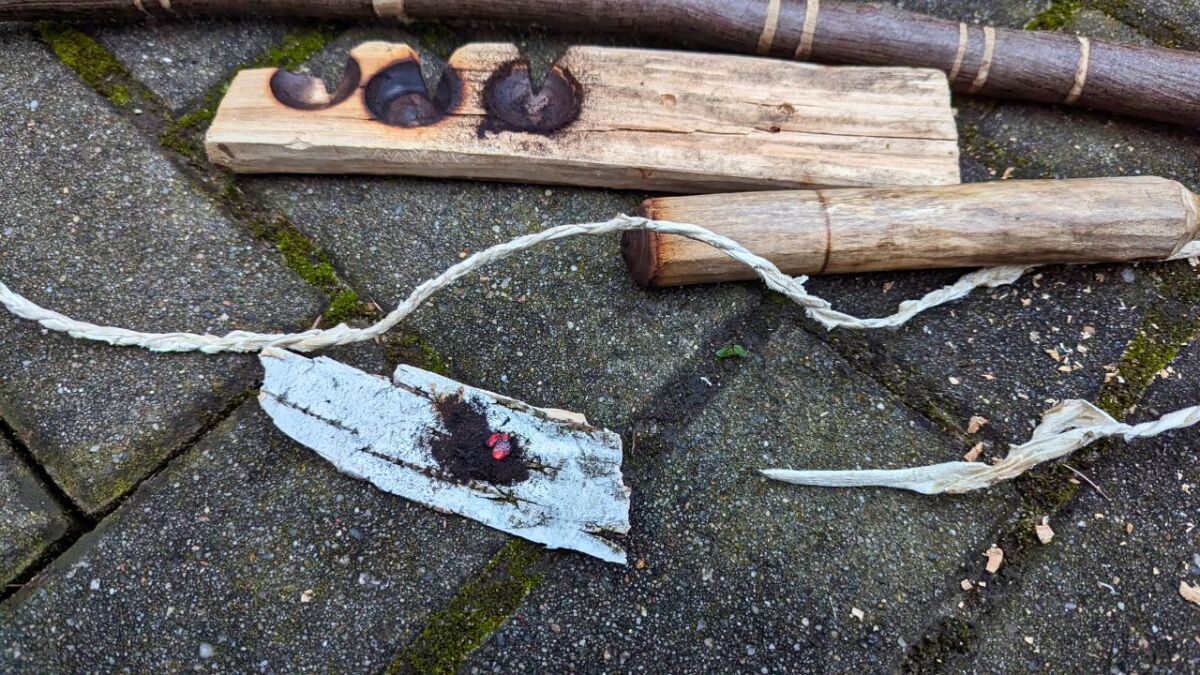
Rules of thumb for campfires
- Never burn: Oleander, savin, thuja needles, mezereon, golden chain cuttings, cherry laurel green waste, yew branches
- Burning allowed (dry, hot fire): Yew log wood, boxwood log wood, robinia, elderberry wood
- Generally avoid green wood – it smokes more, burns less cleanly
- Hedge clippings from neighbors? When in doubt, household waste instead of fire pit
PART 3: Food, tea, and wild plants – what works, what doesn't
Needle teas – here edible separates from deadly
Conifers are classic vitamin C suppliers. A tea from fresh needles warms and strengthens the immune system.
✅ Safe and recommended:
- Spruce – four-sided, stinging needles, typical Christmas scent
- Pine – long needles, arranged in pairs (and more)
- White fir – flat, soft needles with two white stripes underneath
- Douglas fir – intense citrus/orange scent when crushed
- Larch – soft needles in tufts
❌ Absolutely forbidden:
Yew. Just 5–10 needles are said to have strong toxic effects. The poison concentration increases in fall and winter.
Distinguishing features:
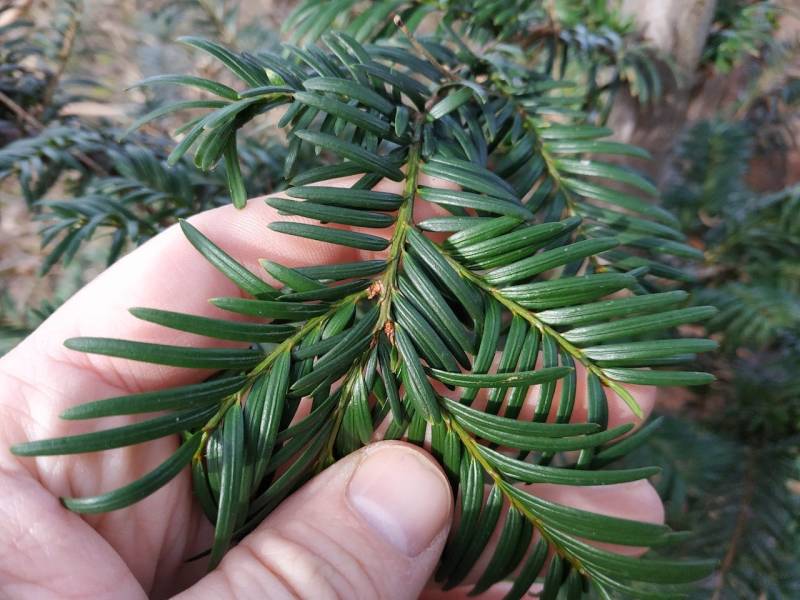
Yew needles are dark green and shiny, soft (don't sting), and have no white stripes underneath like fir. Plus, scales form on the branch from where the needles grow. Yew has no cones – only red fleshy arilli.
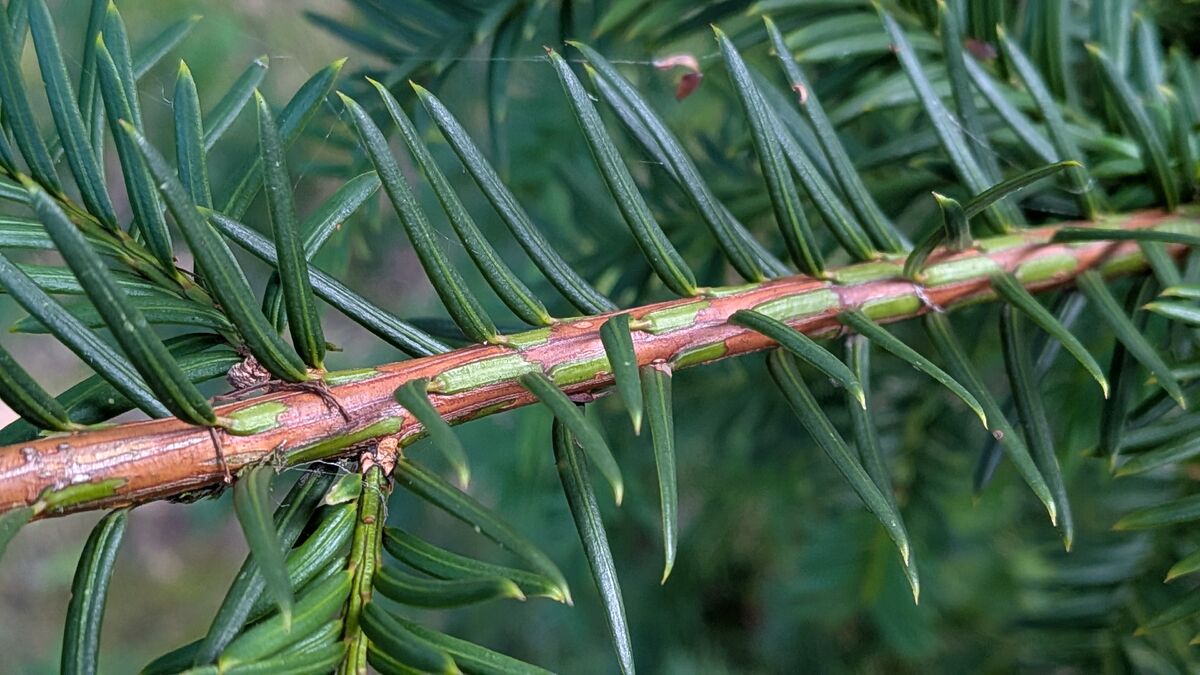
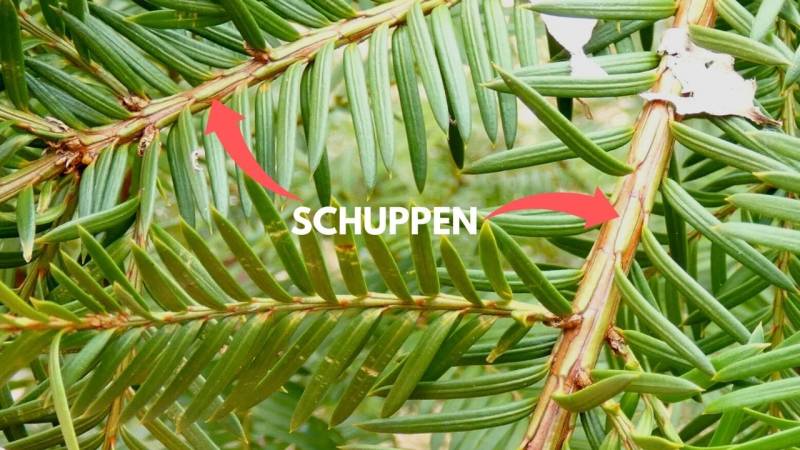
Savin, thuja, false cypress – contain thujone. Never for teas.
More on identification: 5 common conifers identified by their needles and recognized
Juniper vs. savin – vital to distinguish
Juniper berries are known as a spice. But be careful of confusion.
| Feature | Juniper | Savin |
|---|---|---|
| Leaves | Sharp needles (stinging!) | Scale-like (like thuja) |
| Smell when crushed | Aromatic, resinous | Stinking, unpleasant |
| Growth habit | Often upright, columnar | Usually creeping |
| Berries | Edible as spice | Highly toxic |
Memory aid: "Juniper stings, savin doesn't!"
Elderberry – raw toxic, cooked edible
Black elderberry is a wonderful plant. The flowers are edible raw – perfect for elderflower syrup or pancakes.
But the berries?
Raw elderberries contain sambunigrin – a cyanide precursor. In larger amounts: nausea, vomiting, diarrhea.
The solution is simple: Sambunigrin decomposes above 76°C. Heat the berries for at least 20 minutes at over 80°C – then they are safe (Gartenjournal: Elderberry).
Red elderberry: Berries usable when cooked, but remove seeds after cooking – they remain toxic.
Dwarf elderberry (Attich): Completely toxic, even when cooked. Recognizable by upright fruit clusters (instead of hanging) and disgusting smell.
More on edible plants: Edible plants: emergency food you'll find in the forest (list + photos)
Rowan / Mountain ash – safe when cooked
Rowan berries have a bad reputation.
Undeservedly.
Raw, they contain parasorbic acid – this can cause stomach pain and diarrhea. But when heated it becomes harmless sorbic acid (Apotheken Umschau).
Rule: Harvest after the first frost (or freeze), then cook. The Moravian rowan is even edible raw.
⚠️ These fruits are off-limits
- Yew: Seeds highly toxic – even though the fruit flesh (arillus) is non-toxic
- Spindle tree: The pink-orange capsules look tempting, but are highly toxic
- Mezereon: 10–12 berries can be fatal for adults
- Golden chain: 10 flowers or 15–20 seeds are potentially fatal
- Privet: Berries weakly toxic, concerning for children from about 10 berries on
Edible bark (cambium)
The cambium – the thin layer between bark and wood – was used in Northern Europe as emergency food.
✅ Well-suited:
- Birch – inside sweet, nutrient-rich
- Pine – Scandinavian "bark bread"
- Linden – sweet, slimy
⚠️ Never eat:
- Yew, robinia, cherry laurel, savin, mezereon, buckthorn (fresh), boxwood
Important: No girdling – take narrow vertical strips from side branches, otherwise you kill the tree.
More on this: Can you eat tree bark to survive? What does tree bark taste like?
Overview table: The most important woody plants
| Woody plant | Toxic substance | Carving | Burning | Edible? |
|---|---|---|---|---|
| Yew | Taxine A/B | With mask; nothing for kitchen | Seasoned in hot fire OK; needles no | No (except arillus) |
| Savin | Sabinyl acetate, thujone | Unsuitable, contact poison | No – household waste | No, highly toxic |
| Robinia | Lectins, robin | Dust mask mandatory; no drinking vessels | Excellent (2100 kWh/rm, smoker-suitable) | Only flowers |
| Oleander | Oleandrin | Not relevant (ornamental shrub) | No – toxic smoke | No |
| Boxwood | Cyclobuxin | Dust mask, gloves | Log wood OK | No |
| Elderberry | Sambunigrin | For flutes/blowguns; remove pith | Unproblematic | Flowers raw; berries only cooked |
| Spindle tree | Evonin, cardenolides | No eating utensils | Cautious | No, highly toxic |
| Mezereon | Mezerein | Unsuitable, contact poison | No – household waste | No, 10–12 berries fatal |
| Golden chain | Cytisine | With FFP3; no eating utensils | Not recommended | No |
| Thuja | Thujone | Avoid skin contact | Green waste no | No |
Three basic principles to conclude
First: Most serious poisonings are rare events – but they happen. Yew is one of the most frequently asked about according to the German poison control center. Horses, dogs, and children are the main victims.
Second: The risk in woodworking is underestimated. Beech and oak wood dust are carcinogenic. With green wood carving this is not an issue. With regular and mechanical work it is.
Third: Bushcraft practice is safer than its reputation, if you pay attention to three things:
- Be able to identify plants 100%
- Know the dangerous candidates for teas and wild fruits
- Choose wood for eating and drinking utensils from the "harmless" list
Whoever works outdoors with children and beginners sticks to the safe basics: Linden, birch, spruce, pine, hazel, alder, fruit woods. With these you can build everything bushcraft wants.
Note: This article is an information overview and does not replace medical advice. If you suspect poisoning, contact your poison control center immediately.

Sources for the guide
Im Text verlinkte Quellen:
- Gartenjournal: Eibe giftig – https://www.gartenjournal.net/eibe-giftig
- Baumpflegeportal: Robinie – https://www.baumpflegeportal.de/baumwissen/baum-des-jahres-2020-robinie-gift-delikatesse/
- Plantura: Buchsbaum giftig – https://www.plantura.garden/gehoelze/buchsbaum/ist-der-buchsbaum-giftig
- Wikipedia: Sadebaum – https://de.wikipedia.org/wiki/Sadebaum
- Giftnotruf Erfurt: Seidelbast – https://www.ggiz-erfurt.de/seidelbast.html
- CVUA Stuttgart: Thuja – https://www.ua-bw.de/pub/beitrag.asp?subid=1&ID=444&Pdf=No
- Wikipedia: Hartholzstaub – https://de.wikipedia.org/wiki/Hartholzstaub
- NaturaDB: Oleander – https://www.naturadb.de/pflanzen/nerium-oleander/
- Hausjournal: Eibenholz verbrennen – https://www.hausjournal.net/eibenholz-verbrennen
- Kaminholz.org: Robinie – https://www.kaminholz.org/portal/holzsorten/robinie.php
- Gartenjournal: Robinie Brennholz – https://www.gartenjournal.net/robinie-brennholz
- Gartenjournal: Holunder giftig – https://www.gartenjournal.net/holunder-giftig
- Apotheken Umschau: Vogelbeeren – https://www.apotheken-umschau.de/gesund-bleiben/ernaehrung/eberesche-vogelbeeren-gekocht-essbar-713045.html
Weitere verwendete Quellen:
- IPA Journal DGUV (2016): Holzstaub und Allergien – https://www.dguv.de/medien/ipa/publikationen/ipa-journale/ipa-journale2016/documents/ipa_journal_1602_holz.pdf
- Allergologie.de: Hölzer – https://www.alles-zur-allergologie.de/Allergologie/Artikel/3846/Allergen,Allergie/H%C3%B6lzer/
- NaturaDB: Europäische Eibe – https://www.naturadb.de/pflanzen/taxus-baccata/
- Wikipedia: Europäische Eibe – https://de.wikipedia.org/wiki/Europ%C3%A4ische_Eibe
- Botanikus: Robinie – https://botanikus.de/informatives/giftpflanzen/alle-giftpflanzen/robinie
- Holzvomfach.de: Buchsbaum – https://holzvomfach.de/fachwissen-holz/holz-abc/buchsbaum/
- Gartenjournal: Buchsbaum giftig – https://www.gartenjournal.net/buchsbaum-giftig
- Wildfind: Sadebaum – https://www.wildfind.com/pflanzen/sadebaum
- Pflanzen-Portal: Sadebaum – https://pflanzen-portal.com/pflanzen-steckbrief/sadebaum,-stink-wacholder
- Wikipedia: Lorbeerkirsche – https://de.wikipedia.org/wiki/Lorbeerkirsche
- Plantura: Kirschlorbeer – https://www.plantura.garden/gehoelze/kirschlorbeer/ist-kirschlorbeer-giftig
- NABU: Pfaffenhütchen – https://www.nabu.de/tiere-und-pflanzen/pflanzen/pflanzenportraets/wildpflanzen/gehoelze/04724.html
- Plantura: Goldregen – https://www.plantura.garden/gehoelze/goldregen/ist-goldregen-giftig
- IKK classic: Holzstaub Krebs – https://www.ikk-classic.de/gesund-machen/arbeiten/holzstaub-krebs
- SUVA Schweiz: Holzstaub – https://www.suva.ch/de-ch/praevention/nach-branchen/arbeitssicherheit-in-gewerbe-und-industrie/sicherheit-bei-der-holzverarbeitung/holzstaub
- Robinie.org: Heizwert – https://www.robinie.org/heizwert-robinie/
- Brennholzkontor: Robinienholz – https://www.brennholzkontor.org/product-page/robinienholz-stammware
- Drooff-Kaminofen: Brennholz Top 10 – https://www.drooff-kaminofen.de/de/blog/detailseite/brennholz-top-10-mit-diesen-holzarten-laesst-sich-gut-heizen/
- Pflanzen-Vielfalt: Schwarzer Holunder – https://www.pflanzen-vielfalt.net/baeume-straeucher-a-z/baeume-uebersicht-a-k/holunder-schwarzer-holunder/
- Pflanzen-Vielfalt: Zwerg-Holunder – https://www.pflanzen-vielfalt.net/baeume-straeucher-a-z/baeume-uebersicht-a-k/holunder-zwerg-holunder/
- Plantura: Vogelbeeren – https://www.plantura.garden/gehoelze/eberesche/vogelbeeren
- Wikipedia: Vogelbeere – https://de.wikipedia.org/wiki/Vogelbeere
- Wikipedia: Faulbaum – https://de.wikipedia.org/wiki/Faulbaum
- Wald-Prinz: Robinie – https://www.wald-prinz.de/die-robinie-schnellwachsend-tolles-holz-aber-mit-vorsicht-zu-geniessen/5297
- Kraut & Rüben: Wacholder oder Sadebaum – https://www.krautundrueben.de/wacholder-oder-sadebaum
- Baumfreunde: Sadebaum – https://baumfreunde.org/FinBa/juniperus-sabina
- Hortica: Thuja giftig – https://hortica.de/thuja-giftig/

Author of the guide
Martin Gebhardt
Hey, I'm Martin. On my blog, you will learn the basics and numerous details about living in the wild. I think survival, bushcraft and the good life in nature are the keys to happiness. Find me here on Instagram or on YouTube. You can find more about my mission on the About Me page.
Was this guide helpful?
32 people found this guide helpful.
5.00 out of 5 points (32 Ratings)
Comments (0)
This post may contain affiliate links. So if you click on the links and make a purchase, I will receive a small commission at no additional cost to you. Click here, to learn more about it.