

Deer ears and owl eyes: Two techniques that change your perception in the forest
Free 35 Survival Hacks you'll love!
You will get 35 easy-to-implement survival hacks so that you don't have to stand aimlessly in the forest from tomorrow when things get tough. Take your skills to the next level!
DOWNLOAD HERE FOR FREE👉 The key facts from this guide
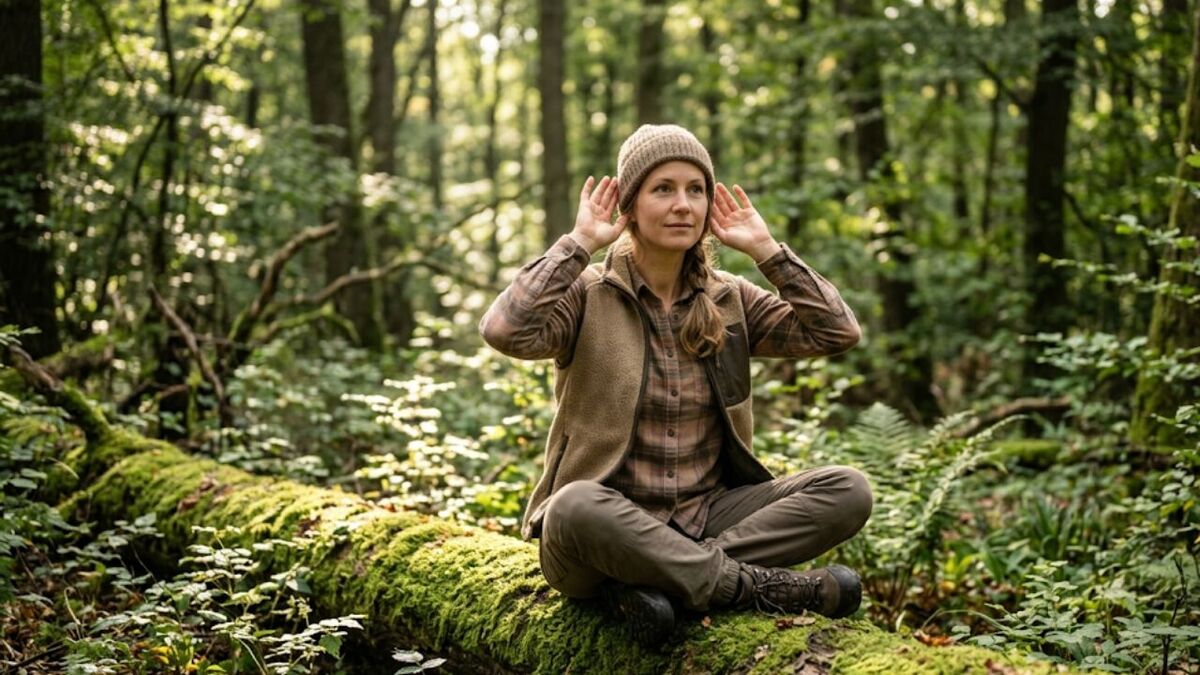
- Deer Ears: Place your hands behind your ears like bowls – you suddenly hear much more and can pinpoint the location of sounds.
- Owl's Gaze: A soft, expansive gaze instead of focused staring – you perceive movements at the edge of your field of vision.
- Both techniques together maximize your perception – you are no longer an observer, but part of the forest.
- These exercises are ancient – copied from animals that can do exactly this naturally.
- Side Effect: You become calmer, more present, and more attentive. The tunnel vision of everyday life dissolves.
I was recently in the forest with one of my boys. No big plan, no goal. Just out.
At some point we stopped. A sound. Somewhere ahead, in the underbrush.
My son whispered: "Dad, do you hear that?"
I nodded.
Then he asked: "Why can deer hear that much better than we can?"
Good question, right?
And you know what – the answer is literally in your hands.
What are Deer Ears and Owl Eyes?
In wilderness education, there are two techniques that are so simple you almost laugh when you first see them.
But then you try them out.
And suddenly you perceive the surrounding forest completely differently.
Deer Ears amplify your hearing – you hear more, clearer, and can locate sounds.
Owl Eyes expand your visual field – you see movements at the edge that would otherwise escape you.
Both together? That is the greatest possible opening of your perception.
Not strained. Relaxed alertness.
Both techniques belong to the core routines of wilderness education – proven exercises that connect you step by step more deeply with nature.
How Deer Ears work
Step-by-step instructions
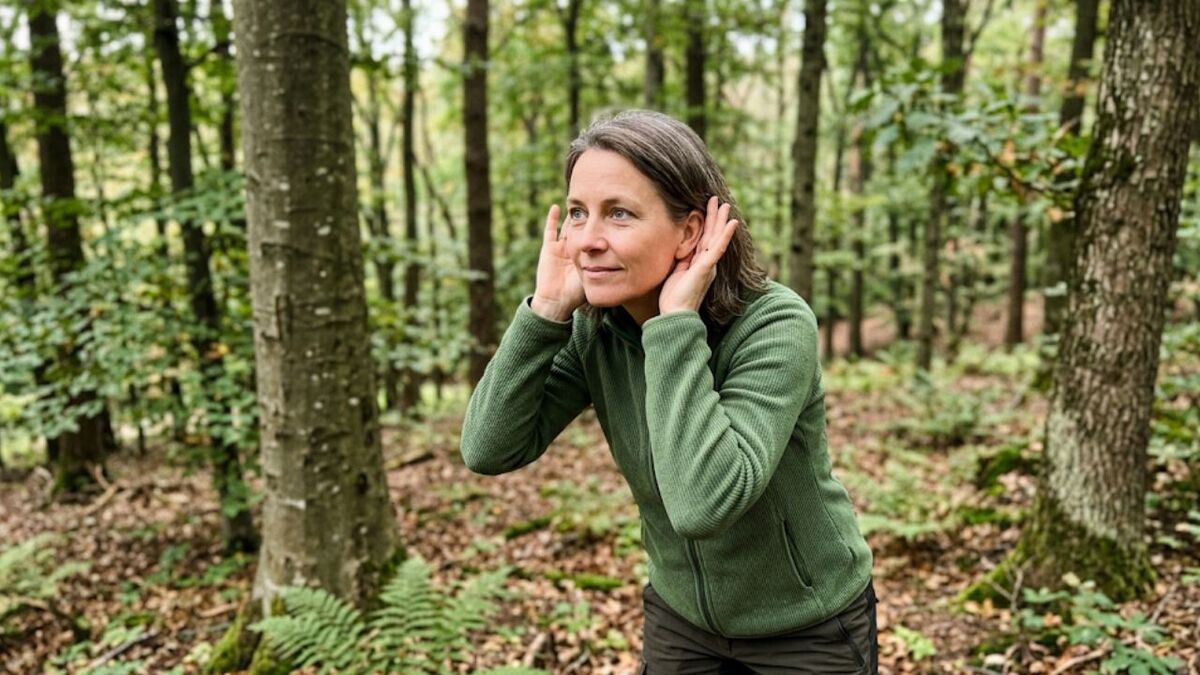
- Take your hands
- Form a small shell with each hand – as if you want to catch water
- Place these shells behind your ears
- Your palms face forward
You have just enlarged your ear flaps.
Now turn slowly in a circle.
What happens?
Suddenly everything is louder. Clearer. You hear which direction the sounds come from. You find a point where the "reception" is best – and if you turn a bit further, it gets quieter again.
Why this works
Deer have this naturally. Their ear flaps are large and moveable – they can turn them individually in any direction like little satellite dishes.
We humans lost this ability somewhere along the way. But with our hands we can imitate it.
This is not a trick. It is physics. Larger sound collectors = more sound = better hearing.
What you can discover with it
I often use Deer Ears when I want to locate birds. You hear a song – but where does it come from?
With Deer Ears you can slowly turn until the sound is loudest. Then you know: There it is.
This technique is perfect by the way, if you want to dive deeper into bird language. Because before you can interpret bird calls, you first have to hear and locate them.
It also works for:
- Rustling in the underbrush
- Water sounds (finding a stream!)
- Approaching humans or animals
- The quiet crack of a branch
How Owl Eyes work
Step-by-step instructions
- Stand and stretch both arms horizontally forward
- Palms facing each other
- Let your gaze rest in the distance – don't look at anything specific
- Open your arms slowly outward, like a curtain opening
- Don't look at your hands
- Perceive from the corners of your eyes how your hands move apart
Eventually you can't see them anymore – or barely.
Then wiggle your fingers briefly.
There they are. At the very edge of your visual field.
That is Owl Eyes. Or: peripheral vision.
What happens in the process
Owls see almost 180 degrees. Not sharply, but they notice every movement at the edge. That is their strength in the forest.
And what is fascinating: When you switch to this soft wide-angle gaze, it doesn't just change what you see.
It also changes how you are.
The strained, focused tunnel vision of everyday life dissolves. You become calmer. More attentive. More present.
You might know this from Silent Walking – there too it's about getting out of your head and into perception.
Why animals respond to Owl Eyes
A participant once wrote to me:
"The animals around me drop their guard stance when I shift from focused vision to peripheral seeing. They notice that they don't need to fear me – because I'm not staring, but rather fitting myself into my living world."
That's true.
Focused gaze acts like a threat. Soft gaze signals: I'm just here.
I've tested this often with carrion crows. When I stare directly at them, they fly away. When I look past them and observe them from the corner of my eye, they stay much calmer.
By the way, this is also helpful with tracking: With Owl Eyes you discover traces at the edge that you would miss with tunnel vision.
Combining Deer Ears and Owl Eyes
Now comes the best part.
Try doing both at once.
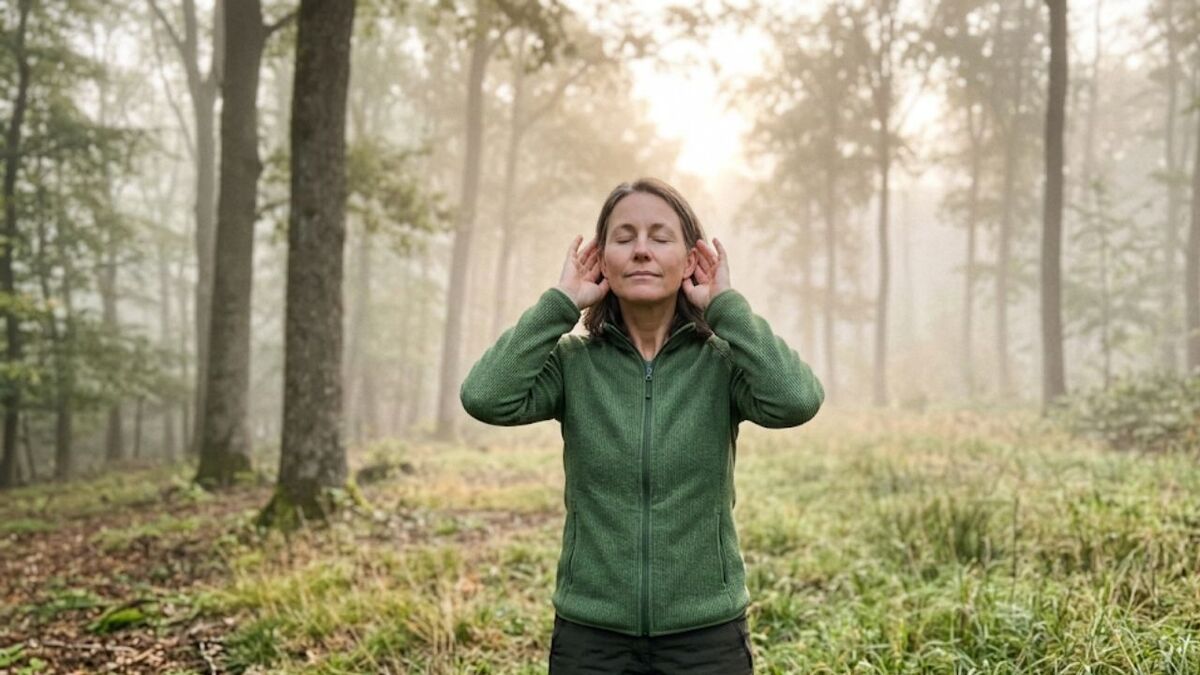
Put on Deer Ears – and hold Owl Eyes at the same time.
It takes a moment. But then something opens up.
You're no longer standing in the forest like someone observing it. You are in the middle of it.
You perceive what you hadn't perceived before:
- Movements at the edge
- Sounds from behind
- The quiet crack of a branch somewhere to the left
A wilderness educator once described it like this: "This is the greatest possible opening of our perception."
I think that captures it well.
Comparison: Deer Ears vs. Owl Eyes
| Deer Ears | Owl Eyes | |
|---|---|---|
| Sense | Hearing | Sight |
| Model | Deer, stag, hare | Owl, birds of prey |
| Technique | Hands as sound amplifiers behind the ears | Soft, wide gaze instead of focus |
| Effect | Sounds louder, direction recognizable | Movements at visual field edge perceivable |
| Side effect | Attention increases | Relaxation, presence |
| Difficulty | Doable immediately | Needs some practice |
Why these techniques are so valuable
We have trained ourselves out of using our senses
In everyday life we might use 10% of our perceptual ability.
We stare at screens. We listen to podcasts over headphones. We walk through the world without really looking.
Our ancestors needed their senses to survive. Whoever didn't hear the crack in the bush might have been eaten. Whoever didn't see the movement at the edge missed the prey.
These abilities are still there. They're just asleep.
More on why connection to nature is so important today – and what we have lost.
An invitation, not a technique
Deer Ears and Owl Eyes are not tricks.
They are an invitation to listen more carefully again. Look more carefully. Feel again what we otherwise miss.
And the beautiful thing: It works immediately. You don't need training, equipment, or preparation.
Just your hands. And the willingness to engage.
Where and when you can practice
Best places:
- Your sit spot in nature (if you have one)
- A quiet forest clearing
- At the forest edge with view to open space
- In the park when it's quiet
Best times:
- In the morning during bird concert
- In the evening at dusk (animals become active)
- After rain (everything sounds different)
Tip: Best practice alone so you don't feel observed. Or with someone you trust.
How to build the exercises into your daily life
You don't need to stand in the forest for hours.
5 minutes are enough.
Next time you're outside:
- Stop briefly
- Put on Deer Ears
- Turn slowly once
- Switch to Owl Eyes
- Just stand there. Listen. Look wide.
That's it.
The forest will show itself to you – if you are ready to hear and see it.
Find more such exercises here: 33 tips for more connection to nature
What you can do this week
Go outside. Once. Five minutes.
Find a place where you won't be disturbed.
Put on Deer Ears. Turn slowly. Hear what you otherwise miss.
Then let your arms drop. Open your gaze. Wide. Soft. Relaxed.
And then just stand there.
You will notice: The forest was there the whole time. You just had to learn to perceive it.
If you want to go deeper, also try Wandering – aimless roaming with open senses. Another core routine that pairs perfectly with Deer Ears and Owl Eyes.


Author of the guide
Martin Gebhardt
Hey, I'm Martin. On my blog, you will learn the basics and numerous details about living in the wild. I think survival, bushcraft and the good life in nature are the keys to happiness. Find me here on Instagram or on YouTube. You can find more about my mission on the About Me page.
Was this guide helpful?
12 people found this guide helpful.
5.00 out of 5 points (12 Ratings)
Comments (0)
This post may contain affiliate links. So if you click on the links and make a purchase, I will receive a small commission at no additional cost to you. Click here, to learn more about it.