

Why adults should play more – and what wilderness education has taught me about it
Free 35 Survival Hacks you'll love!
You will get 35 easy-to-implement survival hacks so that you don't have to stand aimlessly in the forest from tomorrow when things get tough. Take your skills to the next level!
DOWNLOAD HERE FOR FREE👉 The key facts from this guide
- Adults have unlearned playing – societal pressure and "having to be an adult" have taken away our lightness.
- Playing is not childish – it is a biological basic function that reduces stress, promotes creativity, and strengthens relationships.
- In my wilderness pedagogy training I experienced myself how liberating it is to play again – after initial shame.
- Research confirms: Playing activates the reward system, lowers cortisol, and promotes divergent thinking.
- As an educator, I always play along – that makes me approachable and creates a real connection with the children.
- Playing is learnable – even as an adult, you can reclaim this ability. It only takes the first step.
It was a summer afternoon during my wilderness pedagogy training.
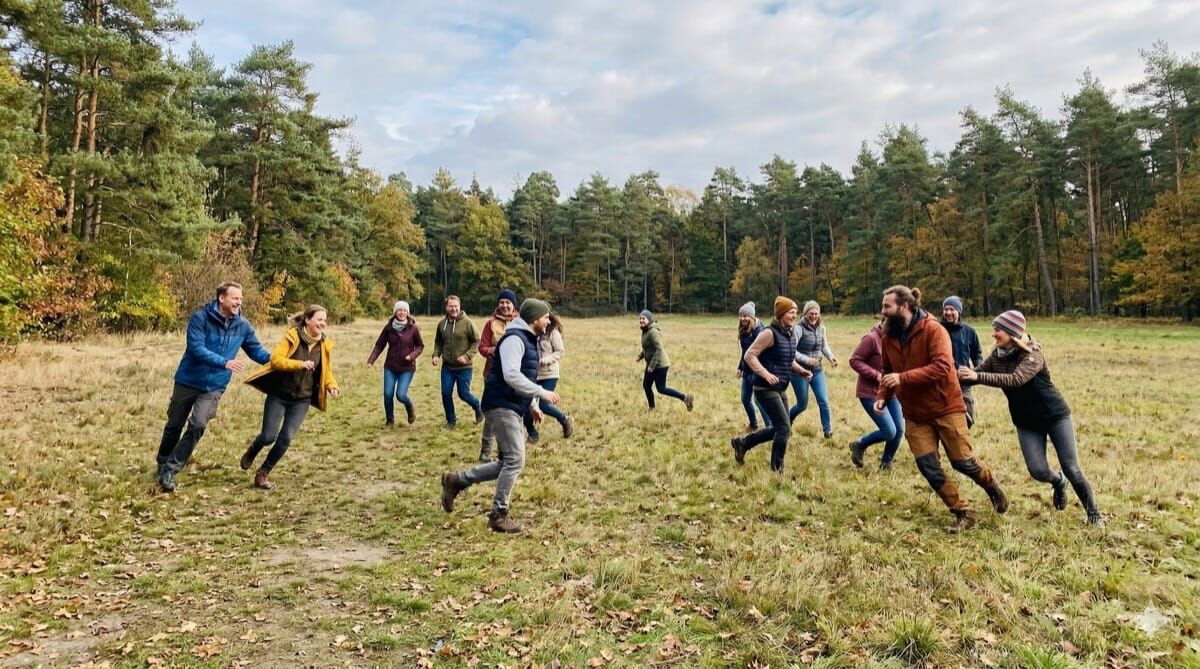
I was standing in a meadow. Around me, about twenty other adults. All between the ages of 25 and 55.
And then the instructor said: "We’re going to play Bear Catches Rabbit now."
Tag.
I was in my mid-30s back then. A software developer. A father. A person who has his life under control.
And now I'm supposed to run around here and catch other people?
My first thought was: Where have I ended up?
My second thought was: This is just silly.
I looked around. Everyone else was also standing there a bit uncertainly. Some smiled sheepishly. No one wanted to be the first to start running.
And then I made a decision.
I said to myself: I'm going down this path now. I'm going to get involved. I'll just join in. What's the worst that could happen? Everyone else is doing it too – and no one is standing around looking foolish except you.
So I started running.
What happened next changed me.
What Playing Actually Means – and Why We Have Forgotten It
Before I continue, let me briefly clarify what I mean by "playing."
I don't mean video games. Not board game nights. Not sports.
I mean real play. Aimless activity. Without a goal, without a result, without a clock in your head.
Playing is:
- Jumping through puddles, even though you're 42
- Throwing sticks, just because
- Playing hide-and-seek with your children – and really trying not to be found
- Climbing a tree because it's there
- Running around and catching other people
Children play for 3 to 5 hours a day. It is their "full-time job." This is how they get to know the world, develop creativity, and process experiences.
And us adults?
Almost zero.
At some point, we stopped playing. Not consciously. It just happened. "Grow up." "That’s childish." "I don’t have time for that."
And so we lost a skill that defines us as human beings.
PS: Here you can find more about why time in nature is so important: Building and Strengthening a Connection with Nature
What Happens When Adults Stop Playing
I was a serious person in my twenties and early thirties.
Not unhappy. But seriously. Focused. Goal-oriented.
I laughed, of course. At jokes among friends. At funny movies.
But it was a different kind of laughter. A controlled laughter. An adult laughter.
What I didn't know: I was missing something fundamental.
When adults stop playing, the following happens:
- Creativity decreases. Studies show that divergent thinking – the ability to find many different solutions to a problem – is significantly higher in people who play.
- Stress has no outlet. We jog, meditate, do yoga. All good. But playing is the most natural stress reliever there is. It is programmed into us.
- Relationships become functional. We "do" things together – housework, trips, appointments. But we no longer play with each other. Yet, playing creates a connection like almost nothing else.
- The inner critic takes over. The less we play, the louder the voice becomes that evaluates everything. The one that says: "That wasn't good enough." "You can do better." "What will the others think?"
Playing is the antidote to perfectionism.
What I Learned in My Wilderness Pedagogy Training
Back to that summer afternoon.
So I started running. And suddenly I was right in the middle of it.
People were shouting, laughing, dodging. I tried to catch someone, was hunted myself, tripped, scrambled back up.
And then something happened.
I stopped thinking.
For the first time in years, I was simply there. No to-do lists in my head. No worries. No evaluations. Just running, laughing, breathing.
After the first module, I thought: Okay, that was fun.
After the second module, I noticed something that shook me.
In all the recent years, I hadn't laughed so authentically and from the heart at any game – or at anything at all.
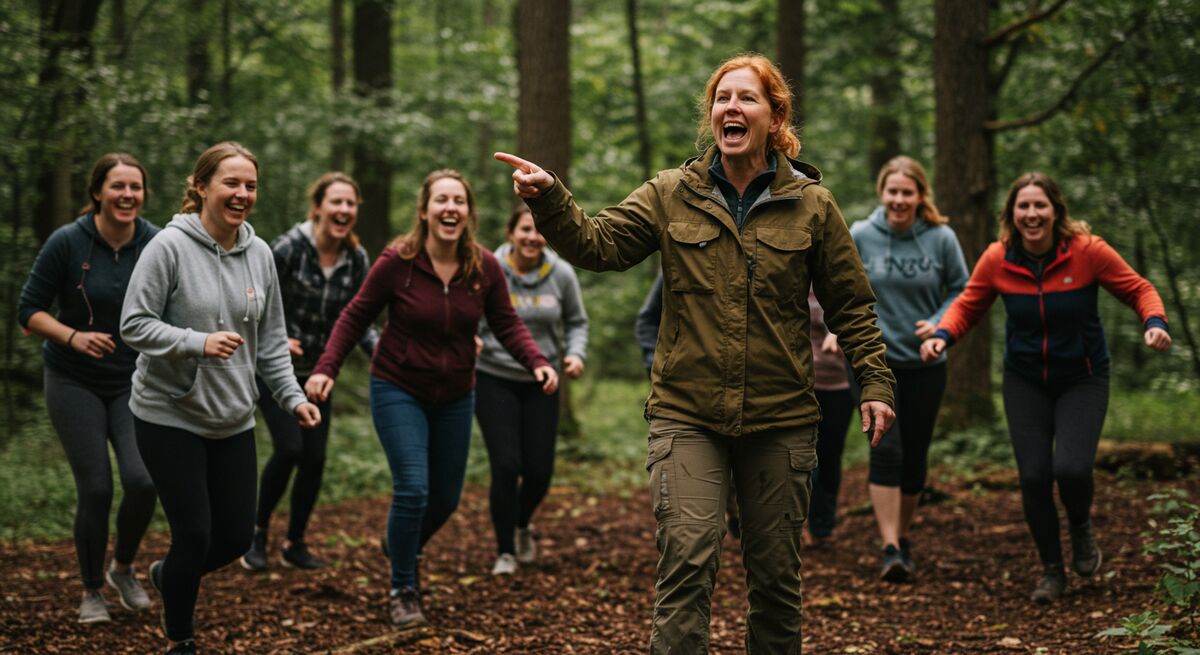
The laughter was different. It wasn't a "ha ha, good joke" laughter. It was a vibrant, joyful laughter. From the gut. Uncontrolled. Contagious.
We played so many games. One game that stands out in my memory: one person had to represent a rabbit being hunted by a bear. And the bear had to scream like a bear.
"ROOOAAARRRR!"
I sometimes couldn't even continue playing. I was cracking up so hard that I had to sit down. Everyone was laughing. It was contagious. The more one person laughed, the more the others laughed.
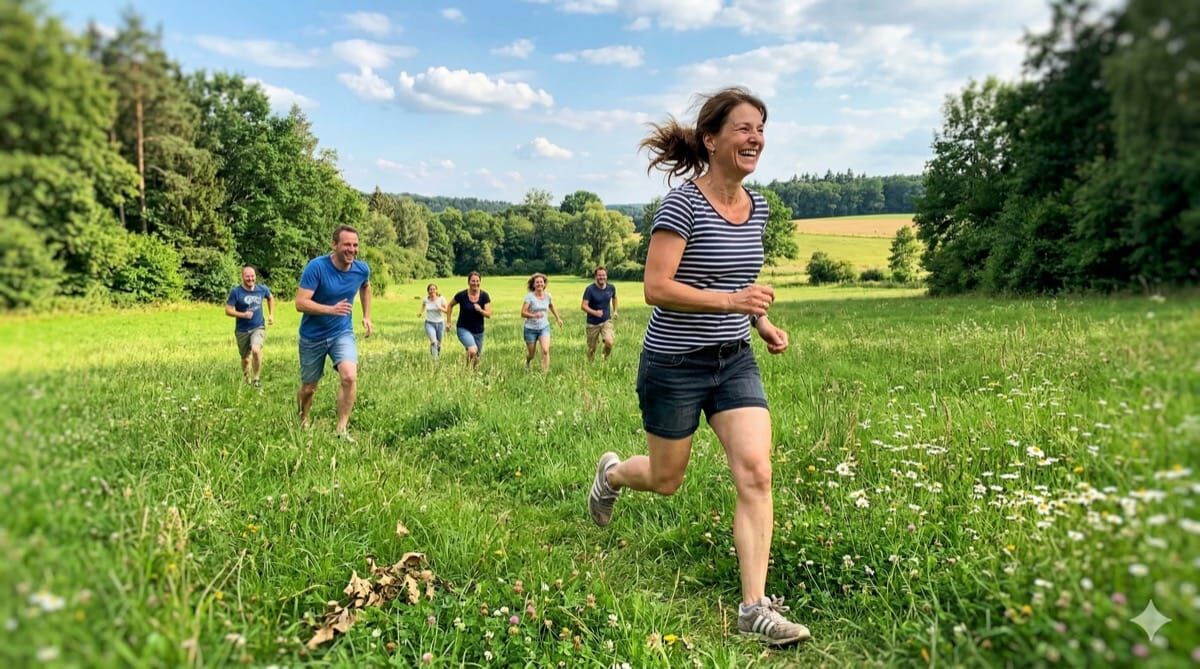
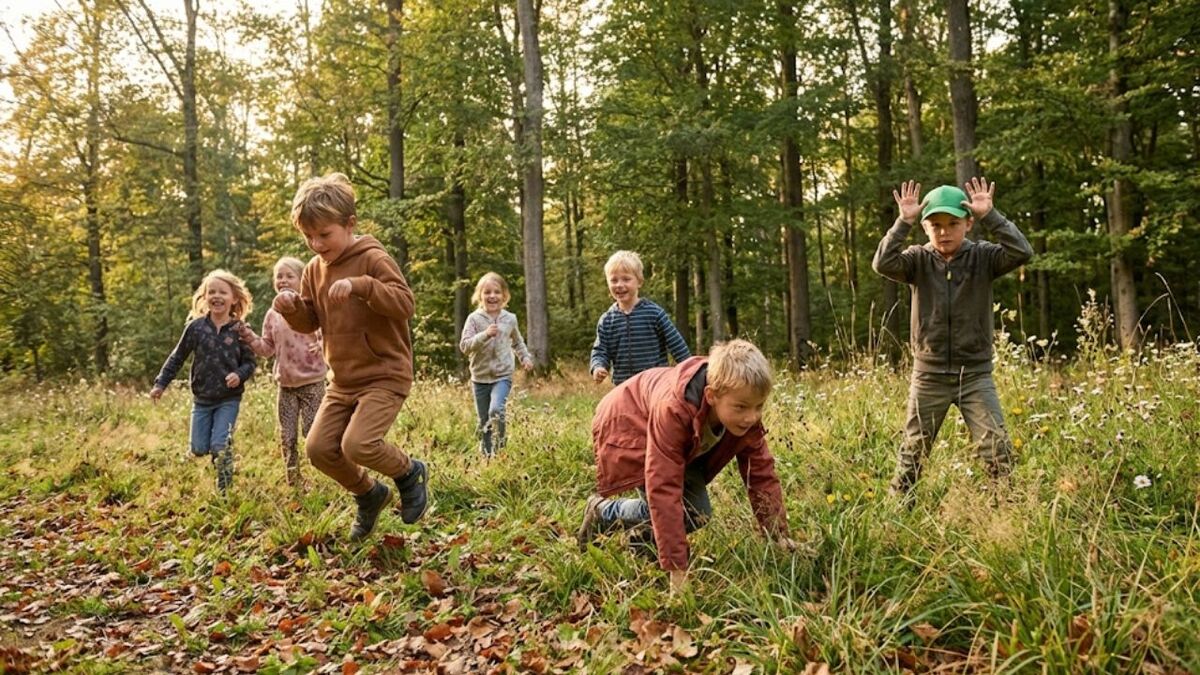
A summer afternoon. Sun. Meadow. Grown adults running around making animal sounds.
My face hurt afterward. My laughing muscles. I didn't even know that could still happen.
That's when I understood: Playing liberates. It reduces stress. It releases tension.
And it is nothing to be ashamed of.
More about the core routines of wilderness pedagogy, which include playing, can be found here: The Core Routines of Wilderness Pedagogy
The Fear of Playing
I understand the fear.
I had it myself.
The fear of looking ridiculous. The fear that others might think: "What is he doing?" The fear of losing control.
Playing means giving up control. You don't know what will happen.
You don't plan.
You don't function.
You simply are.
For us adults, this is difficult. We are trained to have everything under control. Our work, our family, our emotions.
And then we are supposed to run around in a meadow and make animal sounds?
Yes. Exactly that.
The inner adult protests. He says: "This is just silly." "I'm too old for this." "What will they think?"
But you know what? Everyone else is thinking the same thing. Everyone has the same fear. And as soon as one person starts – really starts – they pull the others along.
On that summer afternoon during my training, everyone started joining in. And suddenly the fear was gone. Because everyone was equally silly. Because no one judged. Because we were all in the same boat.
By the way, nature is the perfect place to learn how to play again. The forest doesn't judge. There is no audience. No cameras. Just you and the trees.
What Research Says About Playing
Studies and Facts
Playing is not kid stuff. It is a basic biological function anchored in our brains.
Stuart Brown, founder of the National Institute for Play and a psychiatrist, has shown through decades of research: adults who no longer play are more susceptible to depression, chronic stress, and relationship problems. In his book "Play: How it Shapes the Brain, Opens the Imagination, and Invigorates the Soul" (2009), he describes playing as essential for creativity, problem-solving, and emotional health. → Source: Brown, Stuart L. (2009). Play: How it Shapes the Brain, Opens the Imagination, and Invigorates the Soul. Avery Publishing.
Jaak Panksepp, neuroscientist and pioneer of affective neuroscience, identified playing as one of seven primary emotional systems in the mammalian brain. Playing activates the reward system, releases dopamine, and reduces anxiety. Interesting: The PLAY system is the same in all mammals – even adult animals play throughout their lives. → Source: Panksepp, Jaak (1998). Affective Neuroscience: The Foundations of Human and Animal Emotions. Oxford University Press.
Peter Gray, a psychologist at Boston College, researches the link between play and mental health in children and adults. His work shows: the dramatic decline of free play in recent decades correlates with an increase in anxiety disorders and depression in young people. → Source: Gray, Peter (2011). "The Decline of Play and the Rise of Psychopathology in Children and Adolescents." American Journal of Play, 3(4), 443-463.
In summary: Playing is not a luxury. It is a basic need – and its absence makes us sick.
Why I Always Join the Game as a Wilderness Educator
Today, I lead courses myself. School classes, children's groups, and adults too.
And I have an ironclad rule: I always play along.
Always.
If we play tag, I run with them. If we play hide-and-seek, I hide. If we make animal sounds, I roar like a bear.
Why?
Because I don't want to be the guy standing on the sidelines. Phone in hand. Chatting with another adult. While the children play.
Do you remember that from your school days? The teachers who stood at the edge and "supervised"? Who never joined in?
I want to be the opposite.
When I play along, something magical happens: I become approachable. The children no longer see me as the adult who knows everything better. They see me as a fellow player. As someone at eye level.
And you know what children love most? "Defeating" an adult.
When we play tag, they want to catch me. Not just anyone. Me. The adult.
Suddenly I have three children around me playing as a team against me. They develop strategies. One distracts, the others attack. And usually, they are faster than me – I am nearly 45, after all.
When they finally catch me, the cheering is enormous. They have defeated an adult. That gives them so much.
And me too.
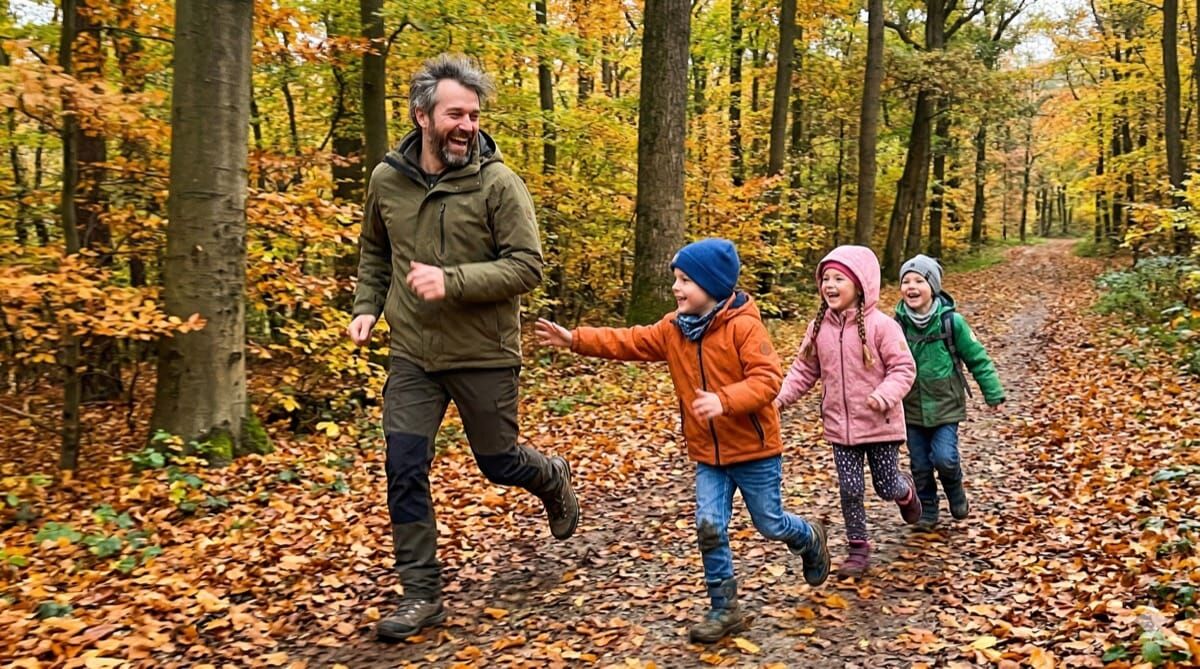
More on how you can play with children in the woods can be found here: 15 Forest Games That Guaranteed Your Children Will Have Fun in the Woods
For Educators: You Must Play Yourself Before You Let Children Play
If you work in an educational profession – educator, teacher, social worker, whatever – then I have an uncomfortable truth for you:
You cannot convey what you do not live.
Children immediately sense whether you are "truly" playing or just moderating. Whether you are part of it or just standing next to it. Whether you are getting involved or just doing your job.
If you don't play yourself, you will never truly be able to encourage play.
My invitation to you: play for 10 minutes every day for a week. Without children. Without an audience. Just you.
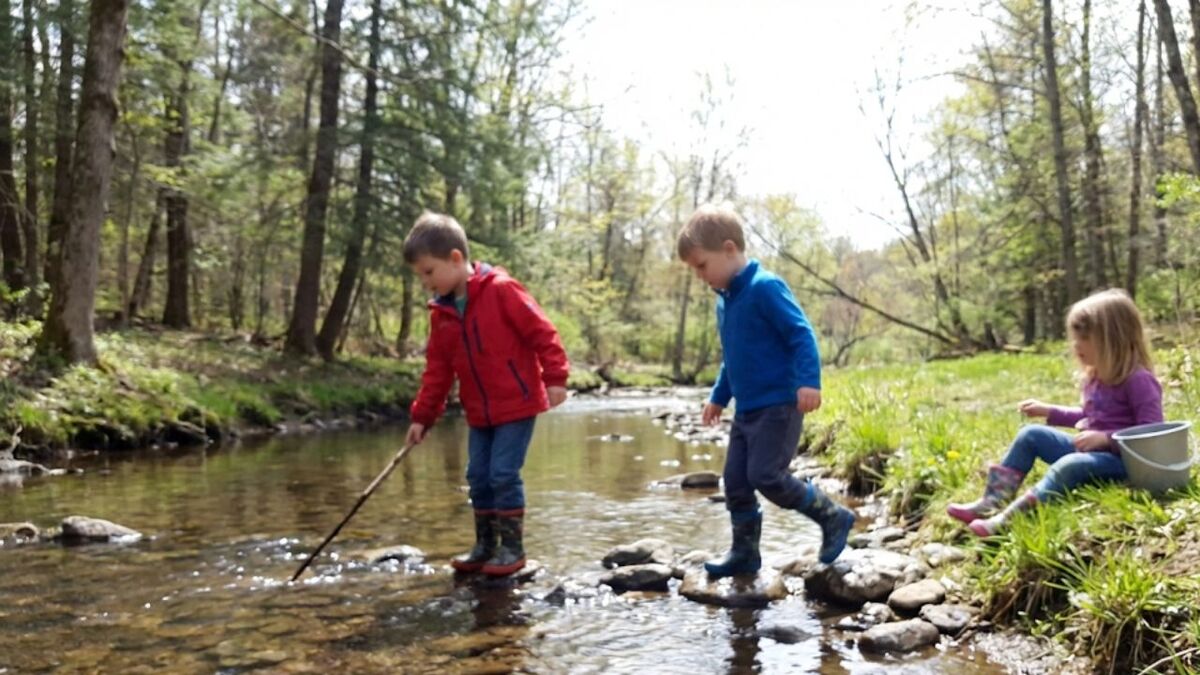
Jump in a puddle. Throw stones into a creek. Climb on something. Just start running.
It will feel weird at first. That's normal. Keep going anyway.
After a week, you will notice: something has happened. You have become lighter. Internally.
And the children you work with will sense that too.
If you sometimes feel burned out, also read: Burnout in Educators – and How Nature Connection Can Help
For Parents: How to Get a Better Connection with Your Children Through Playing
I have two sons of my own.
And I've realized: there is a huge difference between "playing with the children" and "playing yourself."
"Playing with the children" often means: being there. Watching. Moderating. "Yes, great, keep going."
"Playing yourself" means: joining in. Letting go. Getting involved. Forgetting that you are the adult.
Children notice the difference immediately.
If you're just there, you're still the parent. The supervisor. The one who will soon say, "Come on, let's go home."
When you really play along, everything changes. Suddenly you are on their side. In the same team. In the same world.
Three tips:
-
Smartphone away. Not on silent, but away. In your bag. Out of reach.
-
The "Yes, and..." rule. From improv theater. Whatever your child suggests, don't say "No, but..." Say "Yes, and..." and join in.
-
Let yourself be surprised. You don't have to know what happens. You don't have to plan. Just follow along.
What happens when Dad suddenly jumps into the mud?
First silence. Then wide eyes. And then everyone jumps in after him (and they will celebrate you).
Children never forget these moments.
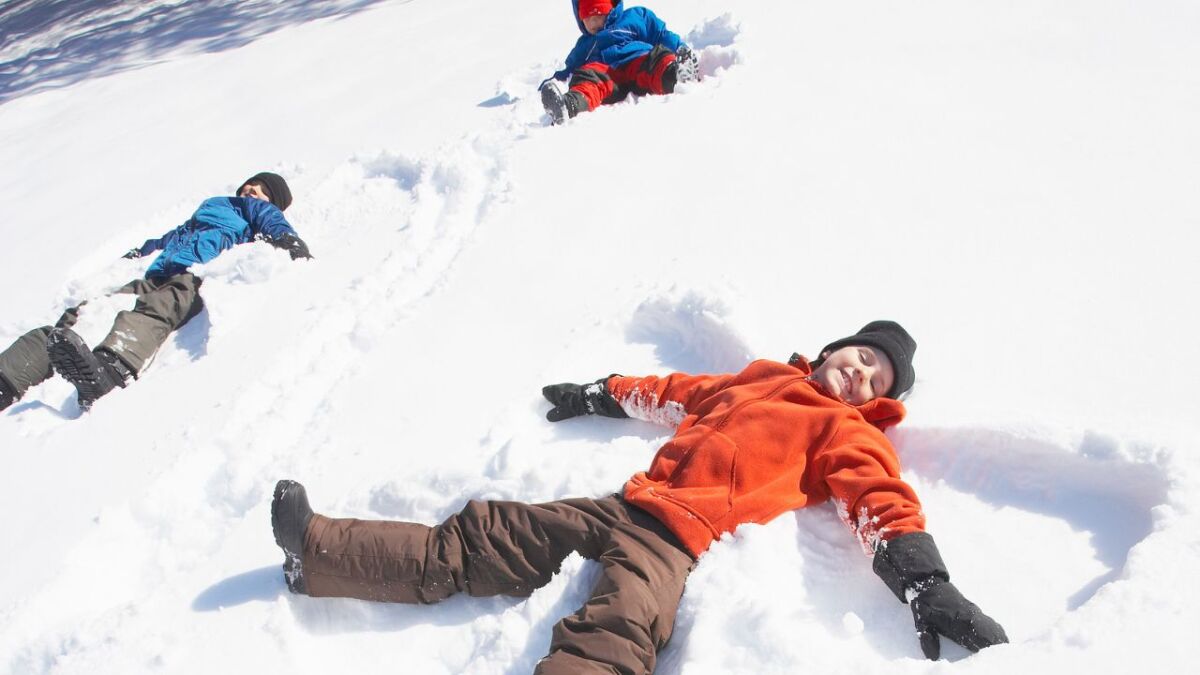
More ideas for family adventures: Micro-Adventures with Children – 100 Ideas for All Seasons
Self-Test: How Playable Are You?
Answer these five questions honestly:
-
When was the last time you did something just because it was fun – without a goal, without a result?
- This week → 2 points
- Last month → 1 point
- No idea → 0 points
-
How do you react when your child asks you to play?
- I join in immediately → 2 points
- I play along a little, but half-heartedly → 1 point
- I usually say "In a minute" or "Later" → 0 points
-
When was the last time you laughed so hard that your stomach hurt?
- Last week → 2 points
- Last month → 1 point
- I can't remember → 0 points
-
How do you feel when you're supposed to do something "silly" (e.g., make animal sounds)?
- I enjoy it → 2 points
- I join in, but I feel uncomfortable → 1 point
- No way → 0 points
-
Do you have a place or an activity where you can completely switch off?
- Yes, and I use it regularly → 2 points
- Yes, but I rarely get around to it → 1 point
- No → 0 points
Evaluation:
- 8–10 points: Your inner child is alive! You have preserved the ability to play.
- 4–7 points: There’s room for improvement. You know what playing is, but you need more of it.
- 0–3 points: Time for a play revolution. This article is exactly for you.
How to Learn to Play Again – Practical Steps
Playing is like a muscle. If you don't use it for a long time, it atrophies. But you can rebuild it.
Start small. You don't have to join an improv theater class immediately. It's enough if you throw a stone into a pond today. Just like that. For no reason.
Play alone first. This sounds strange, but it works. Go into the woods. Alone. And then do something meaningless. Balance on a tree trunk. Throw a stick. Run through leaves.
Then play with children. But really do it. Don't just stand next to them. Join in.
And eventually: play with other adults. That is the ultimate discipline. But if you manage to play with other adults – without alcohol, without a board game as a shield, just because – then you've made it.
My tip: Nature is the best place to play. No audience. No judgment. Just you and the world.
Invitation: Play Once This Week
I would rather not write a conclusion.
Conclusions are for adults who want to control everything.
Instead, I have an invitation for you.
Play once this week. Just once. For ten minutes.
It doesn't have to be anything big. No organized game. No planning.
Maybe it's a pinecone throwing contest in the woods. Maybe it's climbing onto a tree trunk. Maybe it's playing tag with your children – and really running, not just trotting along.
Do something seemingly meaningless. Something without a goal. Something that has no purpose other than the act itself.
And then pay attention to how it feels.
Maybe you'll notice after a while that you're smiling. Maybe you'll notice your shoulders becoming looser. Maybe you won't notice anything at all – except that ten minutes have suddenly passed too quickly.
And maybe – just maybe – you'll notice at some point that you're laughing.
Not the controlled adult laughter.
But the other kind. The real kind. The one that makes your face hurt.
I found it in a summer meadow, during a silly game with grown-up people making animal sounds.
Where will you find it?

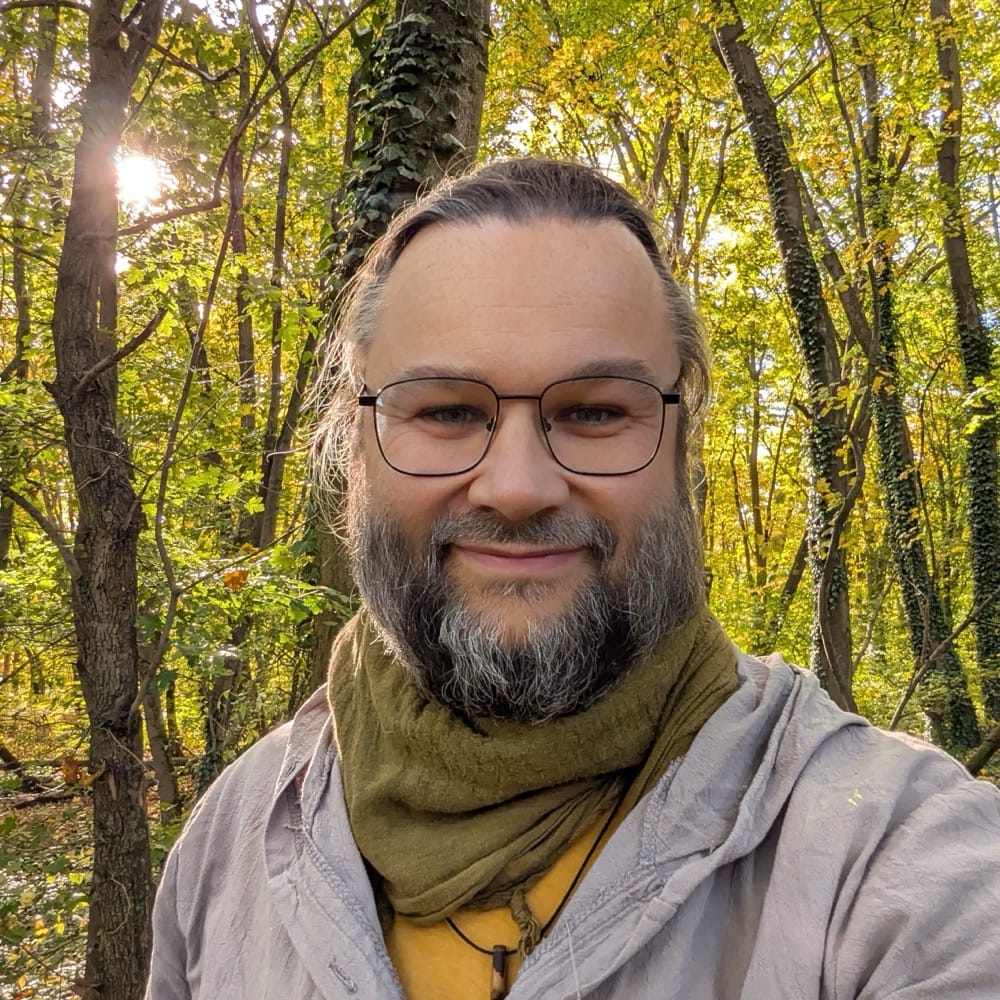
Author of the guide
Martin Gebhardt
Hey, I'm Martin. On my blog, you will learn the basics and numerous details about living in the wild. I think survival, bushcraft and the good life in nature are the keys to happiness. Find me here on Instagram or on YouTube. You can find more about my mission on the About Me page.
Was this guide helpful?
16 people found this guide helpful.
5.00 out of 5 points (16 Ratings)
Comments (0)
This post may contain affiliate links. So if you click on the links and make a purchase, I will receive a small commission at no additional cost to you. Click here, to learn more about it.