

Constantly striving to improve: The curse of self-optimizers (and why I'm caught in it myself)
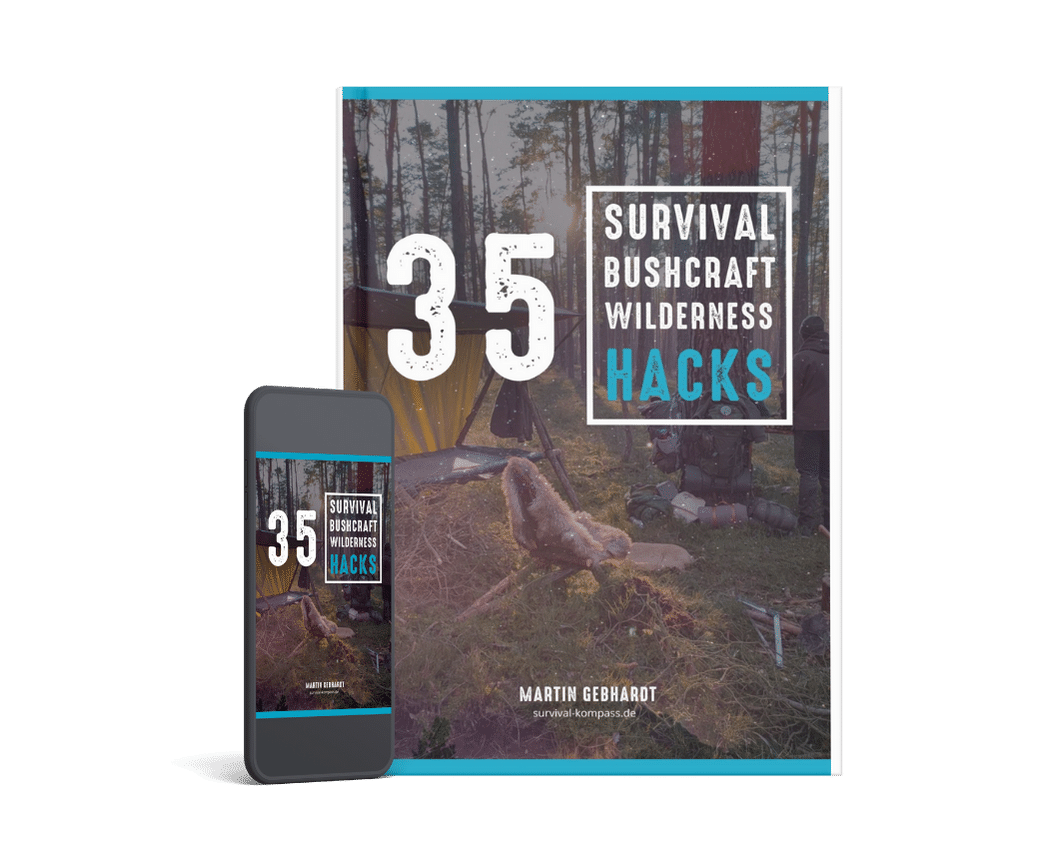
Free 35 Survival Hacks you'll love!
You will get 35 easy-to-implement survival hacks so that you don't have to stand aimlessly in the forest from tomorrow when things get tough. Take your skills to the next level!
DOWNLOAD HERE FOR FREE👉 The key facts from this guide
- The problem is real: Podcast while driving, audiobook while shopping, article during lunch. We stuff ourselves with input – and we cannot stand the silence.
- Idle time feels like failure: When we "do" nothing, we feel like we are wasting time. Even worse: we feel overtaken – by the competition, by colleagues, by others in our industry.
- The roots run deep: Capitalism and productivity logic, FOMO on knowledge, escaping unpleasant thoughts, and the dopamine addiction to the "Aha!" moment.
- Consumption is not integration: Knowledge that isn't processed is dead weight. For true insight, you need silence – and you don't allow yourself to have it.
- Nature shows the counter-model: Trees don't optimize. Winter is not an "unproductive phase." Silence is not empty, but full of life – but you only hear it when you stop the constant noise.
- For coaches: Your clients have the same problem – and you yourself are not immune. The "silence diagnosis" (sitting silently for 10 minutes) is diagnostic gold.
- No magic formula: One car ride per week without a podcast. Lunch without a screen. Small experiments, not a 30-day program. Failure is part of it.
I have a confession to make.
As I write this article, I am sitting at lunch.
Technically. Because actually, I am eating right now. But my laptop is open. My fingers are typing. My head is working.
The food is getting cold. I barely notice.
And the crazy thing is: I am currently writing an article about how we should all put the computer away. About silence. About slowing down. About the addiction to input.
While I am working during lunch.
That is the paradox. And that is exactly why I am writing this.
I catch myself constantly
While driving: Podcast.
While shopping: Audiobook.
While walking: Thoughts about the next project.
While waiting for coffee: Checking Instagram.
While brushing teeth: YouTube Shorts.
And in every free second, my head is rattling: What can I do even better? What have I overlooked? What do I still need to learn?
I know that this isn't healthy.
I know that my brain needs breaks.
I know all that.
And yet, I do it. Again and again.
Maybe you feel the same way?
Why we can't stand the silence
The superficial reason is simple: We want to improve. We don't want to miss anything. We want to "use" the time.
Sounds reasonable, right?
But if I'm honest, there is something else.
Idleness feels like failure.
If I do nothing, learn nothing, consume nothing – then I feel like I'm wasting my time. I could be. I should be. The others are doing it too.
And there is something else: Idleness feels like I am being overtaken.
By the competition. By colleagues. By others in my industry who are more diligent, know more, are further ahead.
While I sit here and "do nothing," those three are listening to podcasts. Reading five books. Expanding their business.
And me? I'm falling behind.
That's how it feels. Even though I know it's nonsense.
Where does this come from?
This is not a character flaw. This is a system.
Capitalism and productivity logic
We have been trained: Time is money.
"Dead time" is wasted time. The commute to work, the wait at the doctor's, the lunch break – all time windows that can be "used."
Even leisure time must be productive. Forest bathing for better performance. Meditation for better focus. Walking for more creative ideas.
Everything becomes a means to an end.
Nothing is allowed to just be.
I've written about this before: When nature is just a lifestyle product. The problem is deeper than we think.
The fear of being left behind
Social media constantly shows us others.
Others who know more. Accomplish more. Are further ahead. Who get up at 5 a.m. and have already worked for three hours before we are even awake.
And then the thought: The others certainly listen to three podcasts a day too. The others read twenty books a year. The others optimize themselves around the clock.
If I stop, I fall behind!
FOMO – Fear of Missing Out – the social anxiety of missing important experiences, trends, or information. Not at parties or events. But on knowledge. On an edge. On relevance.
The market for self-optimization is growing and growing. And it feeds exactly this insecurity. It lives on the fact that we are never enough.
Escaping from oneself
There is another reason. One we don't like to talk about so much.
Silence means: being alone with your own thoughts.
And that can become uncomfortable.
In the silence, questions arise. Questions we don't want to answer. Am I on the right path? Am I satisfied? What am I actually missing?
Input is anesthesia.
As long as the podcast is running, we don't have to listen. Not to ourselves.

The brain and the dopamine kick
New knowledge gives a small dopamine hit.
The "Aha!" feeling when you hear something interesting. The brief moment of realization. The feeling of having become smarter.
We become addicted to it.
But here is the problem: Consumption is not integration.
Knowledge that is not processed is dead weight. It piles up in your head, but it changes nothing. You heard it – but did you understand it? Did it change you?
Probably not. Because for that, you would need silence. And you don't allow yourself that.

What we are doing to ourselves
Knowledge without wisdom
We know a lot.
We have listened to hundreds of podcast hours. "Read" dozens of books (okay, audiobooks). Skimmed thousands of articles.
But do we understand more?
There is a difference between knowledge and insight.
Knowledge means: I have heard it.
Insight means: It has changed me.
For insight, you need time. Space. Silence. You have to let what you've heard settle. Think about it. Connect it with your life.
But there is no time for that. The next podcast is already waiting.
Exhaustion despite standing still
The brain needs idle time to process.
This is scientifically proven. In the so-called "Default Mode Network" – the resting state of the brain – integration happens. Creativity arises. Connections are established.
But you don't reach this state if input is constantly coming in.
That's why you are tired even though you "only" consumed. Even though you didn't exert yourself physically. Your brain had no break. It was in recording mode the whole time.
Alienation from one's own life
You are sitting at lunch. But you are not there.
You go for a walk with the children. But your head is on the next project.
You drive through a beautiful landscape. But you only hear the podcast.
The moments pass by. You don't live them. You are physically present and mentally elsewhere.
And eventually, you ask yourself: Where did the time go?
The paradox of self-optimization
The more we optimize, the more dissatisfied we become.
Because it is never enough.
Every podcast shows you what you don't know yet. Every book shows you what you can't do yet. Every expert shows you how far you are still from the ideal.
The goalpost keeps moving.
You run and run. And never arrive.
That is not a path to improvement. That is a hamster wheel.

What nature teaches us
I work outside a lot. With people who want to go out. Who are looking for something.
And I observe the same thing over and over again: The first few minutes in nature are restless.
People don't know what to do. They pull out their phones. They take photos. They talk.
The silence is uncomfortable.
But if they endure it – if they truly arrive – something happens.
Trees don't listen to podcasts
Nature does not optimize. It is.
A tree doesn't try to be a better tree. It grows. Or it doesn't grow. Depending on the conditions.
Winter is not an "unproductive phase." It is part of the cycle. Necessary. Not to be optimized.
This is so different from our logic. We think: Standing still is a step backward. Nature says: Standing still is part of life.
You can find more about this in my article on circular vs. linear time – a concept that occupies me a lot.
Silence is not empty
In nature, you notice: Silence is full of life.
But you only hear it when you stop the constant noise.
The wind in the leaves. A bird in the distance. Your own breath.
That is not "nothing." That is everything.
I wrote about bird language. To hear it, you have to be silent. Truly silent. Not just physically – also in your head.
Integration needs space
The brain processes during idle time.
Insights don't come during the podcast. They come after. When you do nothing. When you go for a walk without headphones. When you sit by the fire and stare into nothingness.
The beauty is: Nature offers this space.
But only if you use it. If you don't turn on the podcast there too.
In wilderness pedagogy, there is the concept of the Sit Spot. A place you go to again and again. Where you just sit. Without an agenda. Without input. Just you and nature.
That sounds simple. But it is incredibly difficult.

For Coaches: Why this is relevant to your work
If you work with people – as a coach, mentor, trainer, therapist, educator – then you encounter this topic constantly.
Your clients have the same problem
They come to you exhausted.
But not because they have done so much. But because they never switch off.
They know everything about stress management. They have read books about it, listened to podcasts, tried apps. And they are still stressed.
They have seventeen morning routines. And still feel empty.
The problem is not a lack of knowledge. The problem is a lack of silence.
You yourself are not immune
I say this from my own experience.
Coaches are often the worst self-optimizers. We read the books about work-life balance – and work on the weekend while doing so. We preach mindfulness – and check the time while meditating.
If you are honest: How much silence do you grant yourself?
I wrote about burnout prevention for educators. The forest as a colleague. But that only works if you are actually there. Not with your head somewhere else.
Concrete interventions
What I use in my work:
The Silence Diagnosis: Have your client sit in silence for ten minutes. Without a phone. Without a task. Just sit. Observe what happens. The restlessness. The urge to do something. That is diagnostic gold.
Walk & Talk without an agenda: Not "We are now discussing topic X," but just walking. Seeing what comes up. This is completely new for many clients – and liberating. More on this in my article about Walk & Call Coaching.
The Question: "What would you do if you were allowed to stop improving yourself?"
This question hits home. Most clients cannot answer it. They don't know who they would be without the compulsion to optimize.

My honest attempt
I am not writing this article as someone who has overcome this challenge.
I am writing as someone who is right in the middle of it.
As someone who works during lunch and at the same time writes about how one shouldn't do that.
That is absurd. I know.
But maybe that's the point.
We are all in it. The question is not whether we are perfect. The question is whether we see it. Whether we try. Whether we keep trying, even if we fail.
What I'm trying
One car ride a week without a podcast. Just driving. Looking out the window. Thinking. Or not thinking.
Lunch without a screen. At least sometimes. Truly tasting the food. Noticing every bite. Letting the break be a break.
Noticing the thought "What can I do better?". And then asking: "Do I need to know that now? Or am I allowed to just be right now?"
No 30-day program. No "5 steps to silence." Just small attempts.
I fail often.
I try again.
That is all I can do.
Nature as an ally
What almost always helps me: going outside.
Not with an agenda. Not to learn something. Just going out.
In the core routines of wilderness pedagogy, there is the concept of "Wandering" – aimless roaming. Going where it pulls you. Without a plan.
That is the opposite of optimization. And that is exactly why it is so healing.
If you want to learn more about how true nature connection arises – not the Instagram version – then read the linked articles. It's not about using nature. It's about being in it.
An invitation to silence
I'm not saying: Delete all podcasts.
I'm not saying: Throw away your phone.
I'm not saying: You're doing everything wrong.
I'm just saying: When was the last time you heard nothing, read nothing, learned nothing – and endured it?
Not because silence is "productive." Not because you'll be more creative or have better ideas afterward.
Just because you are worth it.
Because your brain deserves a break.
Because the moments of your life deserve to be lived.
Maybe today. On the way to the car: no headphones. During lunch: no screen. During the walk: just walking.

Five minutes. No more.
See what happens.
Maybe it will be uncomfortable. Probably, even. The restlessness will come. The urge to do something.
Endure it.
There, on the other side of the restlessness – there is something.
I don't know exactly what yet. I am still on the way myself.
But I believe it is important.

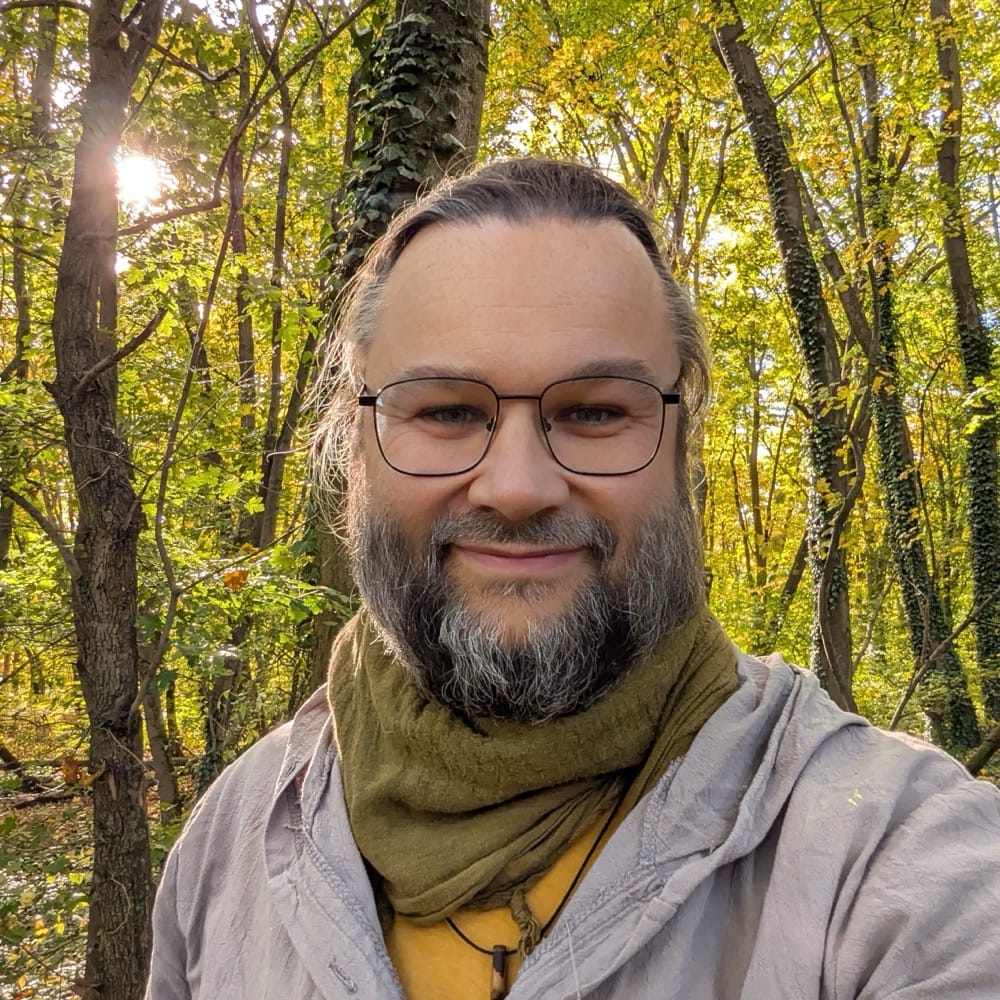
Author of the guide
Martin Gebhardt
Hey, I'm Martin. On my blog, you will learn the basics and numerous details about living in the wild. I think survival, bushcraft and the good life in nature are the keys to happiness. Find me here on Instagram or on YouTube. You can find more about my mission on the About Me page.
Was this guide helpful?
22 people found this guide helpful.
5.00 out of 5 points (22 Ratings)
Comments (1)
This post may contain affiliate links. So if you click on the links and make a purchase, I will receive a small commission at no additional cost to you. Click here, to learn more about it.