


5 tree buds you can instantly recognize in winter
Free 35 Survival Hacks you'll love!
You will get 35 easy-to-implement survival hacks so that you don't have to stand aimlessly in the forest from tomorrow when things get tough. Take your skills to the next level!
DOWNLOAD HERE FOR FREE👉 The key facts from this guide
- Oak: Several small, egg-shaped buds cluster at the shoot tip like a bunch of grapes. Brown, smooth, roundish. Unique among native forest trees.
- Beech: Long, pointed, and protruding like a small spear. The brown scales overlap tightly. Unmistakably sharp.
- Linden: Roundish, often asymmetrical, with only 2-3 visible scales. Mostly reddish to dark red in color. Leans slightly to the side.
- Norway Maple: Buds sit opposite each other – always two at the same height, left and right on the twig. Thick, egg-shaped, often dark red.
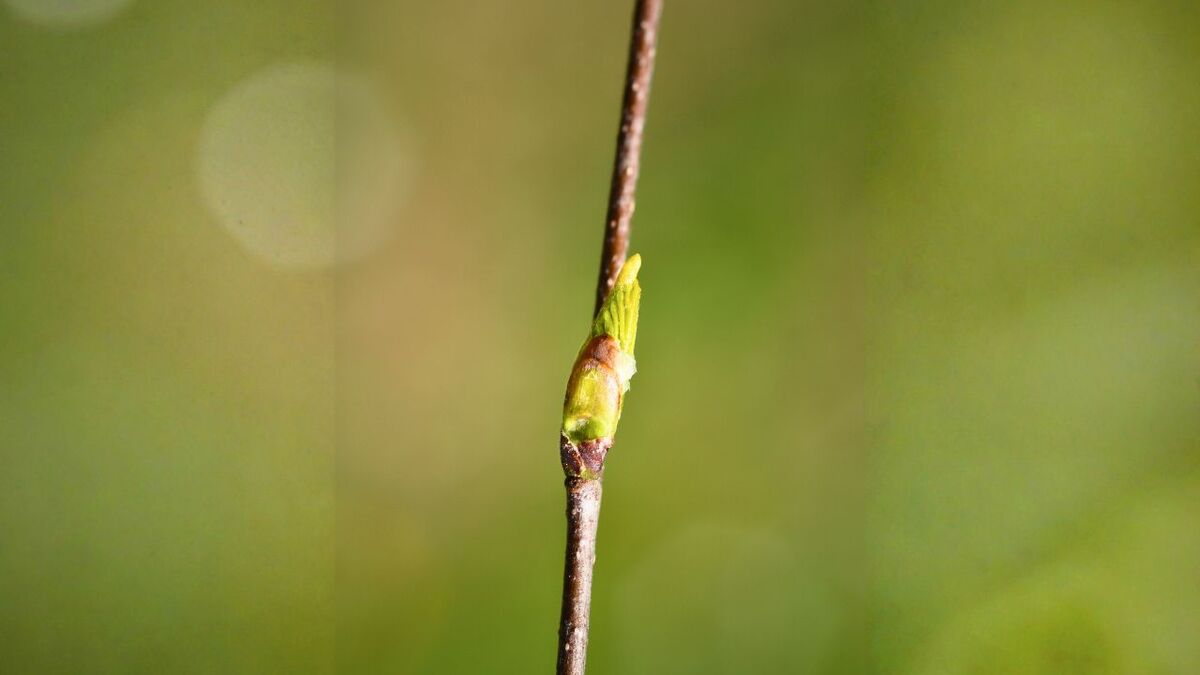
- Birch: Small, pointed buds that lie close to the twig. Greenish-brown and slightly sticky. The white bark additionally helps with identification.
- Learning strategy: Do not learn all at once. Start with one tree, look at it on every walk for three days – then add the next one.
No leaves?
No problem.
I still remember walking through the forest for the first time in winter and trying to identify trees. In summer? No issue. Look at leaf shape, done. But in winter you stand there in front of bare branches and think: Could be anything.
It doesn't have to stay that way.
Because trees have identifying features in winter too. Even quite distinct ones. You just have to know where to look.
The answer: buds and bark. Today we will look at the buds.
Every tree has its own bud shape. Some pointed, some round. Some single, some in groups. Some sticky, some smooth. If you know five of them, you will recognize more trees in winter than most people do in summer.
Here are the five I would start with.
The Oak: Many buds, a meeting point
You recognize the oak by the fact that several small buds cluster together at the shoot tip. Like a small bunch of grapes. Or like a group of friends meeting at one point.
The individual buds are egg-shaped, brown, and smooth. Relatively small. But the decisive factor is this accumulation at the end of the twig.
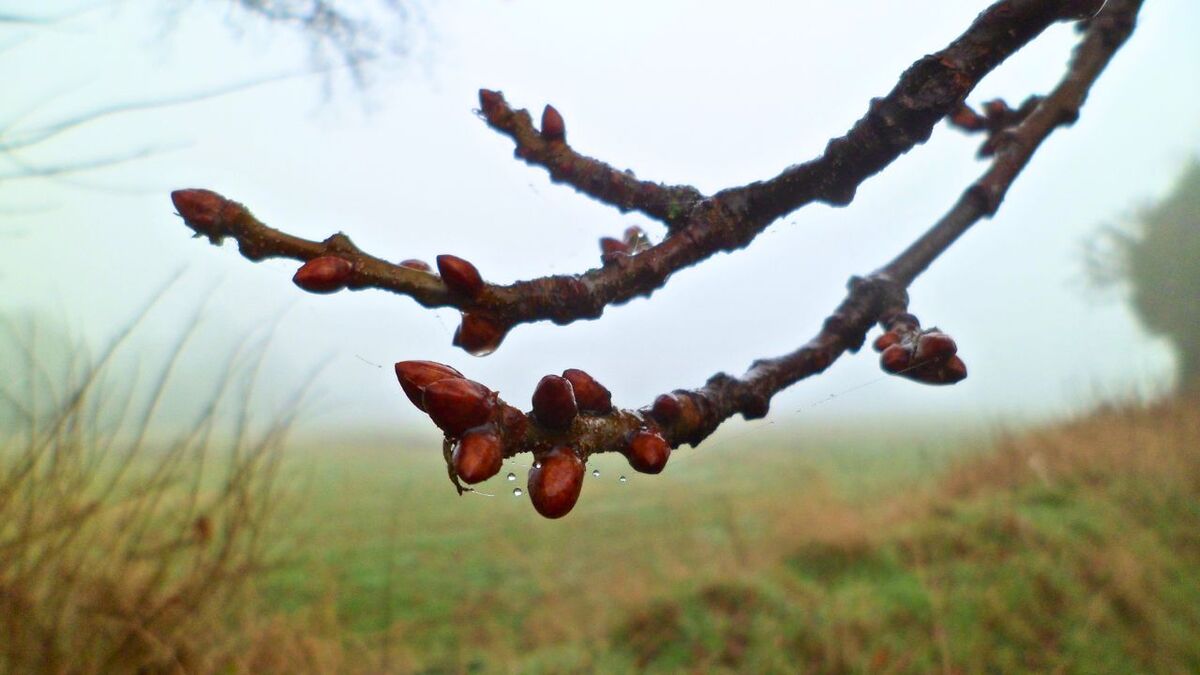
No other native forest tree does this.
So if you see a bare tree and several small buds are clustered at the end of the twig – you are standing in front of an oak. If you want to know what you can do with oak wood: Here you will find 14 wood types and their uses in the wilderness.
Mnemonic: Many buds, a meeting point – that is the oak.
The Beech: Pointed like a dagger
The beech bud is unmistakable. Long, pointed, and protruding from the twig.
Imagine a small spear pointing sideways away from the branch. The bud is slender, the tip sharp. The scales are brown and lie tightly over one another like a small armor.
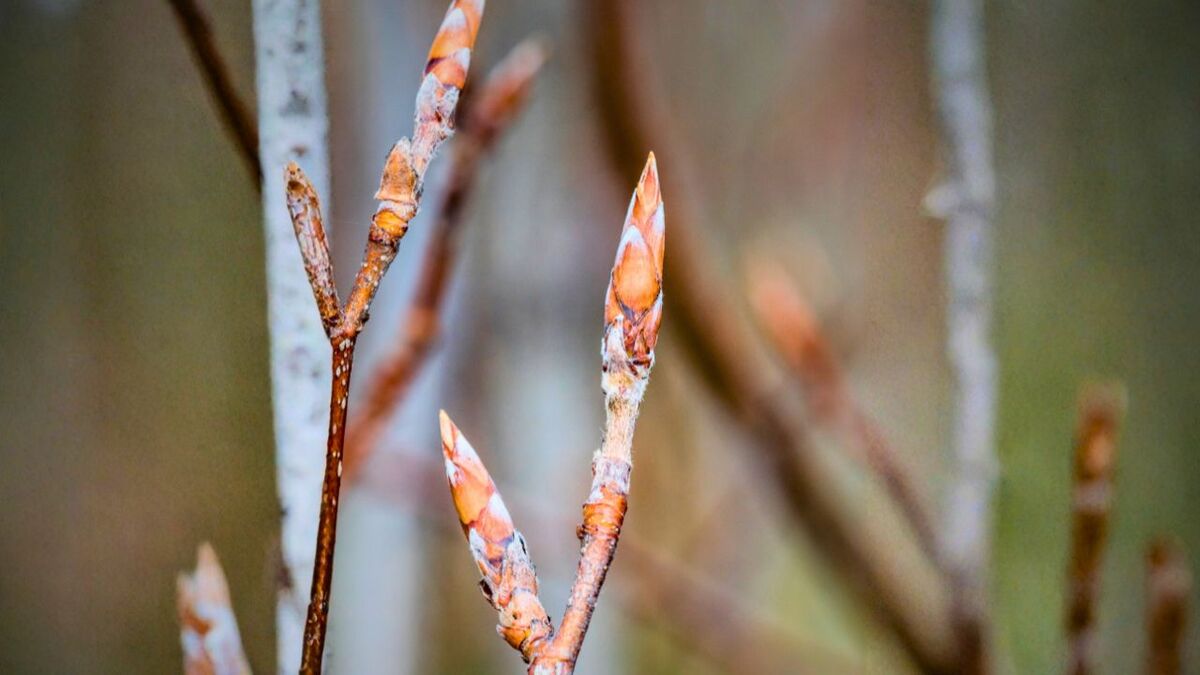
Compared to other buds, the beech seems almost aggressive. While other buds look round and cozy, the beech bud says: Something is growing here soon. And emphatically so.
The beech belongs to the 6 trees every survivalist should know – not only because of the buds, but because it can help you in the forest in many ways.
Mnemonic: Pointed like a dagger – that is the beech.
The Linden: Red, round, and a bit crooked
The linden bud is different from the others. Roundish instead of pointed. And often a bit asymmetrical – as if it were leaning slightly to the side.
What makes it special: The color. Most linden buds are reddish to dark red. That stands out amidst all the brown and gray of winter.
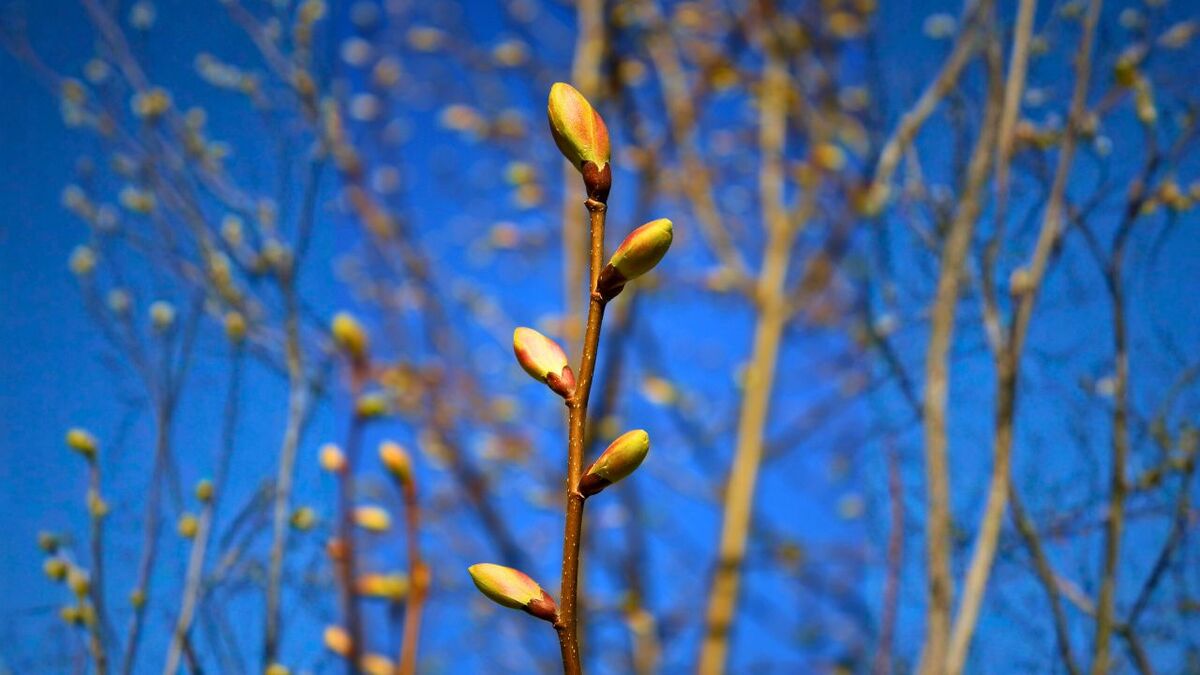
Furthermore, the linden has only two to three visible bud scales. That is few. On the beech, for example, you see significantly more scales.
So: If you see a roundish, reddish bud sitting a bit crookedly on the twig – that is probably a linden. The linden is, by the way, also one of the trees you can tap for syrup.
Mnemonic: Red, round, and a bit crooked – that is the linden.
The Norway Maple: Pairs on the twig
With the Norway maple, you have to look not only at the individual bud, but at the arrangement.
The buds sit opposite each other. That means: Always two at the same height, left and right on the twig. Like two ears.
The buds themselves are thick and egg-shaped. Often colored dark red, sometimes also greenish-brown. But the decisive factor is this pairwise arrangement.
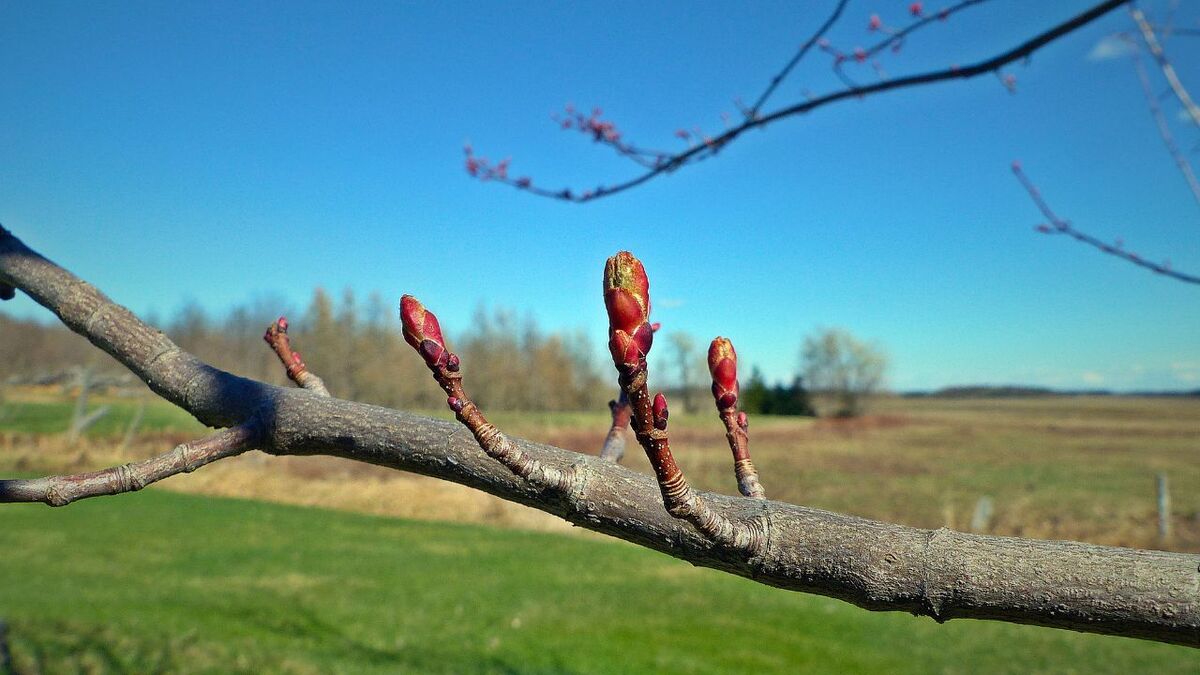
This also helps you distinguish the Norway maple from the sycamore maple and field maple – although all three have opposite buds, the buds themselves look different. You can find more about this in my article How to distinguish Norway, Sycamore, and Field Maple.
Mnemonic: Pairs on the twig – that is the Norway maple.
The Birch: Small, sticky, and white trunk
With the birch, you actually have an easy game. The white bark usually betrays it from afar.
But if you want to look at the buds anyway: They are small and pointed. They lie close to the twig, almost shyly. The color is greenish-brown.
And if you touch them – carefully – you notice that they are slightly sticky.
The birch is one of the most useful trees for bushcraft and survival. The bark burns even when wet, can be processed into containers, and has antibacterial properties. More about this in my detailed article on Birch bark as a survival miracle.
Mnemonic: Small, sticky, and white trunk – that is the birch.
How you learn this
You don't have to learn all five at once.
Start with one.
Look for an oak on every walk this week. Or a beech. Look at the buds. Touch them. Memorize what they look like.
After three days, you will recognize them in passing.
Then you add the next one.
That is how you slowly build a repertoire. And at some point you walk through the forest in February and know what is standing in front of you with every second tree. Without a single leaf.
That is nature connectedness on a very practical level. You learn to look. You learn to see differences. And suddenly the winter forest comes alive.

Bonus: Conifers in winter
Deciduous buds are one thing. But what about conifers?
Of course, they have their needles in winter too. And you can learn to distinguish them as well – by needle shape, arrangement, smell.
I have a separate article on this: Identify 5 common conifers by their needles.
If you combine both – buds on deciduous trees, needles on conifers – you are just as oriented in winter as in summer.
For the next forest day with children
If you are out with children: Identifying buds is a perfect winter activity.
The children can touch the buds, compare them, perhaps even draw them. And in doing so, they learn to look closely – a skill that goes far beyond tree identification.
You can find more ideas for outdoor activities with children in my article Bushcraft with Children. And if you also look out for animal tracks in the snow in winter, the walk becomes a tour of discovery.


Author of the guide
Martin Gebhardt
Hey, I'm Martin. On my blog, you will learn the basics and numerous details about living in the wild. I think survival, bushcraft and the good life in nature are the keys to happiness. Find me here on Instagram or on YouTube. You can find more about my mission on the About Me page.
Was this guide helpful?
11 people found this guide helpful.
5.00 out of 5 points (11 Ratings)
Comments (0)
This post may contain affiliate links. So if you click on the links and make a purchase, I will receive a small commission at no additional cost to you. Click here, to learn more about it.