

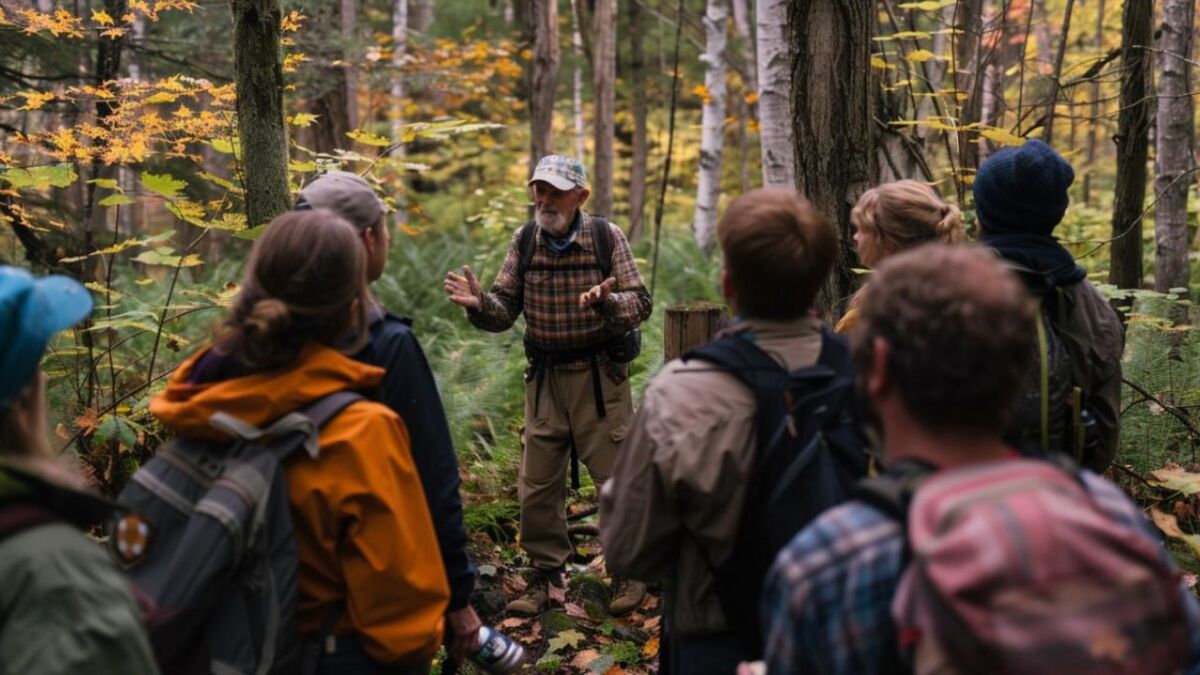
The core routines of wilderness education: Your path to a deep connection with nature
Free 35 Survival Hacks you'll love!
You will get 35 easy-to-implement survival hacks so that you don't have to stand aimlessly in the forest from tomorrow when things get tough. Take your skills to the next level!
DOWNLOAD HERE FOR FREE👉 The key facts from this guide
- The core routines of wilderness education are ancient practices that help you sharpen your senses and connect deeply with nature – completely without dry theory.
- With your own sit spot in nature you find a familiar place where you come to rest, experience silence, and refine your perception.
- Routines like the "Story of the Day," training your senses (e.g., "Owl Eyes") and tracking make you an attentive explorer of your surroundings.
- Through animal observation, mimicry (animal forms), aimless wandering ("Wandering") and nature journaling you develop a playful, creative relationship with nature.
- The routines foster a deep understanding of interconnections in the wilderness (e.g., bird language, survival basics) and strengthen intuition and self-confidence in the process.
- You don't need a fixed plan – simply choose the routines that call to you and take step by step your very own path to more connection with nature.
Do you sometimes feel lost in the noise of the modern world? I know that feeling all too well. Like a stranger in nature, when it should feel like home?
There is an old path back, a way to truly see, hear, and feel the world again. A path that changed my life.
The core routines of wilderness education are this path. They are not dry rules, but powerful, ancient learning habits that awaken your senses and connect you deeply with nature.
Imagine you understand the subtle messages of birds, read tracks in the forest like an open book, and feel as safe and secure outdoors as in your own living room. This is not a distant dream, but the result of these practices!
Are you ready to discover these profound tools and take your connection to nature to a completely new level? Then dive now into the world of core routines!
These routines are not a modern invention
These routines reflect how humans have learned for thousands of years – through experience, curiosity, and direct interaction with their environment. I feel this every time I'm outside and simply let myself be guided.
A stark contrast to our often theory-heavy Western education system, which works very differently from the learning system of our ancestors.
It is often said that pioneers like Jon Young developed and structured this as part of the "8 Shields Mentoring Model" (often also referred to as Coyote Teaching or Mentoring).
I think this is not a new invention, but rather a rediscovery by many different people, because people in the past actually lived these routines anyway – in contrast to trends like forest bathing, detox, and mindfulness as lifestyle products. It is knowledge that slumbers in all of us.
Either way: These routines are incredibly important for us modern people, often trapped in the big-city jungle, because they provide a framework to revive our innate abilities for nature perception.
They invite you to become an explorer yourself, guided by your enthusiasm and the countless small wonders that nature has in store for you.
And believe me, there are wonders around every corner if you just look!
The 13 Core Routines of Wilderness Education: Your Toolkit for Connection to Nature
These routines are like keys that open doors in your consciousness. They sometimes build on each other, but can also be practiced individually.
Find out which topics call to you the most; where your heart leaps. Because that's what it's all about: the joy of discovery.
1. The Sit Spot: Your Anchor in the Wilderness
The idea is deceptively simple and for me personally one of the most transformative routines ever. It is the foundation of many wilderness practices.
- Find YOUR place: Find a place in nature that you can return to again and again. A place that calls to you. Mine is an old fallen pine – maybe you'll find such a magical place too?
- Be STILL: Sit down and listen. Observe. Perceive without judgment or analysis. This is often harder than you think at first!
- Sharpen your senses: What do you hear, see, smell, feel? With each visit your perception becomes finer. You'll notice things that never caught your attention before.
- Feel at home: Your sit spot becomes a trusted friend. Here you meet animals, the weather, your curiosity, but also your fears. Here you grow.
The sit spot is essential. Your personal gateway to nature. Learn more about what the sit spot in wilderness education really is.
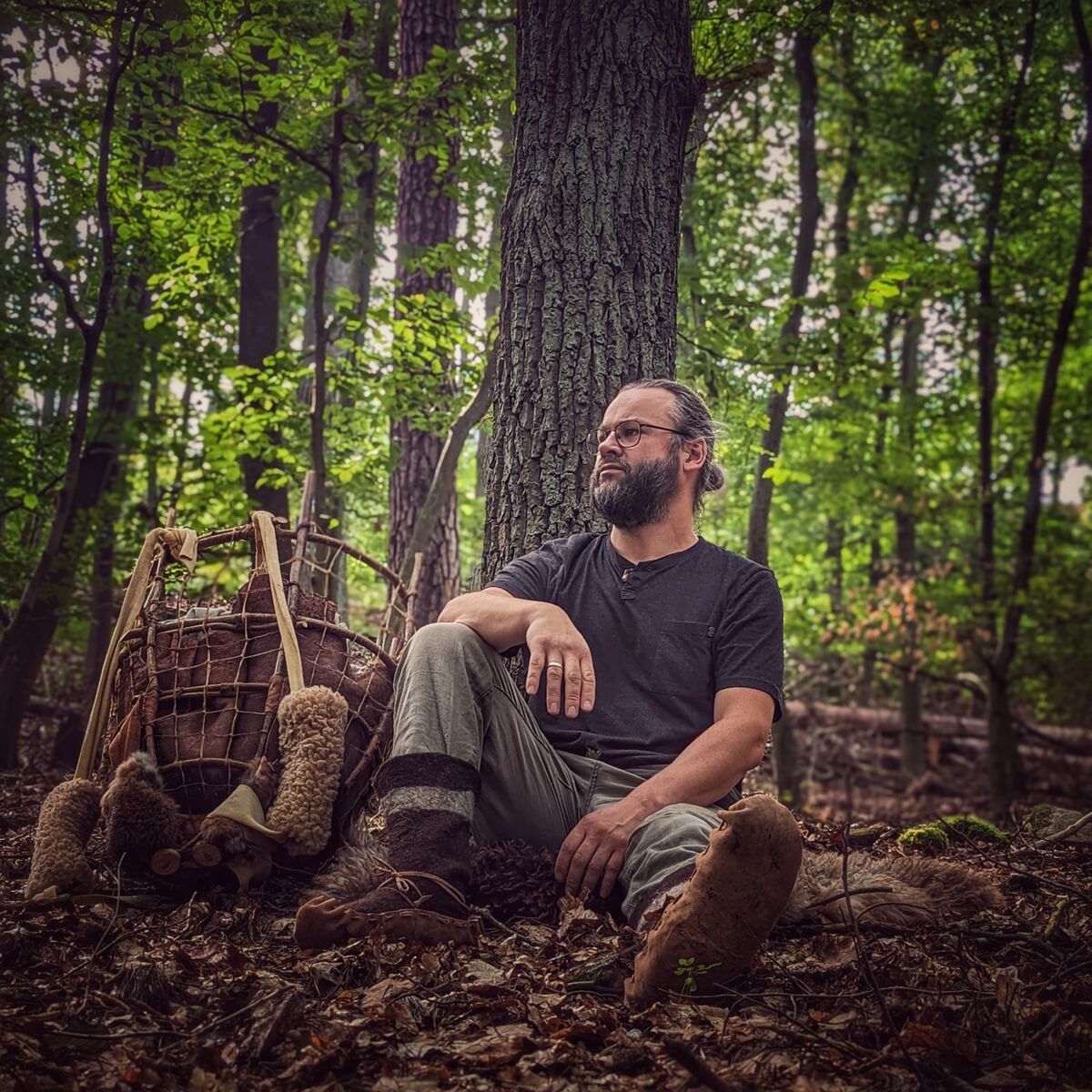
🔥 The Magic of Silence – Why Your Sit Spot Works?
In our loud, fast world, true silence is rare. At the sit spot it's about exactly that: becoming consciously still. Not just outwardly, but also inwardly.
Why? Because only in silence do the fine voices of nature become audible. Your brain switches from constant "doing" mode to "being" mode. You suddenly notice the rustling in the leaves, the shadow of a cloud, the wind on your skin.
This silence is not passive waiting, but active listening – the first step to truly perceiving the patterns and rhythms of your surroundings.
My tip to start: Begin with just 5 minutes of daily silence at your spot! And put your smartphone away – essential!
2. Story of the Day: Weaving Life
Move through the day with open eyes and awake senses. Pay attention to the little things: the feather at the wayside and other animal tracks, the smell of rain, the buzzing of insects.
- Improve local knowledge and perception: Who lives here? What is different today than yesterday? What story does this place tell?
- Tell your story: In the evening share your observations. What moved, surprised, made you curious? Telling anchors the experience and creates connection.
This routine is also fundamental. It makes you a conscious part of your surroundings.
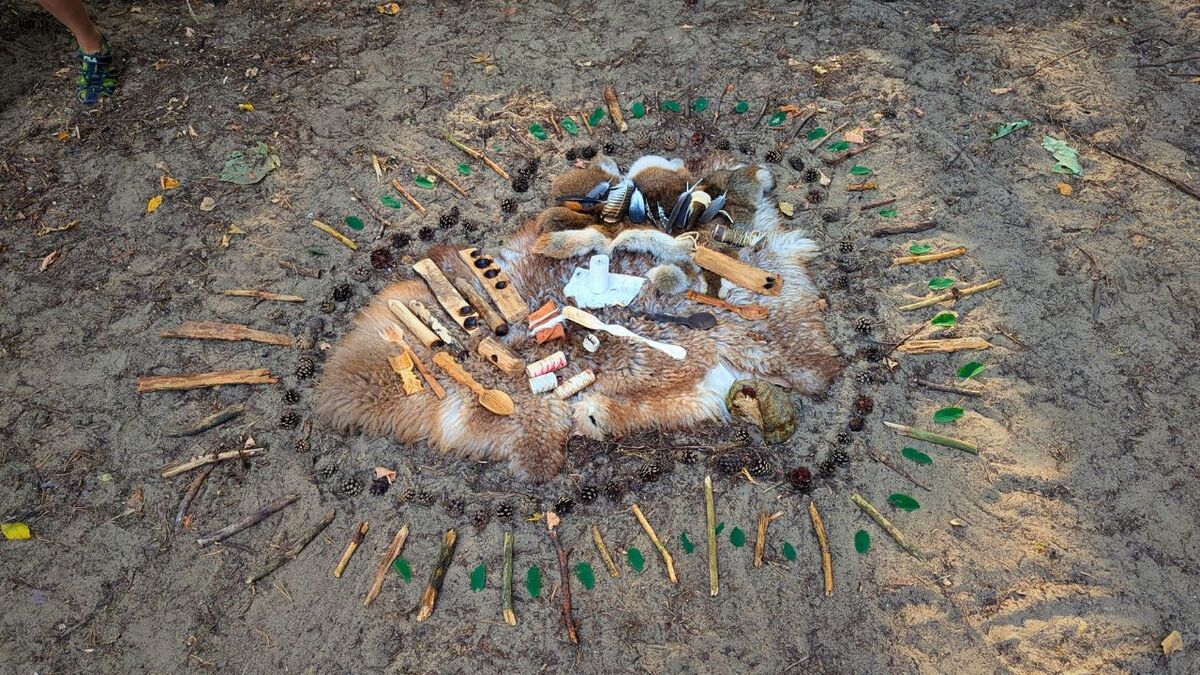
3. Expanding the Senses: More Than Just Sight
We have five (or more!) incredible tools to experience the world. This routine invites you to consciously use and expand them all.
For me personally, training peripheral vision, the Owl Eyes, is always fascinating.
- Perceive everything: Consciously switch between your senses. What is your nose telling you? What do your feet feel on the ground? Try walking barefoot to intensify this connection – it's as if you suddenly learned a new language and the ground begins to tell you stories!
- Peripheral vision: Practice perceiving from the corners of your eyes ("Owl Eyes"). This expands your visual field and your mindfulness enormously. At first I thought this was only for survival experts, but it helps me be more present even in everyday life.
- 5-senses meditation: Try consciously activating all your senses at once. What do you perceive when you let everything work on you simultaneously? It breaks up entrenched thought patterns.
🔥 Activate Your "Owl Eyes" – Training Peripheral Vision
Our normal vision is often focused, like a spotlight. But the wilderness requires the "wide gaze" – peripheral vision, often called "Owl Eyes."
In doing this you relax your gaze, don't fix on any point, and consciously perceive what moves at the edges of your visual field. This was vital for our ancestors to recognize dangers or prey early.
Exercise: Sit at your sit spot, relax your gaze, and try to notice only the movements in your peripheral vision without turning your head. You'll be surprised how much more you perceive!
I often do this exercise for a few minutes at my sit spot – it's amazing what movements you suddenly notice.
4. Tracking and Questioning: The Detective in the Forest
Every track, every bent blade of grass tells a story. Become a detective!
I find there's hardly anything more exciting than following a fox's trail and wondering what it was up to.
- Ask the 6 questions: When you find a track, ask yourself: Who? What? When? Where? Why? How?
- Follow the signs: Following a track trains concentration and pattern recognition. It's like reading an exciting book. If you're curious, start here with tracking for beginners (with pictures & examples).
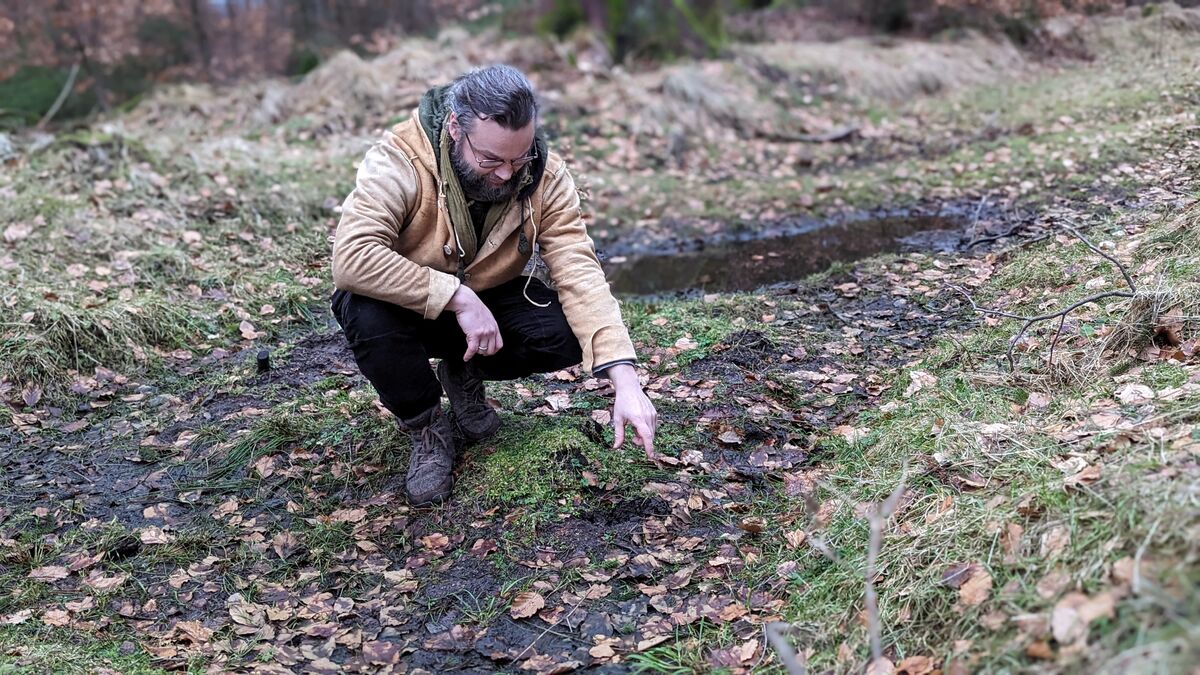
🔥 Every Track a Story – More Than Just Identification
Tracking is about much more than just knowing: "That was a deer." The real magic begins with the questions: What was the deer doing here? Was it feeding, resting, was it alarmed? How old is the track? Where did it go and why?
Every track is a chapter in the ongoing story of the place. The 6 W-questions (Who, What, When, Where, Why, How) are your tools to decipher these stories and immerse yourself deeply in the lives of the animals.
It teaches me humility again and again when I realize how complex life in the forest is and how little I often see at first glance.
5. Animal Forms: Dancing Like a Crane, Stalking Like a Fox, Hearing Like a Deer
Observe animals closely: How do they move? How do they hunt, eat, play?
- Imitate & Empathize: Try to physically imitate their movements and behaviors. Yes, at first it might feel funny to try to stalk like a heron or climb like a squirrel
- But let yourself in! It is a profound method to build a relationship with animals and intuitively understand their world. It's amazing how different the forest feels when you perceive it from the "perspective" of an animal.
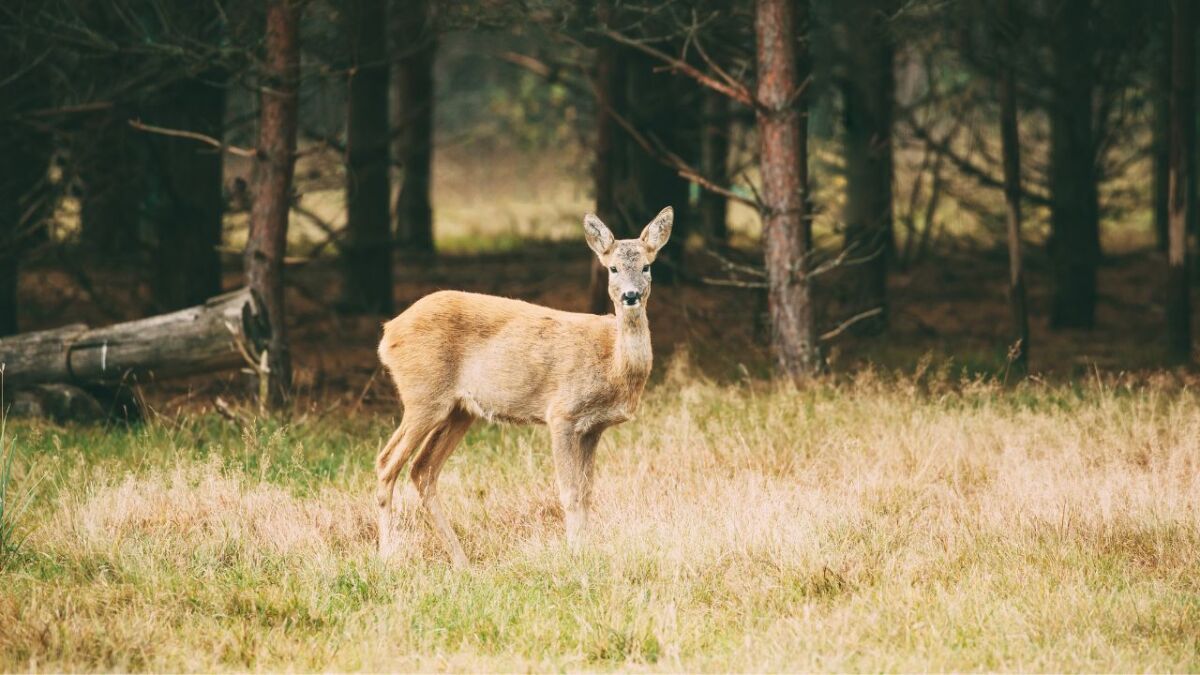
By the way: Animal forms are also wonderful to imitate in games. Read my article on this: Why adults should play more again – and what wilderness education taught me about it
6. Wandering: Traveling Without a Goal
Leave map and compass (sometimes) consciously at home. This practice of aimless wandering is also called "Wandering", for me pure freedom.
- Wander aimlessly: Just go, follow your curiosity. Without time pressure, without a fixed goal. I love letting myself be guided by an interesting beetle or a special play of light.
- Be in the moment: In this unstructured time you open yourself to what nature wants to spontaneously show and teach you. These are often the most magical moments.
- Connection with animal forms, tracking and questioning, expanding the senses and story of the day – during wandering it often all flows together naturally.
🔥 Walking vs. Wandering – The Subtle Difference
We often get used to "walking": with a goal, a route, a certain number of kilometers in mind. Wandering is different. It is an aimless drifting, guided by the curiosity of the moment.
Maybe you follow a butterfly, examine a strange fungus, or just listen to the wind. This lack of structure is intentional!
It allows you to step out of planning mode and open yourself to spontaneous discoveries and the quiet lessons of nature that you might miss on a fixed path. It is an exercise in letting go and acceptance.
7. Creating Maps: The World in Mind (and Heart)
Orientation is more than just the four cardinal directions.
- Mental maps: Imprint distinctive points in the landscape in your mind.
- Songlines/Stories: Connect these points in your head into a story or a song. This helps you navigate and brings the landscape to life. A practical application can be found in nature mapping.
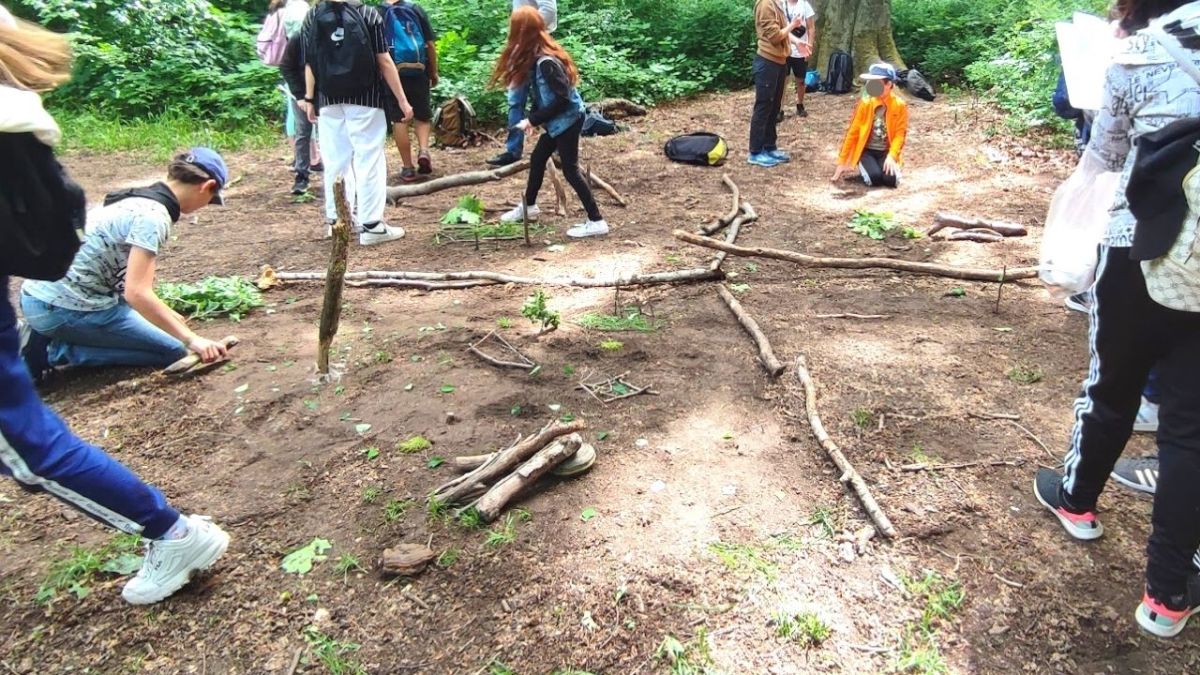
8. Exploring Field Guides: Deepening Knowledge
Intuitive perception is important, but sometimes my mind just wants to know: What is this bird called with the red spot? Or is this berry really edible?
- Scientific info: Use field guides or apps.
- Connect knowledge and experience: Looking things up deepens your understanding. View books and other resources as your personal nature library or nature museum – but never forget that the most important library is right outside your door and nature itself is the best teacher.
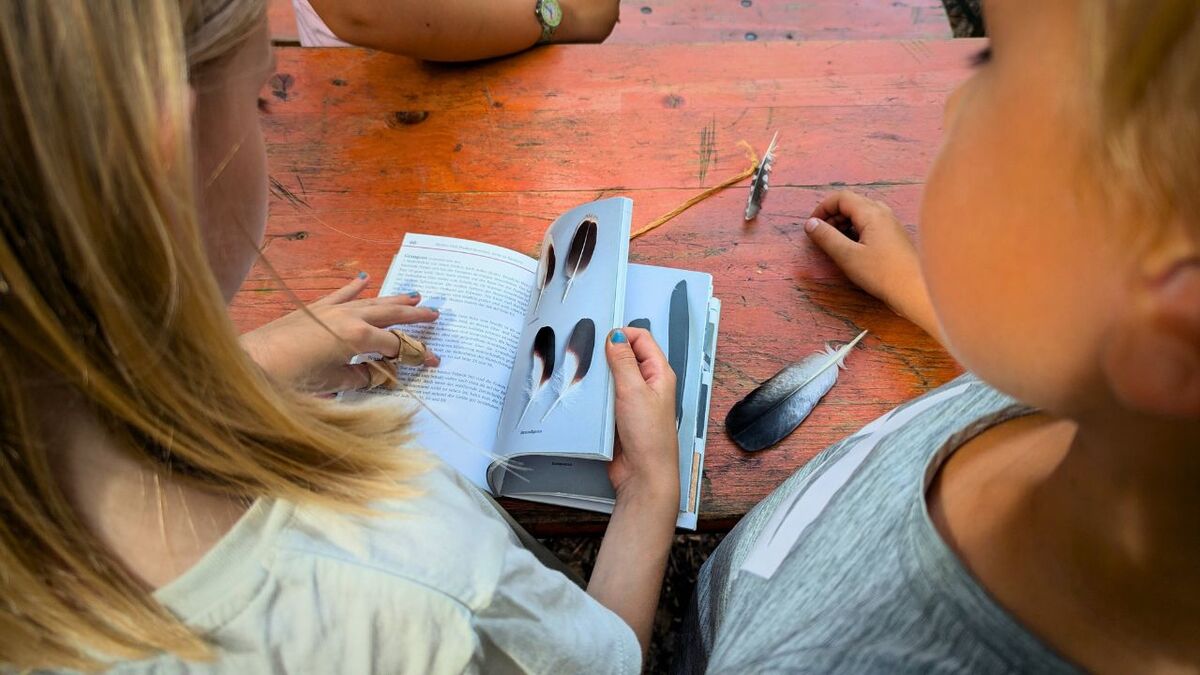
9. Nature Journaling: Observing, Drawing, Reflecting
Record your discoveries!
- Write down: Whether in words, sketches, photos – your nature journal is your personal treasure.
- Increase attention: Recording forces you to look more closely.
- Find your own gift: Your journal shows you what fascinates you most.
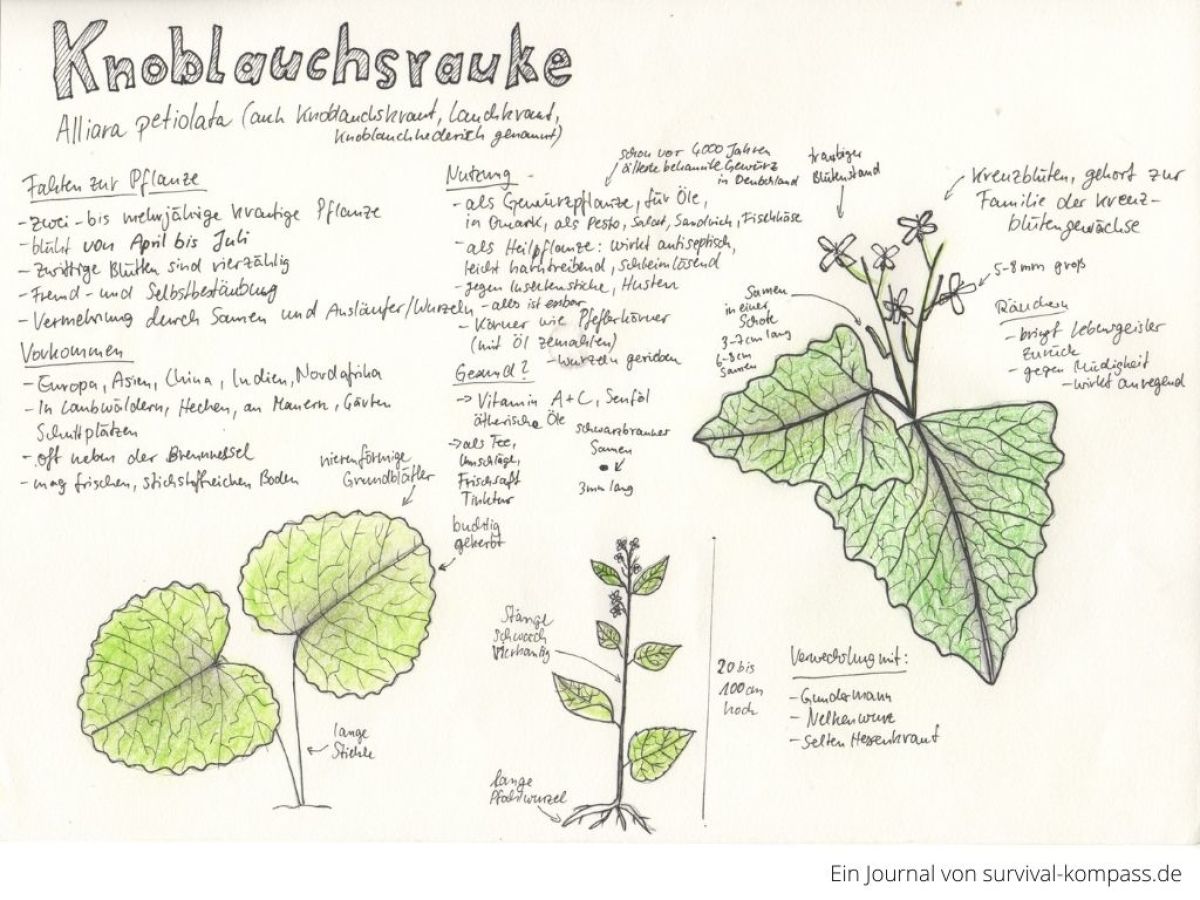
10. Living Survival: The Perspective of Survival
View nature from a different angle. This routine grounds me again and again immensely and puts things in perspective.
- Recognize basic needs: Where can I find water? What could I eat? Where would there be shelter? What is survival anyway? It's not about constantly living in fear or playing the hero, but about understanding the basic connections and being capable.
- Humility & seriousness: This perspective creates motivation to learn and respect for resources. You quickly learn how valuable dry tinder, clean water, or a simple shelter really are when you consciously engage with them.
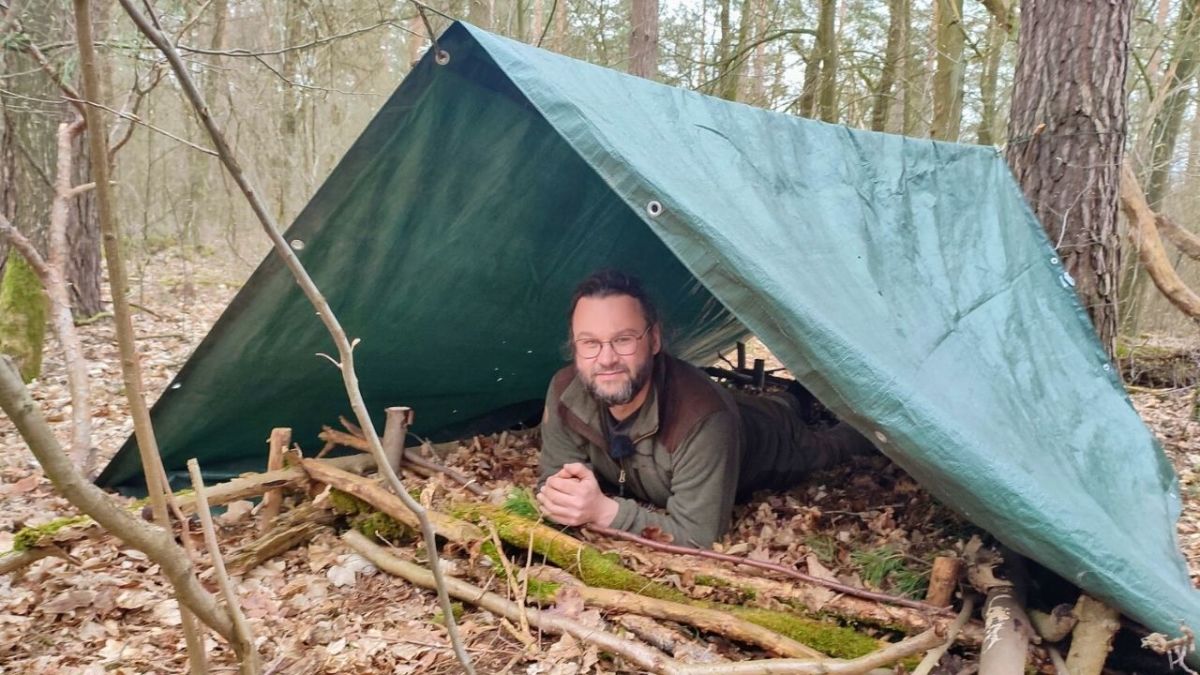
🔥 Coyote Teaching – The Art of "Not Teaching"
Have you wondered why core routines are often conveyed "invisibly"? That is the principle of Coyote Teaching (or mentoring). The mentor is like the coyote from many indigenous stories: clever, sometimes tricky, but always intent on leading the learner to their own realization through questions, riddles, and cleverly placed hints.
Rather than providing ready-made answers, the mentor awakens curiosity and creates situations in which the student finds the solution themselves. This indirect teaching promotes deep, intrinsic (coming from within) learning and self-confidence – an art that far surpasses mere knowledge dumping.
This way of learning has shaped me deeply and is for me the heart of true wilderness education.
11. Seeing With the Inner Eye: The Power of Imagination
Close your eyes and remember:
- Visualize: Bring places, animals, events to your mind's eye in detail. With all your senses!
- Holistic perception: This exercise trains your memory and your ability to receive information beyond pure sight.
12. Listening to Bird Language: The News of the Forest
The birds are the news anchors of the forest. Learn to understand their language:
- Harmony vs. alarm: Distinguish normal songs from excited alarm calls.
- Learn to listen: Be still, listen attentively. Your presence affects the birds. Dive deeper and learn the basics of bird language.
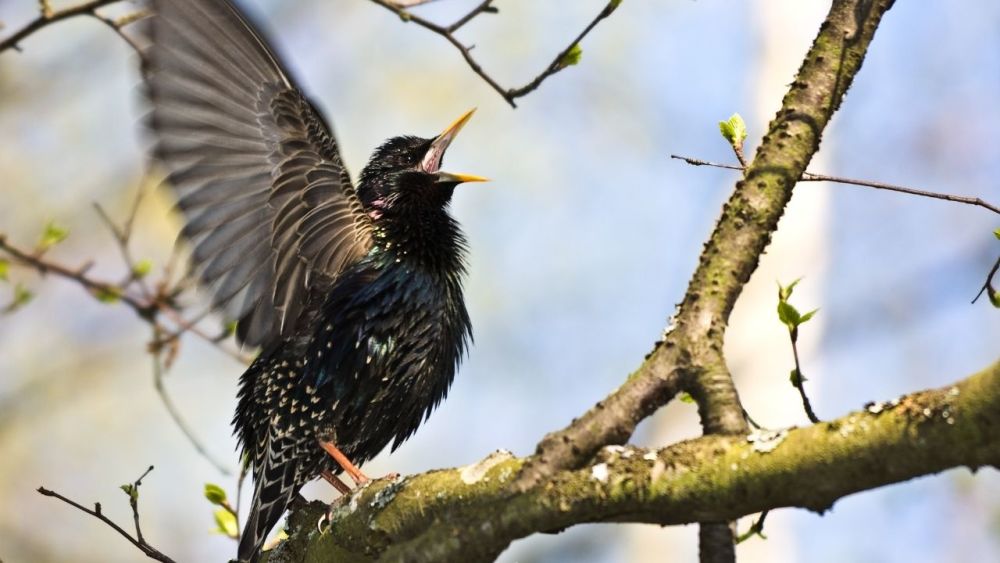
🔥 Understanding the "Baseline" – Key to Bird Language
The secret of bird language often lies in recognizing the "baseline" – the normal noise level and behavior of birds when everything is in harmony. They sing relaxed, forage, interact normally.
Only when you know this baseline do the deviations stand out: sudden silence, excited alarm calls, birds flying to the same spot together.
These alarms are often universally understood and tell you whether a fox is sneaking, a hawk is circling, or just the neighbor's dog is passing by. Listening to the baseline trains your ear for the subtle states of the forest.
13. Giving Thanks: Affirming the Connection
A simple, but for me central and beautiful act:
- Show appreciation: Consciously express your gratitude – for the sun, the water, the food. I often do this in the morning at my sit spot or before I take something from nature, whether it's a berry or a piece of wood. A brief pause, a quiet thank you. Or before eating.
- Understand interdependence: Giving thanks reminds us that everything is interconnected. It directs focus to the positive. Learn more about the power of gratitude in wilderness education. It's amazing how one's attitude toward the world changes when you consciously practice gratitude.

Also read
Gratitude vs. Prayer: The Difference That Changes Everything – Gratitude and prayer seem similar – yet they differ significantly. Discover why indigenous peoples give rather than ask.
The Magic of the Mentor: Working in the Background
Important with all these routines: if you work as a mentor, they are often best conveyed "invisibly."
A good nature mentor (in the sense of Coyote Teaching) doesn't push the routines, but awakens curiosity, asks the right questions, and creates opportunities in which learners discover the routines as if by themselves.
It is a creative, artful accompaniment – a gift that often goes unnoticed, but has lasting impact.
Core Routines = "Rewilding" for Mind and Senses?
One could also call the core routines a form of "rewilding" – not in the sense of reintroduction projects, but as a reclamation of our innate, natural abilities and ways of perceiving.
In our modern culture, many of these senses and instincts have atrophied. The routines help us reactivate these old neural pathways. It's about not just understanding the world intellectually, but experiencing it again physically, emotionally, and intuitively – a profound reconnection with our own human nature.
Your Path Begins Now
The core routines are not a rigid program, but I want to bring them closer to you as a buffet of possibilities. They are an invitation to you for more connection, happiness, and contentment.
Maybe you start with a regular sit spot or consciously pay attention to the "story of the day."
Find your own access, be curious and patient (and have fun!). Each step on this path brings you closer to yourself and to the wonderful world out there.
Need more inspiration? Here you'll find 33 exercises for more connection to nature.


Author of the guide
Martin Gebhardt
Hey, I'm Martin. On my blog, you will learn the basics and numerous details about living in the wild. I think survival, bushcraft and the good life in nature are the keys to happiness. Find me here on Instagram or on YouTube. You can find more about my mission on the About Me page.
Was this guide helpful?
16 people found this guide helpful.
5.00 out of 5 points (16 Ratings)
Comments (0)
This post may contain affiliate links. So if you click on the links and make a purchase, I will receive a small commission at no additional cost to you. Click here, to learn more about it.