

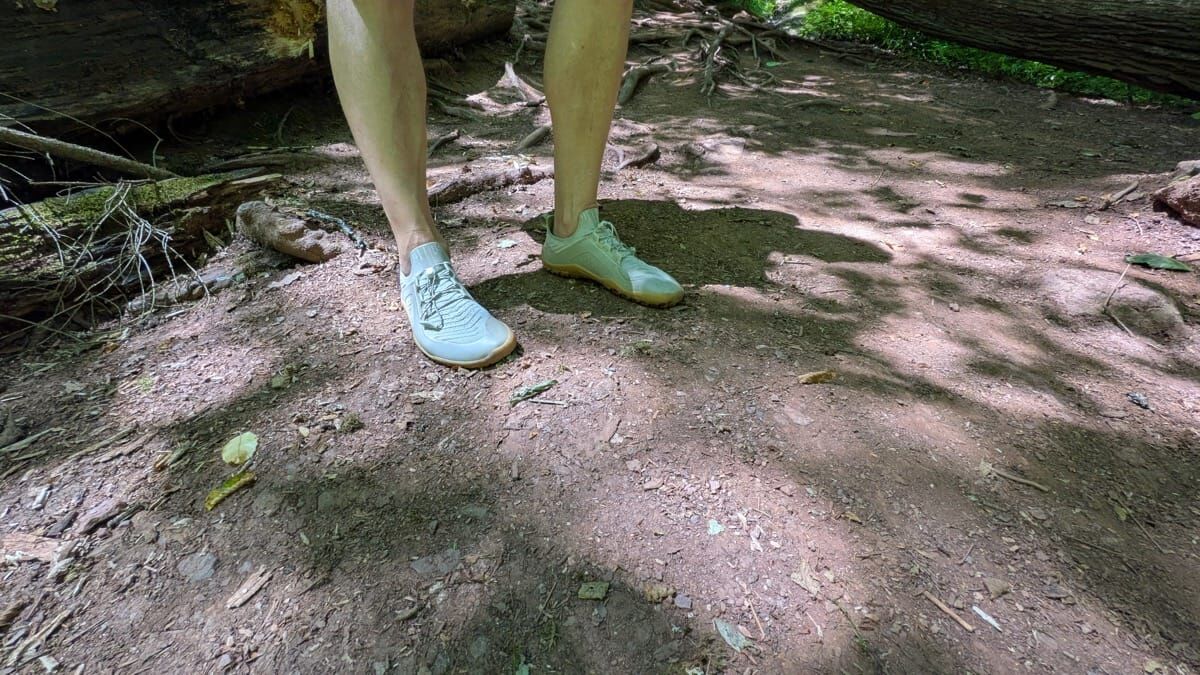
Vivobarefoot Primus Trail Knit FG: My review after four months in the city, the forest, and the Dragon Gorge.
Free 35 Survival Hacks you'll love!
You will get 35 easy-to-implement survival hacks so that you don't have to stand aimlessly in the forest from tomorrow when things get tough. Take your skills to the next level!
DOWNLOAD HERE FOR FREE👉 The key facts from this guide
- I’ve been wearing the Vivobarefoot Primus Trail Knit FG for four months—in Berlin, in the park, on hikes, and in the Drachenschlucht (Dragon’s Gorge) near Eisenach.
- Strengths: Excellent grip despite the thin sole, a sock-like fit that feels like a second skin, easy to slip on, very easy to clean, and dries incredibly fast.
- Weaknesses: Ventilation could be better—it tends to get a bit clammy if your feet sweat. No leather; made entirely of synthetic materials. No weather protection.
- Price: Approx. €120 (RRP).
- For whom? For the city, parks, day hikes, and dry-to-moderate trails. Not for deep mud or bushcraft in the undergrowth—for that, go with the Tracker Forest ESC.
- My verdict: The shoe I wear most often. And the one with the best grip per millimeter of sole thickness.
I have to start with this story because it stuck with me the most.
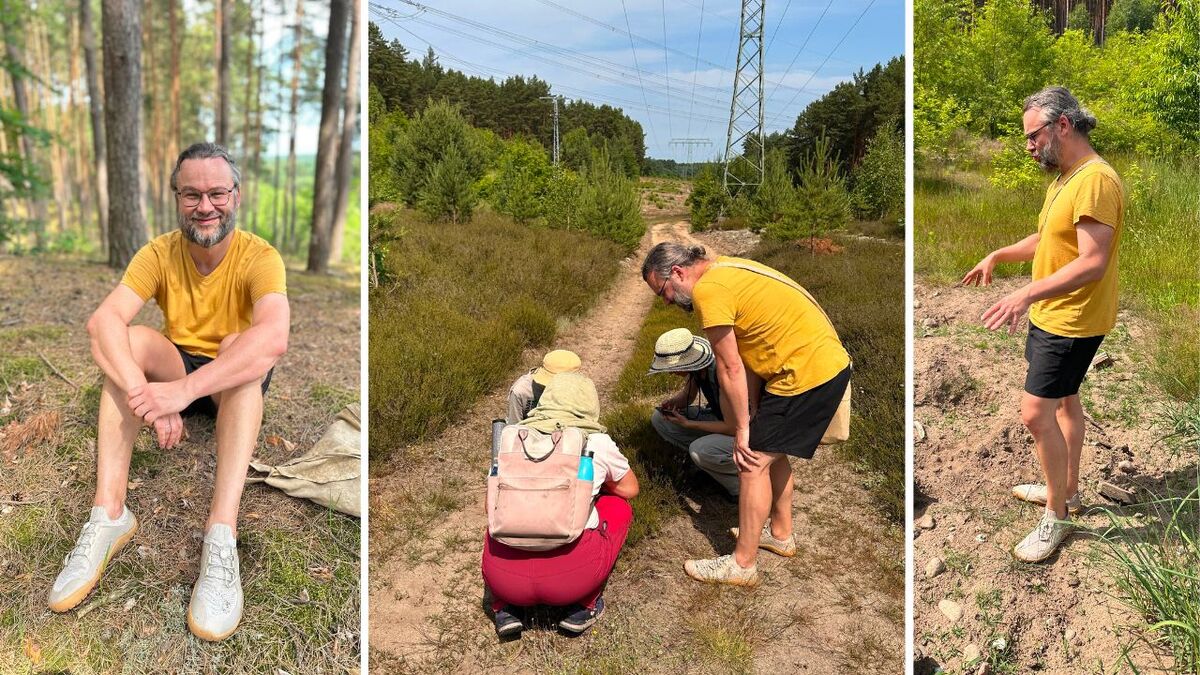
We were in Eisenach. My wife, my mother, my two sons, and I. The Drachenschlucht – this narrow, damp, sometimes only shoulder-wide rock crevice, through which you walk on metal grates and over slippery stones.
I had the Primus Trail Knits on. And honestly thought to myself shortly beforehand: Hm. Thin sole. Wet stones. Grates. We'll see.
Then we went up.
And my boys, being boys, naturally wanted Dad to come along. So: right behind them. Over rocks. Over roots. Over sandy sections. Over wet metal grates.
And I was honestly surprised.
I got up fast. The grip was there. On sand, on rock, on grates – the shoe held up. No slipping, no hesitation, not a single moment where I thought: "Careful, it's sliding now."
And what surprised me almost even more: I felt like I was climbing faster than in a classic hiking boot. Because I could feel the rock. Because my foot could wrap around the edges. Because I wasn't balancing on a rigid plate but working with the ground.
That's the moment I understood what this shoe can do.
What makes the Primus Trail Knit special
Briefly on the tech, then back to practice.
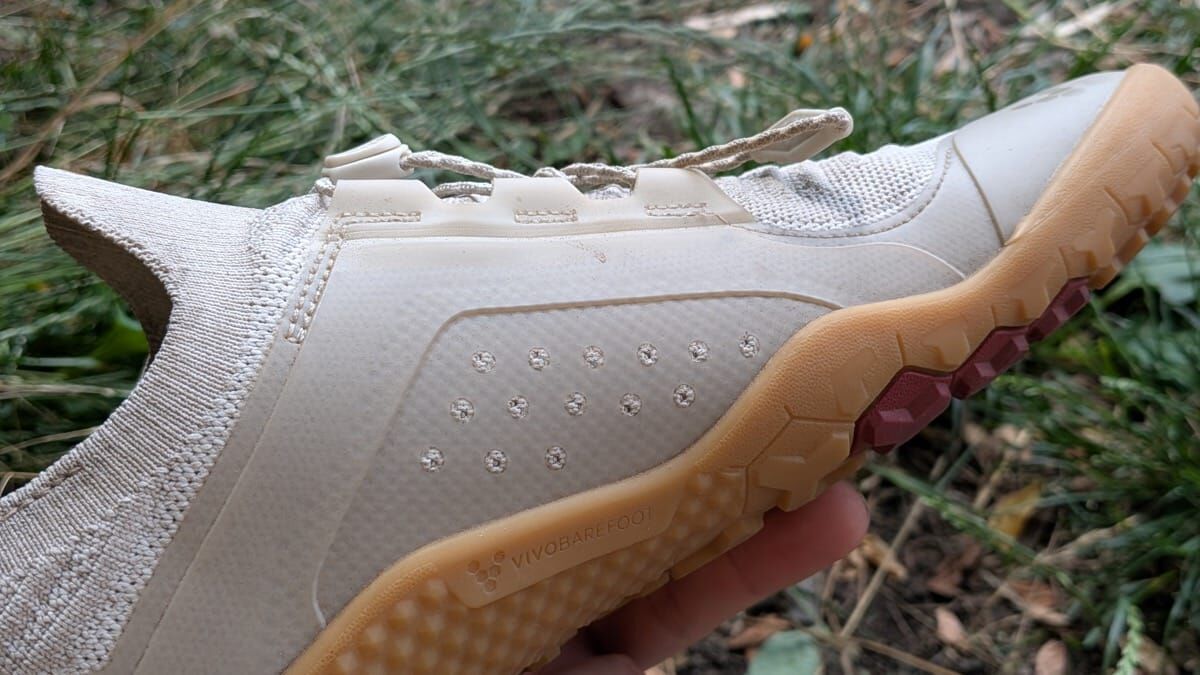
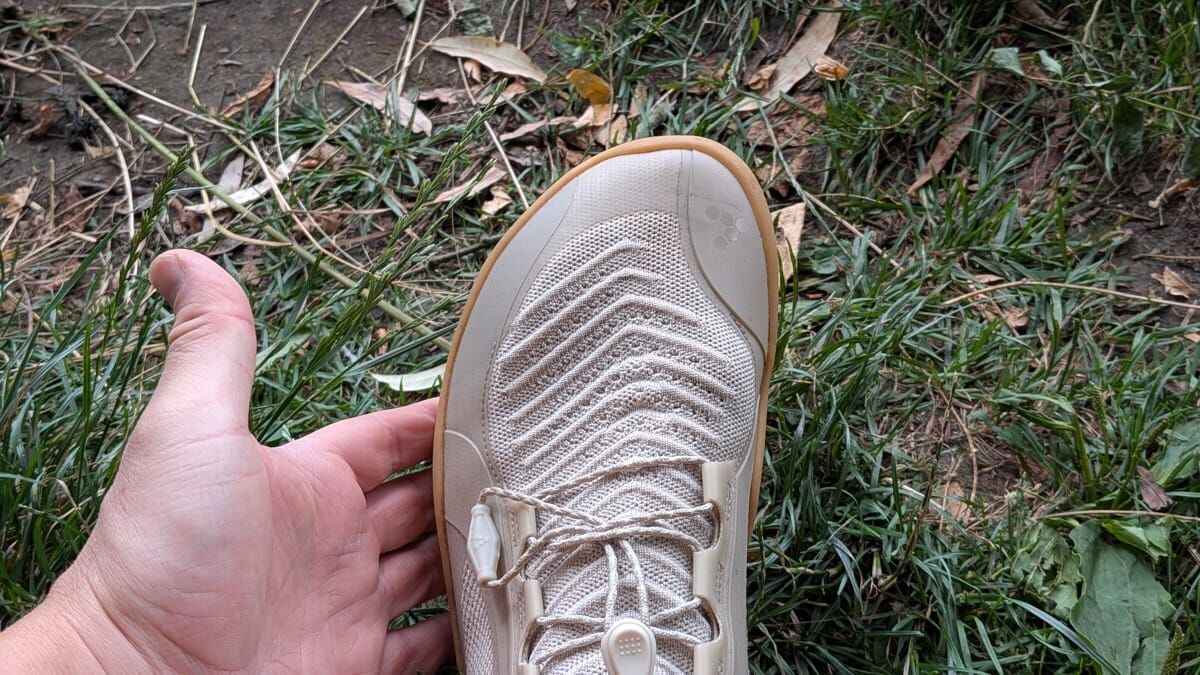
The sole. Firm Ground, 3 mm base, 2.5 mm lugs. That is thin. Really thin. Still, the tread bites remarkably well. The rubber compound contains a high amount of silica – this provides grip and at the same time abrasion resistance.
What I really like: The sole is thin, but grippy. That is exactly the contradiction I thought was impossible for a long time. You feel the ground – and you still don't slip.
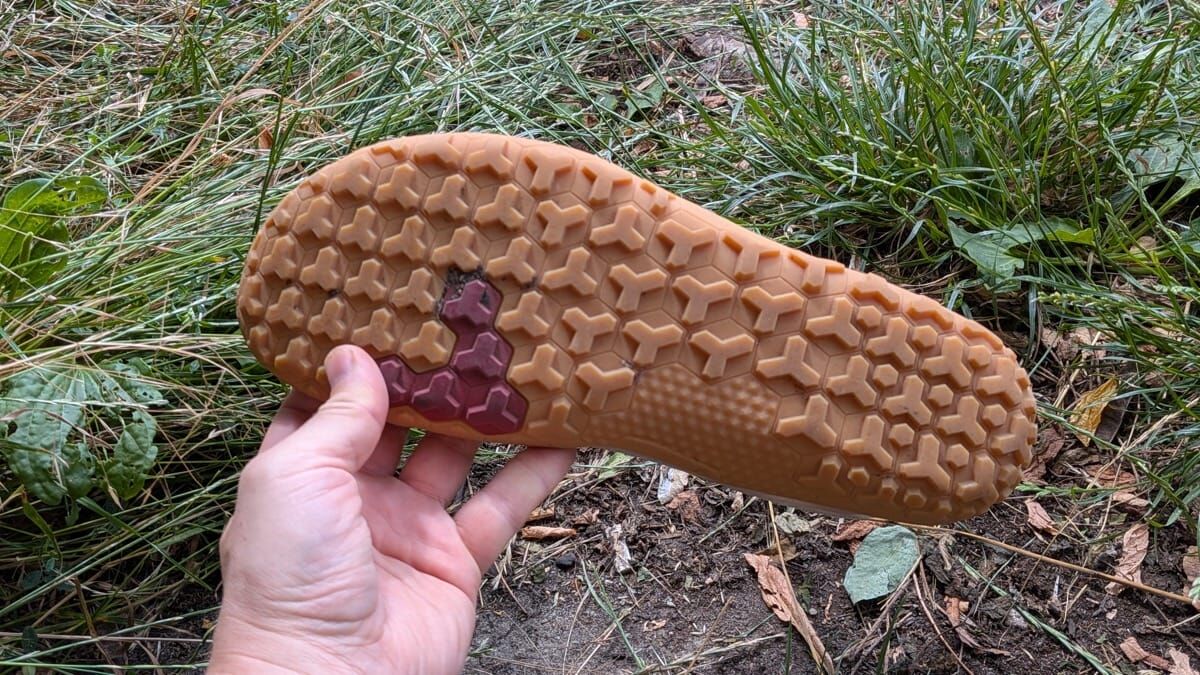
In addition, there is a 1 mm puncture-resistant layer in the sole. So you feel the sharp stone, but it doesn't hurt. That's a subtle difference and for me one of the most important points about this shoe.
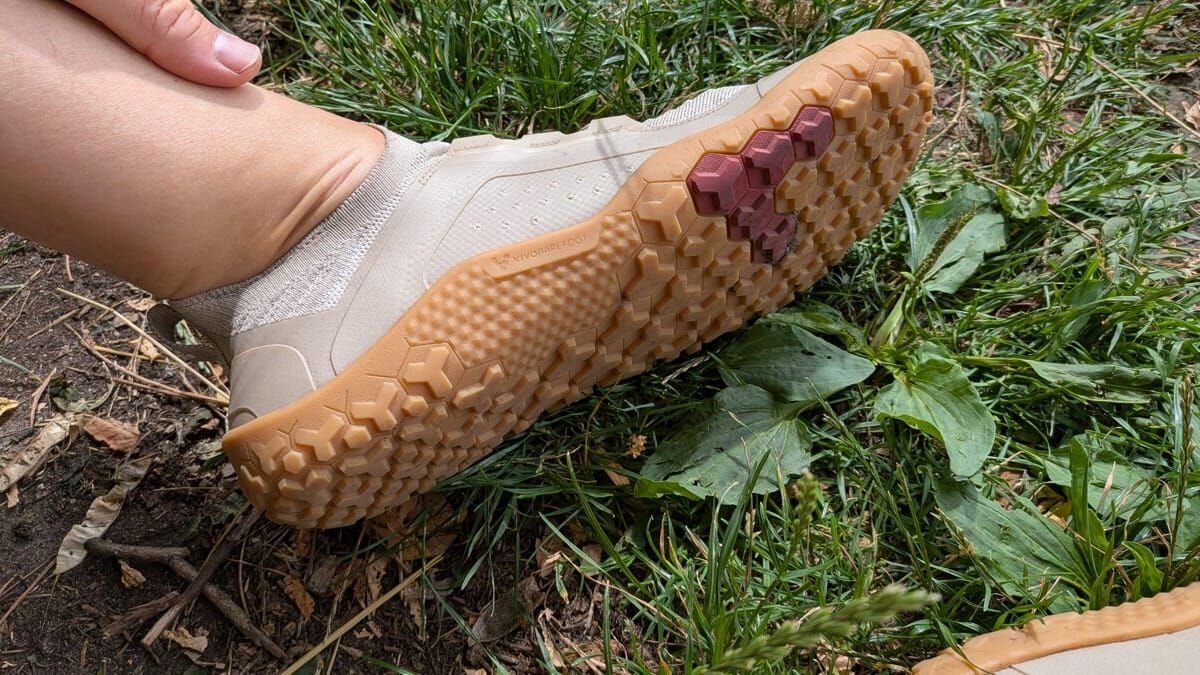
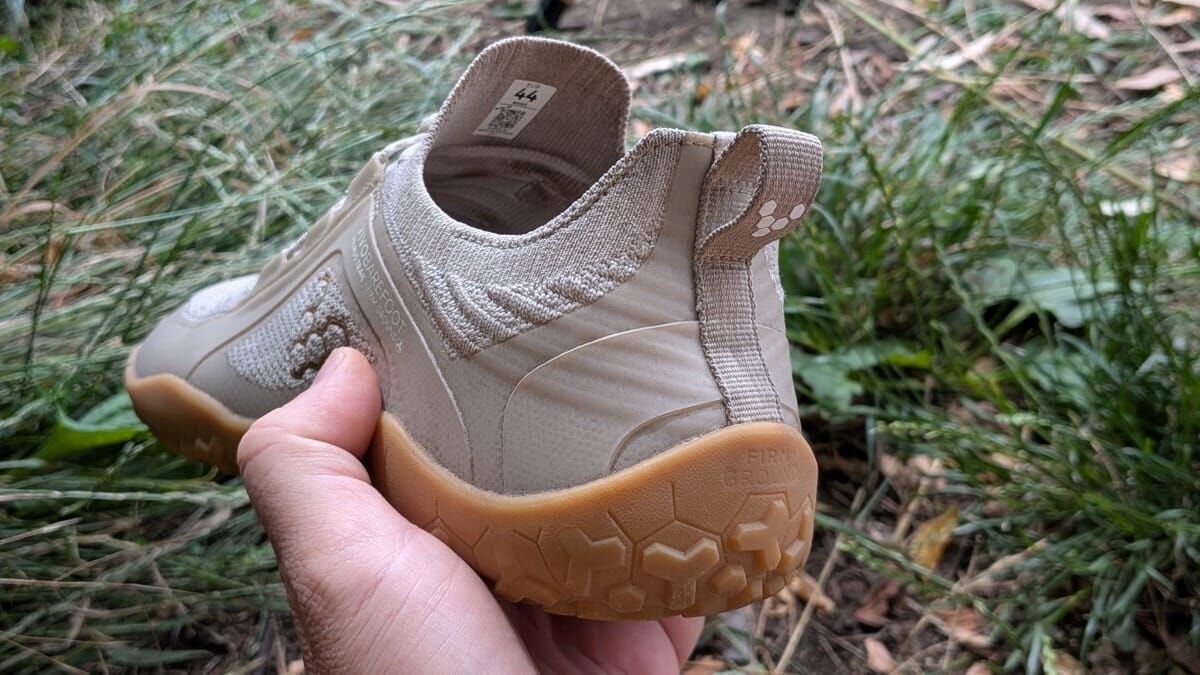
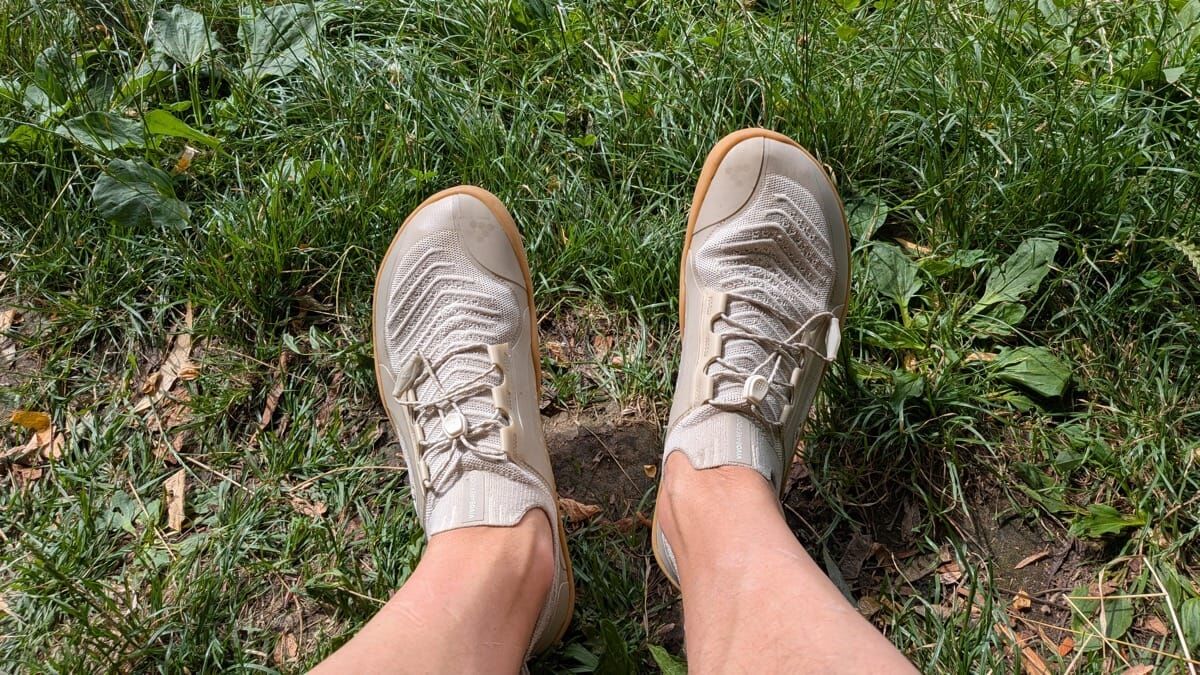
The upper material. Knit from recycled PET, with a good amount of elastane. Plus a sock-like construction on top – no classic tongue, but an elastic band that hugs right at the ankle.
The result: The shoe fits like a second skin. Especially up at the ankle, it sits so well that I simply forget about it after a few minutes.
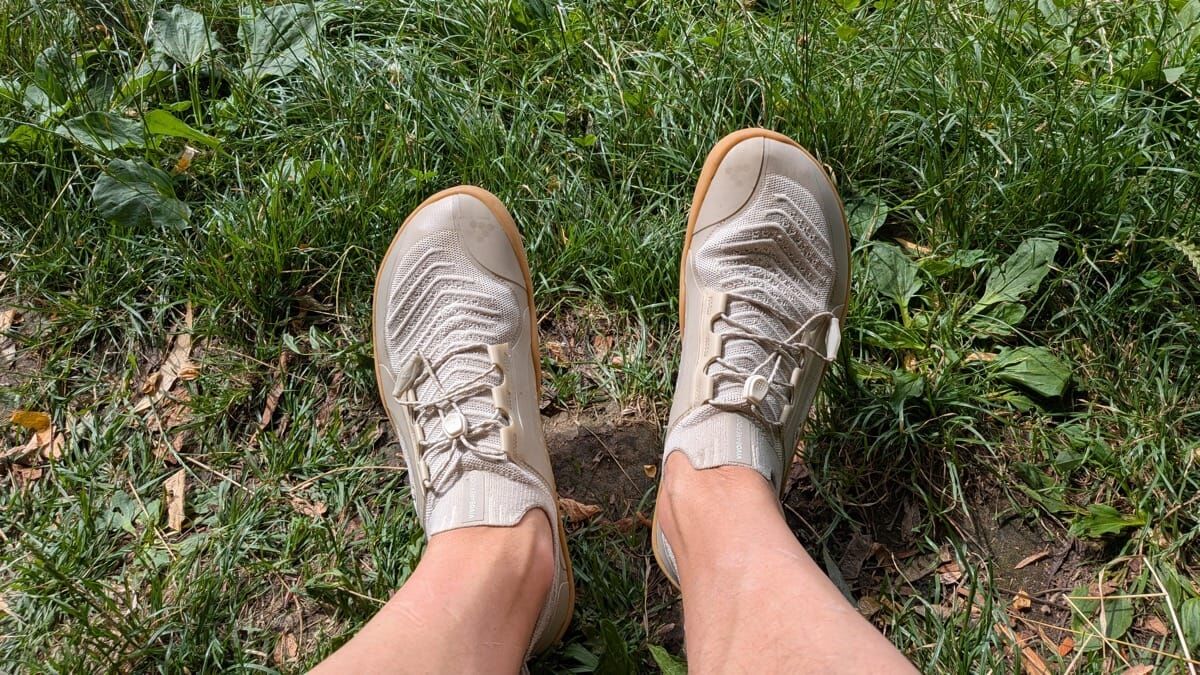
Zero Drop. Heel and forefoot on the same level. As it should be for a barefoot shoe. I wrote down why this is so important in my article on walking barefoot.
The weight. Approx. 400 g per shoe in size 42. That's not a little for a barefoot shoe – it is significantly heavier than, for example, the Primus Lite IV. Honestly, though, I barely notice it on the foot because it fits so well.
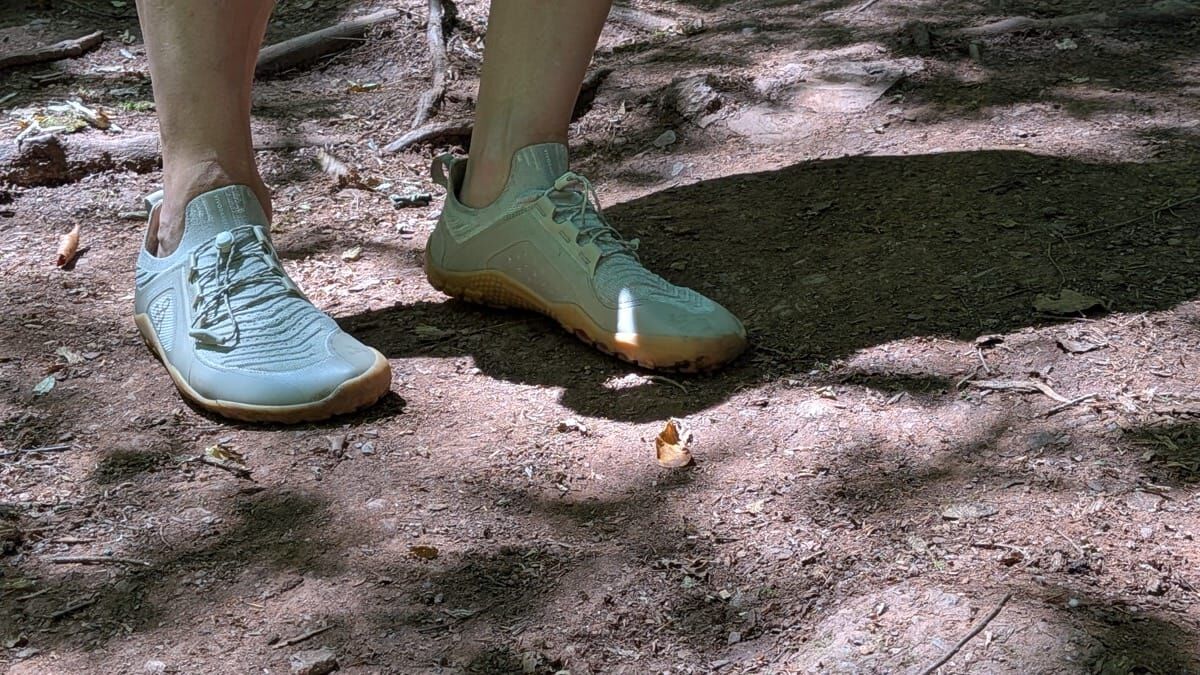
Fit and size - my experience
I wear size 44. Same with Vivobarefoot. For me, the shoe does not run long, although you read that in some tests.
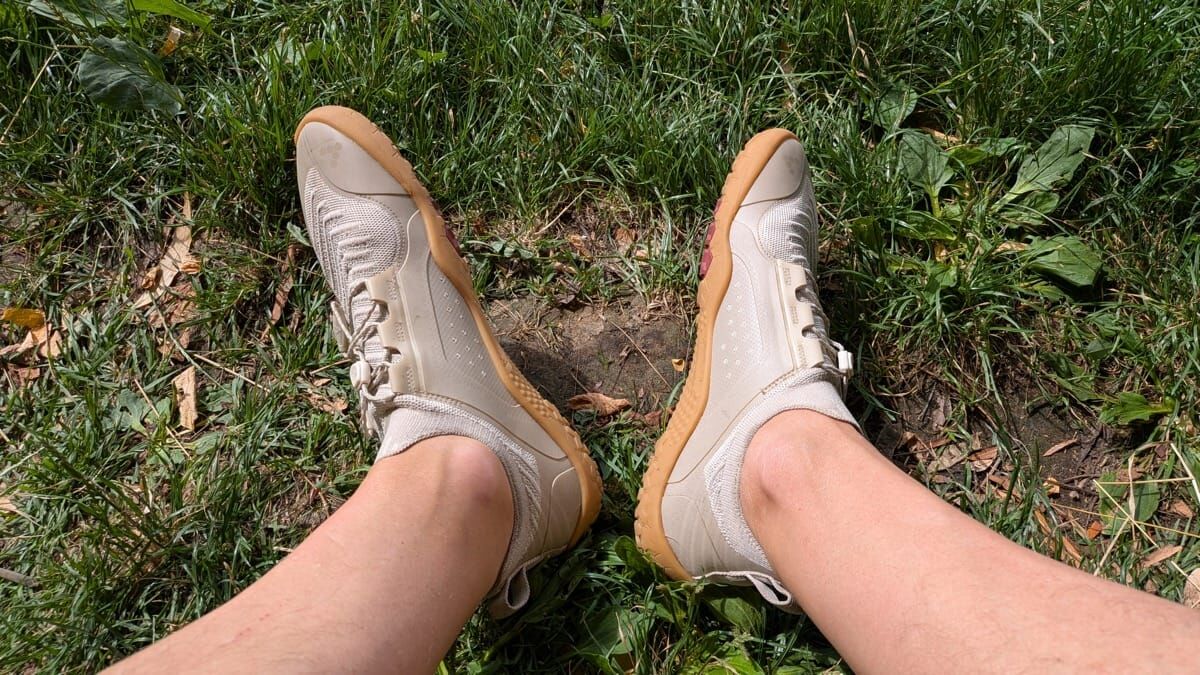
The toe box is wide – really wide. My toes have room to splay. And because the knit material is so yielding, it seems even more generous than in other Vivobarefoot models.
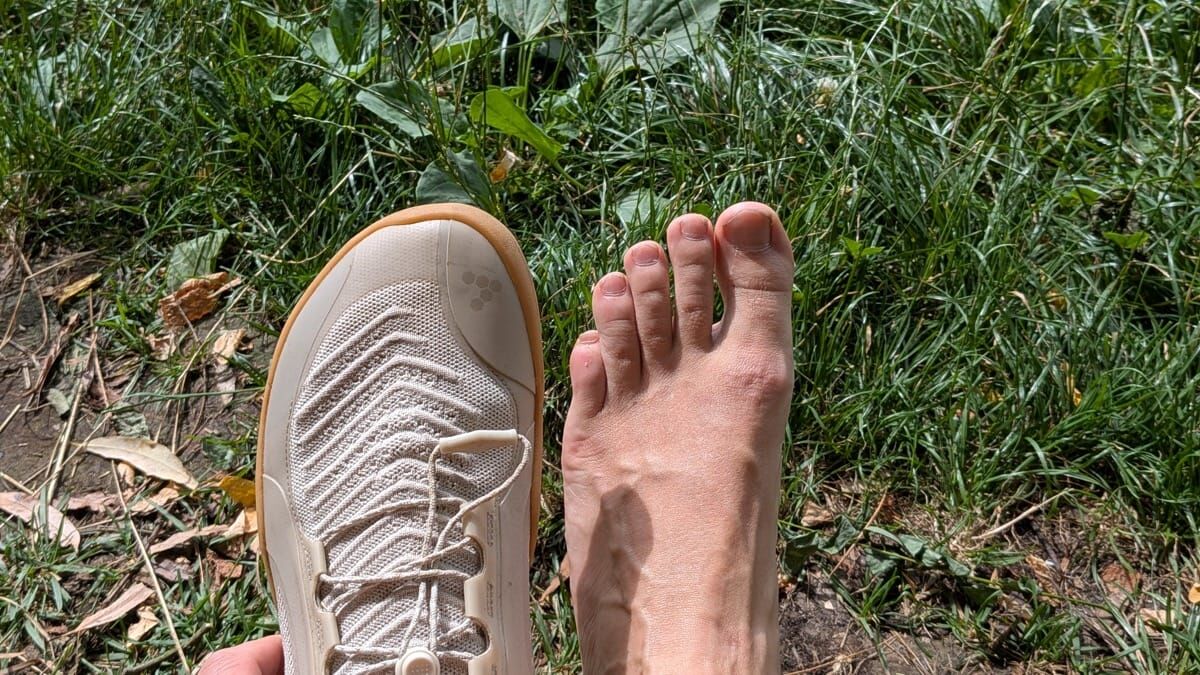
If you have a high instep or voluminous feet: This is your shoe. The elastic knit adapts three-dimensionally without pressing.
If you have very narrow, flat feet: Careful. Then you might not find proper support in the shoe because the material is so soft. Make use of the 100-day trial.
The insole (Ortholite, 98% recycled PU foam) I left in. Some barefoot purists take it out to be even closer to the ground. For me, it's fine as it is.
The speed lacing system – not an issue for me
In many reviews, the toggle lacing system is criticized: You can't adjust it zonally, the tension is only distributed in the middle, etc.
For me? Not a point of criticism.
The shoe fits so well anyway due to the elastic material that I hardly have to adjust anything on the lacing system. Set it once, done.
What I really appreciate instead: I just slip in. No tying, no fumbling, no shoehorn. Out with the boys in the morning, shoes on, let's go. That's worth its weight in gold in everyday life.
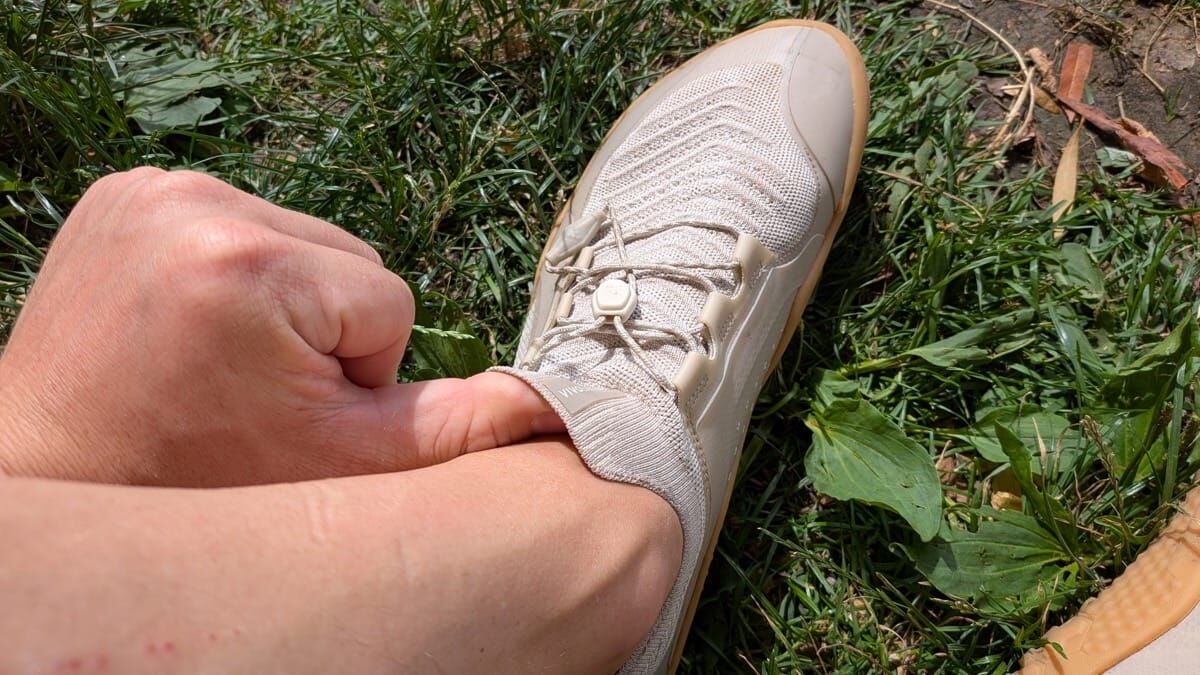
Where I wear the shoe
Berlin and the park
My standard shoe for short trips. To school, to the park, for groceries, for a walk along the Spree.
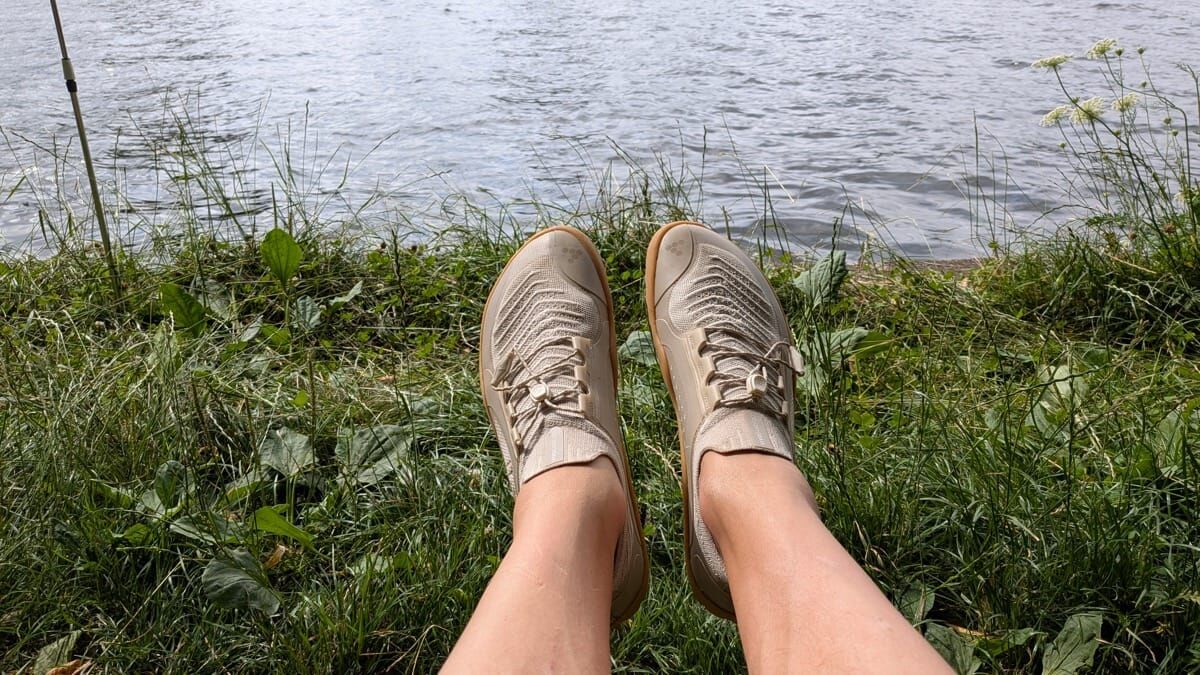
It looks good – I have the light, white version, which also works in the city and doesn't scream "technical functional shoe." And it's quick to put on, quick to take off.
Hiking
This is where it shines.
I did a lot of hiking in this shoe, and it's really fun. Forest paths, dirt roads, gravel, firm ground – it walks wonderfully on all of these. You feel the trail, you stay alert, you are present.
If you practice Silent Walking, the thin sole is a real advantage. You notice every branch before it snaps.

What surprised me when cleaning
I had the shoes really dirty once. Like, completely gray from the Brandenburg soil.
So: hosed them down, scrubbed them, hung them up.
And then they were dry again in a flash. In summer, within 1-2 hours.
That's a real practical advantage. With the leather Tracker you have to maintain it, waterproof it, and be careful. Here: hose on, brush, done.
Note: Vivobarefoot advises against the washing machine – heat and the drum weaken the glue joints. Hosing off by hand is the better way.
What bothers me: the ventilation
Now for the honest part.
Vivobarefoot advertises the knit material as highly breathable. My experience is a bit more sobering.
There is no leather used here – it's all synthetic. And accordingly, I had hoped the ventilation would be a little better.
If my feet tend to sweat, it gets slightly clammy inside the shoe. Not a drama, but noticeable.
What surprised me about it, however: The shoes don't get damp inside. It's really just this slight, clammy feeling – no wet socks, no sweaty feet. And I've never had sweaty feet in these shoes.
Nevertheless: The ventilation could be better. That is my clearest point of criticism for an otherwise excellent shoe.
What I CANNOT confirm
A few points of criticism that you read in international reviews, I simply cannot comprehend after a few months:
"No support downhill." Many reviews say the elastic knit material gives way on downhills and the foot slides forward. For me: didn't happen. The shoe fits me so well that I ran up and down the Drachenschlucht without ever feeling like I was losing support.
I suspect this is highly dependent on the foot. Those with narrower feet might experience this differently.
The "Vivobarefoot Pinch". A known weak point of the Primus series: At the crease in the front of the forefoot, the glue between the sole and upper material comes loose on some pairs.
After four months, I see: not a bit of wear and tear. The crease looks like it did on day one. Sole tight, seam clean, nothing is coming loose.
I will continue to monitor this and update the article if anything changes.
Pros and Cons – my honest overview
What I love:
- Thin sole with an amazingly grippy tread – this contradiction works
- Fit like a second skin, especially at the ankle
- Slipping in instead of lacing – a real win in everyday life
- Extremely easy to clean, dries lightning fast
- Wide toe box, perfect for high insteps
- Look works in the city too
- Vegan, recycled materials, ReVivo repair program
- 100-day trial
What bothers me:
- Ventilation could be better – gets slightly clammy if you tend to sweat
- No weather protection – in the rain, the shoe is wet
- At approx. 400 g, relatively heavy for a barefoot shoe
- Marginal on wet rocks and roots according to other testers (no problem for me so far, but I've never been out in continuous rain either)
- Deep mud is not its terrain – the tread clogs up
Primus Trail Knit vs. Primus Lite IV vs. Tracker Forest ESC (BOX)
Because I wear all three, and the question comes up often:
| Feature | Primus Trail Knit FG | Primus Lite IV | Tracker Forest ESC |
|---|---|---|---|
| Main purpose | Hiking, trail, city | City, gym, everyday life | Forest, bushcraft, cross-country |
| Sole | 3 mm + 2.5 mm lugs | 2 mm, flat | 2.5 mm + 7 mm Michelin lugs |
| Off-road grip | Very good | Weak | Excellent |
| Barefoot feel | Strong | Maximum | Good |
| Upper material | Knit (synthetic) | Mesh (synthetic) | Wild Hide Leather |
| Weather protection | None | None | Good (with care) |
| Weight (approx.) | 400 g | 235 g | 525 g |
| Price (RRP) | approx. 160 € | approx. 120 € | approx. 190 € |
My recommendation:
- City only? → Primus Lite IV
- City + hiking + trails? → Primus Trail Knit FG (this one here)
- Deep into the forest, cross-country, bushcraft? → Tracker Forest ESC
The Primus Trail Knit is the most versatile of the three for me. The shoe I put on most often.
Who is the shoe for – and who is it not for?
Buy it if:
- You are looking for a shoe for the city AND hiking
- You have wide feet or a high instep
- You know barefoot shoes and want more grip than with flat models
- You value quickly slipping in and out
- You are out and about in summer and drier seasons
- You prefer vegan products
Do NOT buy it if:
- You are mostly out in rain, mud, and wet conditions
- You want to go into alpine, steep, technical terrain
- You have very narrow, flat feet (then you'll lack support)
- You do bushcraft in thorny undergrowth - then take the Tracker Forest ESC
- You are looking for a shoe for autumn and winter
Care – how to keep it going for a long time
- Knock off dirt with a soft brush
- Wipe with a damp cloth or hose off with a hose
- Not in the washing machine (weakens the glue joints)
- Take out the insole and dry separately
- Dry at room temperature – not on the heater, not in blazing sun
- Water-repellent effect fades over time – can be refreshed with a waterproofing spray
Product recommendation
Vivobarefoot Primus Trail Knit FG – Men's
- Price: approx. 160 € (RRP), currently often for approx. 112 €
- Weight: approx. 400 g per shoe (Size 42)
- Sole: Firm Ground, 3 mm base + 2.5 mm lugs, 0 mm drop
- Upper material: Knit from 81% recycled PET
- Vegan: yes
- 100-day trial: risk-free return possible
- Reviews: 586 on the Vivobarefoot site
Use my discount code "MARTIN15" for a permanent 15% discount! And until the end of July 2026, use the code "SURVIVALKOMPASS25" for a full 25% discount!
→ Click here for the Vivobarefoot Primus Trail Knit FG
Note: Affiliate link. If you order via this link, you support my work - without it costing you any more.
Transparency
Just like with the Tracker Forest ESC and the Primus Lite IV: This article is created as part of a partnership with Vivobarefoot. If you buy via my link, I get a small commission – the price stays the same for you.
And as always: I don't recommend anything that I don't wear myself. I write down what annoys me. And I tell you clearly when you should rather choose another shoe.
My verdict after a few months
Would I buy it again? Yes.
Is it perfect? Almost. The ventilation could be better, and those who are out in the wet a lot won't be happy.
But: Out of my three Vivobarefoot shoes, the Primus Trail Knit is the one I wear most often. It can do almost everything decently – city, park, hike, even a climbing tour through a gorge with two impatient sons breathing down my neck.
What still thrills me: this combination of a thin sole and really good grip. I wouldn't have thought that was possible before.
If you're looking for a versatile barefoot shoe that accompanies you from daycare drop-offs to the hiking trail – then the Primus Trail Knit FG is an honest recommendation.
But if you really want to head into the forest – cross-country, through mud, through blackberry vines, in wind and weather –, then take the Tracker Forest ESC. I won't link you to anything that doesn't fit your path.
You can find more gear that I actually use in my complete wilderness gear list.
If you already wear the shoe – let me know in the comments how it holds up for you. Above all: How are you coping with the ventilation?


Author of the guide
Martin Gebhardt
Hey, I'm Martin. On my blog, you will learn the basics and numerous details about living in the wild. I think survival, bushcraft and the good life in nature are the keys to happiness. Find me here on Instagram or on YouTube. You can find more about my mission on the About Me page.
Since this is a gear guide, here ...
🤝8 reasons to trust my recommendation
-
Practical Experience: I have tested most of the products I recommend under extreme conditions myself.
-
Independence: As a wilderness mentor, I am not tied to any specific brands - this means my recommendations are unbiased.
-
Expertise: My many years of experience allow me to understand the intricacies and details of various products that a layperson might overlook.
-
Target group understanding: I understand the needs and challenges of outdoor enthusiasts, from beginners to seasoned experts.
-
Quality focus: I attach great importance to quality and longevity. These are characteristics that are crucial in the wild.
-
Clear communication: I try to explain the pros and cons of each product clearly and understandably so that you can make an informed decision.
-
Currentness: I always keep my guides up to date and adapt them to new findings or products.
-
Community Feedback: I work in wilderness schools, teach courses myself, attend courses and am active in various outdoor and survival communities and therefore integrate the feedback and experiences of others into my recommendations.
So when I introduce the best survival knives or flashlights, you can be sure that every recommendation is based on solid experience and extensive knowledge.
Was this guide helpful?
11 people found this guide helpful.
5.00 out of 5 points (11 Ratings)
Comments (0)
This post may contain affiliate links. So if you click on the links and make a purchase, I will receive a small commission at no additional cost to you. Click here, to learn more about it.