

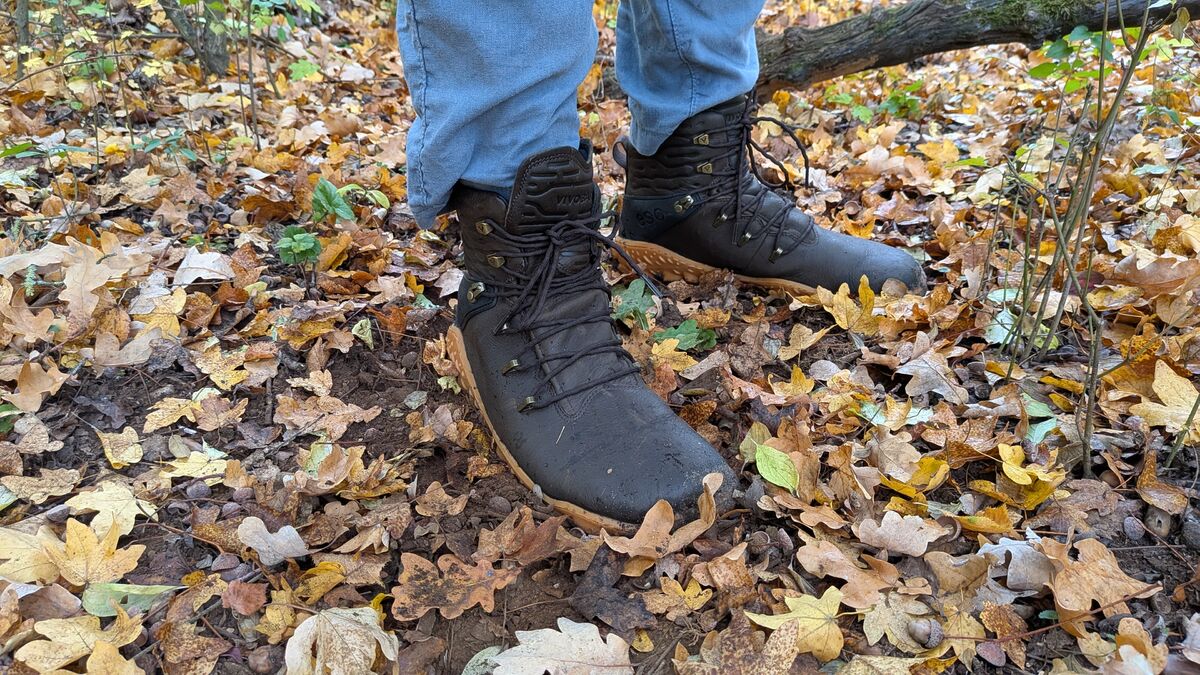
Vivobarefoot Tracker Forest ESC: My Honest Review After 6 Months in the Forest, in Daily Life, and on Wilderness Courses
Free 35 Survival Hacks you'll love!
You will get 35 easy-to-implement survival hacks so that you don't have to stand aimlessly in the forest from tomorrow when things get tough. Take your skills to the next level!
DOWNLOAD HERE FOR FREE👉 The key facts from this guide
- I have been wearing the Vivobarefoot Tracker Forest ESC for 6 months—through autumn and spring, in the woods, at meetings, during outdoor courses, and in my daily life in Berlin.
- Strengths: wide toe box, excellent craftsmanship, very grippy Michelin sole, high-quality Wild Hide leather, high shaft with a long tongue, small heel loop for easy slip-on.
- Weaknesses: not a shoe for deep snow or prolonged rain, high price (~ € 230), requires a break-in period (minimal for me, as I am accustomed to barefoot shoes).
- Who is it for? For anyone seeking a durable, honestly crafted barefoot shoe who is willing to maintain it. Not suitable for strictly winter conditions or deep snow.
- My Verdict: I would buy them again. This shoe is an investment, not a disposable item.
I remember it clearly.
It was the beginning of October.
I was standing in my Berlin living room, holding the package in my hand. Vivobarefoot. Tracker Forest ESC.
Honestly? I was curious.
I've been wearing barefoot shoes for years. But mostly cheaper models – the 20 or 30-euro class that you slip into for the garden or the city. The Vivobarefoot ones were a different caliber. Just from the price alone. Just from the look.
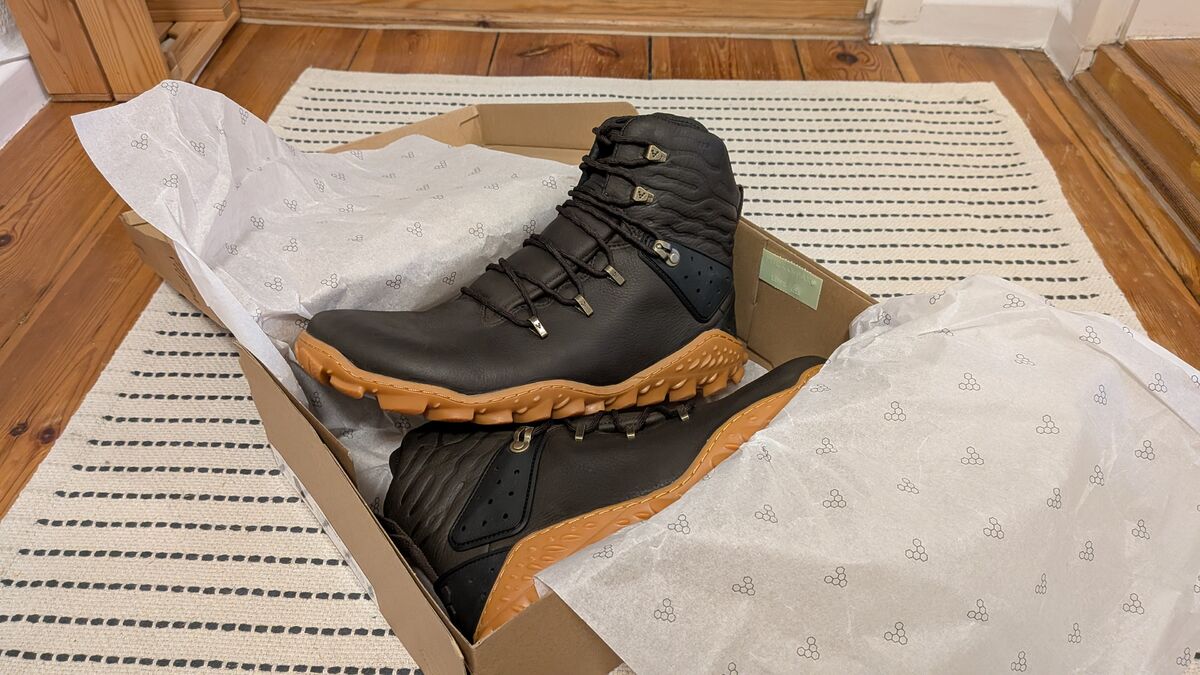
I opened the box.
And there it was. This leather. This visibly handcrafted workmanship. This sole with the deep lugs immediately reminded me of the tire treads on off-road vehicles.
I remember standing there thinking: "Okay. With these, you can actually go into the forest."
Six months later, I can tell you: Yes, you can. And more.
Transparency upfront
Before I get started: This article is a recommendation in partnership with Vivobarefoot. If you buy through my link, I receive a small commission – the price remains exactly the same for you.
I believe transparency is important. That's why I'll tell you directly: I don't recommend anything here that I don't wear myself. And I don't link to products that I think are garbage.
And if I see weaknesses (and I do see some), I'll write them down. Promised.
🎁 Exclusive for my community: 25% summer discount
Vivobarefoot has provided us with a special code. With SURVIVALKOMPASS25OFF you save 25% on all Vivobarefoot shoes – including the Tracker Forest ESC (valid until the end of June). Alternatively, this always applies: MARTIN15 for 15%.
Who is behind Vivobarefoot?
Before we dive into the shoe, a quick word about the company – because it matters here.
Vivobarefoot was founded in London in 2012 by cousins Galahad Clark and Asher Clark. Both come from the famous Clark shoe family – seventh generation, since 1825 in Glastonbury, Somerset.
That means: They know how to build shoes. But at some point, they asked the question of whether classic, heavily cushioned shoes are actually good for the foot – or whether the foot wouldn't rather feel what it was made for.
The answer was: Barefoot. As close as possible. Zero Drop. Thin sole. Wide toe box.
Since 2020, Vivobarefoot has also been a certified B-Corp – one of the strictest sustainability certifications worldwide. Not as a marketing gimmick, but with a score that is clearly above average.
→ You can find more about the company on the official Vivobarefoot About page.
What caught my eye immediately when unboxing
First impressions are sometimes the most honest. Here are mine:
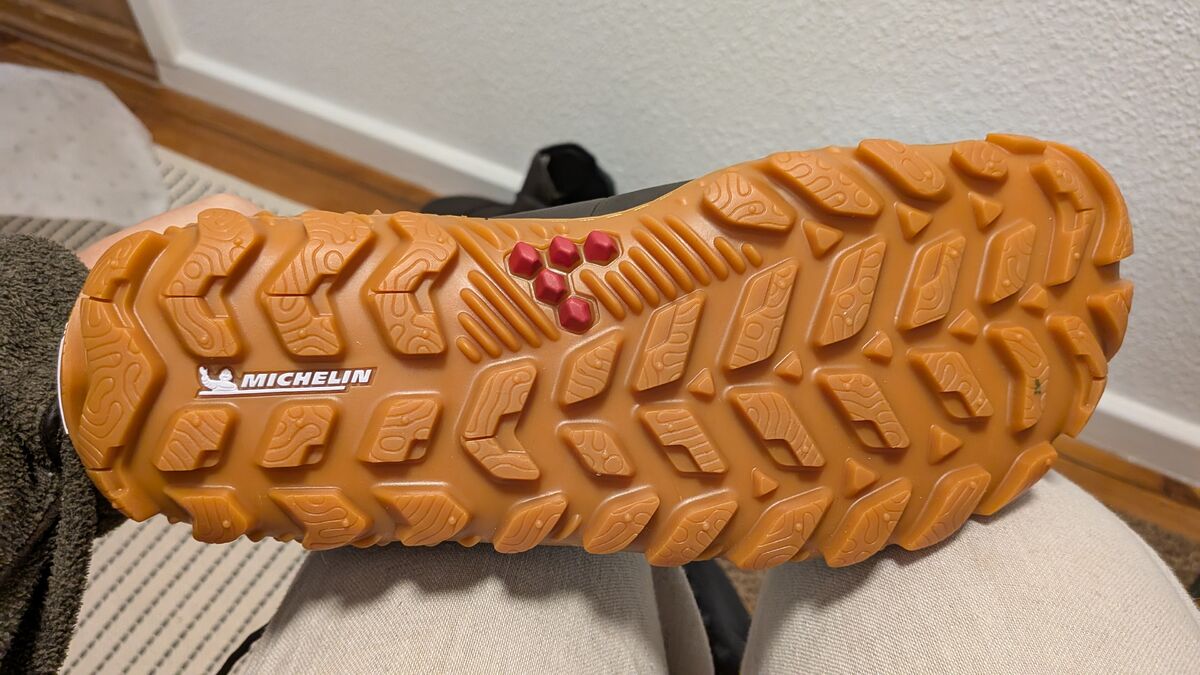
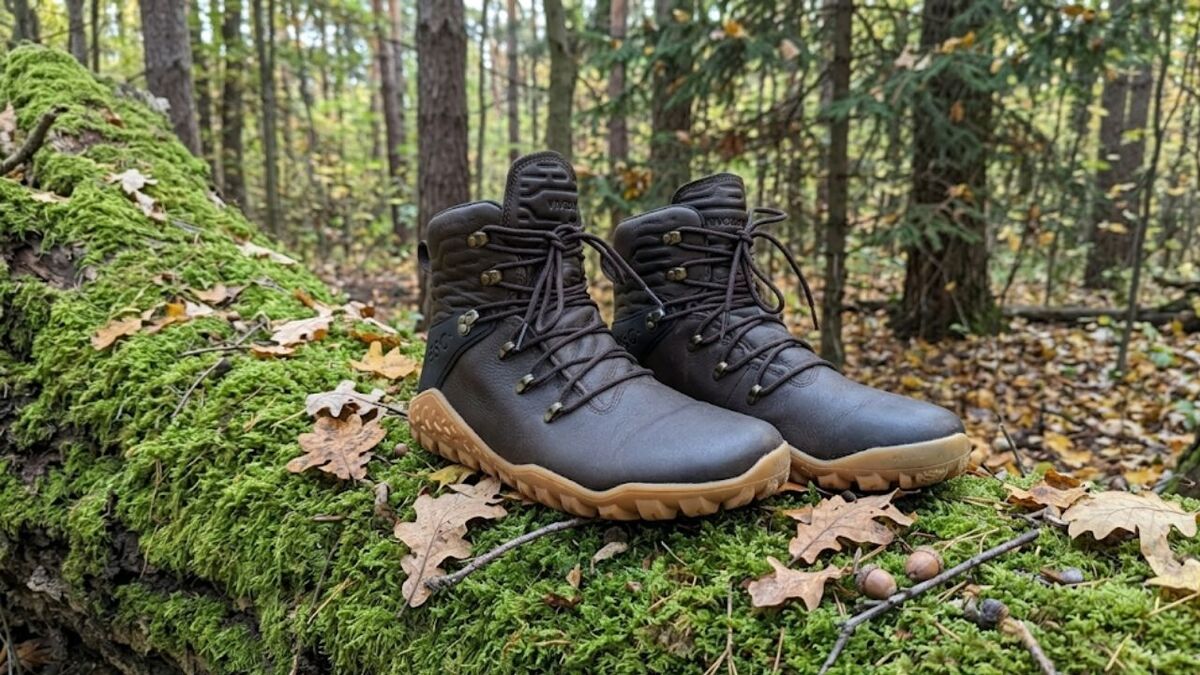
The tread. This sole is a statement. Deep, claw-like lugs in a W-pattern. This is not your typical barefoot shoe that only leaves a 3-millimeter rubber layer between your foot and the ground. The tread looks as if someone at Michelin said: "Let's make a hiking boot."
And that's exactly what they did. Vivobarefoot developed the sole with the French tire manufacturer. You can feel it.
The leather. Wild Hide is what it's called. Full-grain leather from free-roaming cattle from small farms. It feels different from the polished, uniform industrial leather you know from standard hiking boots. It has character. Natural scars. A warm, living surface.
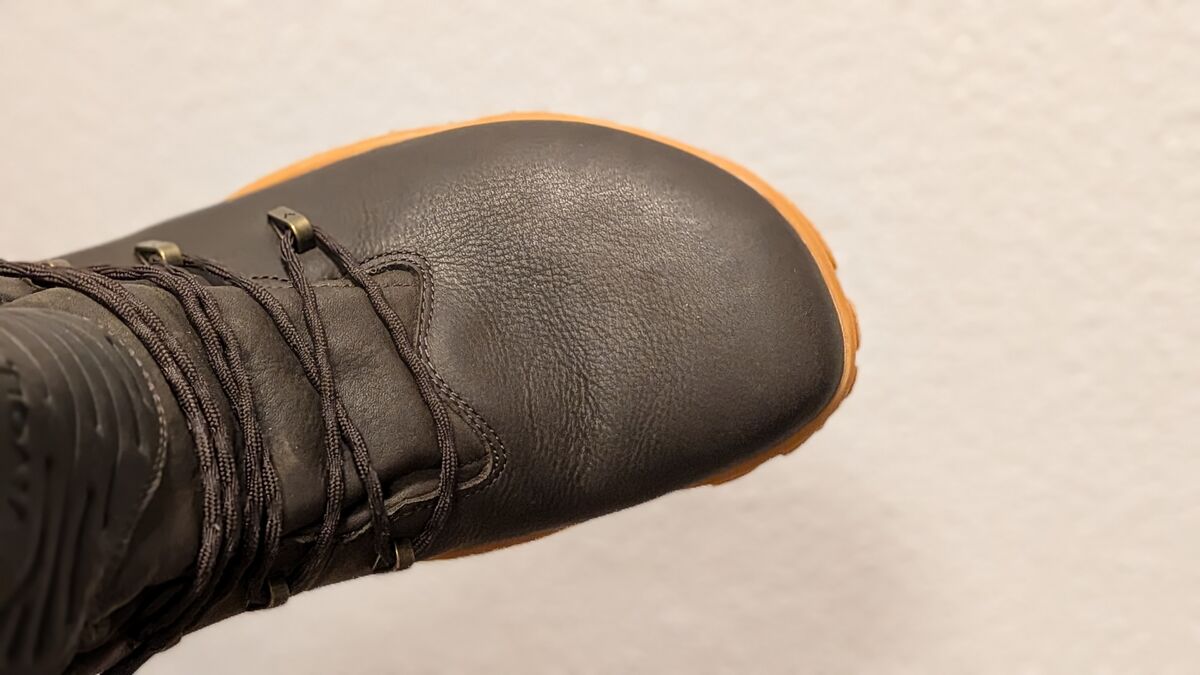
The workmanship. I turned the shoe upside down, twisted it, squeezed it. All seams are clean. The sole is stitched through, not just glued – that makes a huge difference for repairability later on. The lace eyelets are robust. The shoelaces have a textured surface that stays tied in a knot.
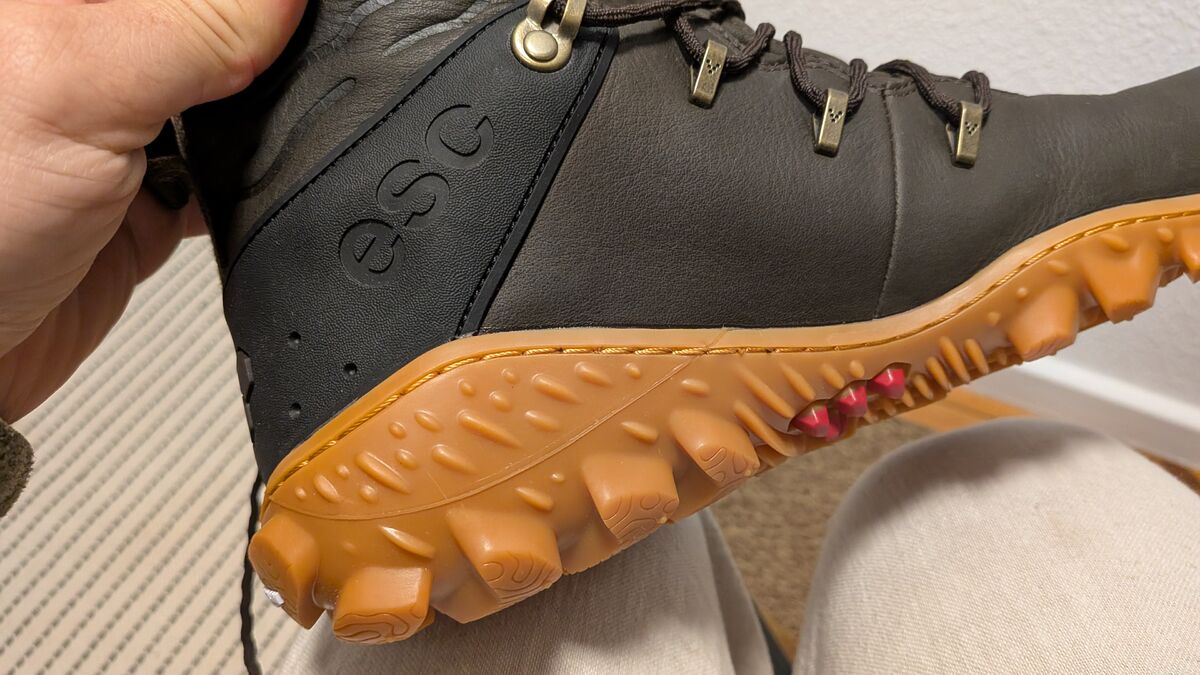
The tongue. It goes up high. Really high. This means water, dirt, and thorns don't easily get in from above.
The heel. There is a small loop at the back, which makes it easy to slip into the shoe. No shoehorn needed. I used to underestimate this, but when you need to get in and out quickly in everyday life, it's worth its weight in gold.
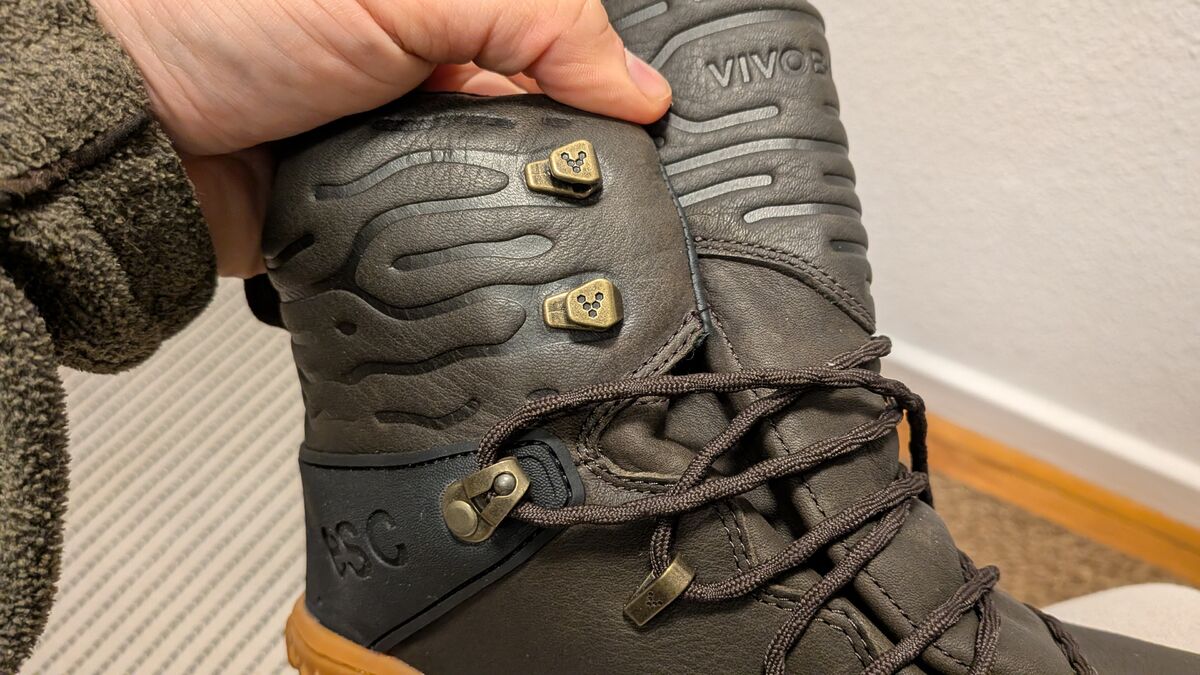
The fit at the front. Wide. Exactly the right amount of wide. My toes have room to splay – and that's exactly why I wear barefoot shoes. If your toes are cramped, a huge part of the biomechanical effect is lost. I have written in detail about why walking barefoot is so important.
The size. I usually wear a 44. Before ordering, I measured my feet – Vivobarefoot recommends this because their shoes run a bit differently. 44 fit perfectly. Tip: If you are unsure, you'd better measure your foot once.
How this shoe was created – and why it's probably important for you
The Tracker Forest ESC is not a normal hiking shoe with barefoot branding slapped onto it. The story behind it is one I want to tell you – because it shows what this shoe was truly made for.
ESC stands for Ecological Survival Collection. The idea was born back in 2013 when British bushcraft expert Ben McNutt (here is his website) approached Galahad Clark and said:
I need a barefoot shoe for the most extreme biomes on Earth. A shoe that works in the forest like a barefoot human, but offers what an experienced woodsman needs: grip, protection against thorns, moisture-wicking materials, and the feeling for the ground.
Ben McNutt and his partner Deborah "Debs" Nickolls are known together as Wild Human – a British bushcraft and survival expert couple who have been training people in wilderness skills for years.
They are the ones who tested the Tracker Forest ESC in the field for over four years and helped develop it. Not in a lab. In the forest.
When I read that for the first time, it spoke to me directly. Because that is exactly the context in which I travel. Wilderness seminars. Bushcraft. Hours of tours cross-country with participants. This is not leisure hiking on marked trails.
The market launch was in 2021 – as the first model of the ESC line. Since then, the collection has grown. There are now several ESC models for different biomes:
- Tracker Forest ESC – temperate forests, our candidate here
- Magna Forest ESC – slightly lower shaft, very breathable (good for fast tours in summer)
- Jungle ESC – for tropical jungles, different construction
- Tundra ESC – insulated, for arctic conditions
- Hydra ESC – amphibious, for swimrun and water adventures
Each model for a different biome. The principle behind it: Connection not conquest. Not defying nature, but going with it. To be honest, that is exactly what I advocate with my year-round distance learning course Wildimpuls.
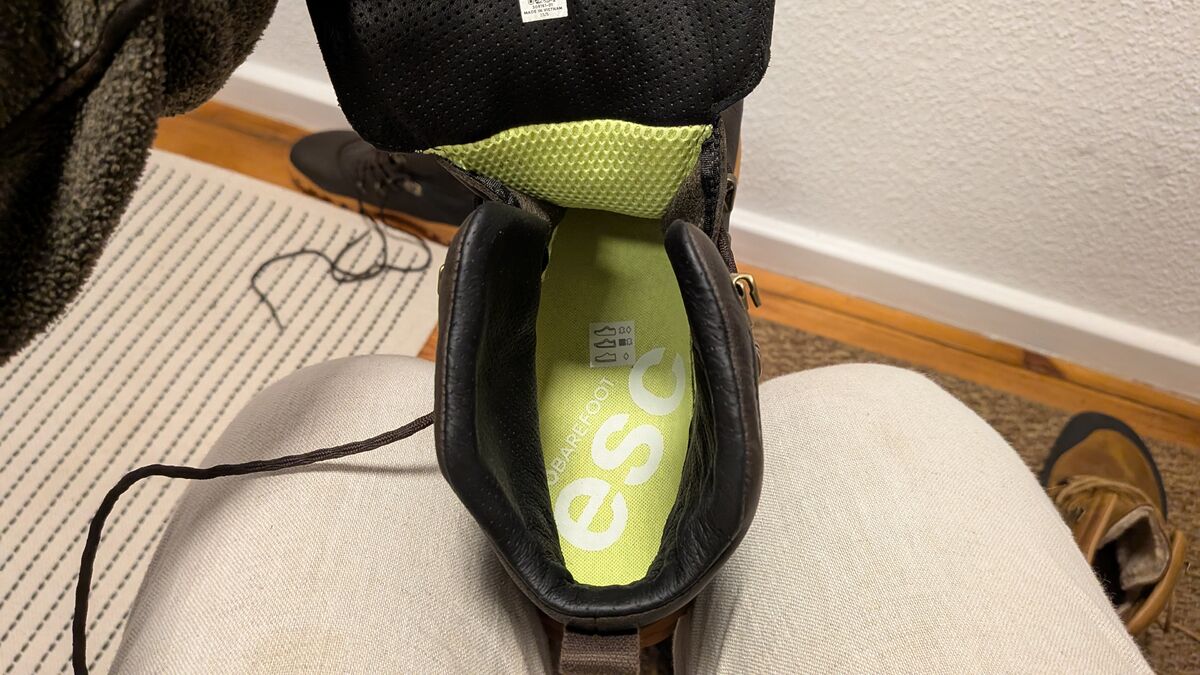
One detail that caught my eye when looking at the interior: the bright fluoro lining. At first, I thought it was just a design gimmick. Then I read why it's there: It makes insects, ticks, and thorns visible before you put the shoe on. A direct request from Ben McNutt and Deborah Nickolls from the field test. Small detail, big thought.
What science says – and what I felt myself
Vivobarefoot advertises that six months in their shoes increases foot strength by 60%. That sounds like marketing at first. But there is a real study behind it.
At the University of Liverpool, researchers investigated what happens when people wear mainly barefoot shoes for six months. The result: maximum foot strength increased by over 57%. The control group without a change: no modification.
→ You can read the study on PubMed / NIH (scientific study, English).
What I can say after six months of the Tracker Forest ESC: My feet feel different. More active. I stand more stably. Whether that's 57% I can't measure – but the difference is noticeable. And that's not because the shoe *does* something, but because it allows the foot to do what it's supposed to do.
6 months practical test – where I really challenged the shoes
Enough theory. Here is what actually happened.
In the forest during a wilderness seminar
That was the first real test. A wilderness seminar means: hours outside, often on soft forest soil, through blackberry brambles, over root carpets, sometimes cross-country, away from any paths.
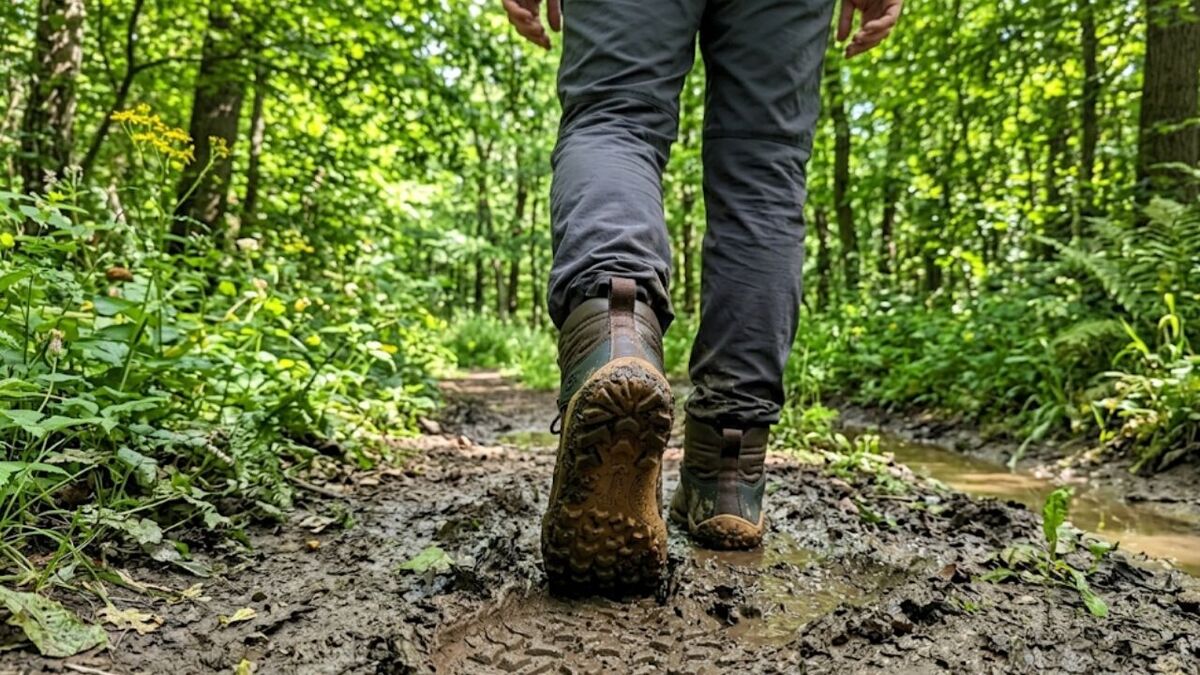
The sole surprised me. On soft, organic forest floor, it gives a sense of security that I don't know from any other barefoot shoe. The lugs dig in, the foot remains stable, and at the same time, I still feel enough of the ground to react.
When I practice Silent Walking – meaning consciously walking silently through the forest – the thin base sole is worth its weight in gold. I feel every branch before it snaps. In classic hiking boots, this perception is gone.
In everyday Berlin life
Here it gets interesting. I often wear the shoe for shopping, bringing the kids to school, or walking with the family. Asphalt. Cobblestones. Berlin streets.
To be honest: On hard surfaces, this shoe feels less natural than flatter barefoot shoes. The deep lugs make a slight "clicking" sound, and you can feel them. It works—no question about it—but for that purpose, I recommend the Vivobarefoot Primus Lite IV (you can find my honest review of it here).
But: It lasts. While my cheaper barefoot shoes are worn out after a year, I see hardly any signs of wear on the Tracker Forest ESC after six months. This is a different league.
In rain and mud
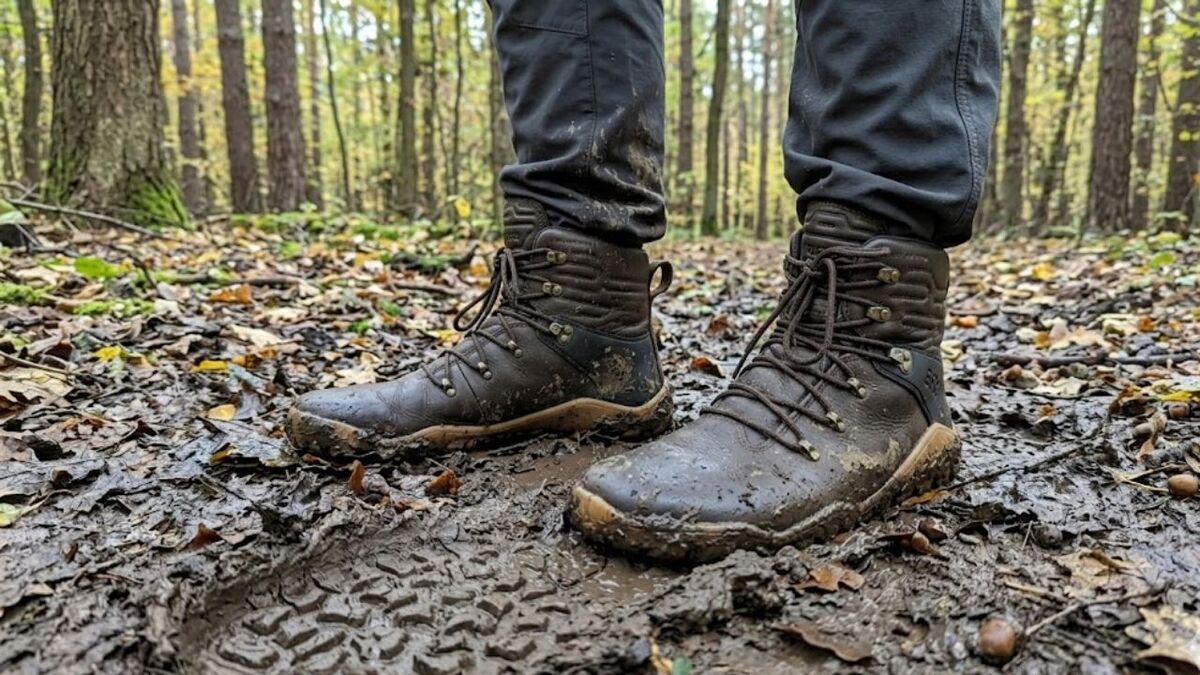
Berlin poured quite a bit from the sky in autumn and winter. My conclusion: The shoe is water-resistant, not waterproof. That is an important difference.
In short showers, puddles, and mud, my foot stays dry – provided I care for the leather regularly. However, during hours of continuous rain or marching through tall, wet grass, moisture does get through. This makes physical sense – there is no membrane like Gore-Tex.
The advantage of this: The shoe dries very quickly again. Anyone who has ever completely soaked a Gore-Tex shoe knows how many hours it takes to dry otherwise.
By the way, I have written down detailed tips on hiking boot care – these apply 1:1 to the Tracker as well.
In winter and early winter
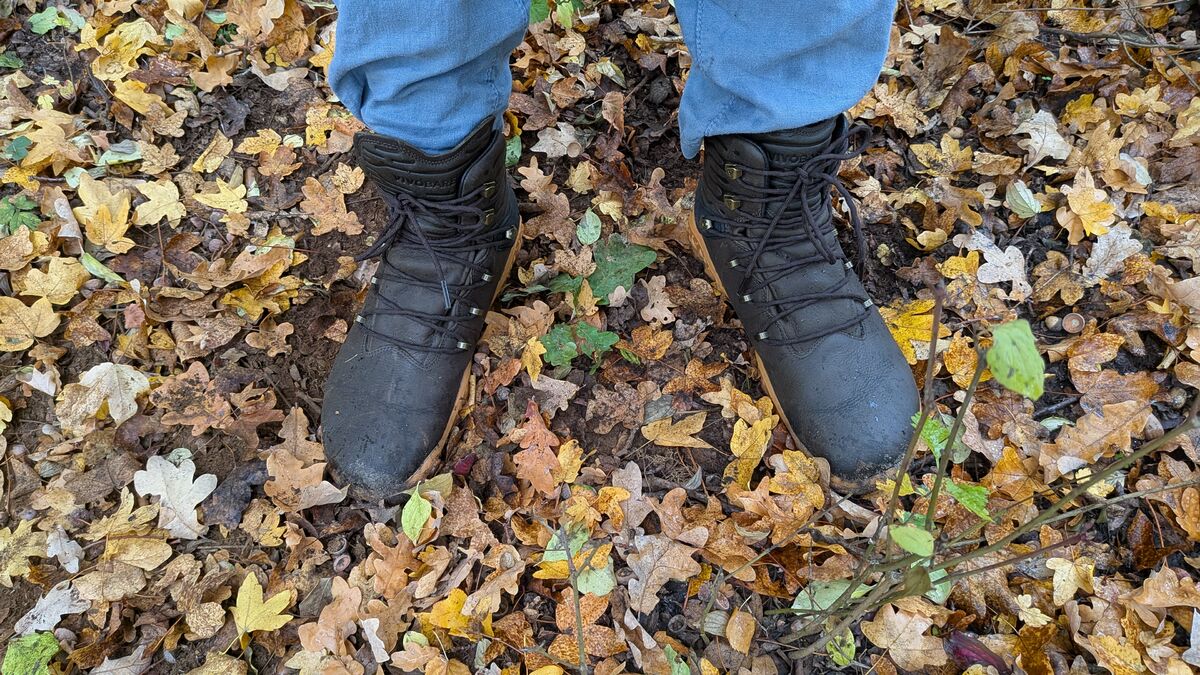
Here is my honest assessment: For mild winter days with thick wool socks, the shoe works surprisingly well. My feet didn't get cold at temperatures around 5 degrees, as long as I kept moving. Tip: Lace them slightly looser; otherwise, there will be pressure points because thicker socks need space.
However, it is not made for real deep snow, continuous frost, or sub-zero temperatures. For that, you need the Tracker Winter SG or the Tundra ESC (significantly more insulated) from Vivobarefoot. I have summarized more on how to get warm feet in winter in a separate article.
Pros and Cons – my honest overview
What I love:
- The workmanship is on a wholly different level than with cheap barefoot shoes, such as the SAGUARO Unisex Barefoot Shoes (here is my review)
- The Michelin sole is unrivaled on forest ground
- The wide toe box – finally enough space at the front (nothing else is an option for me anyway)
- The high tongue protects against water and thorns
- The stitched-through sole is repairable (via Vivo's Revivo program or an external partner)
- The break-in period was short for me because I am used to barefoot shoes
What bothers me or should at least be made clear:
- The price – at approx. €230, definitely in the premium segment
- Not a shoe for real winter or deep snow
- Not quite as grippy on wet rocks or slippery roots as on soft ground
- On hard asphalt, the shoe feels less natural than flatter barefoot shoes
- Care is mandatory, not optional - especially in the flex area
Which Vivobarefoot model suits you? A quick overview
Vivobarefoot now has a large selection. This can be confusing. Here is an honest classification – so you know if the Tracker Forest ESC is the right one for you or if another model fits better:
| Model | For whom? | Special feature |
|---|---|---|
| Tracker Forest ESC | Forest tours, bushcraft, wilderness seminars, autumn & spring | Michelin ESC sole, Wild Hide leather, mid-cut, Wild Human collaboration |
| Magna Forest ESC | Fast hiking, more breathable tours, summer | Lower shaft with merino wool collar, same ESC sole, slightly lighter |
| Tracker Leather AT II | Hiking, moderate trails | Less aggressive profile, slightly cheaper |
| Tundra ESC | Winter expeditions, continuous frost | Highly insulated, for arctic conditions – significantly more expensive |
| Tracker Winter SG | Winter, snow, cold down to approx. −10 °C | Lined, warmer than the Forest ESC |
| Hydra ESC | Swimrun, water, amphibious tours | Completely different construction, optimized for wet conditions |
In short: If you are mainly out in the forest – autumn, spring, cool summers – the Tracker Forest ESC is the best model in the series.
If you experience real frost in winter, you need the Tundra or Winter SG. If you go on tours and warmth is more important than protection, check out the Magna Forest ESC.
What other testers say – Voices from international outdoor journalism
I am not the only one who has tested the Tracker Forest ESC extensively. In the USA, the UK, and Canada, there are a number of outdoor magazines and independent testers who have tried the shoe, in some cases longer and under more extreme conditions than I have. Here is an overview of how the English-speaking outdoor world assesses the shoe – so you can get an even broader picture.
Canadian Nomad – a year in arctic Sweden
Probably the toughest long-term test comes from the Canadian outdoor blog Canadian Nomad. The author wore the shoe for over a year in arctic Sweden at temperatures down to –25 °C and comes to a clear verdict: it is the "best build quality ever" he has ever seen on an outdoor shoe. Particularly interesting: while he normally destroys shoes within a year, he predicts a lifespan of over three years for the Tracker Forest ESC. In his direct grip comparison between ESC, FG, and SG soles, the ESC variant wins clearly.
GearJunkie – a "singular footwear experience"
The American outdoor magazine GearJunkie tested the shoe in the Pacific Northwest and describes it as a "singular footwear experience". The exceptionally wide toe box is particularly praised, which is unfamiliar at first but leads to more comfort in the long run. Recommendation: get used to it slowly, then it is a shoe you will hardly want to take off.
CleverHiker – 150 miles in the Colorado Rockies
Senior Analyst Ian Krammer tested for CleverHiker over 150 miles in the Colorado Rockies. Remarkable: the Tracker Forest ESC is the only barefoot boot on his best list of hiking boots for men. Krammer praises the flexibility and ground feel but criticizes that the leather makes feet sweat at temperatures above 27 °C. After 250 miles, lug wear is visible, but another 250 miles are realistic.
Advnture – from skeptic to believer
I found the review by Gary Moore for Advnture particularly relatable, who describes himself as a "cynic turned barefoot believer". After six months of daily wear, hardly any wear is visible. His adjustment period was about six weeks, after which the shoe became his favorite model. One point of criticism: the bellows tongue does not reach quite to the ankle – so it is not ideal for bog crossings.
T3 – comfortable, but with limitations
The British tech magazine T3 confirms the high comfort even without a break-in period, but also sees clear limits in technical terrain: the very wide toe box leads to slightly less precision on difficult ground, and the leather is only waterproof to a limited extent. On long distances over uneven ground, the shoe can cause fatigue.
GearMoose – as close to the barefoot feeling as possible
Crisp and to the point, GearMoose puts it: the shoe is "as close to going barefoot as you can get". The W-shaped lugs even gripped when climbing trees – an observation that matches my experience in the forest.
The Great Outdoors Magazine – the most technical barefoot boot in the UK
Peter Macfarlane from the traditional British The Great Outdoors Magazine describes the Tracker Forest ESC as arguably the most technical barefoot boot on the UK market. Interestingly, he praises the grip on wet rocks – a point where other testers like Barefoot Universe see weaknesses. This shows: sure-footedness is always a question of technique and habit.
And on Vivobarefoot's own page – just for classification – the shoe comes to 562 reviews with 4.9 out of 5 stars. That is a value you rarely see. And one that coincides with my own experience.
Sustainability: What is behind the shoe
I don't like buying things that I have to throw away after two years. It costs money, produces waste, and – to be honest – gives me a bad conscience.
At Vivobarefoot, there is a real program behind the topic of longevity: Revivo.
The idea is simple: shoes are repaired and refurbished instead of thrown away. Vivobarefoot has set up its own platform for this – revivo.com – where refurbished Vivobarefoot shoes are sold. Including the Tracker Forest ESC.
What convinces me about it:
- The sole of the Tracker Forest ESC is stitched through, not just glued. This means it can be replaced when it's worn through.
- The shoelaces and the insole are replaceable.
- Vivobarefoot is certified as a B-Corp – with a score significantly above the industry average.
- In 2023/24, over 62,000 pairs were refurbished and resold – an increase of 51% compared to the previous year.
There is also a "Take Back" program: Anyone who sends in old shoes – regardless of the brand – gets 20% off their next Vivo purchase. A step in the right direction.
Why am I writing this? Because a €230 shoe that lasts five years and can be repaired afterwards is cheaper per meter than three €80 shoes that end up in the trash after a year and a half each. That's my logic. And I think it holds up.
Who is the shoe for – and who is it not for?
✅ Buy it if:
- You are regularly out in the forest, on forest paths, or cross-country
- You already know barefoot shoes and are looking for more protection and tread
- You are willing to care for leather
- You value repairability and longevity
- You are in professions or hobbies where a high-quality outdoor shoe is important to you (wilderness pedagogy, nature coaching, bushcraft, hiking)
❌ Do NOT buy it if:
- You are completely new to barefoot shoes and want to dive straight in with a hiking boot – better start with an everyday model and accustom your feet slowly
- You wear the shoe almost exclusively in the city on asphalt – a flatter model would make more sense there (like the Primus Lite IV)
- You need real winter suitability for deep snow
- You are someone who doesn't want to care for shoes at all – Wild Hide needs Renapur (Link to the shop)
How to care for the shoe properly
Here is my routine after six months:
After every properly dirty use:
- Knock off coarse dirt with a soft brush
- Wipe with a damp cloth if necessary (no water bath!)
- Remove the insole and dry separately (if damp)
- Let dry in the air – not on the heater, as that makes the leather brittle
Every few weeks:
- Apply Renapur balsam thinly to the dry leather
- Work it in with a soft cloth
- Let it absorb overnight
Every few months:
- Take out the shoelaces, wash them individually, or replace them
- Check the eyelets for fit
- Inspect the sole
That sounds like effort. But it's maybe an hour of work per year. In return, you have a shoe that accompanies you for years instead of one season.
My conclusion after 6 months
Would I buy the shoes again? Yes.
Are they perfect? Almost.
Is the price hefty? Yes, without a discount.
But: It is a shoe that fits perfectly into the wilderness. That grows with you. That is repairable. That shows it was made for someone who is actually out and about – and not for someone who just wears outdoor lifestyle marketing.
If you are in the forest often like me, do bushcraft, give outdoor courses, go into nature with children, or are simply looking for a shoe with which you can still feel the ground and have enough protection at the same time – then the Tracker Forest ESC is an honest recommendation.
However, if you are primarily in the city, just starting out with barefoot shoes, or need a winter-ready shoe – then there are more suitable options. I won't sugarcoat anything that doesn't fit you.
What I take away from 6 months of wearing them: There is equipment that accompanies you. And there is equipment that you hide in the drawer. The Tracker Forest ESC definitely belongs to the first category for me.
You can find more regarding outdoor equipment in my complete wilderness equipment list – there I wrote down what I actually own and use.
If you have any questions – feel free to write to me. And if you already wear the Tracker Forest ESC yourself: I look forward to your experiences in the comments.
Vivobarefoot Tracker Forest ESC – Men's
- Price: approx. €230 (MSRP)
- Color: Forest Bracken (brown) or Obsidian (black)
- Sizes: EU 40–47 (Men's)
- 100-day trial run: risk-free return possible
→ Click here for the Vivobarefoot Tracker Forest ESC
Note: Affiliate link. If you order through this link, you support my work – without it costing you more.
🎁 Save 25% with my exclusive community code
Simply enter SURVIVALKOMPASS25OFF at checkout and you will get a 25% discount on all Vivobarefoot shoes until the end of June 2026. Alternatively, this applies permanently: MARTIN15 for 15%.


Author of the guide
Martin Gebhardt
Hey, I'm Martin. On my blog, you will learn the basics and numerous details about living in the wild. I think survival, bushcraft and the good life in nature are the keys to happiness. Find me here on Instagram or on YouTube. You can find more about my mission on the About Me page.
Since this is a gear guide, here ...
🤝8 reasons to trust my recommendation
-
Practical Experience: I have tested most of the products I recommend under extreme conditions myself.
-
Independence: As a wilderness mentor, I am not tied to any specific brands - this means my recommendations are unbiased.
-
Expertise: My many years of experience allow me to understand the intricacies and details of various products that a layperson might overlook.
-
Target group understanding: I understand the needs and challenges of outdoor enthusiasts, from beginners to seasoned experts.
-
Quality focus: I attach great importance to quality and longevity. These are characteristics that are crucial in the wild.
-
Clear communication: I try to explain the pros and cons of each product clearly and understandably so that you can make an informed decision.
-
Currentness: I always keep my guides up to date and adapt them to new findings or products.
-
Community Feedback: I work in wilderness schools, teach courses myself, attend courses and am active in various outdoor and survival communities and therefore integrate the feedback and experiences of others into my recommendations.
So when I introduce the best survival knives or flashlights, you can be sure that every recommendation is based on solid experience and extensive knowledge.
Was this guide helpful?
16 people found this guide helpful.
5.00 out of 5 points (16 Ratings)
Comments (0)
This post may contain affiliate links. So if you click on the links and make a purchase, I will receive a small commission at no additional cost to you. Click here, to learn more about it.