


What is an elder? What an interview taught me about wisdom, humility, and listening
Free 35 Survival Hacks you'll love!
You will get 35 easy-to-implement survival hacks so that you don't have to stand aimlessly in the forest from tomorrow when things get tough. Take your skills to the next level!
DOWNLOAD HERE FOR FREE👉 The key facts from this guide
- Being an Elder has nothing to do with age – it is a matter of attitude.
- Humility is the foundation. Those who call themselves Elders usually are not.
- An Elder does not provide answers – they help others find their own answers. This is very close to the concept of Coyote Teaching.
- The Seven Grandfather Teachings: Humility, Courage, Honesty, Truth, Love, Wisdom, Respect.
- An Elder is recognized by the community – not self-appointed. Without a community, there is no Elder.
- The dice metaphor: Everyone sees something different from their own vantage point. Only together do we see the whole picture.
I watched an interview a couple of weeks ago.
One of those conversations that you watch and then sit still for a while afterward. Not because something had been spectacular. But because something in your inner image had shifted.
Barbara from the wilderness school "WIR – Children of the Earth" had interviewed a man. His name: Serge Gaganon. His spiritual name: Little Wolf. He belongs to the Deer Clan and identifies as Métis – a person with mixed indigenous and European roots in Canada.
The topic of the conversation was a very simple question:
What is an Elder?
I had never really asked myself this question. I had a clear picture in my head – and I was quite convinced it was right.
You can watch the entire interview here: Interview with Serge Gaganon – Wilderness School WIR – Children of the Earth. It's worth it.
In this article, I share what the interview did to me. And what questions I'm leaving you with at the end.
My old image of the Elder
When I used to think of an Elder – of an elder – it looked like this:
A very old man. Alone in a tent. Wise. Silent. A bit unapproachable.
When young people had big questions – life questions – they were allowed to go to him. And he spoke. And what he said was true.
Or an old woman, away from the village. Herbs on the wall. A fire. Wise eyes. You went to her when you didn't know what to do.
That was my image.
And part of it is true. The part about listening, about advising, about wisdom.
But one thing is not true at all.
The age part.
An Elder has nothing to do with age
That's the first sentence that made my old image wobble.
Serge says it very clearly:
"There are young people who listen well. Who think before they act. Who don't push others in a certain direction, but help them find their own path."
And there are old people who never learned that.
An Elder is not a question of years. It's a question of attitude.
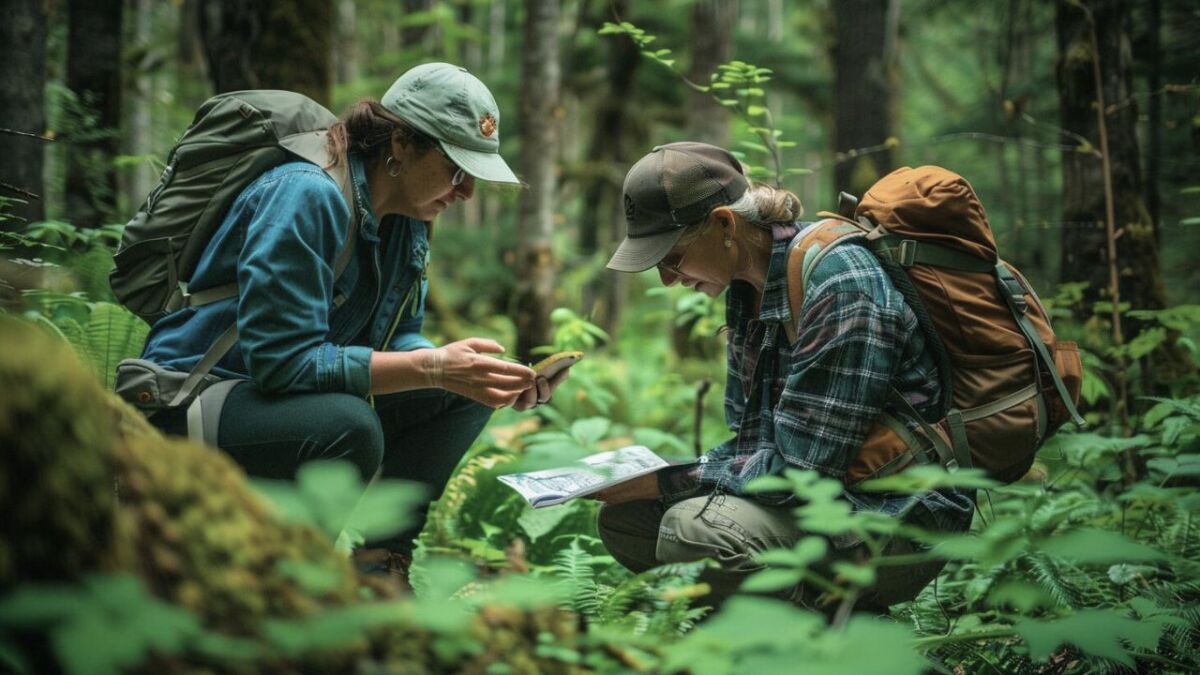
This is an important point. In our culture, we automatically connect age with wisdom – and that's a convenient assumption.
If you're 80, you've gathered 80 years of life experience. But 80 years of life experience don't make you a wise person. You also have to have processed that experience. You have to have listened. You have to have paused sometimes, instead of just moving on.
Otherwise, 80 years is just 80 years.
The most important quality: Humility
And then comes the sentence that touched me most deeply.
Serge says: Whoever calls themselves an Elder is usually not one.
There's no diploma for it. No course. No certification.
An Elder is recognized by the community. Not appointed by themselves.
And the foundation of everything is humility. Humility, as Serge calls it.
Not self-denial. Not insecurity. But this quiet, firm attitude: I don't place myself above others. I place myself beside them.
I find that extraordinarily refreshing in a time when so many loudly say "I'm an expert, I know better, follow me".
Especially as someone who works in wilderness education myself and has an audience. There's constant temptation to stand on your own "knowledge". On your own stage persona. On your own position.
When I listen to Serge, I realize: that wouldn't be a good path. I've written more about why I'm a wilderness mentor and not a "survival trainer" in my article on becoming a wilderness mentor – that fits with this attitude.
What an Elder really does
This is where it gets really interesting for me.
An Elder, says Serge, is not an answer-giver. He is a companion in thinking.
When someone comes to him with a problem, a question, a decision – he doesn't just give an answer. He plays through scenarios. He shows possibilities. He helps the other person recognize for themselves what is right for them.
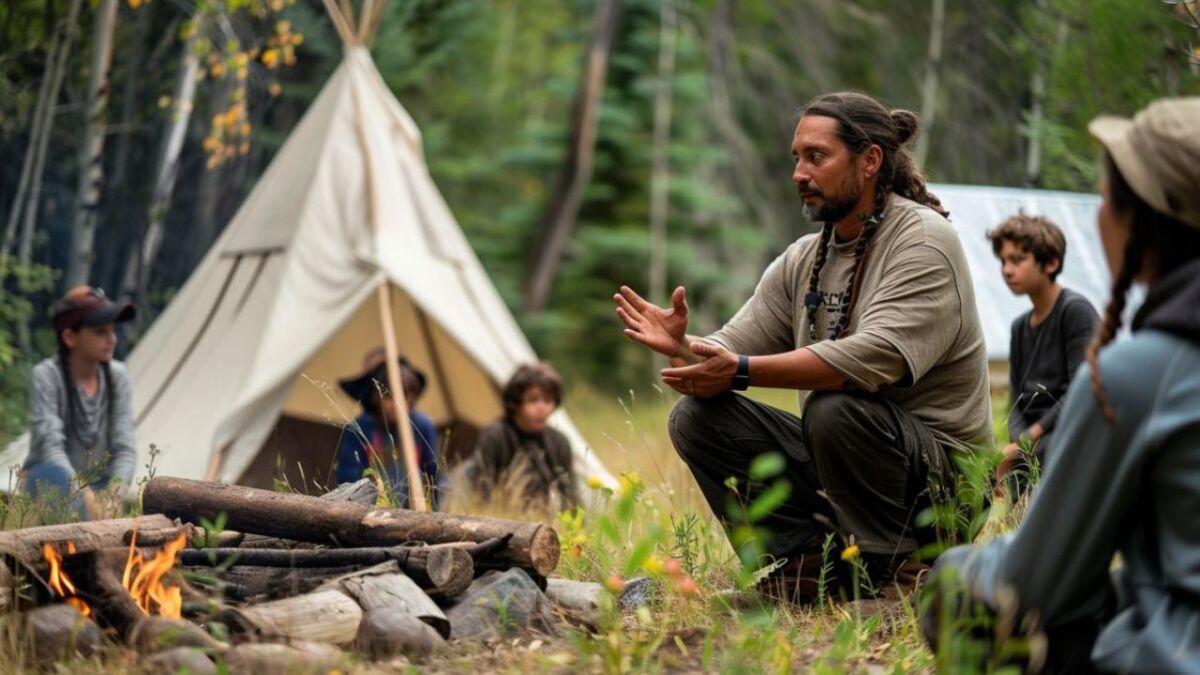
Anyone familiar with wilderness education hears a familiar bell ring at this description: this is Coyote Teaching.
Not giving the answer. Leading the other person to the answer. Asking questions instead of serving up answers. Awakening the other person's curiosity instead of overwhelming them with knowledge.
This is an ancient indigenous teaching method that also has a firm place in modern wilderness education.
And then Serge says something that sounds almost revolutionary in our hectic times:
An Elder doesn't make rushed decisions.
He pauses. He reflects. He asks himself: What are the consequences?
In a world that constantly drives us to immediate reaction – news, social media, the next stimulus, the next opinion – this is almost an act of resistance.
Pause. Think. Then act.
If you also catch yourself constantly getting faster instead of slower, feel free to check out my article on the curse of self-optimization. I wrote about how this acceleration wears us down.
The seven teachings of the Grandfather
Serge speaks in the interview about the seven teachings of the Grandfather – seven qualities you need to be a good person.
I'm sharing them here not as a dry list, but as an invitation to reflection:
Humility. The foundation of everything. Not placing yourself above others.
Courage. Not the courage of a hero – but the courage to get up in the morning, to speak, to act, even when it's uncomfortable.
Honesty. First to yourself. Even in the dark, where no one is watching.
Truth. The difference between "my truth" – which is always subjective – and what is actually true.
Love. Doing things with your heart. Looking for the positive in others, even when it takes longer than finding the negative.
Wisdom. Cultivating a respectful relationship with the earth. Only taking what you need. Leaving enough for those who come after us.
Respect. The one that begins with respect for yourself. Being able to say no respectfully too.
I don't find these seven things foreign. They don't sound like another culture that has nothing to say to me.
They sound like something I myself strive for. And usually don't achieve. And yet keep trying.
If you want to know more about how indigenous cultures live with such teachings, check out my article on 8 underestimated abilities of indigenous peoples of the Americas.
The cube in the circle – my favorite image
And then – to conclude my thoughts – a metaphor from Serge that I haven't been able to shake.
He talks about how problems are best discussed in a circle. Everyone sits in a circle. In the middle is a cube.
From his place, each person sees something different. One sees three dots. One sees five. One sees only one face.
No one is wrong. Each sees his truth.
But only when everyone talks – when everyone describes what they see – does the image of the whole cube emerge.
For me, this is one of the most beautiful images of what community means.
Not: One person knows it, the others listen.
But: Each person brings their perspective. And together we see more than any individual could ever see.
What this has to do with nature connection
And now I'm asking myself of course: What does all this have to do with what it's really about for me? With nature, with forest, with fire and herbs?
I believe: everything.
Because the Elder – in whatever tradition – is someone who understands themselves as part of a larger whole. Not as the center. Not as an expert explaining from above.
But as someone who listens. Who can pause. Who helps others find their own path.
That's also what nature teaches us, when we really look.
No tree places itself above another. No bird explains to the next how to sing properly.
Nature knows no hierarchy of know-it-all-ness.
It only knows cycles. Connections. Dependencies that all hold together.
Anyone who engages with the core routines of wilderness education quickly recognizes: what Serge says about Elders is essentially a nature instruction and way of life.
My two questions for you
If I may give this whole thought a purpose, then this one:
Question 1: Who in your life is your Elder?
Not necessarily old. Not necessarily wise in the classical sense.
But: Who really listens to you? Who helps you find your own answers instead of giving you theirs? Who is humble enough not to want to tell you what's right?
Think about it for a moment. Maybe someone comes to mind. Maybe not – and then that's also an important realization.
Question 2: In what moments are you yourself an Elder for someone else?
I like this question even better. Because it turns consuming into doing.
You don't need to be wise for that. You don't need to be old for that. You don't even need to feel like you're something special.
You just need to really listen to someone once a week. Really be there. Not immediately have an answer, but ask questions. Maybe that's already a little Elder moment for someone else.
My conclusion
I watched this interview and thought deeply about it afterward.
Because it shifted my image. Not broke it – shifted it.
The Elder is not the wise old man in the tent. Or at least not only.
He is someone who can pause. Who listens. Who helps others find themselves. Who doesn't place themselves above the community – but sits in its midst.
And who knows: Without community, there is no Elder.
I find that beautiful. And somehow also true.
If you want to see the original interview – the full conversation between Barbara and Serge – you can find it here: Interview with Serge Gaganon on the topic of Elders on the channel of the wilderness school WIR – Children of the Earth.
It's worth it. And maybe it will shift something in you too. Like it did for me.

Author of the guide
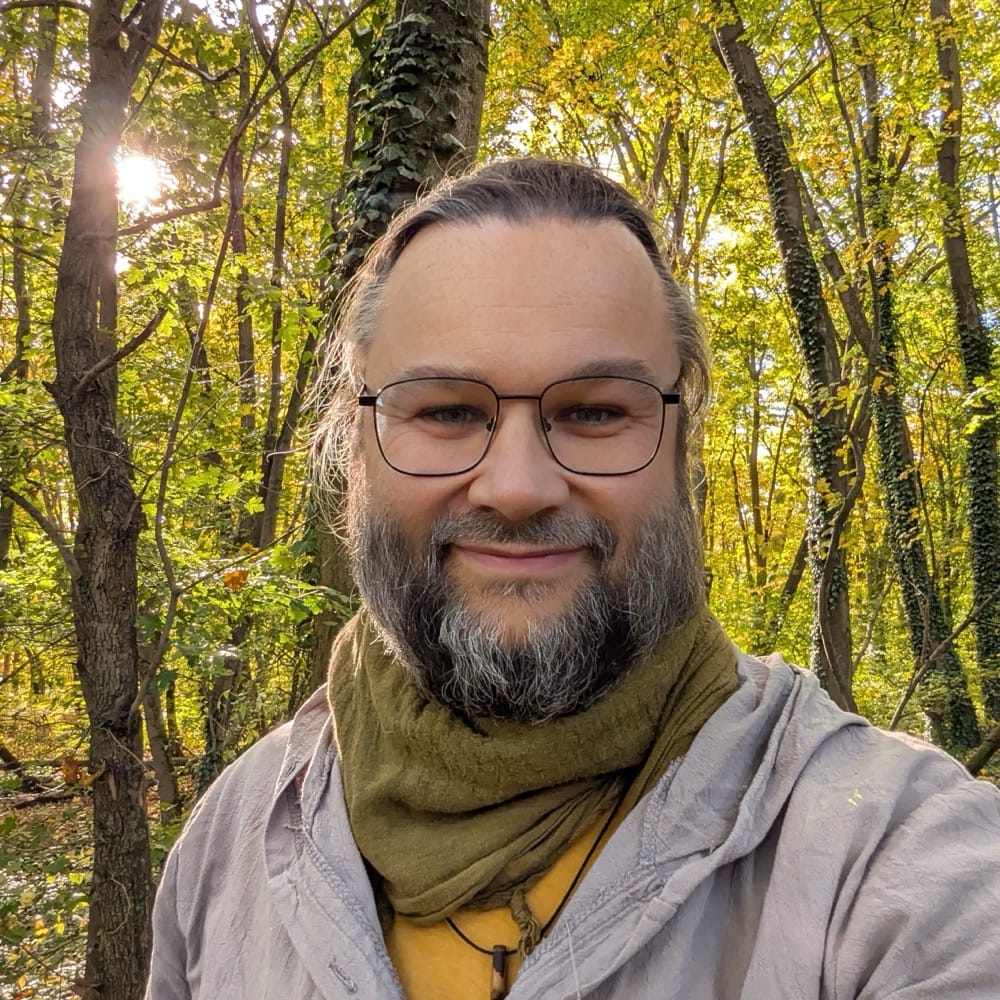
Martin Gebhardt
Hey, I'm Martin. On my blog, you will learn the basics and numerous details about living in the wild. I think survival, bushcraft and the good life in nature are the keys to happiness. Find me here on Instagram or on YouTube. You can find more about my mission on the About Me page.
Was this guide helpful?
12 people found this guide helpful.
5.00 out of 5 points (12 Ratings)
Comments (0)
This post may contain affiliate links. So if you click on the links and make a purchase, I will receive a small commission at no additional cost to you. Click here, to learn more about it.