

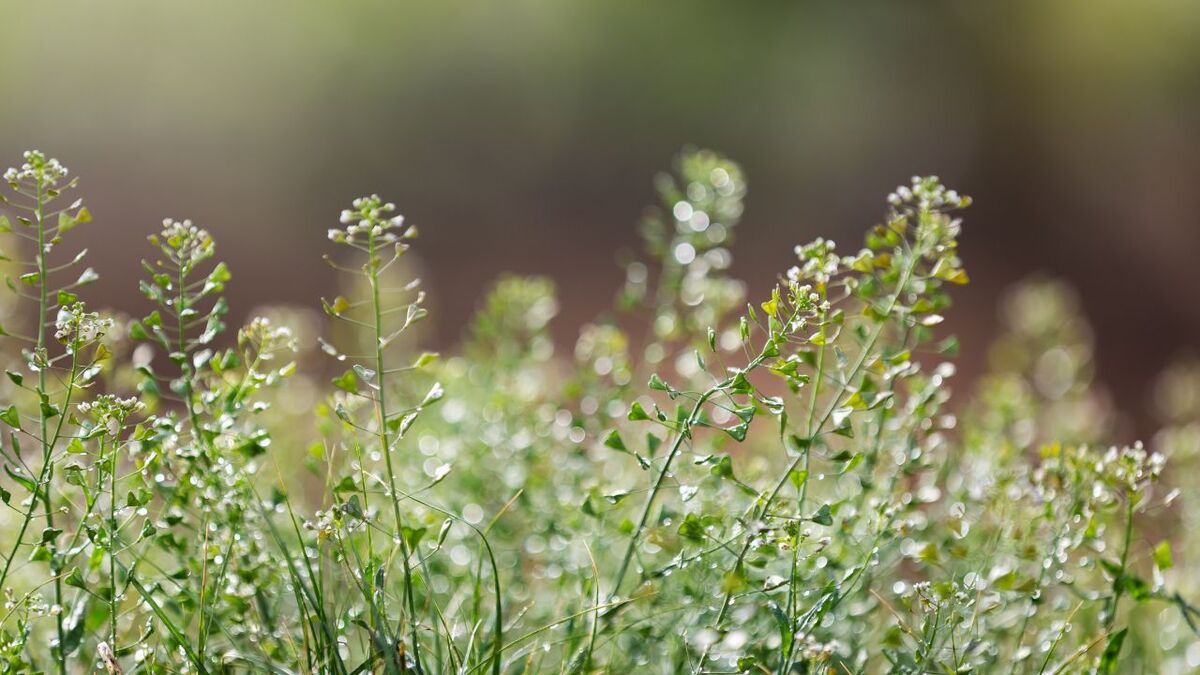
Shepherd’s Purse: From Sidewalk Weed to Versatile Wild Helper
Free 35 Survival Hacks you'll love!
You will get 35 easy-to-implement survival hacks so that you don't have to stand aimlessly in the forest from tomorrow when things get tough. Take your skills to the next level!
DOWNLOAD HERE FOR FREE👉 The key facts from this guide
- Shepherd's Purse (Capsella bursa-pastoris) is one of the most common wild plants in the world—growing in pavement cracks, along roadsides, and in every garden.
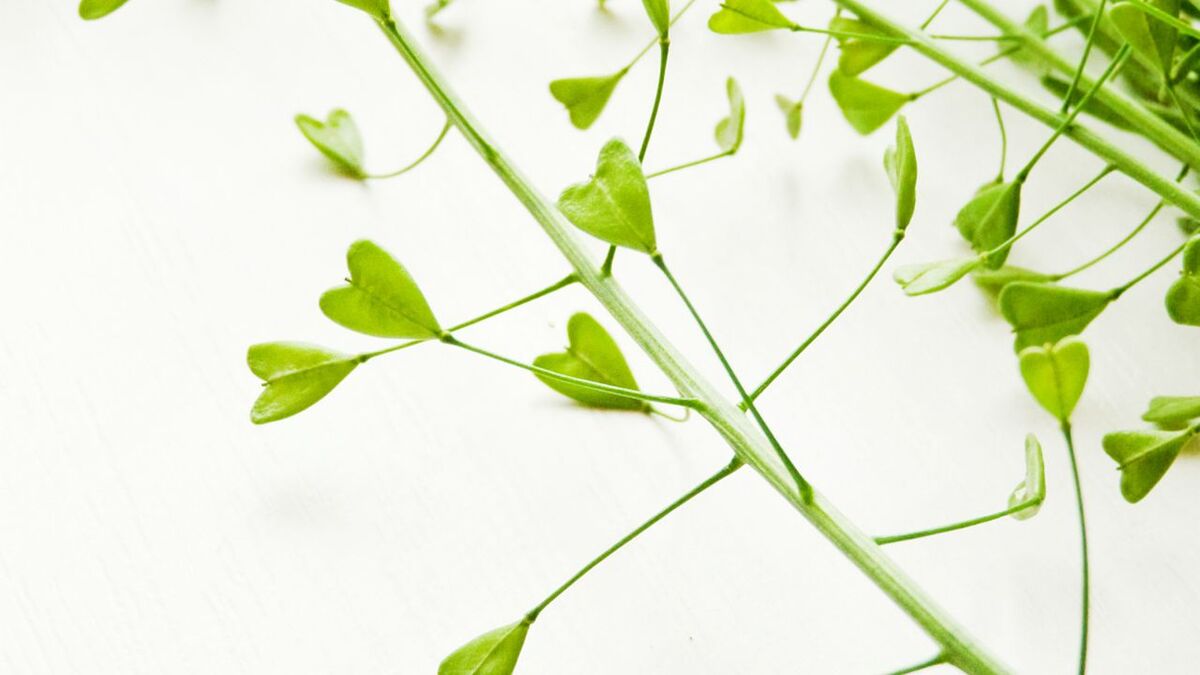
- Key identifying feature: Heart-shaped seed pods (resembling small shepherd's pouches) on a slender plant.
- Risk of confusion? Virtually none. Any potential lookalikes are non-toxic.
- Taste: Peppery and sharp, reminiscent of cress and arugula—the root even tastes like ginger and horseradish.
- Medicinal properties: One of the most potent hemostatic (blood-stopping) wild herbs—a "meadow bandage" for when you're out and about.
- Important warning: Do not use during pregnancy—the plant stimulates uterine contractions.
- Bushcraft highlight: You can make your own "peasant-style mustard" from the seeds over a campfire.
It was just an ordinary walk.
My son, five years old at the time, was walking ahead of me through a Berlin side street. Suddenly he stopped, knelt down on the curb, and asked:
"Dad, what's that?"
He pointed to a small, inconspicuous plant growing out of a paving crack. Narrow leaves, a thin stem, with little heart-shaped things.
I bent down. And I got annoyed with myself.
There I was, someone who had been walking through forests with people for years, showing them plants – and I had walked past this herb thousands of times without really seeing it.
Shepherd's purse.
So simple. So everywhere. And so underestimated.
In that moment, through my five-year-old son's eyes, I understood: the most fascinating plants aren't hidden in secret forests. They often grow right outside our front door. We just have to stop dismissing them as "weeds."
Today I'm showing you why shepherd's purse has become one of my favorite plants. And why it should become one of yours.
The Name Reveals the Story
Before we get practical, a word about the name.
Capsella bursa-pastoris – Latin and a bit unwieldy. But there's a beautiful story behind it:
- Capsella comes from the Latin capsa meaning "small capsule"
- Bursa-pastoris literally means "shepherd's purse"
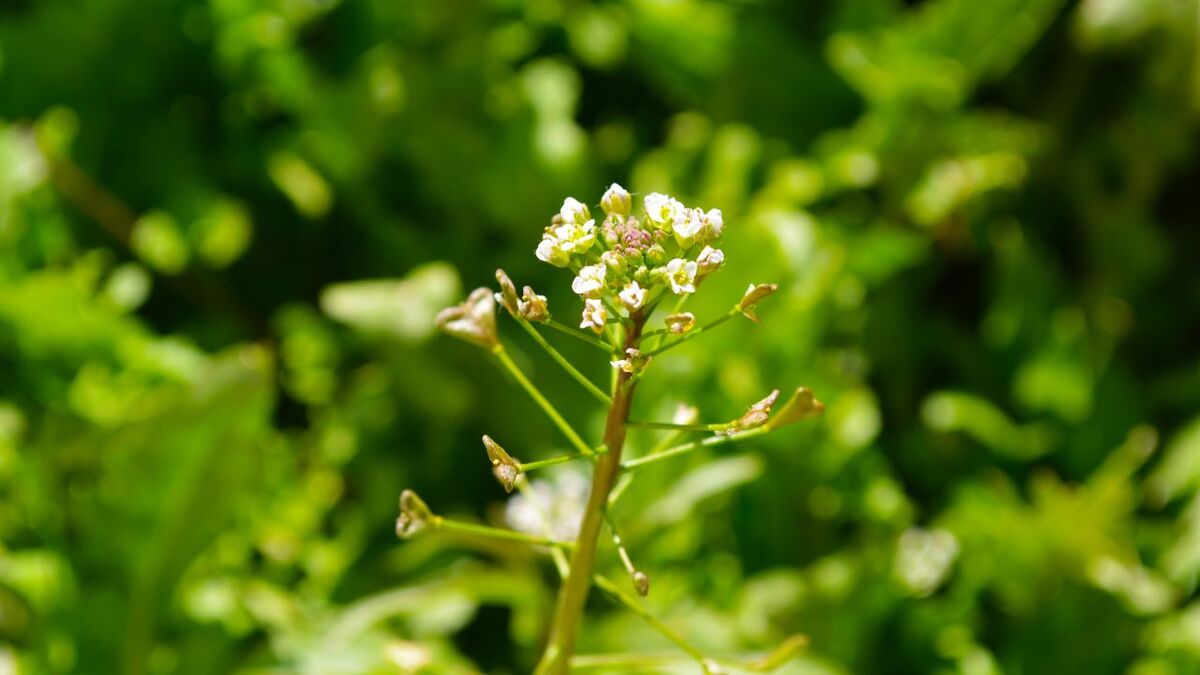
In the Middle Ages, shepherds carried their lunch in small leather satchels worn across their bodies when they went out to the fields. These had exactly this characteristic shape: triangular, slightly rounded, with a small indentation at the top.
And when you see shepherd's purse in full bloom and fruit – that's exactly the shape its little seed pods have.
That's plant observation in the truest sense: our ancestors looked carefully, recognized a similarity, and named the plant after it. Brilliant.
How to Identify Shepherd's Purse With Certainty
Now for the practical part. Shepherd's purse is a member of the mustard family (Brassicaceae) – the same family as mustard, cabbage, cress, and horseradish. Already that gives you confidence: in this family there are no fatally toxic look-alikes in our region.
But be careful: if you don't look closely, beginners can confuse members of the mustard family with members of the carrot family (Apiaceae).
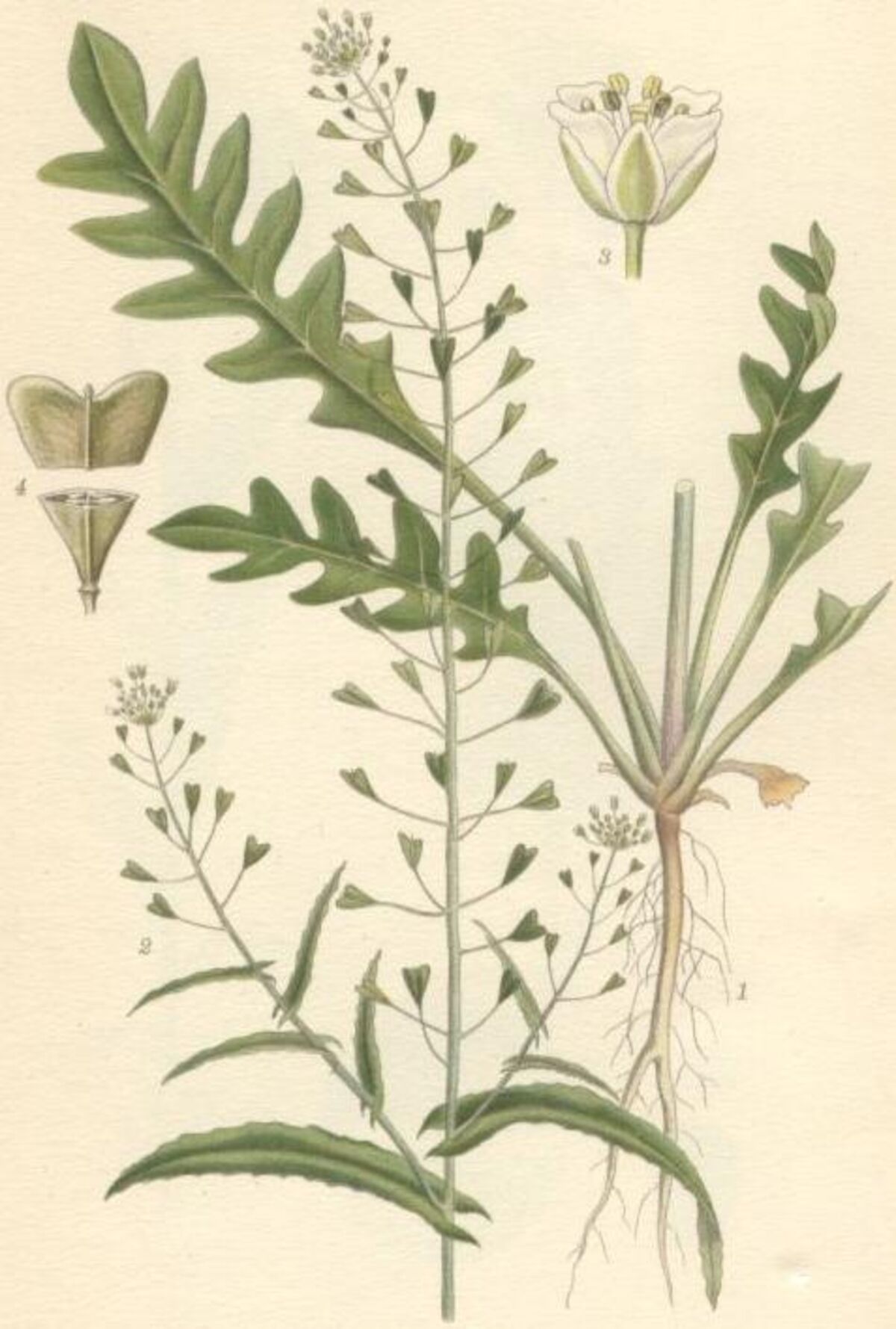
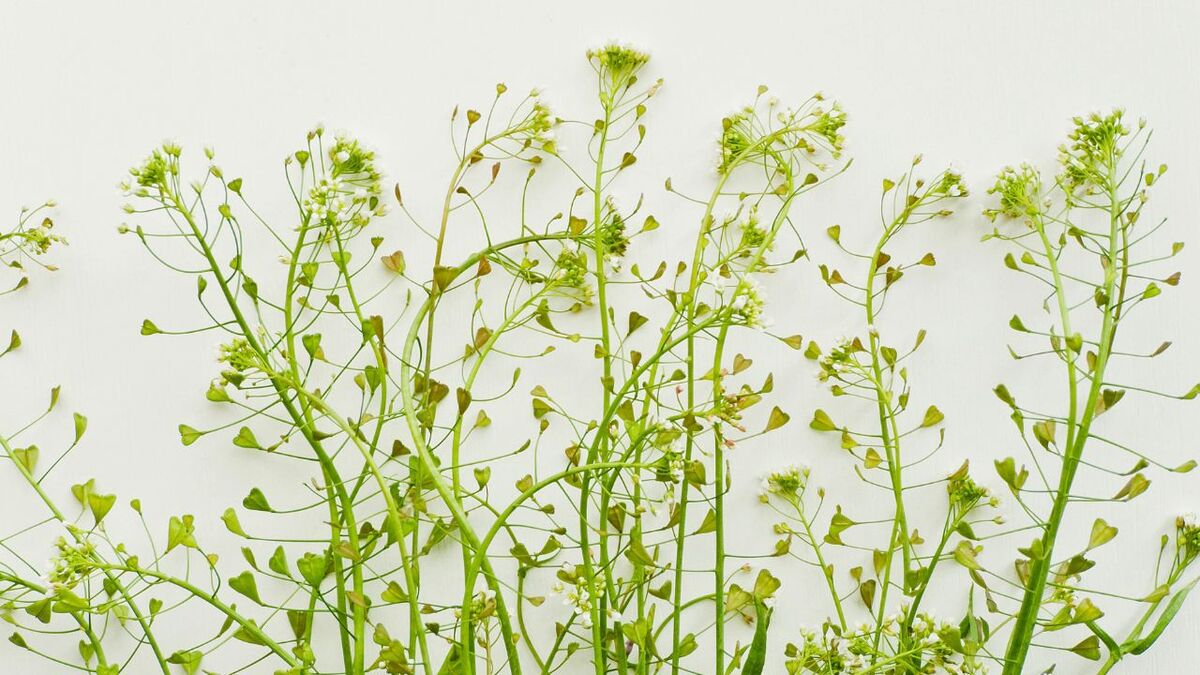
Height: 10 to 50 cm, sometimes only 2–5 cm on poor soil, in exceptional cases up to 70 cm.
Root: A strong taproot that goes up to 90 cm deep into the ground – even though the plant looks so small above ground. Here lies one of its survival secrets.
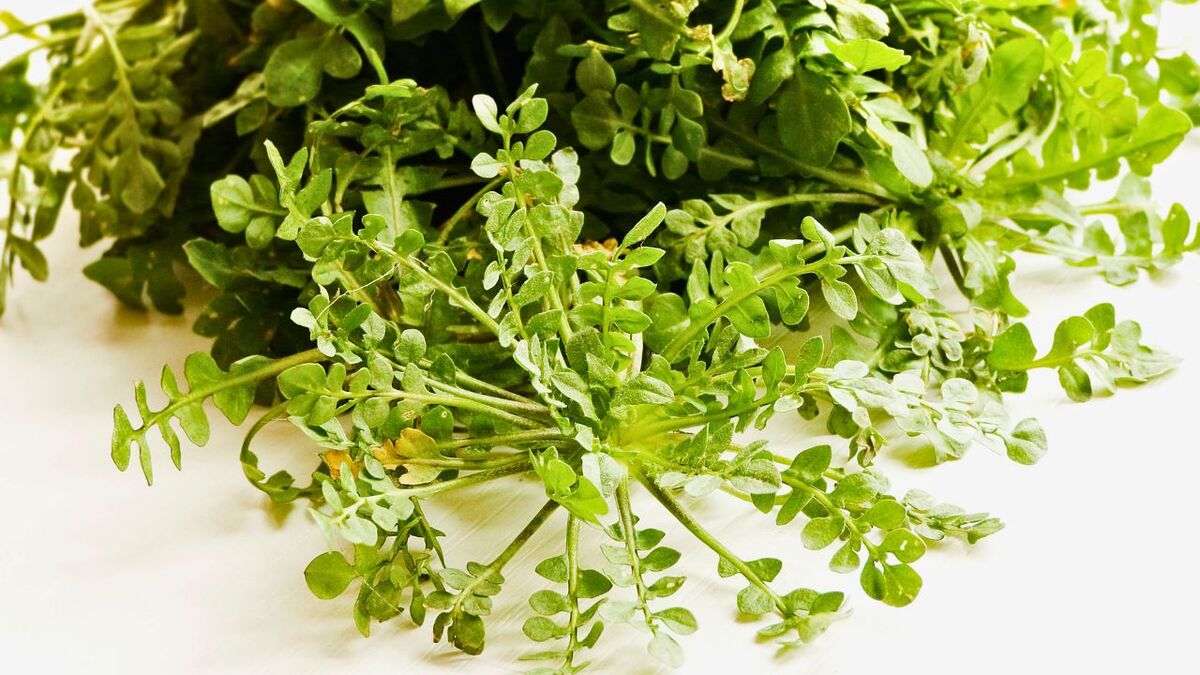
Leaves (the important part):
The plant has two completely different leaf types – which initially confuses beginners:
- Basal rosette (at the base on the ground): deeply toothed, pinnately divided, strikingly resembles dandelion leaves
- Stem leaves (high up on the stem): small, lance-shaped, embrace the stem with arrow-shaped lobes – this is a reliable identification feature
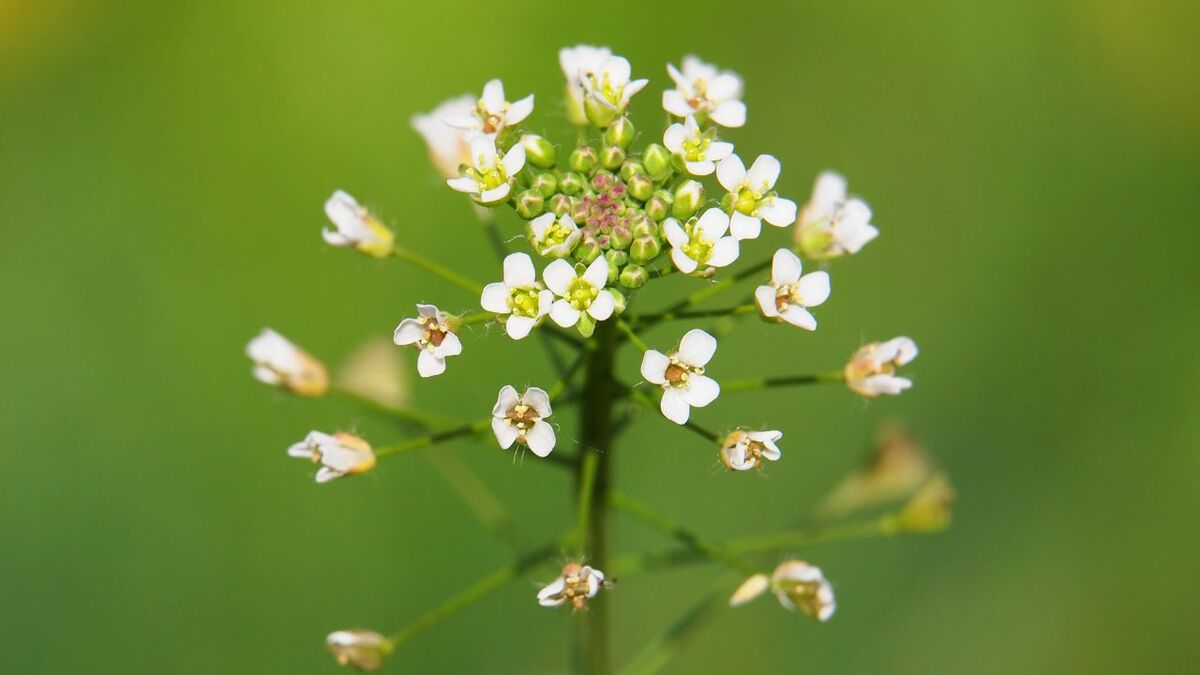
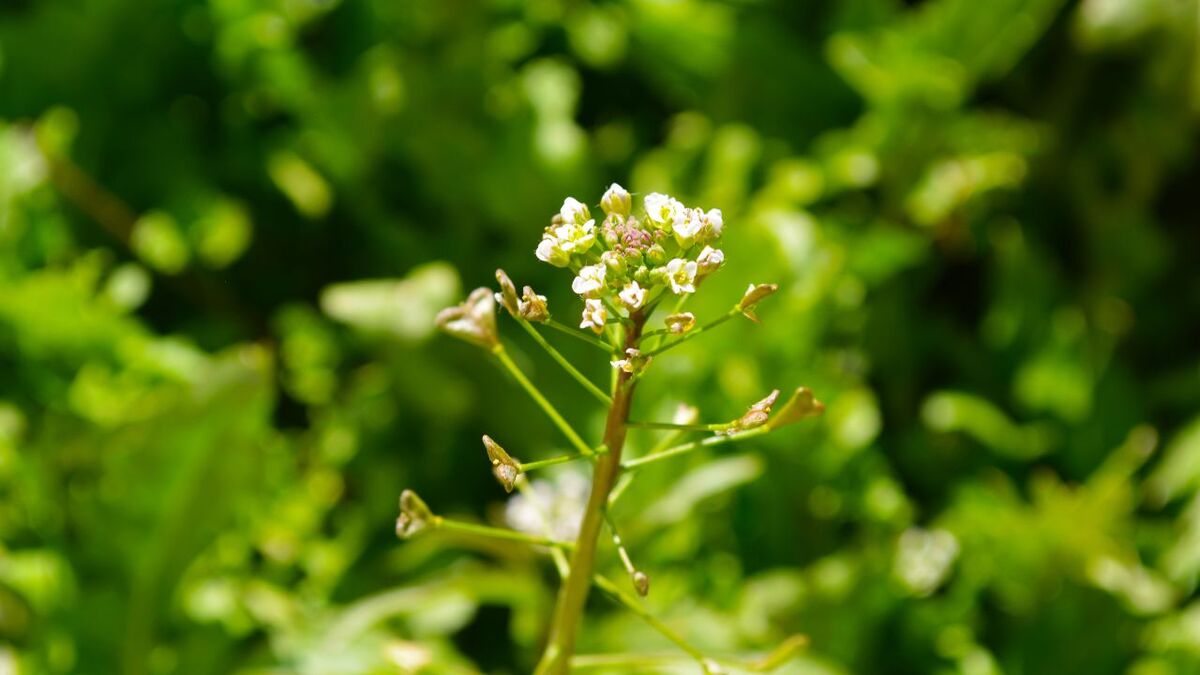
Flowers: Small, white, four-parted – typical of mustard family plants. Hardly conspicuous, about 2.5 mm in diameter.
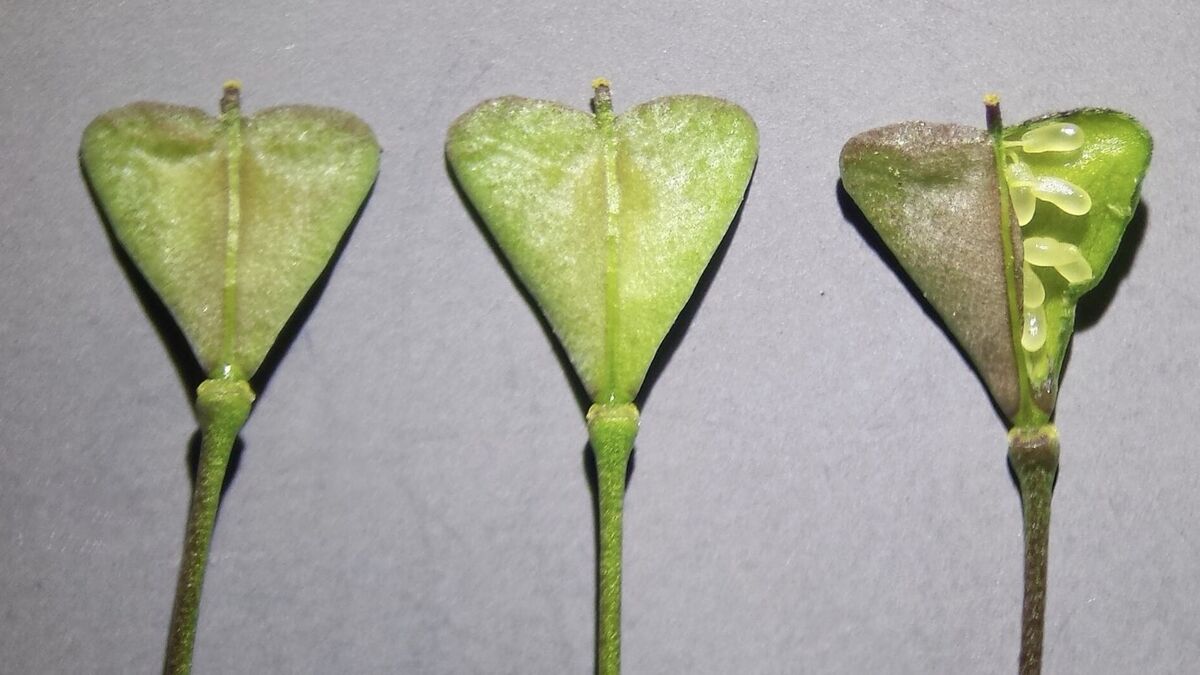
The definitive identification feature – the seed pods:
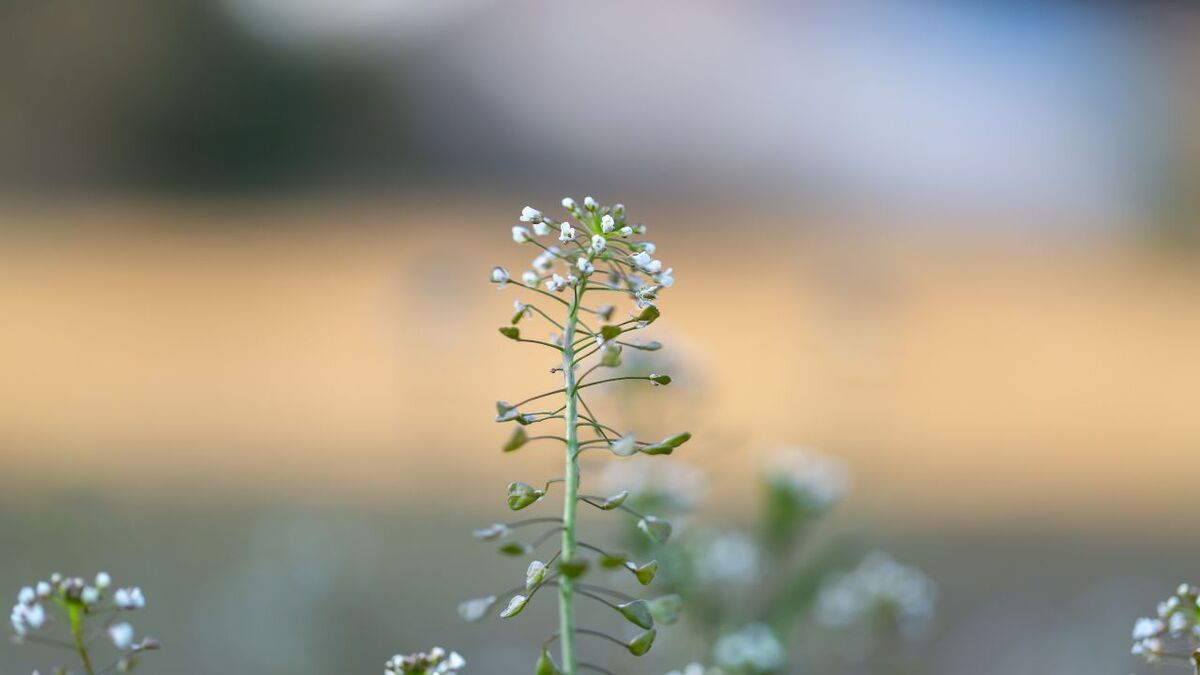
After flowering, the plant forms its namesake little heart-shaped to triangular pods. They hang horizontally on the stem, 4–9 mm large, with a little indentation at the top.
When you see this shape – you've identified shepherd's purse 100 percent for certain.
Look-Alikes – All Harmless
Here's a reassuring message: with shepherd's purse there are no dangerous look-alikes. All possible confusions are themselves edible wild herbs.
| Plant | Difference | Status |
|---|---|---|
| Field Penny-cress | Seed pods round, coin-shaped, larger | Edible, tastes garlicky |
| Dandelion (young) | Only leaf rosette, white milky juice when broken | Edible |
| Cuckooflower | Rounded leaflets, pale flowers | Edible |
My tip for beginners: Wait to harvest until the plant has developed the heart-shaped pods. Then there's no doubt. For more on safely identifying edible wild plants, check out my article on safely identifying edible wild plants.
Where Will You Find Shepherd's Purse?
The short answer: practically everywhere.
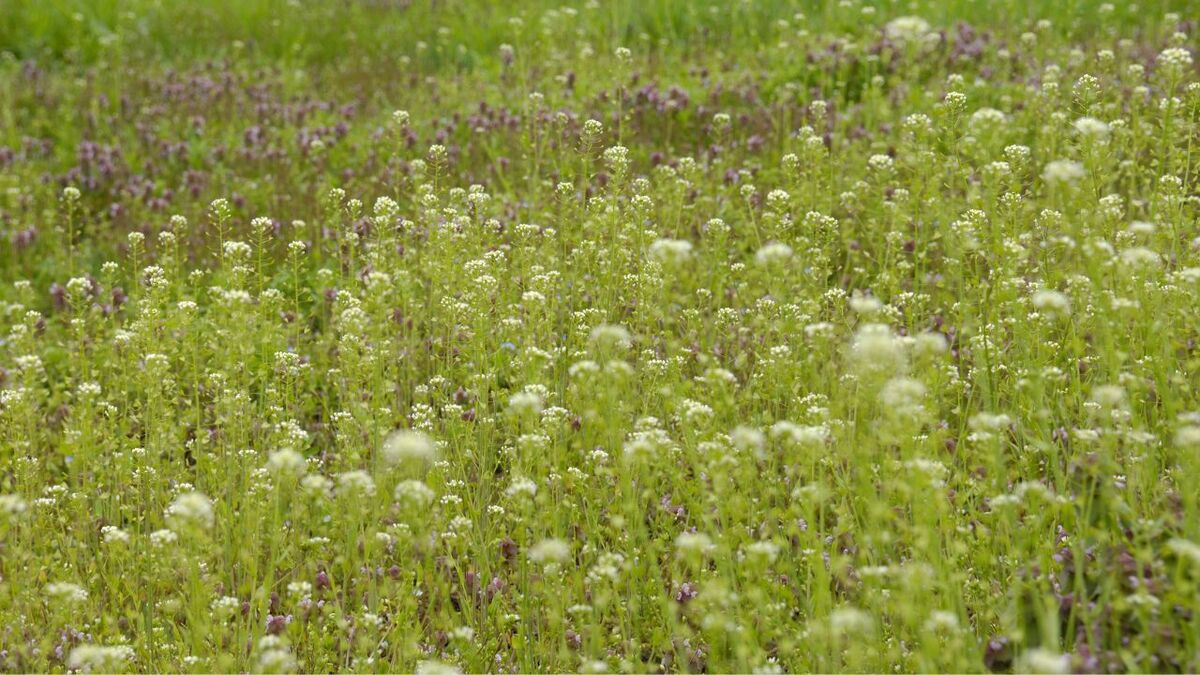
Shepherd's purse is a pioneer plant and one of the most common wild herbs worldwide. It loves disturbed soil – places where we humans have churned, trampled, or compacted the earth.
Typical habitats:
- Paving cracks in cities
- Path edges
- Rubble heaps and wastelands
- Crop fields and gardens
- Meadow margins
- Railway embankments
Ecologically it's an indicator plant – where shepherd's purse grows in large quantities, the soils are usually:
- Nitrogen-rich
- Loose and warm
- Sandy to loamy
On pastureland it can indicate overgrazing, because it colonizes areas where the grass cover has been destroyed by excessive trampling.
Important: Despite this ubiquity, you should follow the hand bouquet rule. In Berlin, there's also a general picking ban in parks – so it's better to gather outside the city.
The Ingenious Trap: Shepherd's Purse Catches Worms
Here's where it gets wild.
Shepherd's purse is not just a plant – it's an almost carnivorous plant.
What science has only discovered in recent years: when the tiny seeds of shepherd's purse come into contact with soil moisture, they secrete a sticky slime layer (myxospermy).
This slime layer is a trap.
It releases chemical attractants that draw small soil worms (nematodes). These become trapped in the sticky slime. Then the seed releases toxins that kill the worms. Subsequently it releases enzymes that digest the dead worms.
And the nitrogen from the digested worms is absorbed by the germinating shepherd's purse seed.
In laboratory experiments, only 25 percent of nematodes survived in the presence of shepherd's purse seeds – compared to 93 percent in the control group.
This is no myth. This is science.
When I tell this in my Wildimpuls courses, I often see eyes widening. This inconspicuous plant that we trample in cracks is a highly developed predator that hunts its own fertilizer.
Once you understand that, you never look at a so-called "weed" the same way again.
In the Wild Kitchen – What You Can Eat
Shepherd's purse is a nutritional powerhouse:
- Vitamin C in large quantities
- Plant protein
- Amino acids (including proline)
- Omega-3 fatty acids
- Iron, potassium, calcium, magnesium
And the best part: you can use practically all parts of the plant. Here's an overview depending on the season.
Spring: The Leaf Rosette
Harvest time: March to June, before the plant shoots up.
The young, tender rosette leaves have a mild, cress-like taste with a slight peppery bite. Uses:
- Raw in wild herb salads (together with chickweed and mâche)
- Finely chopped in herb quark
- On buttered bread
- In green smoothies
- Sautéed like spinach over a campfire
- As an addition to wild herb soups
Important: Once the plant flowers, the leaves become tough and bitter. Then enjoy other parts instead.
Spring: The Root – The Secret Tip
This is my favorite.
In early spring, when the taproot is still young and not woody, you dig it out, clean it, dry it, and grate it finely.
The result: A powder that tastes surprisingly like ginger and horseradish.
You use it to season stews over a campfire, add it to a cup of hot water for a warming infusion on cold days, or refine wild game dishes.
Most people don't know about this use. It's one of the finest surprises shepherd's purse has to offer.
Summer: Flowers and Young Pods
The tiny white flowers and the still-green, soft pods you can eat directly off the plant as savory snacks.
Taste: nutty-mild, a hint of young peas with cress-like pungency.
Lovely garnish over soups and salads – or marinated in nut oil with a bit of salt.
Late Summer/Fall: The Ripe Seeds
The ripe seeds in the dried pods carry the most intense pungency of the whole plant. Historically they were used as a pepper substitute.
You harvest them by gently shaking the dried stems over a bowl – the seeds come tumbling out.
And that brings us to one of my absolute favorite campfire recipes.
Bushcraft Recipe: Shepherd's Purse Mustard (Farmer's Mustard)
This is campfire magic.
What you need:
- Ripe shepherd's purse seeds (about 2 tbsp)
- Optional: mustard seeds in equal parts
- A pinch of salt
- 1 tsp honey or cane sugar
- Some water and vinegar (ratio 50:50)
- Mortar or two flat stones
How to proceed:
- Grind seeds in a mortar or crush between two stones
- Bring water and vinegar briefly to a boil and cool
- Mix crushed seeds with salt and honey in a bowl
- Mix in the water-vinegar mixture to form a paste
- Let rest for at least a few hours, ideally a week
Why the resting time? Only through contact with the liquid do the enzymes in the seeds activate and split off the mustard oils. Before that, the paste only tastes bitter – after resting, you have a full-fledged, pungent, antibacterial farmer's mustard.
Tastes great with wild game, on stick bread, or simply on a slice of bread.
If you're interested in learning more wild herb recipes, check out my article on nine recipes with wild herbs for camping and outdoor.
Shepherd's Purse as a Medicinal Plant – The Meadow Plaster
Now for the medical part. This is where it gets impressive.
Shepherd's purse is one of the most powerful blood-stopping wild herbs of Europe. Commission E and the European Medicines Agency have officially confirmed its effectiveness.
The blood-stopping effect is based on a combination of compounds:
- Biogenic amines (choline, acetylcholine, tyramine, histamine): narrow blood vessels
- Flavonoids (diosmin, rutin, quercetin): strengthen capillary walls
- Tannins and saponins: draw wound edges together
- Peptides with oxytocin-like effects: contract smooth muscle
In the Field – the Meadow Plaster
If you injure yourself while bushcrafting:
- Pluck some above-ground plant parts (pods, leaves, flowers)
- Chew them in your mouth or crush them between two clean stones
- Press the plant pulp directly onto the bleeding wound
- Hold pressure for 5–10 minutes
The bleeding stops remarkably quickly. There's nothing esoteric about this – this is plant medicine that has worked for thousands of years.
More about wilderness first aid in my article on bushcraft first aid.
For Nosebleeds
Classic folk remedy:
- Gently insert a crumbled, slightly damp leaf into the affected nostril
- Or brew a strong tea, let it cool, soak a cotton pad in it
As a Tea for Heavy Menstrual Bleeding
1–2 tsp dried herb with 200 ml hot (not boiling!) water, let steep for 5–15 minutes. 2–3 cups daily.
Tip: Start drinking 3–5 days before expected cycle start, then the effect is strongest.
WARNING: Never During Pregnancy
⚠️ Shepherd's purse has labor-promoting and uterus-contracting effects. It can cause premature labor or even miscarriage during pregnancy.
Absolute rule: No shepherd's purse during pregnancy – neither as tea nor in salads, neither as seasoning nor as tincture.
Use is permitted only during active labor (to support contractions, under midwife supervision) and after birth (to help uterine involution and regulate postpartum bleeding).
People taking blood thinners should also consult their doctor first.
A Brief Journey Through History
The history of shepherd's purse is fascinating.
▶️ In ancient times Hippocrates and Dioscorides already praised it – Hippocrates called it "the most important uterine remedy" of his time.
▶️ Hildegard of Bingen prescribed it in the Middle Ages for excessive bleeding and used it in healing wines for throat infections.
▶️ Obscurity: With modern pharmaceuticals, the herb fell into obscurity and was regarded merely as a "medicinal plant for poor people."
▶️ The dramatic renaissance: In World War I the supply routes for blood-stopping medications broke down. Military doctors consulted old manuscripts – and rediscovered shepherd's purse. It saved countless lives.
This renaissance led to the scientific recognition we have today.
In China it's been cultivated as Jìcài (荠菜) since the Zhou Dynasty as a vegetable. In Korea it's called Naengi (냉이) and is a central ingredient in traditional soups and side dishes. The indigenous peoples of North America also roasted the seeds and made flour from them.
The Spiritual Dimension – Paracelsus and the Doctrine of Signatures
If you delve deeper into wilderness pedagogy, you might eventually come across the Doctrine of Signatures of Paracelsus. It's the old notion that the form, color, and growth behavior of a plant reveals its healing effect.
Shepherd's purse has a special signature that has fascinated me for years:
The little pods are arrows pointing inward – not outward, like most plants, but directly toward the central axis.
This geometry is genuinely rare in the plant kingdom. Symbolically translated: shepherd's purse helps to draw vital force back inward. To hold back something that is flowing out.
▶️ In the physical sense: blood.
▶️ In the emotional sense: our own energy, which we often lose to too many things and people.
If you like the "esoteric" interpretation, you can see it that way. If you prefer to keep it practical, you can see it as a beautiful metaphor. For me, the Doctrine of Signatures is above all: an invitation to really look closely at plants – instead of just consuming them.
Shepherd's Purse is One of the Most Remarkable Plants That Accompanies Humanity
It grows everywhere.
It's safe to identify.
It nourishes us.
It heals us.
It has stories and secrets that make us wonder – from the arrow shape of the pods to the deadly slime trap for soil worms.
And yet most people walk past it daily without seeing it.
My proposal: go outside this afternoon with fresh eyes. Look in the paving cracks, along path edges, in front gardens. Search for a slender plant with the little heart-shaped pouches along the stem.
Once you've found it – squat down for a moment. Look at it. Ask yourself what it can do.
And then maybe pluck a few leaves, chew them and taste that fine peppery bite. Maybe that's your entry point into a whole new relationship with the plants around us.
Because in the end, that's the most important lesson shepherd's purse teaches us: What we dismiss as worthless today is often the most valuable.

Sources for the guide
https://de.wikipedia.org/wiki/Gew%C3%B6hnliches_Hirtent%C3%A4schel
https://pfaf.org/user/Plant.aspx?LatinName=Capsella+bursa-pastoris
https://www.floraweb.de/php/artenhome.php?suchnr=1091&
https://daten.bayernflora.de/de/info_pflanzen.php?taxnr=1091

Author of the guide
Martin Gebhardt
Hey, I'm Martin. On my blog, you will learn the basics and numerous details about living in the wild. I think survival, bushcraft and the good life in nature are the keys to happiness. Find me here on Instagram or on YouTube. You can find more about my mission on the About Me page.
Was this guide helpful?
20 people found this guide helpful.
5.00 out of 5 points (20 Ratings)
Comments (0)
This post may contain affiliate links. So if you click on the links and make a purchase, I will receive a small commission at no additional cost to you. Click here, to learn more about it.