

7 Things That Change When You Go to the Forest Every Week for a Year
Free 35 Survival Hacks you'll love!
You will get 35 easy-to-implement survival hacks so that you don't have to stand aimlessly in the forest from tomorrow when things get tough. Take your skills to the next level!
DOWNLOAD HERE FOR FREE👉 The key facts from this guide
- One year, one place, every week: Not hiking, not bushcraft – just being there. 20 minutes to an hour is enough.
- After 6–8 weeks, your perspective changes. You no longer see "the forest", but the differences between this week and last week.
- Stress relief takes time. The lasting effect came to me between week 10 and 15 – before that, each visit was just a quick reset.
- Seasons are not a four-part block, but a movie. Only consistency makes the fine transitions visible.
- The inner stillness is uncomfortable at first. That is normal and passes – starting around week 15, it became a familiar place for me.
- Rain and cold lose their dread. "Uncomfortable" and "bad" are not the same thing – the mind learns that on its own.
- Aimless attention returns – the way you looked at things as a child watching a beetle.
- In the end, what remains is a relationship with a place. You are no longer a visitor, but part of the pattern.
- You need nothing for this: no equipment, no national park, no plan. An urban forest or a park with old trees is enough.
It was a Tuesday evening in January, somewhere around 4 p.m.
Grey, cold, not a soul in sight. I was standing next to a beech tree that I had come to know better than some of my colleagues. The bark was wet. So was I.
And yet, there was nowhere else I wanted to be.
At that point, I had been heading outdoors at least once every week for about nine months.
Not for hiking, not for a bushcraft project. Just to be there. Sit down. Observe. Sometimes for an hour, sometimes for twenty minutes.
Anyone who knows me knows: as a wilderness mentor, I spend a lot of time outside. But "spending a lot of time outside" and "consciously going into the forest every single week" – those are two entirely different things.
In this article, I am sharing the 7 changes I noticed. Some came creeping in quietly. Some caught me off guard. And one genuinely blew me away.
1. You start seeing things that used to be invisible
The first few weeks: nothing out of the ordinary. Trees, dead leaves, maybe a squirrel. Familiar territory. Seen it before. Moving on.
But at some point – I’d estimate after six to eight weeks – something began to shift.
- I noticed that the beech tree at the entrance looked different every Thursday compared to Monday.
- That the wren always sang in the exact same spot, but never at the exact same hour.
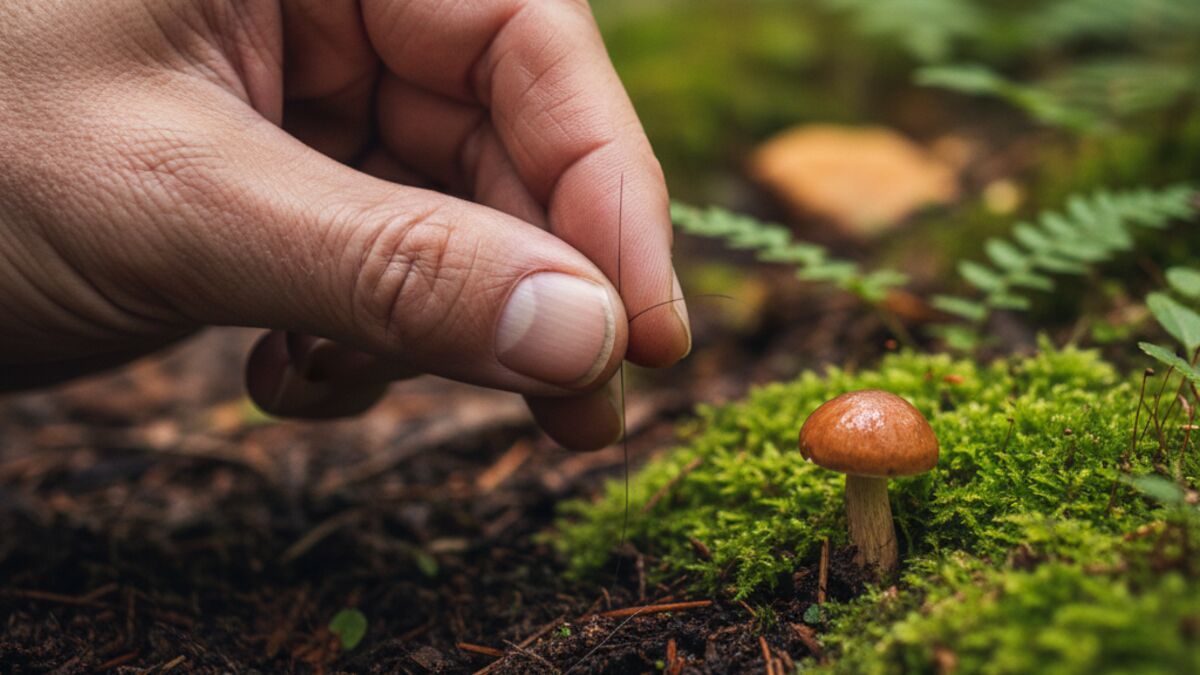
- That in November, mushrooms suddenly sprouted in places that were completely bare in September.
Not because I had gotten any smarter. But because my gaze had settled down.
The brain usually filters out everything it categorizes as "known."
Yet when you return to the exact same place every week, it begins noticing the differences instead of the commonalities. You are no longer looking at "the forest." You are looking at this specific forest. Today. Right now.
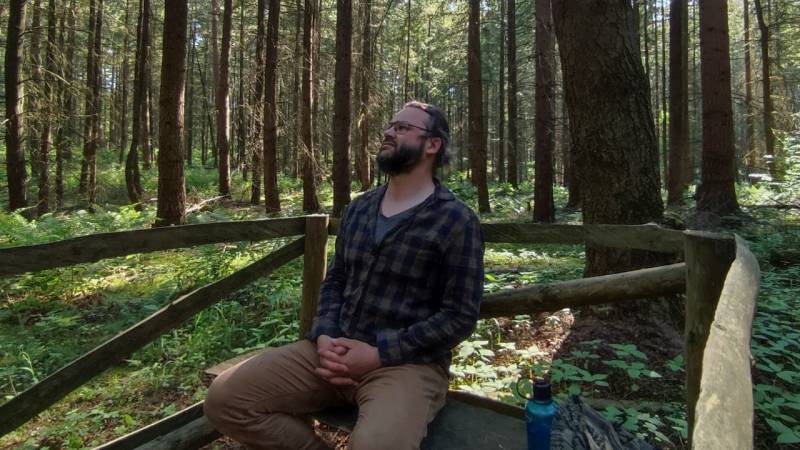
By the way: In nature awareness education, we call this the "sit spot" – one of the most effective routines for building a deep connection to nature. Here I explained in detail what lies behind it →
2. Your stress levels drop – sustainably
That is hardly a secret. The fact that the woods reduce stress can now be found in every magazine sandwiched between smoothie recipes and yoga advice.
Here, however, is the difference I noticed after an entire year: it’s not about the single forest outing. It’s about the consistency.
During the first few weeks, a walk in the forest felt like a reset button. I went in stressed, walked out calmer. Like a brief holiday.
A few months in, something else happened. The background noise quieted down. Not just out among the trees – also at my desk, on the subway, while grocery shopping. It was as if someone had turned the volume dial on my inner radio down a few notches.
And something else shifted: my priorities reordered themselves. That "urgent" email from my boss at the time suddenly didn't seem nearly as critical after an hour in the woods.
Japanese researchers coined the term "Shinrin-Yoku" – forest bathing – for this. But what the studies hadn't told me: the effect takes time to build up.
Going for a walk in the woods once is like going to the gym once. Pleasant. But it won't build muscle.
The real transformation happened for me somewhere between week 10 and 15. The moment the weekly visit was no longer an appointment on my calendar, but an anchor.
3. You realize you had never truly experienced the seasons
Sounds absurd, doesn't it? Of course you know the seasons. Spring, summer, autumn, winter. Done.
Yet when you stand in the exact same spot every week, you realize: these are not four distinct blocks. This is a continuous movie. And up until now, you've only been watching the trailers.
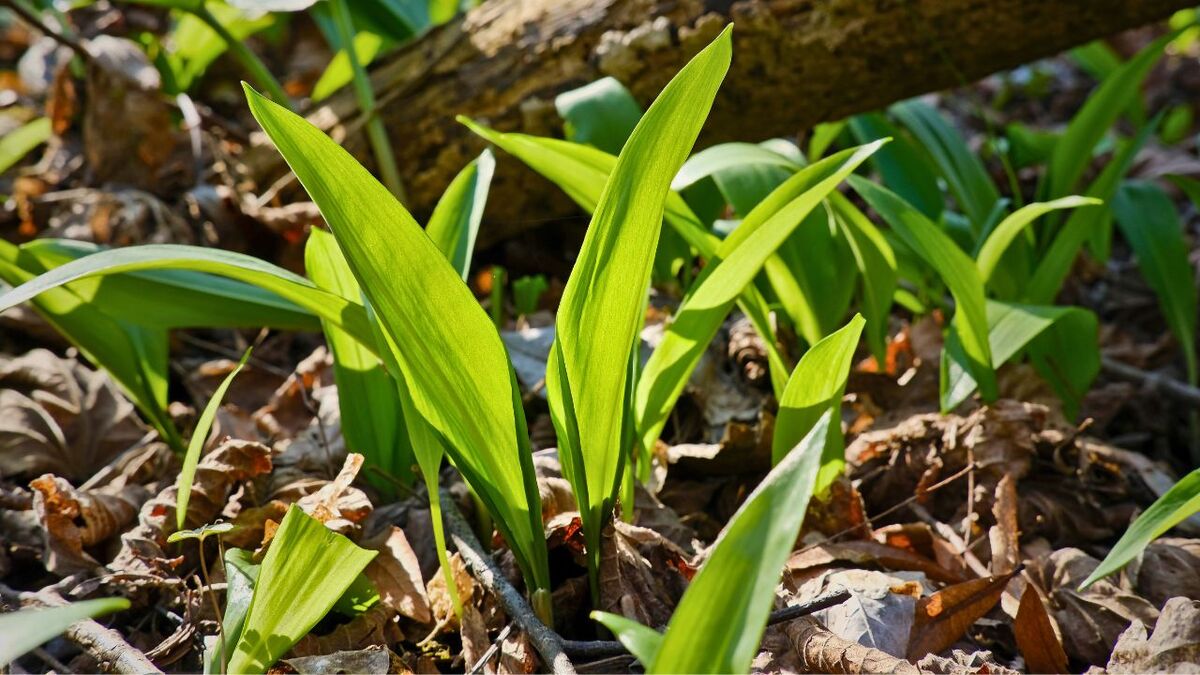
There was this moment in mid-March when I first noticed that the ground smelled different. Not like plain soil. Like renewal and awakening. Tough to describe. A blend of moisture, decay, and something sweet. Two weeks later, wild garlic covered the spot.
Or that moment in September when it struck me that the birds had become quieter. Not gone – just softer. As if the forest were breathing more slowly.
You don't catch things like that on a monthly Sunday stroll. For that, you need regularity. The direct comparison between this week and the last.
My tip: Record your observations in a nature journal – you will be amazed at what reveals itself after a few months. Here are several templates to get started.
4. You become quieter – and that feels uncomfortable at first
Weeks 1 to 4: I walked through the woods while my head was buzzing. Shopping list, emails, yesterday's conversation, the kids. The forest was merely the backdrop. The cinema in my head was the main feature.
Weeks 5 to 12: There were moments – fleeting, brief – where everything went quiet. Not outside. Inside. And that felt surprisingly uncomfortable. Because silence means: you hear yourself. And what surfaced at times wasn't always pleasant.
From week 15 or so onwards: The silence became a familiar space. No longer eerie, no longer unsettling. Just present. Like a chair you settle into. At times I even felt like my mind wasn't doing anything at all – and that was wonderfully liberating.
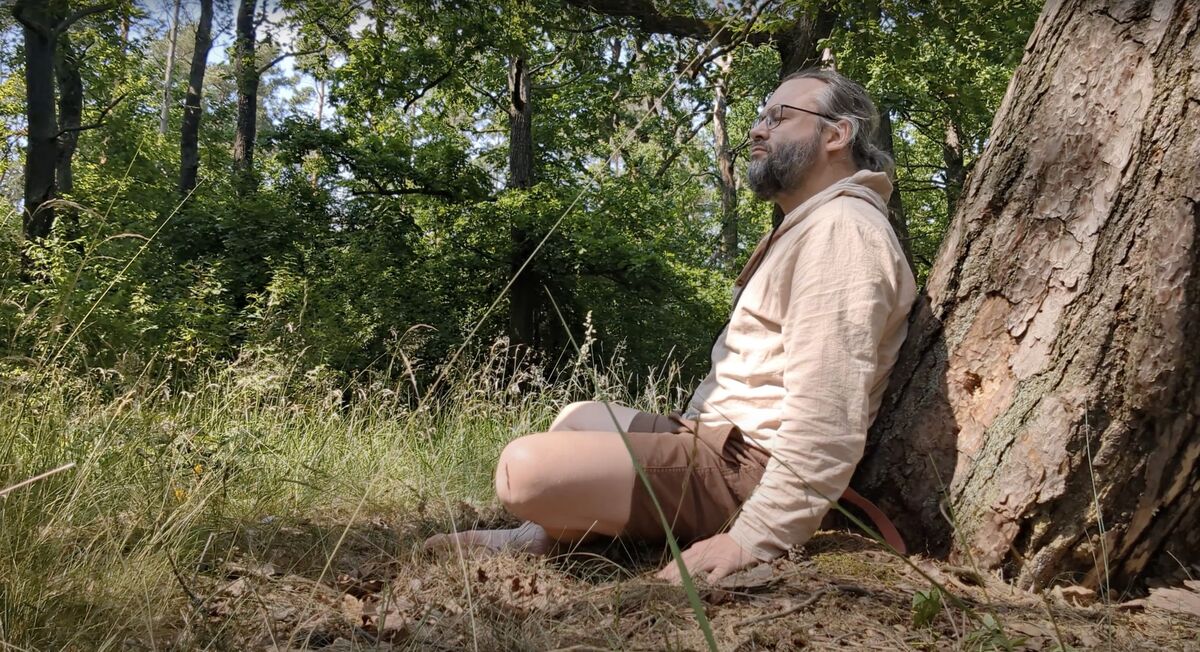
To be honest: that was the hardest part for me. I'm someone who loves doing, planning, optimizing. Simply sitting there doing nothing? That was something I had to learn from scratch.
Yet that is precisely the point. The forest demands nothing from you. You don't have to perform, deliver, or prove yourself there. In a world constantly demanding output, that is a true gift.
5. Your relationship with rain and cold fundamentally changes
October, pouring rain, 8 degrees Celsius. My inner couch potato was putting up quite an argument back then. A very loud one.
I went anyway. And that proved to be the turning point.
Because heading out into the woods only when the weather is fine is like a fair-weather friendship. Everyone is friendly, everything is easy.
The real question is: do you still show up when it gets uncomfortable?
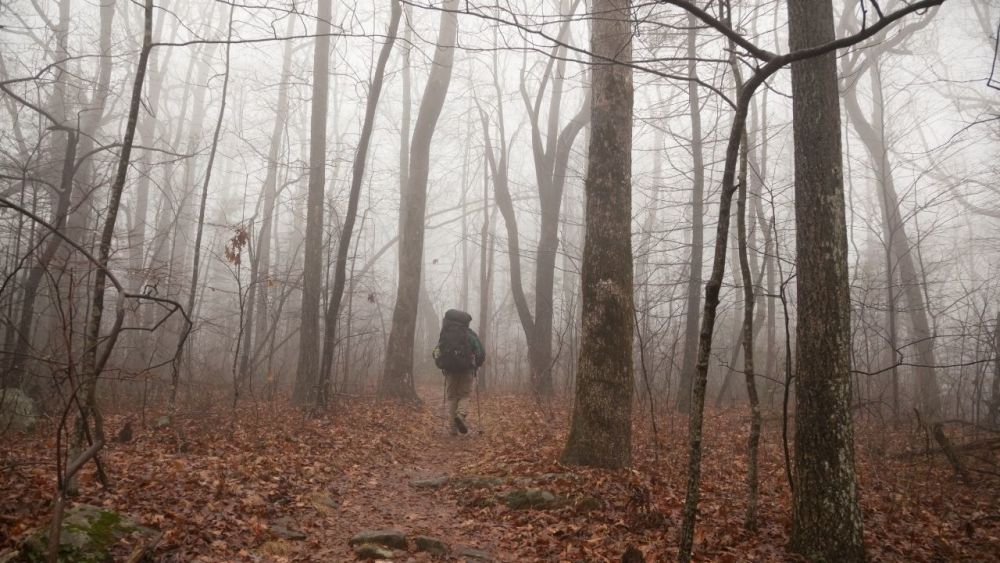
After a few rainy weeks, I noticed something strange: the forest in the rain is an entirely different world. The colors are richer. The sounds change – the steady drip on foliage, the soft trickling through the forest floor. And the scent. In the rain, the forest smells of everything all at once.
The outcome after one full year: rain is no longer an obstacle. The cold is no longer an excuse. Not because I turned into some hardened survivalist, but because my mind learned that "uncomfortable" and "bad" are not the same thing.
6. You regain a sense of wonder you only had as a child
This is the aspect that caught me by surprise the most.
After about eight months, I realized that on my way back home from the woods, I was noticing things that had never registered before.
The woodpecker on the tree near the forest path. The cloud formations shifting above the rooftops. The ant following the exact same crack in the sidewalk for weeks.
It was as if that weekly visit had exercised a muscle I used constantly as a child, only to let it wither away over time: the muscle of aimless attention.
Children watch beetles. Not because they are entomologists. But simply because the beetle happens to be right there. And that is plenty.
That exact capacity returned. Not as a practiced technique, not as a mindfulness drill with a stopwatch. But as a baseline state. Gradually. Almost without notice.
My kids noticed it immediately, by the way. "Dad, you're staring at that bird again." Yes. I am. And it feels good.
7. You build a genuine relationship – with a place
This is the part nobody talks about. Because it can sound sentimental. Yet it might just be the most essential piece of all.
After one year, I truly knew "my" section of the forest. Not as a map, not as a trail route. Rather as a place.
I knew where the fox had its den. Where the first wood anemones bloomed in April. Which branch had broken off during the winter storm and where it was lying now. Where woodruff scented the air in summer, and where the mushrooms clustered in autumn.
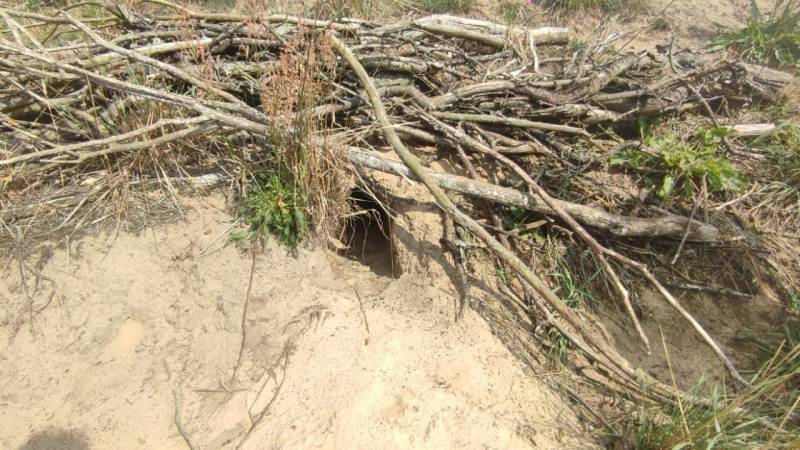
That might sound like small details. But it runs much deeper than that.
It's the sense of belonging somewhere. Not to a neighborhood. Not to a city. To a piece of land. A patch of woods that recognizes you every week. One that changes alongside you as you change.
In nature connection pedagogy, we talk about "becoming native" to a place. It doesn't mean you take up residence there. It means you are known there. It means the birds no longer treat you as an intruder. It means you have woven yourself into the pattern.
And that is – beyond all the practical, tangible shifts – the most profound one: you are no longer a visitor. You belong.
Here is my guide to nature mapping – a wonderful method for truly getting to know your place →
What you can do right now
You don't need a pristine, untouched forest. No national park, no vast wilderness. A local city woods will do. A public park with mature trees. Even an overgrown vacant lot.
Nor do you need special gear, an elaborate program, or a rigid plan.
All you need is this: Once a week. The exact same spot. At least 20 minutes. No headphones, no agenda, no tasks.
Sit down. Look around. Listen. (it's well worth trying deer ears and owl eyes)
For the first few weeks, your brain will push back. That is completely normal. It is conditioned to stay busy. Give it time.
And then, eventually, it clicks. That quiet moment where you are doing absolutely nothing – and it feels entirely right.
One final thought
I debated for a long time whether I should write this article. Because a list of seven points always makes it sound so straightforward and tidy.
It isn't.
There were weeks when I genuinely didn't feel like going. Weeks where I thought: "What's the point, I was just there on Tuesday." Weeks where I showed up and felt completely numb.
Yet I showed up anyway. And looking back after a full year, I can say: the weeks I didn't feel like going were often the ones that mattered most.
Not because everything magically improved afterwards. But because I realized that I showed up regardless. Even when it was uncomfortable. Even when it poured rain. Even when nothing extraordinary occurred.
And that is precisely what builds a real relationship. With the woods. And with yourself.
Remember that beech tree from the beginning? It is still standing right there. And next Tuesday, I'll be heading out to visit it again.
Until then: grab a jacket. Pick out a tree. And linger for a while.

Author of the guide
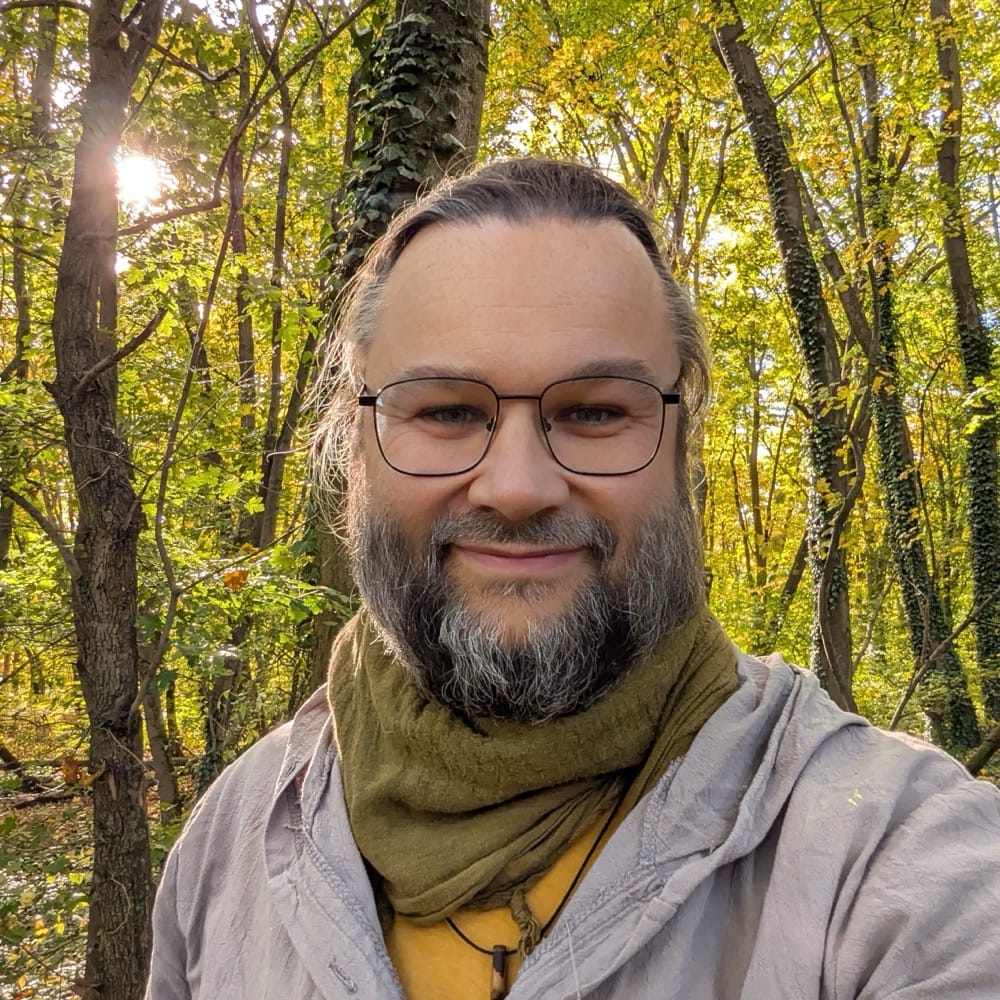
Martin Gebhardt
Hey, I'm Martin. On my blog, you will learn the basics and numerous details about living in the wild. I think survival, bushcraft and the good life in nature are the keys to happiness. Find me here on Instagram or on YouTube. You can find more about my mission on the About Me page.
Was this guide helpful?
22 people found this guide helpful.
5.00 out of 5 points (22 Ratings)
Comments (0)
This post may contain affiliate links. So if you click on the links and make a purchase, I will receive a small commission at no additional cost to you. Click here, to learn more about it.