

7 Outdoor Ideas – Do Something This Autumn That You’ve Never Done Before
Free 35 Survival Hacks you'll love!
You will get 35 easy-to-implement survival hacks so that you don't have to stand aimlessly in the forest from tomorrow when things get tough. Take your skills to the next level!
DOWNLOAD HERE FOR FREE👉 The key facts from this guide
- 7 concrete ideas for autumn – no equipment or prior knowledge needed; all can be done in a single afternoon.
- Twist cord from nettle fibers – one of humanity’s oldest techniques, crafted right between your hands.
- Visit your favorite spot at sunrise – the same place, but a completely different experience.
- Draw an autumn leaf – including every spot and hole; drawing compels you to really look.
- Read an animal track – suddenly, the forest tells a story.
- Carve a spoon – and actually use it afterwards.
- Try out a "sit spot" – sit by a tree for 15 minutes and do nothing.
- Get to know a mushroom better – draw it, identify it, and understand its habitat.
There's a sentence I hear again and again.
"I'd like to do that sometime."
Usually it comes from people who already know a lot about nature. Who can identify plants. Who are in the forest every week.
And who have never twisted a string from nettle fibers.
I know that well. For years I read about things instead of doing them. The knowledge was there - the experience wasn't.
And that's exactly where the difference lies. You can read twenty articles about fire drilling. Only when you're sitting there yourself, sweating, cursing, and finally see that tiny wisp of smoke, do you really understand it.
Autumn is the perfect time for such experiences. Not too hot anymore, not yet too cold. Nature becomes quieter, clearer, more legible.
Here are seven ideas. Pick one.
1. Twist a string from nettle fibers
This is my favorite exercise for beginners in nature craftsmanship. Because it shows something you can hardly believe until you've done it yourself.
From a plant that stings you becomes a string between your hands. A real one. One that holds.
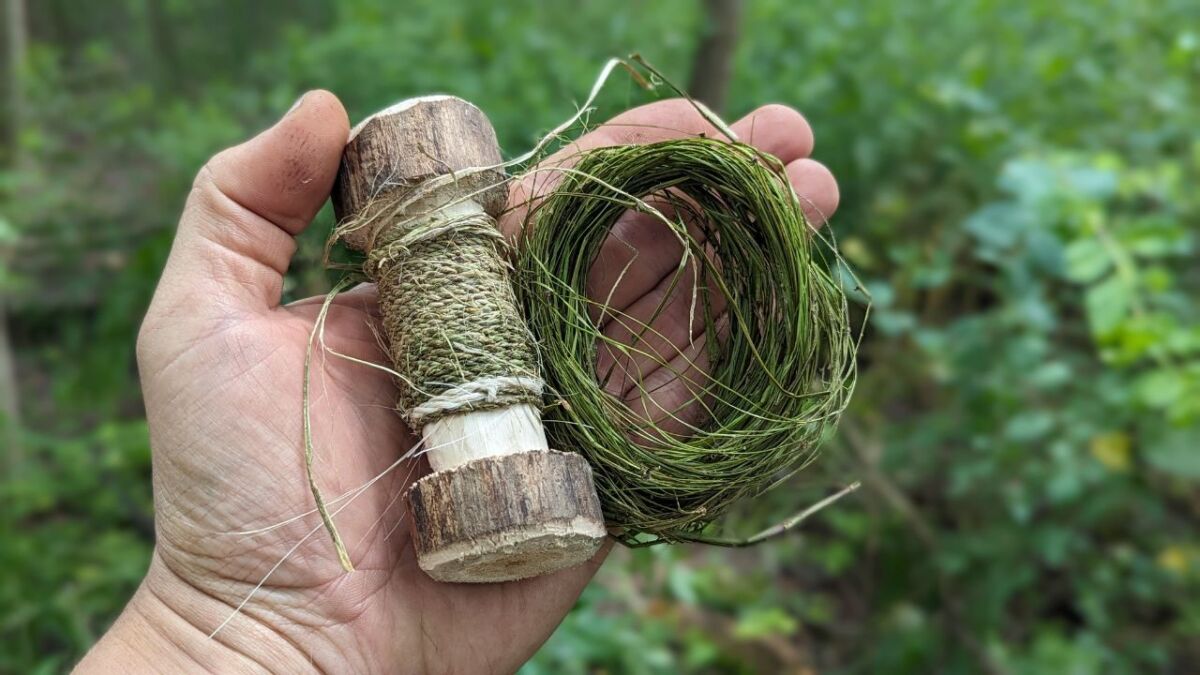
Why this works well in autumn: Now the nettle stems are somewhat more woody and partially already dead. Those are exactly what you want - the long, strong fibers are in the ripe stems, not in the delicate spring shoots.
Here's how to proceed, roughly:
- Collect dry, woody stems
- Gently flatten and break the stems
- Remove the woody interior - the fibers remain
- Twist fibers between your hands, always in two strands in opposite directions
Your first attempt will be crooked and thin. Doesn't matter. Pull on it. If it holds, you've won.
- The complete guide with pictures: Make rope and stable string from nettle
- And more about the plant itself: The nettle - versatile power plant
2. Experience your favorite place at sunrise
You have a place you like to go to. A forest edge, a clearing, a bench by the lake.
When was the last time you were there at six in the morning?

Here's the point: You know the place. But you don't know it in this light.
At sunrise everything is different. The colors are cold and then become warm. Dew covers everything. The birds are active like they won't be all day. The air smells different.
And you're probably alone.
Practical: In October the sun rises around 7:30 - so you don't have to get up in the middle of the night. Be there half an hour early so you catch the twilight. Take something warm, it's colder than you think.
If you want to perceive consciously, this will help you: Deer ears and owl eyes - two techniques for your perception
3. Draw an autumn leaf
I know what you're thinking now. "I can't draw."
That's not the point.
It's about what happens to your perception when you draw.

When you draw a leaf, you have to really look at it. You suddenly notice that the veins aren't symmetrical. That the leaf has three holes that someone chewed into it. That the edge is torn in one place. That the coloring runs unevenly from the stem outward.
You don't see any of that if you just pick up the leaf and throw it away.
My tip: Deliberately don't take a perfect leaf. Take one with spots, holes, and crooked edges. That's much more interesting - and it takes the pressure off that it has to look "nice."
How to record such observations I show you here: Learn wild plants with the diary method
4. Read an animal track
Autumn is a good time for track reading. The ground is moist and soft, there are muddy spots along paths, puddle edges, soaked game trails.
And when you find an imprint, something fascinating begins.
You don't just see "an animal was here". You see: Who was here? Where did it go? How fast? And what was it doing?

A deer that grazes quietly leaves a different track than one that flees. A fox places its paws differently than a dog - with the fox the prints lie almost in a line, with the dog they're spread wider apart.
Just get started: Find a muddy spot along a forest path. Look carefully. Measure the imprint. See if you can find a second track that goes with it. Follow it a bit.
Suddenly the forest is telling a story.
- The basics with many image examples: Learn to read tracks for beginners
- For advanced learners: Track reading for advanced learners - when tracks start to tell stories
- And one detail that fascinates me again and again: Feeding marks on cones - who was it?
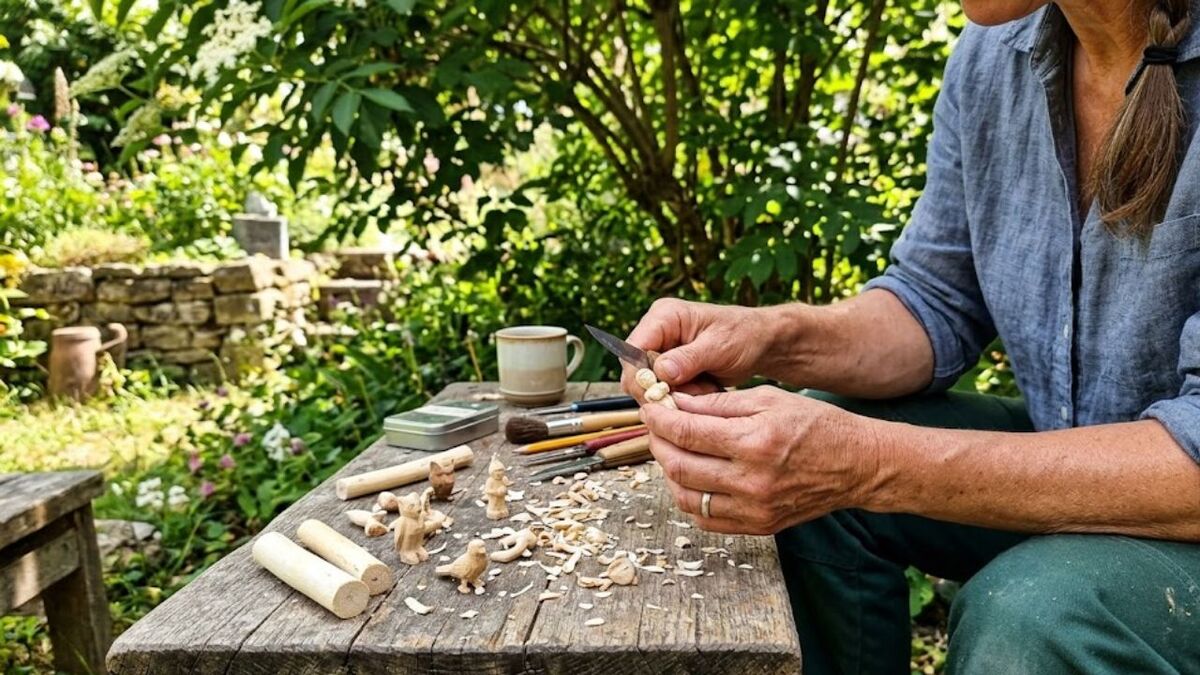
5. Carve something for your daily life
Not just anything. Something you will use afterward.
A spoon. A butter knife. A cooking spoon for the campfire. A tent ring.
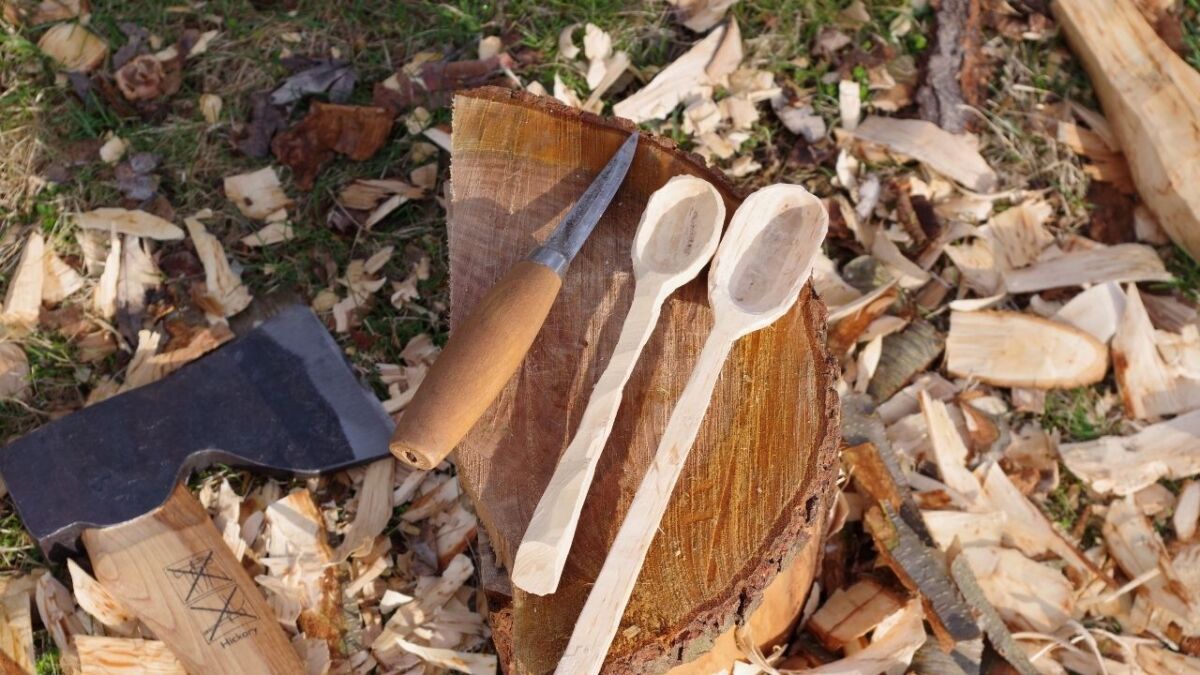
The difference is crucial. A decorative object ends up on a shelf. A spoon ends up in your hand - every day.
And then something happens: You use it, and somewhere in the back of your mind you think "I made that."
This feeling is hard to describe and pretty hard to replace.
Autumn is good carving time: Fresh wood is easiest to work with, and now you'll find good material after storms and pruning. Linden, willow, birch, hazel, and maple are ideal for beginners.
Don't expect it to be perfect. My first spoon was too thick and torn in one spot. You could still eat soup with it.
- Everything about getting started: 7 Things I wish I'd known before my first carving project
- And specifically about the spoon: Carving a wooden spoon - how to start and what you need
- What wood you should use: The best woods for carving

6. Try out a sit spot
This is the simplest idea on this list. And for many, the hardest.
Sit at a tree for 15 minutes. And just stay there.
No phone. No task. No goal.
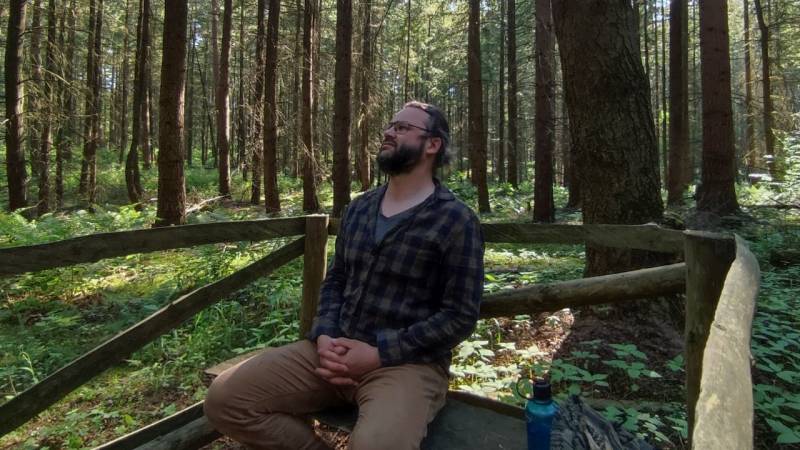
What happens: For the first five minutes your head will rebel. Shopping list, to-dos, yesterday's conversation. That's normal.
Then it slowly gets quieter.
And at some point - usually after ten or twelve minutes - the forest starts to forget you're there. The birds that fell silent when you arrived sing again. A squirrel comes closer than it ever would if you were walking. You notice movements in the undergrowth that you would never catch when passing by.
That's the whole trick: You don't seek nature. You stay still, and nature comes to you.
In wilderness pedagogy, the sit spot is one of the most effective core routines of all. Here I explain why: Why the sit spot connects you with nature
And if you want more: The core routines of wilderness pedagogy
7. Really get to know one mushroom
Not twenty mushrooms. One.
Autumn is mushroom season, and most people make the same mistake: They want to collect and eat right away. But the more exciting way is different.
Take one find and examine it properly:
- Draw it. Cap, stem, gills or tubes, color.
- Where exactly does it grow? Coniferous or deciduous forest? With which tree species?
- Is the soil moist or dry? Mossy or leaf-covered?
- Did it rain in the days before?
- Does it grow alone, in groups, in rings? On ground or on wood?

These questions are more important than the name. Because mushrooms have partners. The porcini grows with certain trees, the bay bolete prefers coniferous forest, the oyster mushroom needs dead wood.
When you understand that, the next time you find a mushroom it's not by chance - you know where to look.
Very important: If you want to eat them, go with an experienced person or have your find checked by a mushroom expert. Mushrooms are the only group where a misidentification can be fatal.
- Two mushrooms that don't belong in the pan but in the tinder pouch: The artist's conk and the puffball.
- What else you can gather in autumn: The great autumn harvest calendar
This could be your autumn
Imagine looking back in December.
At your first self-twisted string lying in a drawer. At a spoon you use every morning. At a notebook with a few crooked drawings. At a forest where more stands out to you with each visit.
This isn't a big program. These are seven small things.
But they change something - not because they're spectacular, but because they turn knowledge into experience.
Pick one
You don't have to do all seven.
Pick one. The one where you thought: "I'd like to do that."
And then do it this week. Not sometime.
Because the difference between "I'd like to" and "I did it" is usually just an afternoon.

Author of the guide
Martin Gebhardt
Hey, I'm Martin. On my blog, you will learn the basics and numerous details about living in the wild. I think survival, bushcraft and the good life in nature are the keys to happiness. Find me here on Instagram or on YouTube. You can find more about my mission on the About Me page.
Was this guide helpful?
13 people found this guide helpful.
5.00 out of 5 points (13 Ratings)
Comments (0)
This post may contain affiliate links. So if you click on the links and make a purchase, I will receive a small commission at no additional cost to you. Click here, to learn more about it.