

Knife terminology explained: What Full Tang, Scandi grind and HRC mean
Free 35 Survival Hacks you'll love!
You will get 35 easy-to-implement survival hacks so that you don't have to stand aimlessly in the forest from tomorrow when things get tough. Take your skills to the next level!
DOWNLOAD HERE FOR FREE👉 The key facts from this guide
- Knife Construction: Full Tang (blade goes all the way through, extremely stable), Stick Tang (lighter, but prone to breaking), and Hidden Tang (tang concealed in the handle, elegant) – for heavy forest work, Full Tang is the safest choice.
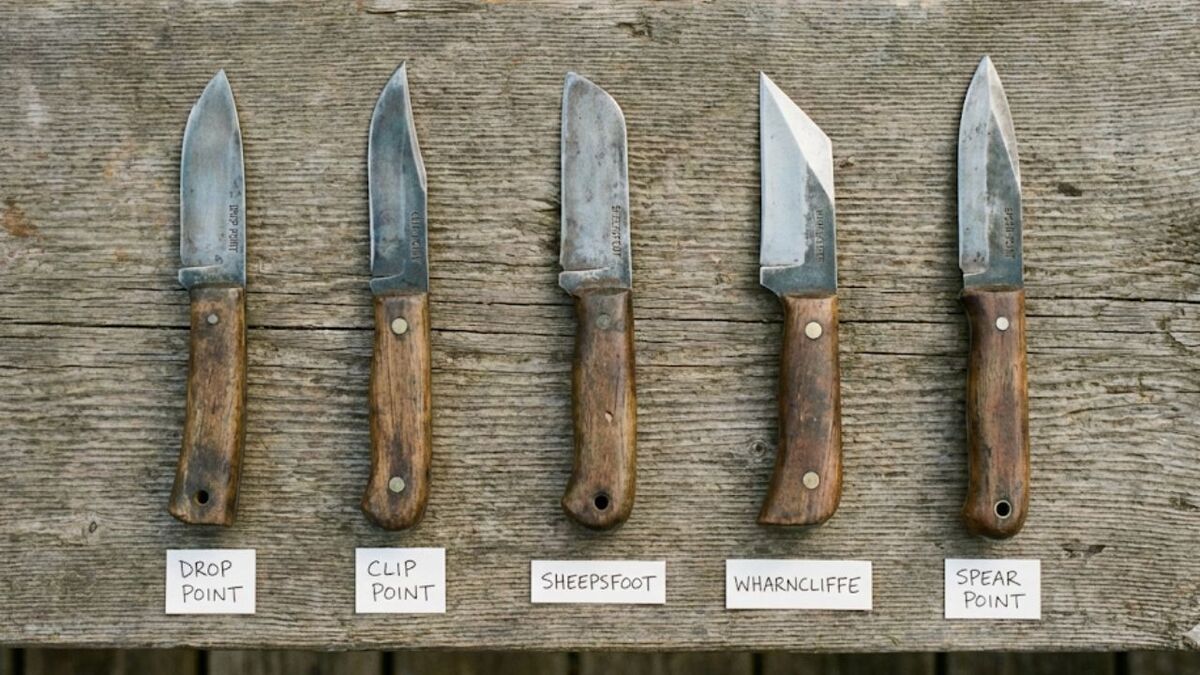
- Blade Shapes: Drop Point (all-rounder), Clip Point (pointed, good for piercing), Sheepsfoot (safe, ideal for children), Wharncliffe (precise cuts), and Spear Point (symmetrical, versatile) – if you only buy one knife, go with a Drop Point.
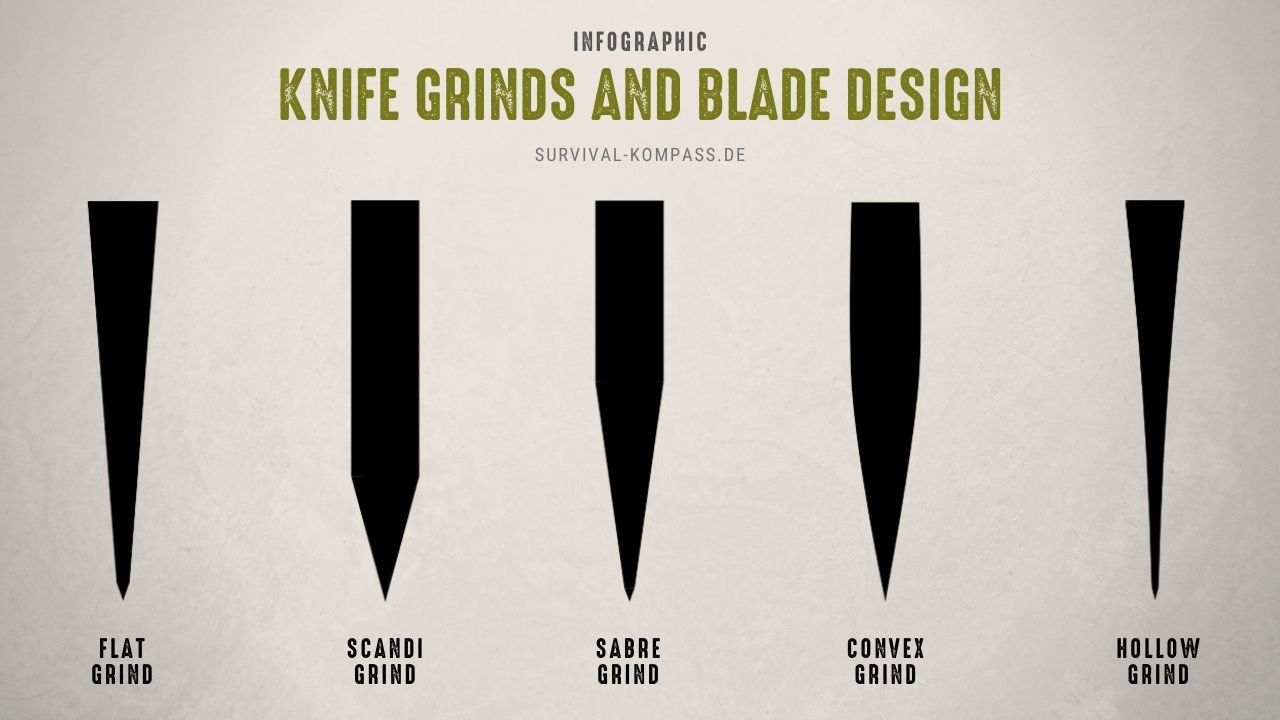
- Grind Types: Scandi Grind (easy to sharpen, perfect for carving), Convex Grind (stable, but harder to sharpen), and Hollow Grind (razor-sharp, but fragile) – Bushcrafters love the Scandi.
- Steel Types: Carbon steel becomes razor-sharp and throws sparks on a fire steel, but it rusts. Stainless steel is easier to maintain but harder to sharpen. Tool steel (e.g., D2) is a compromise between the two.
- Blade Hardness (HRC): 56–58 HRC is the sweet spot for outdoor knives. Harder (60+) means it stays sharp longer but is more brittle. Softer (under 54) gets dull quickly.
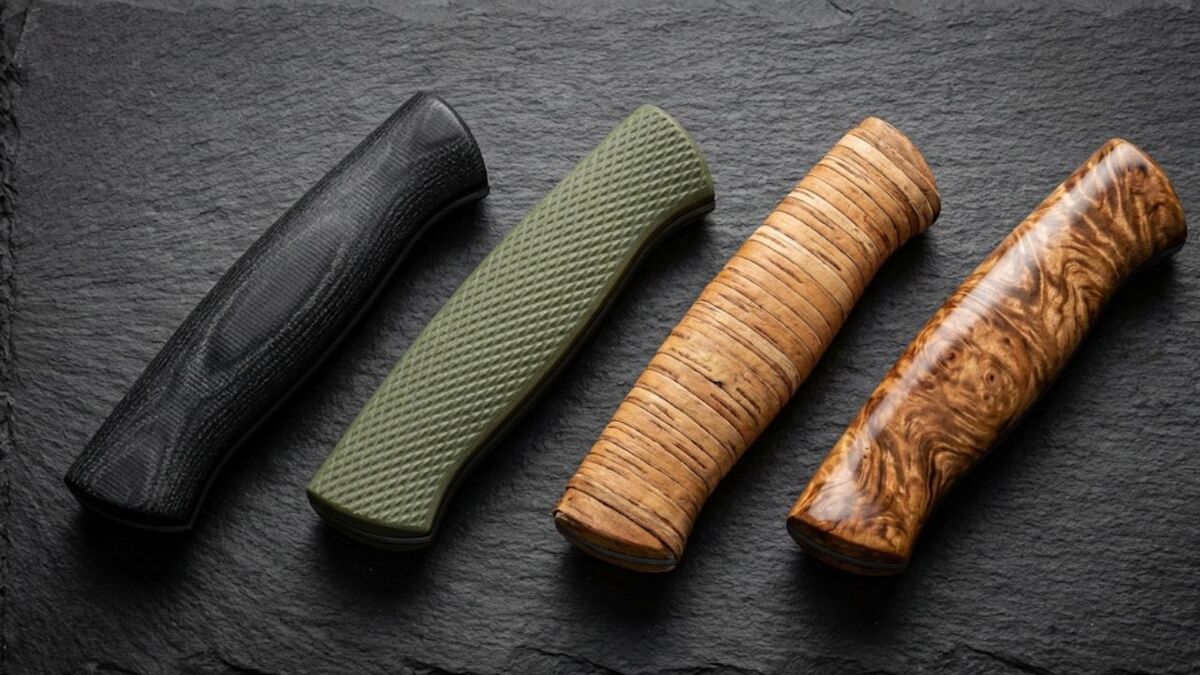
- Handle Materials: Micarta and G10 (robust, weatherproof), Birch Bark (warm, classic, needs care), and Stabilized Wood (beautiful like wood, robust like plastic).
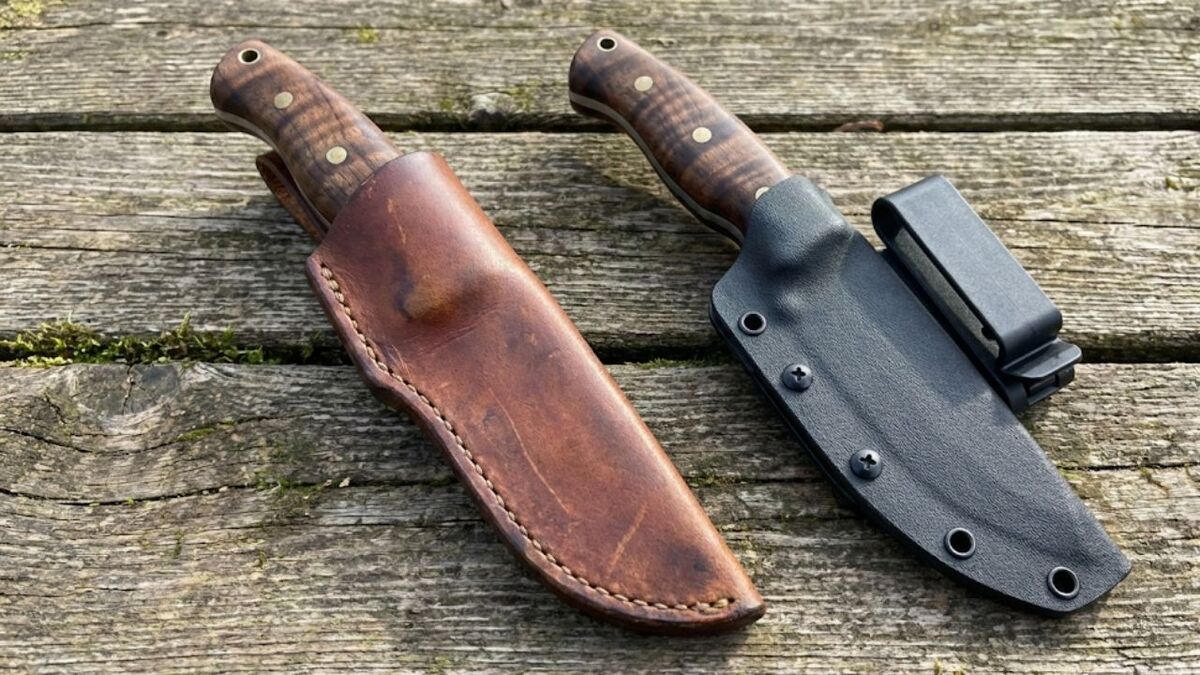
- Sheaths: Leather sheaths are classic and protect the blade but need maintenance. Kydex is practical, weatherproof, and rock-solid – but less romantic.
- Legal Situation in Germany: Fixed-blade knives under 12 cm blade length are permitted with a "legitimate interest." You may own one-handed opening knives (folding), but you are not allowed to carry them in public.
The other day at the outdoor shop. I’m standing in front of the display case, a salesman next to me.
"This here is full tang, Scandi grind, 1095 carbon steel, 58 HRC."
I nod. The man next to me nods too. But I see the look in his eyes. That polite nodding that actually says: I didn't understand a word. But I don't want to ask either, because then I'll look like a beginner.
I know that feeling. I was that guy. Sometimes, I still am.
Knife terminology sounds like a secret language. And some salespeople throw it around as if they get paid per technical term.
So today: an honest glossary. No showing off. No "Aaaaactually, it's much more complicated...". Just what you really need to know when you're looking for a good outdoor knife.
And yes, I’m going to simplify a few things. The purists among you are welcome to send me angry emails. I’ll read them while I’m carving.
How is the knife built?
Let's start at the very beginning. With the question of how the blade and handle are connected. (Sounds trivial, but it's the difference between "lasts forever" and "handle flies off on the third log.")
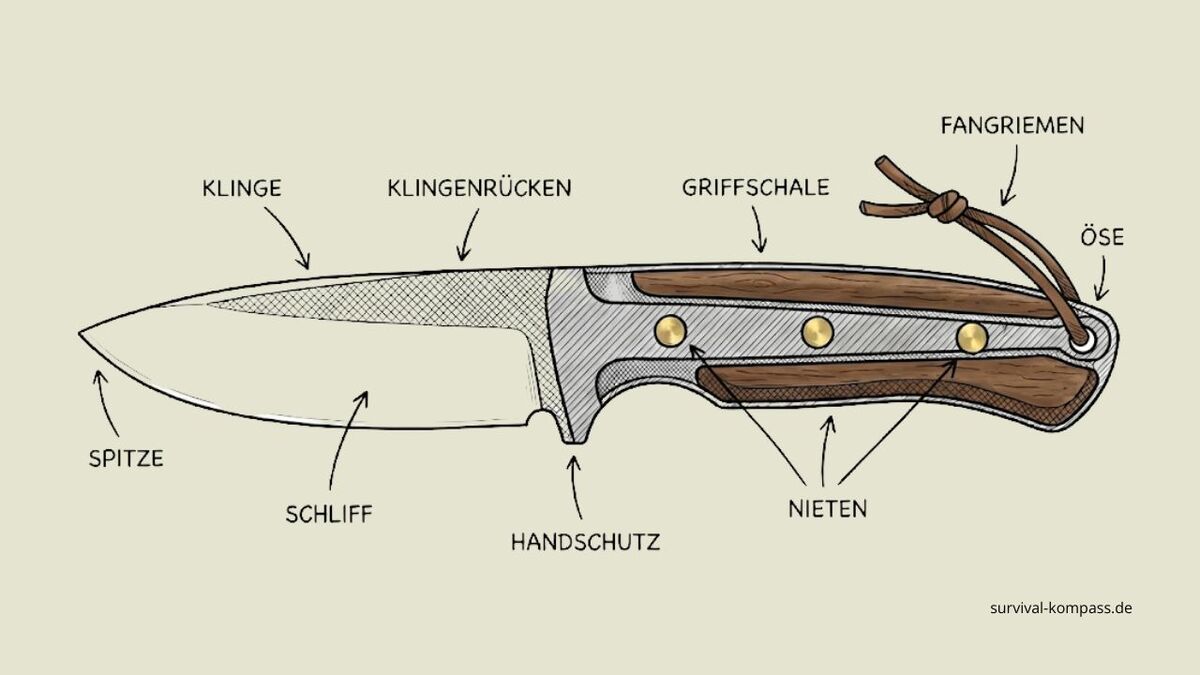
Full Tang means: The blade goes through the handle completely as one piece of steel. The handle scales are just riveted on.
The result? Extremely stable. You can pry with it, baton (i.e., split wood), and the knife won't break. Even if you treat it like a screwdriver. Which you shouldn't do. But we've all done it.
Stick Tang (or rat-tail tang) is the opposite: A thin steel extension is inserted into the handle. Lighter, more elegant, but the handle can break under heavy load. Then you're holding a blade in one hand and a wooden handle in the other. It looks silly. It feels silly too.
Hidden Tang (also partial and narrowing) means: The tang is completely hidden within the handle. You often see this on Scandinavian knives. Beautiful, functional, but not for brutal prying forces.
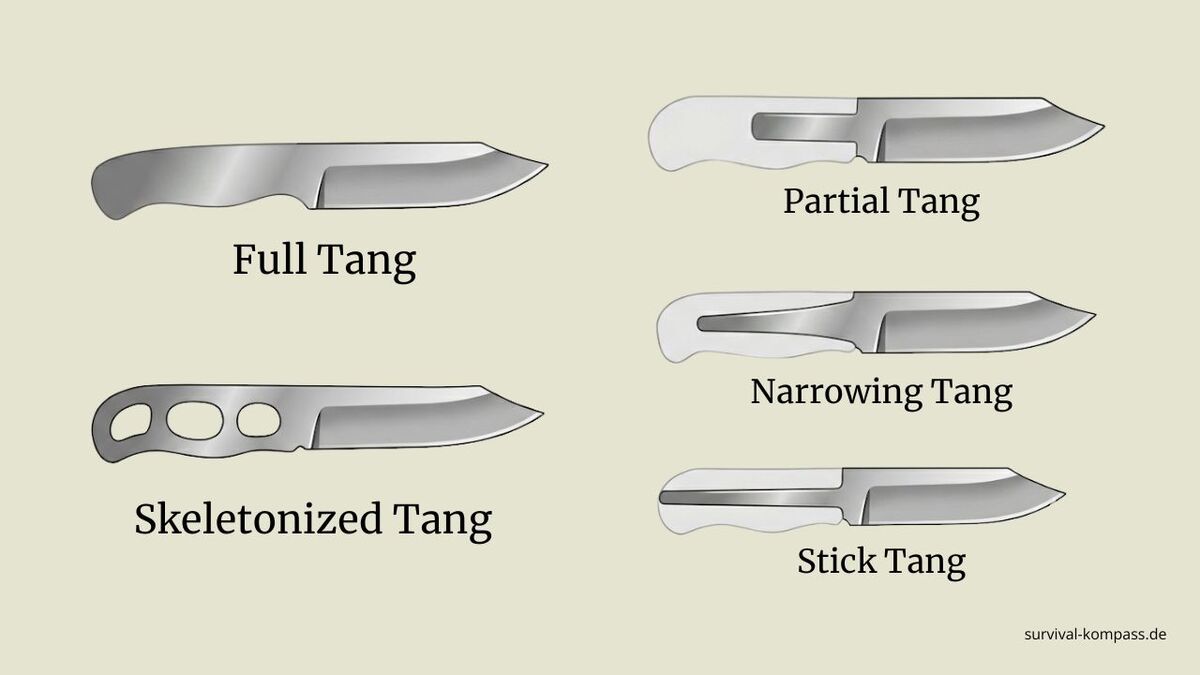
And then there is the ricasso. That’s the unsharpened section between the blade and the handle. Practical if you want to choke up on the blade for fine work.
Which blade shape do I need?
This is where it gets interesting. Because the shape of the blade determines what the knife is good for. And what it's not. (Spoiler: There is no knife that can do everything. Even if the salesman tells you otherwise.)
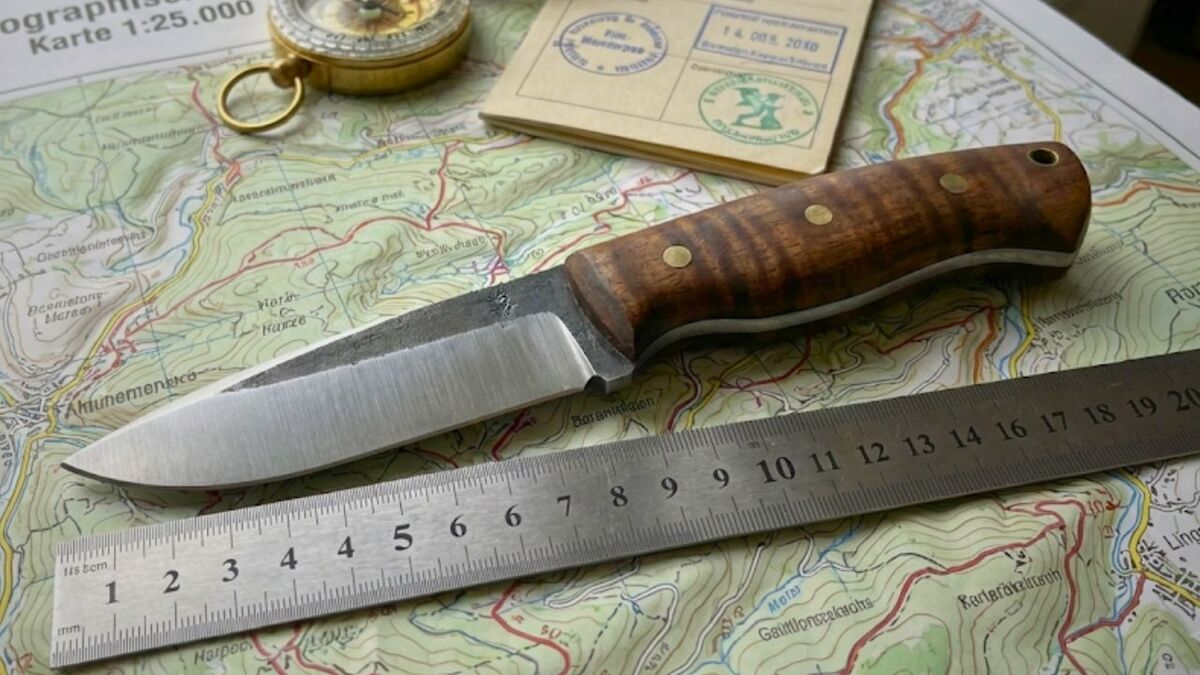
Drop Point is the all-rounder. The spine of the blade slopes gently down to the tip. Easy to control, robust, and perfect for 90% of all tasks in the woods.
If you only buy one knife, get a Drop Point. Seriously. You can find specific recommendations in my bushcraft knife buyer's guide.
Clip Point can be recognized by the concave "cut-out" on the spine. This makes the tip finer and sharper. Classic on the Bowie knife. Good for piercing, but the tip breaks more easily. And when do you really need to pierce something in the local woods? Exactly.
Sheepsfoot has a straight cutting edge and a rounded spine. Safe, because you won't accidentally stab anyone. Perfect for children or if you want to do a lot of carving.
Wharncliffe looks similar, but the spine runs diagonally down to the tip. For precise, controlled cuts. For people who know what they're doing. I'm still working on that.
Spear Point is symmetrical, ground on both sides. Elegant, versatile. And it sounds cool when you say: "This is a Spear Point." At parties. If you go to those kinds of parties.
What does "Scandi grind" mean?
The grind determines how sharp your knife will be. And how easily you can get it sharp again. In my detailed article on knife grinds I go into even more detail. But here are the essentials:
Scandi grind (or flat grind) is the favorite of woodsmen and bushcrafters. And mine. The blade tapers at a single, flat angle to the cutting edge.
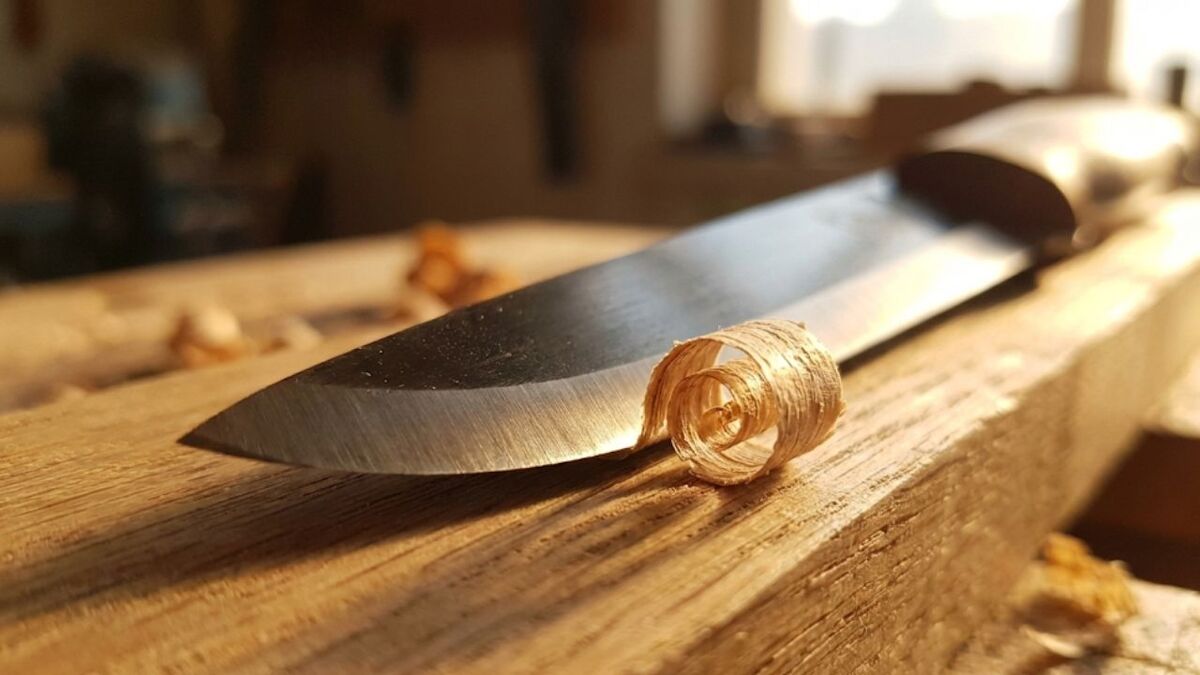
Why is that good? Because you only have to hit this one angle for sharpening. No guesswork, no special equipment, no YouTube video with a guy telling you you're doing everything wrong. A flat stone is enough.
In case you're ever out without a whetstone: here are 9 tricks on how to sharpen a knife without a whetstone.
Furthermore, the Scandi grind glides perfectly through wood. When carving you can feel exactly what you are doing. The wood talks to you. Sounds esoteric. It is, a little. But it's true.
Convex grind (rounded) is slightly curved. Very stable, stays sharp for a long time, but harder to resharpen. More for axes and heavy knives. And for people with more patience than me.
Hollow grind is curved inwards. Razor sharp, but fragile. Not for heavy work. More for surgeons and barbers.
And then there is the secondary bevel: An additional, steeper angle directly on the cutting edge. Makes the blade more stable, but the pure Scandi loses its simplicity as a result.
Micro-bevel is the same thing but tiny. A wafer-thin angle on the cutting edge. Good for more stability without completely changing the grind. Remember: everything with "micro" sounds professional.
Carbon steel or stainless steel?
The eternal question. A matter of faith. Friendships have been ended over this. (Okay, maybe I'm exaggerating. But only a little.)
The honest answer: It depends on what you want. You can find a detailed comparison of steel types in my separate article.
Carbon Steel is the classic. Easy to sharpen, gets razor sharp.
The disadvantage? It rusts. If you leave it wet, you'll have orange or brown spots the next morning. Ask me how I know. Better yet, don't ask.
Classic types: 1095, O1.
Stainless steel is easier to maintain. You can pack it away wet, forget it, find it a week later, and it still looks good. Forgives laziness. Forgives forgetfulness.
On the other hand, it is harder to sharpen. And it often doesn't hold its edge as long.
Classic types: 440C, VG-10.
Tool steel like D2 is a compromise. Very tough, somewhat rust-resistant, but not a beginner's steel. In my D2 vs. 440C comparison I explain the differences in more detail. In case you really want to dive that deep.
And Damascus steel? The folded patterns look beautiful. Instagram loves Damascus. But that says nothing about the quality. There is excellent Damascus and cheap junk that just looks pretty. The price alone won't tell you what you're getting.
My tip: Don't buy a knife for its looks. Buy it because it works.

What does "HRC" mean?
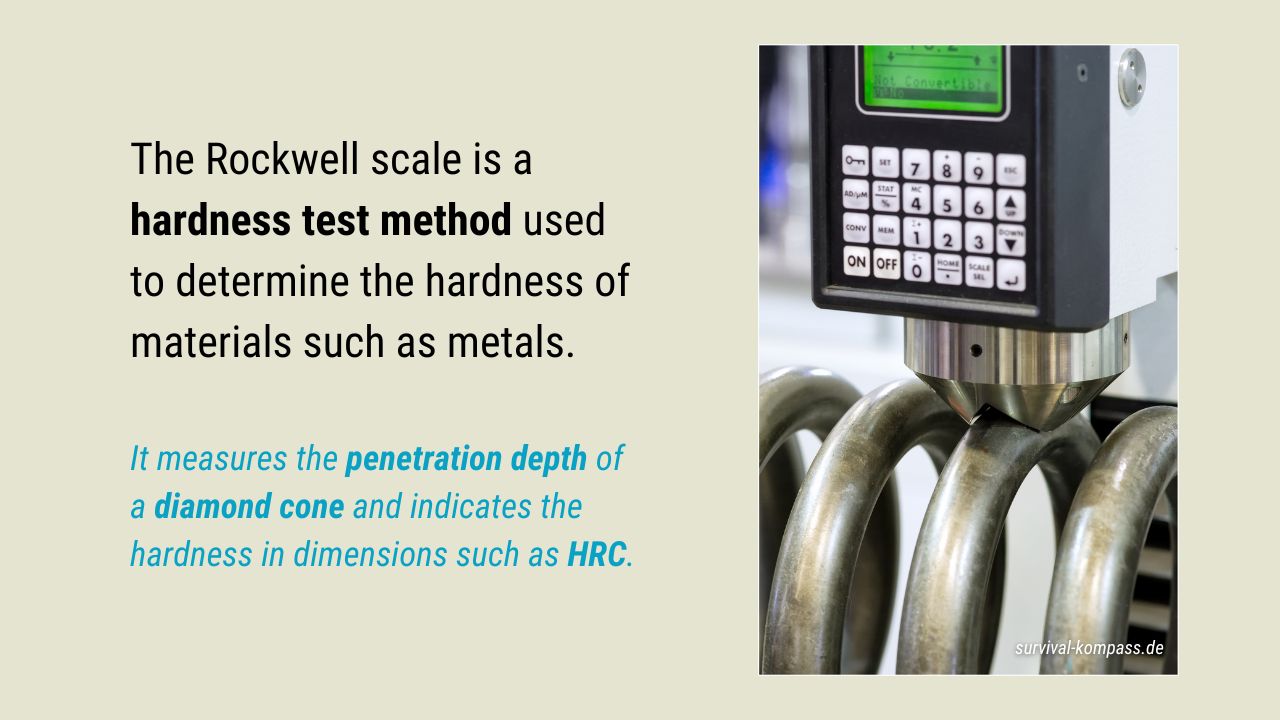
Rockwell Hardness (HRC) is the measure of blade hardness. Sounds complicated. It's actually not. In my article "What hardness should a knife have?" I explain the topic in detail.
The higher the number, the harder the steel. Harder means: The blade stays sharp longer.
But also: It is more brittle and harder to sharpen. And if you drop it, it can shatter. Not good.
A good compromise for outdoor knives is around 56-58 HRC. Hard enough for good edge retention, soft enough not to shatter. The sweet spot.
Above 60 HRC, it gets specialized. Below 54 HRC, the blade gets dull quickly. And you get dull because you have to sharpen constantly.
What makes a good handle?
The handle determines how the knife sits in your hand. For hours. In the wet. In the cold. After three hours of chopping wood, when your hands are tired and all you really want is coffee.
Micarta consists of linen or paper layers pressed in synthetic resin. Grippy, even when wet. Robust. Looks better and better over time because it develops a patina. My favorite for working handles.
G10 is fiberglass in epoxy resin. Similar to Micarta, but lighter and often cheaper. Weatherproof, indestructible.
Birch bark is the Scandinavian classic. Warm in the hand, grippy, smells like the forest. If you hold it to your ear, you can almost hear the elk. (No, you can't. But it feels that way.) Birch bark is also a versatile survival material in other ways.
Disadvantage: Needs care and does not tolerate constant moisture.
Stabilized wood is wood soaked in synthetic resin. Looks like wood, feels like wood, but handles weather like plastic. The best of both worlds.
Leather sheath or Kydex?
The sheath protects the blade. And you.
Leather sheaths are classic, beautiful, and gentle on the blade. They smell good. They feel good.
But: They need care. And if they get wet, they dry slowly. And then they don't smell so good anymore.
Kydex is a thermoplastic. The blade clicks in, sits rock-solid, and you don't care if the sheath lies in the rain, ends up in the mud, or gets nibbled on by the dog.
Not as romantic. Not as Instagram-worthy. But damn practical.
Dangler loop means: The sheath hangs from a loop on the belt.
Firesteel loop is a small holder for your fire steel on the sheath. Practical if you always want to have both together. If you're looking for a bushcraft knife with a fire steel, I have a separate guide for that.
How do I care for my knife?
Carbon steel develops a patina over time. A natural oxide layer that protects against rust. Looks like experience. Like stories. Like "This knife has seen some action."
Some accelerate this with a forced patina. Vinegar, mustard, or lemon on the blade, wait a few minutes, wash off. The patina becomes darker and more even. Like a tattoo for your knife. Only less painful.
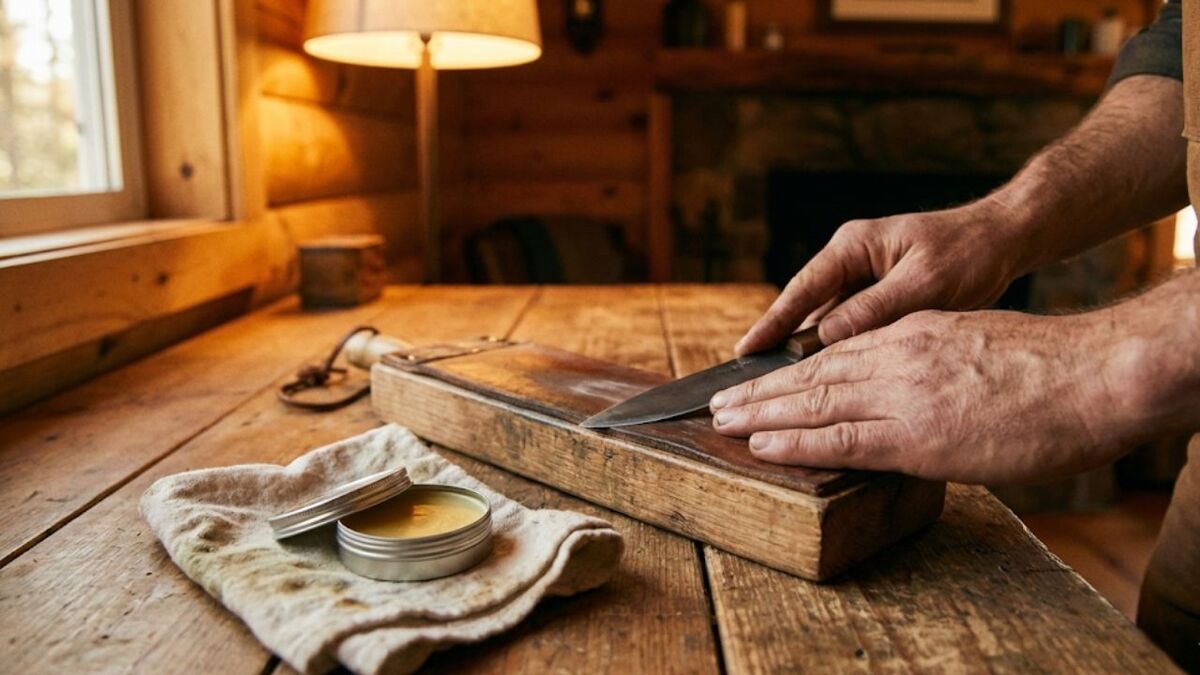
Stropping means: Drawing the blade over a leather strap. This doesn't really sharpen, but it realigns and freshens up the edge. Like coffee in the morning. Doesn't make you younger, but more awake. In my article "Keeping a knife sharp" I'll show you a simple trick for it.
Honing is the last step in sharpening. You remove the fine burr that is created during grinding.
By the way: a sharp knife is safer than a dull one. Sounds paradoxical. But it's true. A dull knife slips. A sharp one goes where you want it to. Mostly, anyway.
What am I allowed to carry in Germany?
Short and sweet. (Because I'm not a lawyer. And you probably aren't either.)
Fixed-blade knives under 12 cm blade length can be owned and carried (except in weapon-free zones). Hiking, fishing, and bushcraft count as valid reasons. All knife blades with over 12 cm blade length require a legitimate interest. "I thought it was cool" doesn't count.
One-handed opening knives (which you can open with one hand and which lock) can be owned, but not carried in public. So: at home yes. In the forest no. Crazy, but that's the law. In my article "What are one-handed knives and why are they prohibited?" I explain the legal details.
Lockback, liner lock, frame lock are different locking mechanisms for folding knives. They all lock the blade in the open position. Important for safety, but legally all treated the same.
If in doubt: find out more before buying in my knife law guide.
The most important question
Finally, it's not about technical terms.
It's not about nodding wisely in the outdoor shop. It's not about showing off with "full tang" and "Rockwell hardness" at the campfire.
It's about finding a knife that fits you. That sits well in your hand. That you can maintain. That you understand.
And then it's about using it.
Don't leave it on the shelf. Don't leave it in a drawer. Take it outside. Carve. Make feathersticks. Work. Make mistakes. Get better.
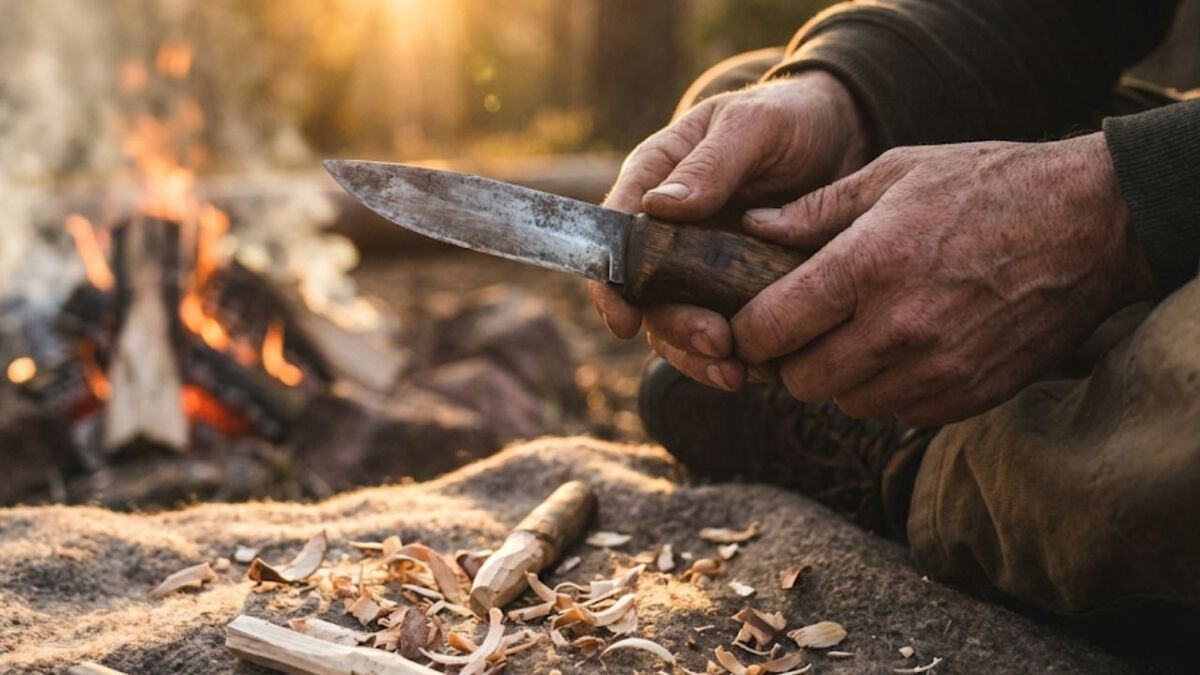
A knife only becomes your knife when it bears the marks of your hands. When it can tell stories. When someone asks "Where did you get that scratch on the blade?" and you can say: "Oh, that was back when..."
Until then: take one outside. And start.
The knife is ready. The question is: are you?


Author of the guide
Martin Gebhardt
Hey, I'm Martin. On my blog, you will learn the basics and numerous details about living in the wild. I think survival, bushcraft and the good life in nature are the keys to happiness. Find me here on Instagram or on YouTube. You can find more about my mission on the About Me page.
Since this is a gear guide, here ...
🤝8 reasons to trust my recommendation
-
Practical Experience: I have tested most of the products I recommend under extreme conditions myself.
-
Independence: As a wilderness mentor, I am not tied to any specific brands - this means my recommendations are unbiased.
-
Expertise: My many years of experience allow me to understand the intricacies and details of various products that a layperson might overlook.
-
Target group understanding: I understand the needs and challenges of outdoor enthusiasts, from beginners to seasoned experts.
-
Quality focus: I attach great importance to quality and longevity. These are characteristics that are crucial in the wild.
-
Clear communication: I try to explain the pros and cons of each product clearly and understandably so that you can make an informed decision.
-
Currentness: I always keep my guides up to date and adapt them to new findings or products.
-
Community Feedback: I work in wilderness schools, teach courses myself, attend courses and am active in various outdoor and survival communities and therefore integrate the feedback and experiences of others into my recommendations.
So when I introduce the best survival knives or flashlights, you can be sure that every recommendation is based on solid experience and extensive knowledge.
Was this guide helpful?
17 people found this guide helpful.
5.00 out of 5 points (17 Ratings)
Comments (0)
This post may contain affiliate links. So if you click on the links and make a purchase, I will receive a small commission at no additional cost to you. Click here, to learn more about it.