

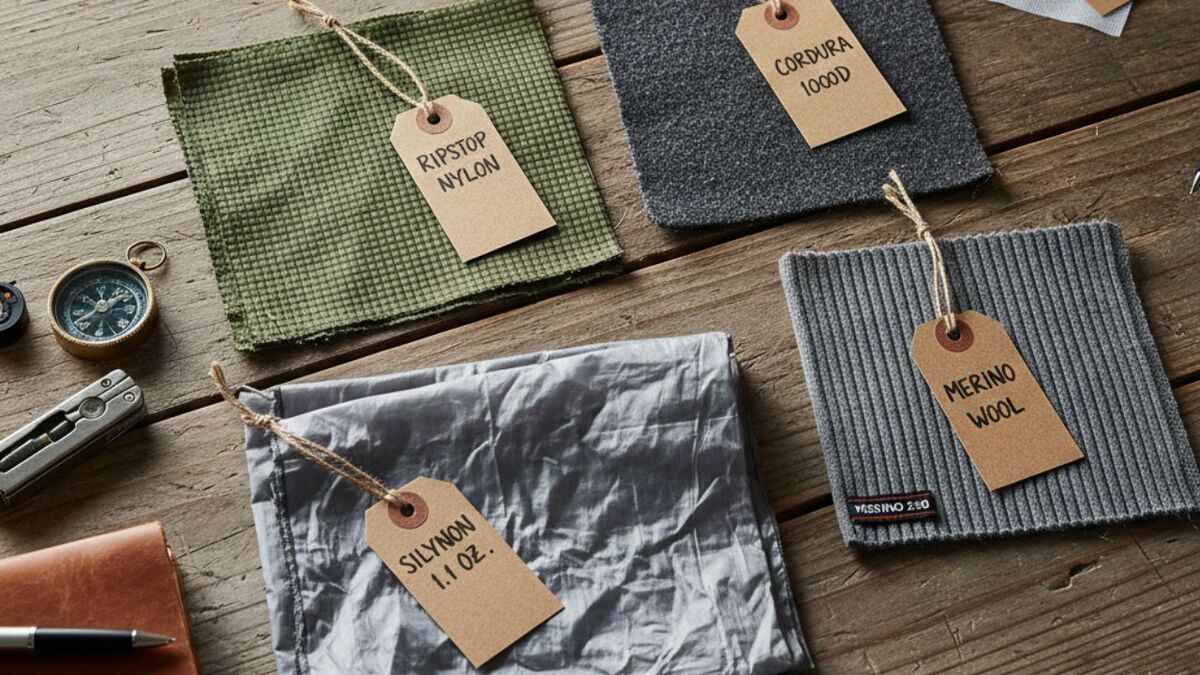
Outdoor materials explained: What ripstop, Cordura and Merino really mean
Free 35 Survival Hacks you'll love!
You will get 35 easy-to-implement survival hacks so that you don't have to stand aimlessly in the forest from tomorrow when things get tough. Take your skills to the next level!
DOWNLOAD HERE FOR FREE👉 The key facts from this guide
- Ripstop features a woven-in reinforcement grid that stops tears – but beware: when it comes to abrasion (rubbing against rock), it is often WORSE than smooth fabrics because the raised threads are the first to fray through.
- Cordura owes its extreme abrasion resistance to the air-texturing of its fibers (not just the high denier). The swirled fibers act like shock absorbers. The number (500D, 1000D) indicates the thread thickness.
- Silnylon is waterproof and lightweight but stretches by up to 4% when wet. Important: Normal adhesive tapes do NOT stick to silicone – only silicone-based adhesive works for repairs.
- Dyneema (DCF): The fiber is extremely UV-stable (better than nylon!), but the Mylar carrier film can become brittle. NEVER stuff DCF – creasing creates pinholes. Roll it or fold it loosely instead.
- DWR (Durable Water Repellent) makes water bead up, but it is NOT waterproof. If water soaks in instead of beading up: it's time to re-waterproof.
- Hydrostatic Head: 1,500 mm is legally considered waterproof and is sufficient for tent walls – but for tent floors, you need 5,000 mm+ because kneeling or sitting creates significant localized pressure.
- Merino Wool stays warm even when damp and doesn't smell for days – however, it dries significantly slower than synthetics because it stores up to 35% water inside the fiber core.
- PU Coating has a limited lifespan (5-10 years). Hydrolysis leads to a sticky degradation. Always store in a dry and cool place!
"That is 70D ripstop nylon with a silicone coating, a 3,000 mm hydrostatic head, and a DWR finish."
I’m standing in the outdoor shop. I nod. The salesman nods back. We understand each other.
Or do we?
To be honest: back then, I didn't understand a single word. But I didn't want to admit it. So I nodded, bought the tarp, and only Googled what I had actually purchased once I got home.
That was years ago. Today, I know what these terms mean. And I also know: most salespeople throw them around because they sound professional. Not because they want you to understand them.
So today: The honest material guide. No technical jargon. No marketing fluff. Just what you really need to know so that next time you don't just nod – you understand.
Why material matters at all
I could tell you that material is "super important" and that you should "definitely pay attention to it."
But you already know that. Otherwise, you wouldn't be here.
So, short and sweet:
Wrong material means: you sweat, you freeze, you chafe your skin, and after two years, everything falls apart.
Right material means: it works. For years. And you save money in the long run because you don't have to buy new gear every two years.
The right survival equipment is an investment. But only if you understand what you are buying.
So let's go. Let's start with the fabrics.
Synthetic Fabrics: The Workhorses
These are the fabrics you see most often. In backpacks, tents, jackets, pants. Everywhere.
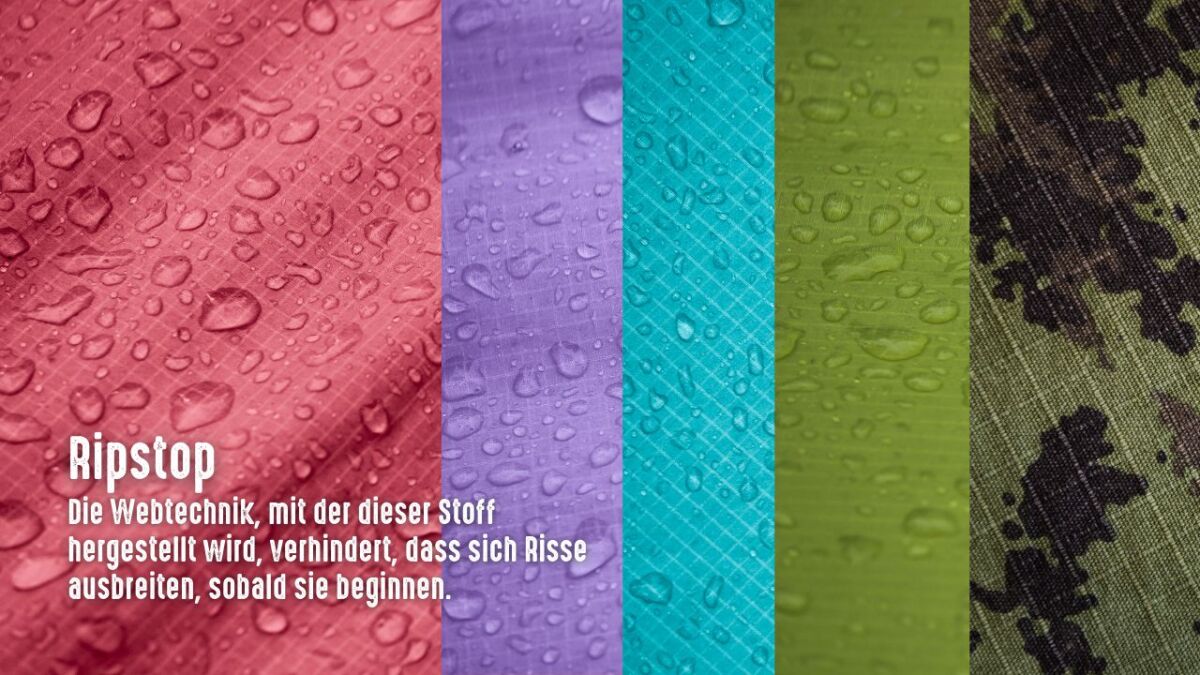
Ripstop – The Tear Stopper
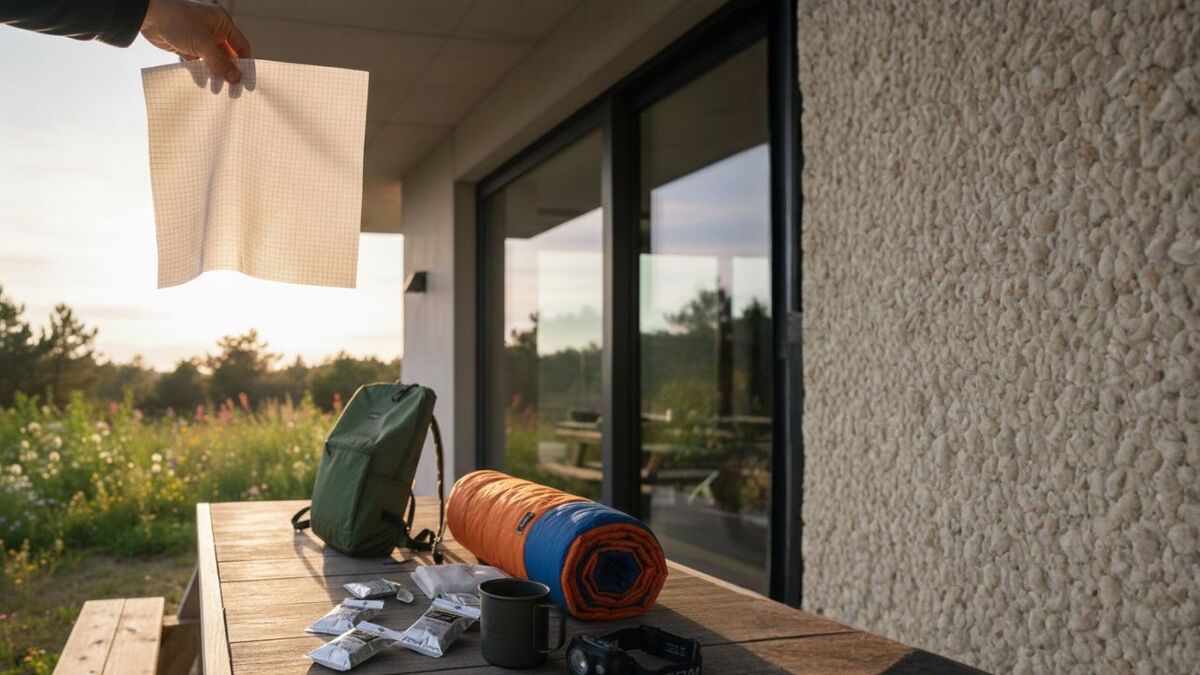
What it is: A fabric with a woven-in reinforcement grid. You see it when you hold the fabric up to the light – little squares or diamonds.
What it can do: If a tear starts, it stops at the next grid thread. The tear doesn't spread. Brilliantly simple.
Where you find it: Tarps, tents, lightweight pants, backpacks, stuff sacks.
When it makes sense: When weight matters and the main danger is tearing – not abrasion. Perfect for tent flies and down jackets.
The weaknesses:
- Ripstop stops tears – but it doesn't prevent them. A knife will still cut through.
- Important: Ripstop is NOT more abrasion-resistant than normal fabric. On the contrary: the raised reinforcement threads create small bumps on the surface. When friction occurs (rock, concrete, sand), these specific threads wear through first. For backpack bottoms or pant knees, ripstop is therefore often the poorer choice.
Cordura – The Workhorse
What it is: A specially treated nylon 6.6 fabric. The trick: the fibers are swirled by an air jet ("Air-Jet Textured"), so that they form loops and clusters – almost like cotton.
What it can do: This bulky structure acts like a microscopic shock absorber. During rubbing, the swirled fibers can move aside and absorb energy instead of tearing through immediately. That’s why Cordura handles abrasion so well – not just because of the thickness, but because of the texturing.
Where you find it: Backpacks, knife sheaths, belt pouches, robust bushcraft pants, military equipment.
When it makes sense: When durability is more important than weight. When you know your gear is going to suffer.
The number behind it: 500D, 1000D – the "D" stands for Denier, a measure of thread thickness. Higher = thicker = more robust = heavier. 500D is a good compromise. 1000D is tank-level.
My favorite: My old backpack is made of 1000D Cordura. It has seen more than I have. And it still looks good. Well. Acceptable.
Silnylon – The Lightweight King
What it is: Nylon, coated on both sides with silicone. Sounds simple. It is.
What it can do: Waterproof. Lightweight. Packs down small.
Where you find it: Ultralight tarps, tent outer skins, stuff sacks. Everything where grams count.
When it makes sense: When you want to lower your base weight without sacrificing weather protection.
The weaknesses:
- Stretches when wet (nylon absorbs up to 4% water). You have to re-tension it. Tear strength drops by 10–20% when wet.
- Repair Warning: Normal adhesive tapes (duct tape, Tenacious Tape) do NOT stick to silicone. They fall off after minutes. You need special silicone adhesive (e.g., Seam Grip +SIL) or silnylon patches with a silicone adhesive layer.
- Not as abrasion-resistant as Cordura.
If you're looking for a good tarp, you'll see a lot of silnylon. For good reason.
Dyneema (Cuben Fiber) – The Expensive Dream
What it is: Ultra-high-strength polyethylene, processed into thin fibers and laminated between films. Sounds like space travel. It’s also just as expensive.
What it can do: Lighter than anything else. Extremely tear-resistant (weight-to-strength ratio better than steel). Waterproof. Does not stretch.
Where you find it: High-end tarps, ultralight backpacks, tents for people who count every gram and don't count every euro.
When it makes sense: When you're ready to spend real money. And I mean real money.
The weaknesses:
- Expensive. Very expensive.
- Crinkles like a potato chip bag. (Some hate that.)
- UV Stability – the Truth: The Dyneema fiber itself is extremely UV-stable – better than nylon. The problem is the Mylar carrier film, which can yellow and become brittle. Structurally, DCF often lasts longer in the sun than nylon tents.
- Don't stuff it! DCF does not handle repeated folding and crushing well. This leads to fatigue fractures in the film – tiny holes ("pinholes") through which water penetrates. Roll DCF tents or fold them loosely; never stuff them into the stuff sack.
- Repair is easier than with silnylon: normal adhesive tape sticks well to the Mylar film.
The Elephant in the Room: Is Dyneema really worth it?
For most: No. Silnylon does 90% of what Dyneema can for a fraction of the price.
For thru-hikers walking 4,000 kilometers: Yes. Every gram counts when you carry it for 20 million steps.
For a weekend trip in the local woods: Absolutely not necessary. Save the money for a good knife.
Coatings & Proofing: The Invisible Heroes
Now it's getting a bit more technical. But don't worry – I'll keep it brief.
DWR (Durable Water Repellent)
What it is: A chemical proofing on the fabric surface. Invisible, but important.
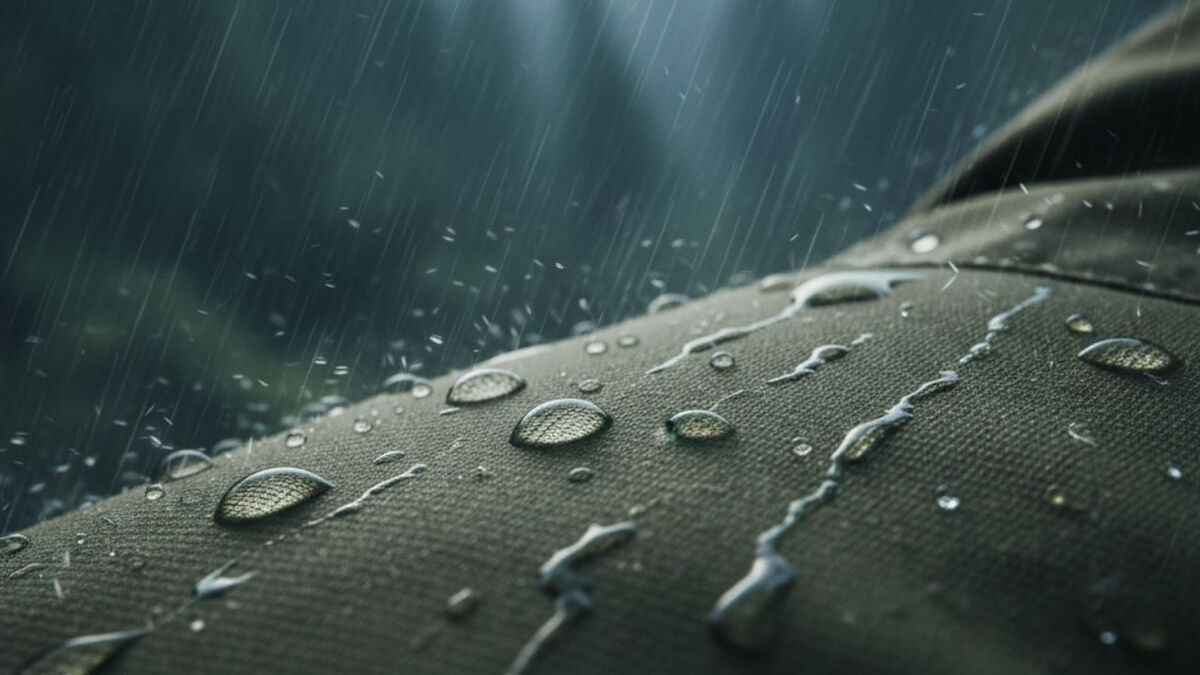
What it can do: Makes water bead up. The drops roll off instead of soaking in.
Where you find it: Jackets, pants, tents, backpacks – practically everywhere.
The big misunderstanding: DWR is not waterproof!
Read that again. DWR makes water bead up. But if you stand in the rain long enough, the water will still push through. DWR is the first line of defense, not the only one.
For real rain protection, you need a membrane (Gore-Tex, etc.) or a coating (PU, silicone).
Why DWR fades: Dirt, abrasion, washing. Over time, it stops working as well.
How to recognize it: Spray water. Beads up = good. Dark spots = DWR is failing.
How to renew it: Spray-on or wash-in proofing. I prefer spray because I'm lazy. In my article on tent care I explain that in more detail.
PU Coating vs. Silicone Coating
Short and sweet:
PU (Polyurethane):
- Cheaper
- Has a chemical expiration clock: after 5-10 years, hydrolysis begins – decay caused by moisture and heat. Symptoms: a sticky film that peels off and a characteristic "vomit" smell (butyric acid). Always store PU-coated gear in a dry and cool place!
- Can be glued and sealed with seam tape
Silicone:
- More durable
- More expensive
- Cannot be glued
Both make things waterproof. Silicone lasts longer. PU is cheaper and easier to repair.
Hydrostatic Head – What the number really means
You see numbers like 1,500 mm, 3,000 mm, 10,000 mm. What does that mean?
The hydrostatic head measures how much water pressure a fabric can withstand before water pushes through.
-
1,500 mm: Legally "waterproof" according to standards (from 1,300 mm). Sufficient for tent walls and rain flies where no pressure is applied to the fabric.
-
3,000 mm: Solid for most conditions.
-
5,000–10,000+ mm: Mandatory for tent floors. Why? When you kneel, your body weight creates localized pressure on the small knee area that easily exceeds 3,000 mm. For floors: the more, the better.
But: The hydrostatic head isn't everything. Seams can leak. Zippers can too. A tent with a 5,000 mm hydrostatic head and poor seams is less waterproof than one with 3,000 mm and sealed seams.
Natural Fibers: The Underrated Classics
Synthetics dominate the outdoor world. But natural fibers have their place. Especially one.
Merino Wool – The Wonder Material
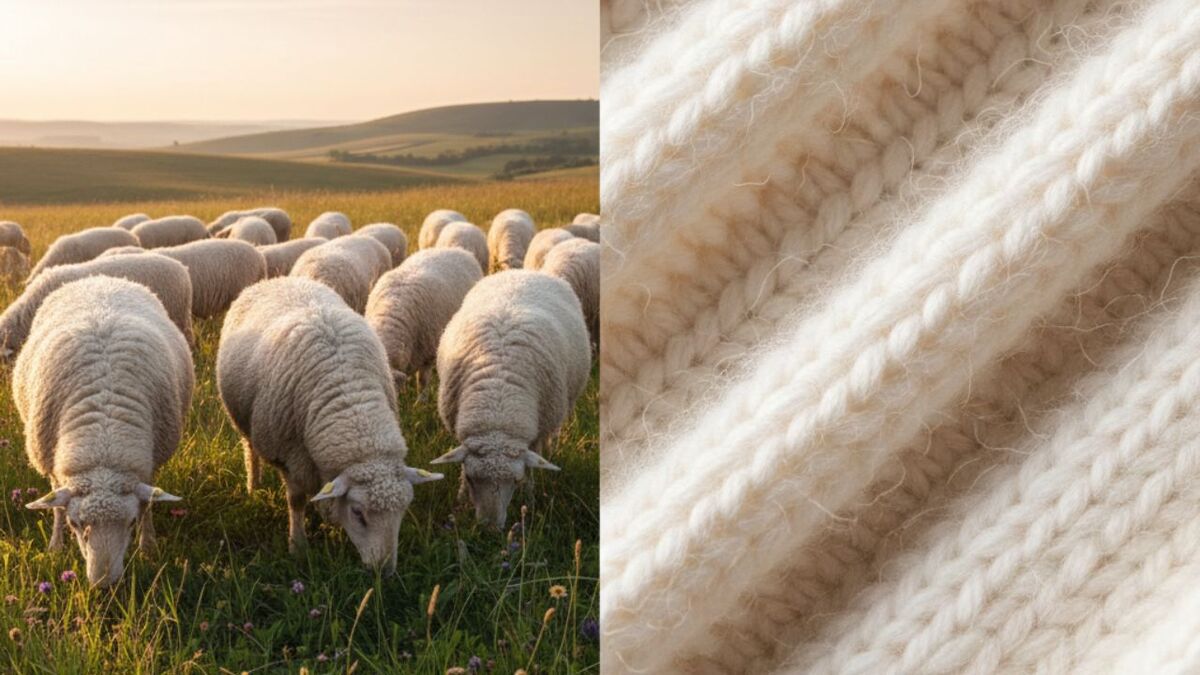
What it is: Fine wool from the Merino sheep. Much finer than normal wool. Doesn't itch.
What it can do:
- Temperature regulating (warms in the cold, cools in the heat)
- Doesn't smell. Not for days. Seriously.
- Soft and pleasant on the skin
- Stays warm even when damp
Where you find it: Baselayers, socks, hats, and underwear. Everything that sits directly on the skin.
When it makes sense: Multi-day tours when washing isn't an option. When you want to wear the same shirt for three days without your companions keeping their distance.
I wear Merino on every long tour. My synthetic shirt smells like a locker room after one day. My Merino shirt is still acceptable after three days. That’s the difference.
The weaknesses:
- Dries significantly slower than synthetics. Wool stores up to 35% of its weight in water inside the fiber core. Synthetics absorb almost no water (<1%), which just sits on the surface and evaporates quickly. But: Merino still feels dry even when damp and continues to warm – synthetics stick cold to the skin.
- More sensitive (can tear, pill)
- More expensive
The weight: 150g/m², 200g/m², 250g/m² – what do you need?
- 150g/m²: Light, for summer or high activity
- 200g/m²: All-rounder, for spring/autumn
- 250g/m²: Warm, for winter or as a mid-layer
More weight = thicker = warmer = heavier. Makes sense.
Cotton – Why it (almost) has no place outdoors
I have to say this, even if it hurts: cotton is usually the wrong choice for outdoors.
The problem:
- Soaks up water like a sponge
- Takes forever to dry
- Doesn't insulate anymore when wet
- Cools you down
The saying "Cotton kills" is exaggerated. But it has a grain of truth. In cold and wet conditions, wet cotton can become dangerous.
The exception: Canvas (heavy cotton) for bushcraft tents. Breathable, fire-resistant by the campfire, robust. But: very heavy. More for stationary camps than for hiking.
If you want to sleep outside in winter, leave the jeans at home.
Down vs. Synthetic – The Eternal Struggle
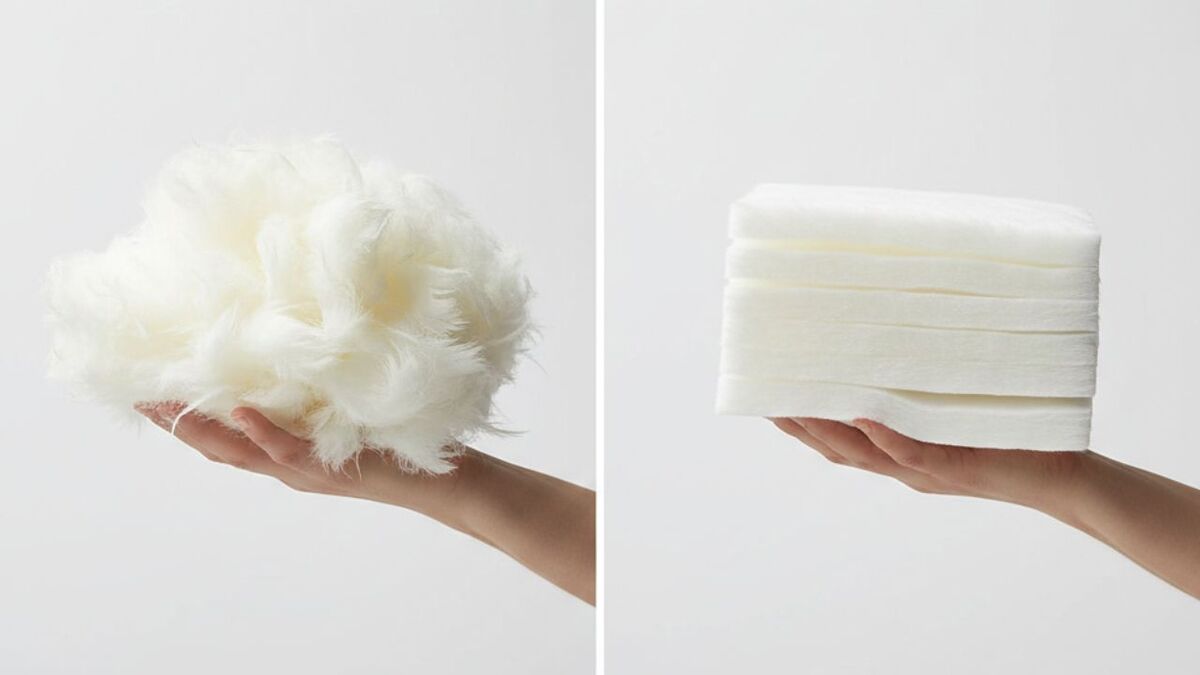
For sleeping bags and insulated jackets, you have two options:
Down:
- Lighter for the same warmth
- More compressible
- More durable (with good care)
- BUT: loses insulation when wet. Disaster in damp conditions.
Synthetic:
- Heavier and bulkier
- Insulates even when damp
- Cheaper
- Dries faster
When Down: Dry cold. Winter camping with protection. When weight is important.
When Synthetic: Damp conditions. When you sweat. When the budget is tighter.
In my sleeping bag guide I go into more detail. And don't forget: even the best sleeping bag is useless without a good sleeping pad.
Checklist: Which material for what?
So you don't have to guess next time you buy:
Tarp / Tent:
- Budget + light: Silnylon
- Budget + robust: Ripstop nylon with PU coating
- Ultralight + money is no object: Dyneema
- Stationary camp + campfire: Canvas
Backpack:
- Maximum durability: Cordura (500D–1000D)
- Saving weight: Ripstop or lighter Cordura (210D)
- Ultralight: Dyneema (but expensive and less robust)
Baselayer (Shirt, Underwear):
- Day trip, quick drying: Synthetic
- Multi-day tours, odor control: Merino
- Winter: Merino (200g/m² or more)
Jacket / Pants:
- Light, water-repellent: Ripstop with DWR
- Robust, for bushcraft: Cordura reinforcements
- Good bushcraft pants often combine both
Sleeping Bag Filling:
- Dry + cold + weight matters: Down
- Damp + variable + budget: Synthetic
Insulation (Jackets):
- Dry + cold: Down
- Active + damp: Synthetic
What I use myself
A quick insight because I'm often asked:
My tarp is silnylon. Light enough, robust enough, affordable. Dyneema would be overkill for my trips.
My backpack is Cordura. The old friend I already mentioned. Heavier than necessary, but indestructible.
Baselayer: Merino. Always. I did the sniff test. Synthetic lost.
My bushcraft pants: Blended fabric with Cordura reinforcements at the knees and seat. The rest is lighter material. Best compromise.
Sleeping bag: Down. Because I’m mostly out in dry weather and I love the pack size. But I always have a waterproof stuff sack around it. Wet down is a nightmare.
The most important thing at the end
Material isn't a marketing buzzword. It's the difference between "it works" and "it fails when you need it."
You don't need to become a materials scientist. But if you understand what ripstop, Cordura, and Merino mean, you'll make better decisions. And you'll no longer just nod politely when the salesman rattles off technical terms.
You’ll understand what you’re buying.
And that is priceless.
What are your experiences? Which material has disappointed you? Which has pleasantly surprised you? Tell us in the comments.
I’ll start: I once bought a cheap rain jacket. "Waterproof" it said. After 20 minutes in the rain, I was wetter than without a jacket because the thing didn't breathe and I was soaked through from the inside from sweating. Since then, I’ve paid attention to BOTH the membrane AND breathability.
Now your turn.


Author of the guide
Martin Gebhardt
Hey, I'm Martin. On my blog, you will learn the basics and numerous details about living in the wild. I think survival, bushcraft and the good life in nature are the keys to happiness. Find me here on Instagram or on YouTube. You can find more about my mission on the About Me page.
Since this is a gear guide, here ...
🤝8 reasons to trust my recommendation
-
Practical Experience: I have tested most of the products I recommend under extreme conditions myself.
-
Independence: As a wilderness mentor, I am not tied to any specific brands - this means my recommendations are unbiased.
-
Expertise: My many years of experience allow me to understand the intricacies and details of various products that a layperson might overlook.
-
Target group understanding: I understand the needs and challenges of outdoor enthusiasts, from beginners to seasoned experts.
-
Quality focus: I attach great importance to quality and longevity. These are characteristics that are crucial in the wild.
-
Clear communication: I try to explain the pros and cons of each product clearly and understandably so that you can make an informed decision.
-
Currentness: I always keep my guides up to date and adapt them to new findings or products.
-
Community Feedback: I work in wilderness schools, teach courses myself, attend courses and am active in various outdoor and survival communities and therefore integrate the feedback and experiences of others into my recommendations.
So when I introduce the best survival knives or flashlights, you can be sure that every recommendation is based on solid experience and extensive knowledge.
Was this guide helpful?
11 people found this guide helpful.
5.00 out of 5 points (11 Ratings)
Comments (0)
This post may contain affiliate links. So if you click on the links and make a purchase, I will receive a small commission at no additional cost to you. Click here, to learn more about it.