


The red fox: Why it can become the most important teacher in your wilderness education
Free 35 Survival Hacks you'll love!
You will get 35 easy-to-implement survival hacks so that you don't have to stand aimlessly in the forest from tomorrow when things get tough. Take your skills to the next level!
DOWNLOAD HERE FOR FREE👉 The key facts from this guide
- The fox is our European coyote – trickster, teacher, and connector between the wilderness and humans.
- Spectacular sensory feats: a sense of smell 400 times finer than ours, ears that rotate like satellite dishes, and a magnetic compass in its head.
- Urban foxes have developed their own culture – they are human-tolerant, curious, and not aggressive.
- Rabies has been history in Germany since 2008. The fox tapeworm is real, but winning the lottery is more likely than an infection from wild berries.
- For wilderness educators, the fox is worth its weight in gold: tracking, Coyote Teaching, sensory training, storytelling – it offers it all.
It was a damp, cold morning in November.
I had been sitting at my sit spot in the woods. For an hour already. It was one of those sessions where you wonder why you actually got up before sunrise.
Then.
A movement at the edge of the forest.
I stayed still. Breathed shallowly. Owl eyes – not looking directly at it.
And there he came. A fox. Maybe 30 meters away.
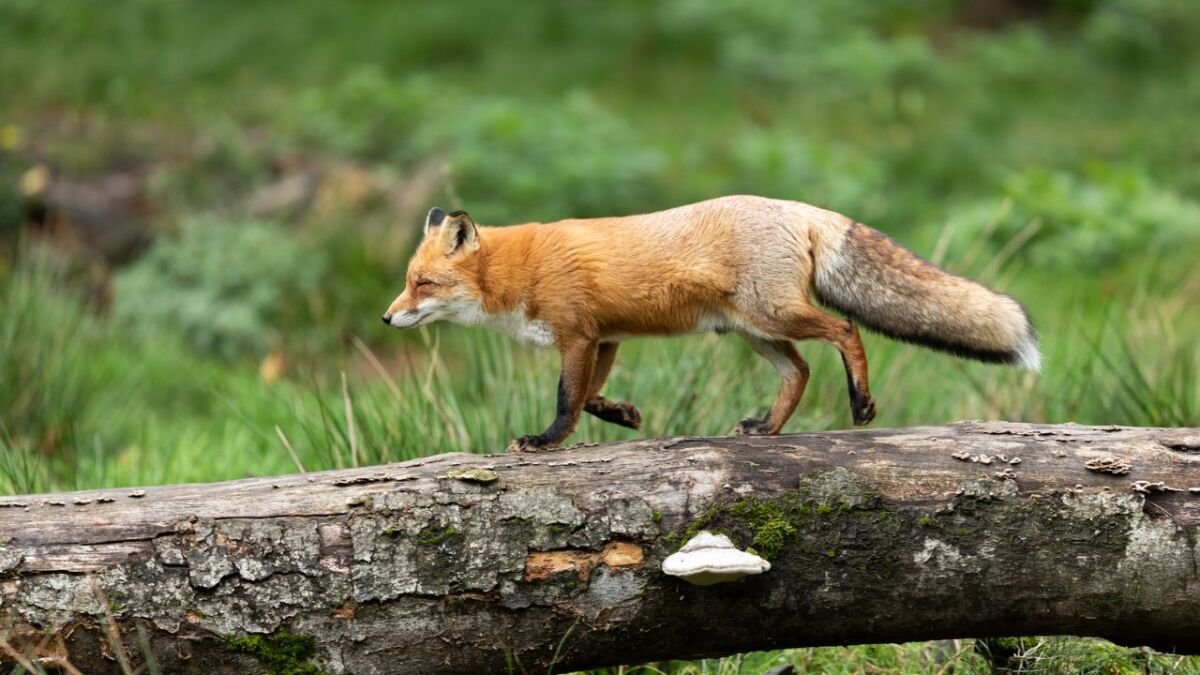
He moved the way only foxes move. Trotting. One foot exactly in the other. As if pulled by a string. Silent.
He stopped. Raised his snout into the wind. Turned his ears like two small satellite dishes.
And then – I will never forget this – he looked directly at me.
Three seconds. Maybe four.
No shock. No flight. Just a calm, searching look.
Then he moved on. Trailing. In mouse-steps.
I sat there for a long time after he was gone.
And I knew: That wasn't just some random animal. That was a teacher.
Why the fox is our European coyote
In North American wilderness education – with Tom Brown Jr., Jon Young, the Wilderness Awareness School – there is a central figure: the Coyote.
The Coyote is:
- Smart without being harsh
- Adaptable
- Curious
- Mysterious
- Ubiquitous yet barely visible
- A trickster who teaches through cunning
We don't have coyotes here in Central Europe.
But we have the fox.
And anyone who observes him, who follows his tracks, who tries to think like him – suddenly understands what Coyote Teaching really means. I always say: this teaching philosophy is the heart of wilderness education – a type of learning where the mentor isn't the center of attention, but rather the curiosity of the learner.
The fox is not just an animal. He is a teaching mindset.
What makes the fox the perfect wilderness teacher figure
His senses are a world of their own
Let me get factual for a moment, then I'll continue the story.
The sense of smell: About 400 times finer than a human's. Through the violet gland on the tail, anal glands, corner-of-the-mouth glands, and glands between the toes, the fox communicates identity, gender, and territory boundaries.
Hearing: Exceptionally fine. As the Deutsche Wildtier Stiftung describes, the ear muscles, which can rotate almost independently, locate the squeaking of mice under thick snow cover. From several meters away.
Vision: Slit pupils like a cat. Excellent in twilight, precise jump calculation, excellent motion vision.
When I lead wilderness education courses, I always have the participants work with deer ears and owl eyes. These exercises are nothing more than an attempt to briefly be like a deer or a fox.
The fox lives this every day. He is not a "survival animal." He is a sensory being.
The magnetic compass in the fox's head
One of the most spectacular research findings in mammalian biology of the last 20 years:
The red fox has a magnetic sense in its head.
The team led by Prof. Hynek Burda (University of Duisburg-Essen) evaluated around 600 mouse pounces from 84 red foxes in the Czech Republic over two and a half years. Spektrum der Wissenschaft described the study in detail.
The result:
- Foxes prefer to pounce in a northeastern direction (along the magnetic north-south axis)
- For jumps toward the north, approx. 73% were successful; in other directions, only approx. 18%
- The position of the sun, wind, and weather played no role
The hypothesis: The Earth's magnetic field acts like a "sight," which the fox uses to calibrate the distance to the invisible, acoustically located prey.
This makes the red fox the first mammal in which a magnetic sense has been proven to be used for hunting.
The next time you discuss this with children or adults outdoors, watch your participants' eyes. They will get big. So big.
The mouse pounce – the iconic image
If you really want to understand who the fox is, watch a mouse pounce.
He locates the mouse acoustically. In the grass. Under the snow.
Pricks his ears. Calculates.
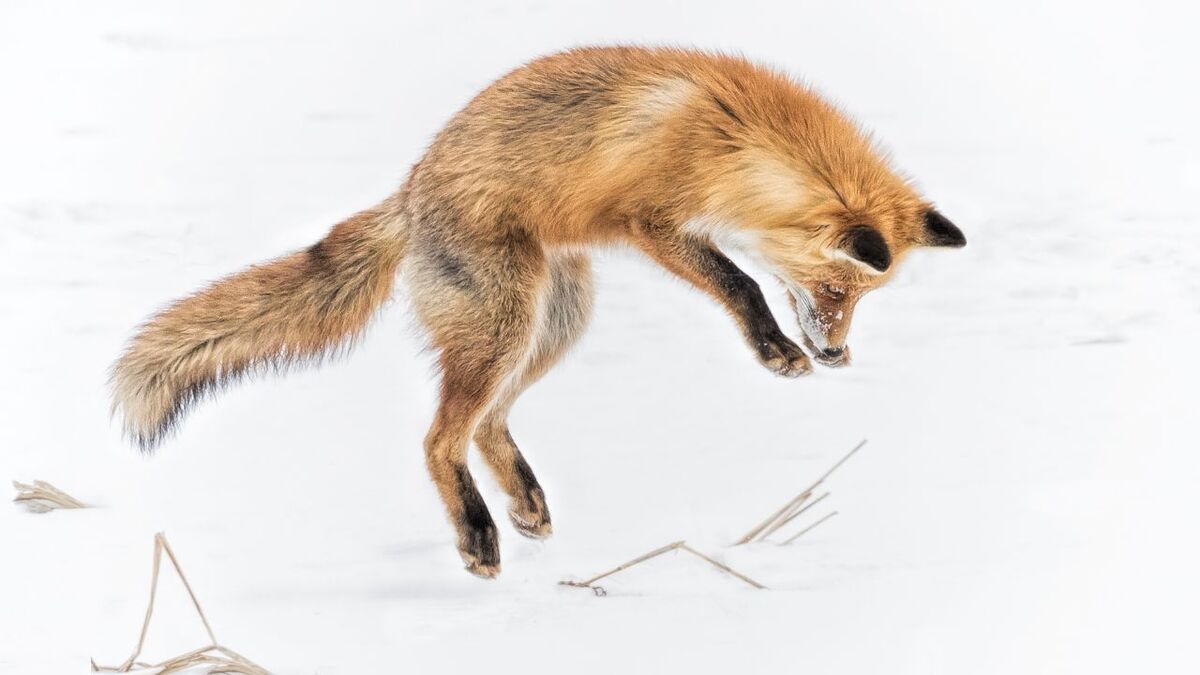
Then: a short run-up. And a jump – almost vertically upward. Up to a meter high. Several meters wide. In an arc.
In deep snow, he dives in headfirst. Only the tail sticks out.
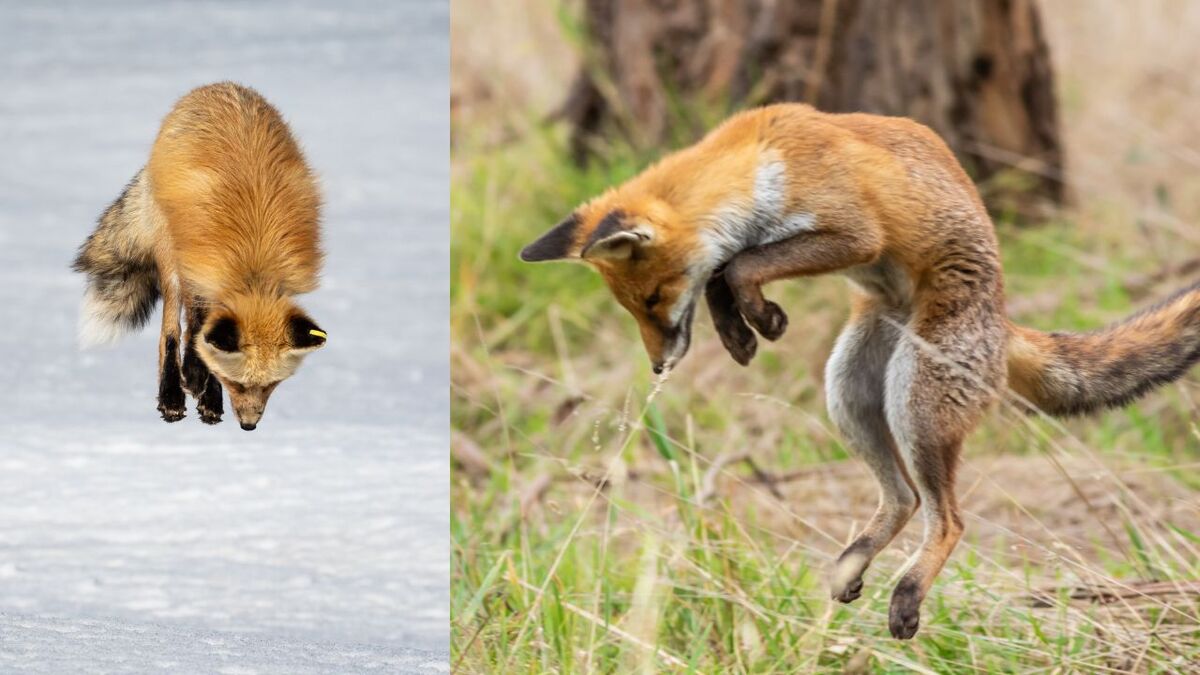
And then he has it.
Try this with your course participants. Imitate the mouse pounce yourselves. First cautiously, then with a run-up. You'll see: within two minutes, the whole group will be laughing.
And they will never forget the fox again.
The educational values of the fox for our teaching
1. Adaptability as a life skill
The fox shows us that change is not a threat but an opportunity.
From the dense forest to the big city – in just a few generations.
In Berlin today, there are 1–3 foxes per square kilometer of city area. From the Tiergarten to the government district. Some run 15 kilometers through the city per night – using S-Bahn tracks, parks, and main roads.
Research at the Leibniz-IZW Berlin around Sophia Kimmig even shows: urban and rural foxes form two genetically distinct populations. The divider is not a fence but a "behavioral barrier" – rural foxes are more shy of humans and are reluctant to cross the border.
Initial skull changes are reminiscent of early stages of domestication: shorter snouts, and smaller braincases, as Wissenschaft.de reports.
We are currently observing how a wild animal changes before our eyes.
What a message to our course participants: Wilderness is not far away. It starts in the backyard.
Below is a fox I recorded on a wildlife camera while I was out as a teamer for a kids' camp:
2. Family and play as a form of learning
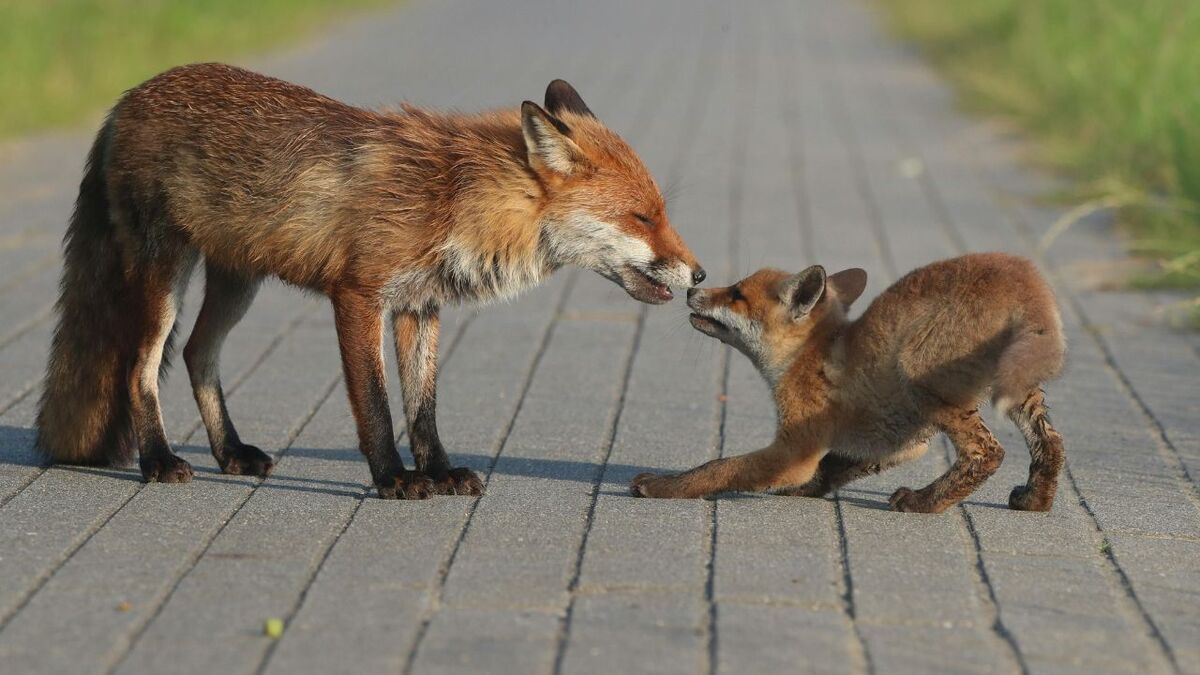
Fox cubs learn through play.
They scuffle, hunt each other, and practice mouse pounces on feathers and sticks. They learn through imitation and experience.
This is exactly what nature and wilderness education is.
By the way, the cliché of the lonely fox is outdated. In fact, foxes live in flexible social systems. Often with "helper vixens" – daughters from the previous year who help raise their siblings. Cooperative brood care.
A lesson we can learn from him: learning takes place in a group. Not in frontal instruction.
More on why play is central for adults too: Why adults should play more again
3. Sensory training in its purest form
When you find fox tracks, you automatically practice:
- Sense of smell: Smell fox scat. Carefully. But do it. You will never forget that musky, pungent note.
- Vision: Tracking trains your peripheral vision.
- Hearing: Bird language shows you where the fox is before you see it.
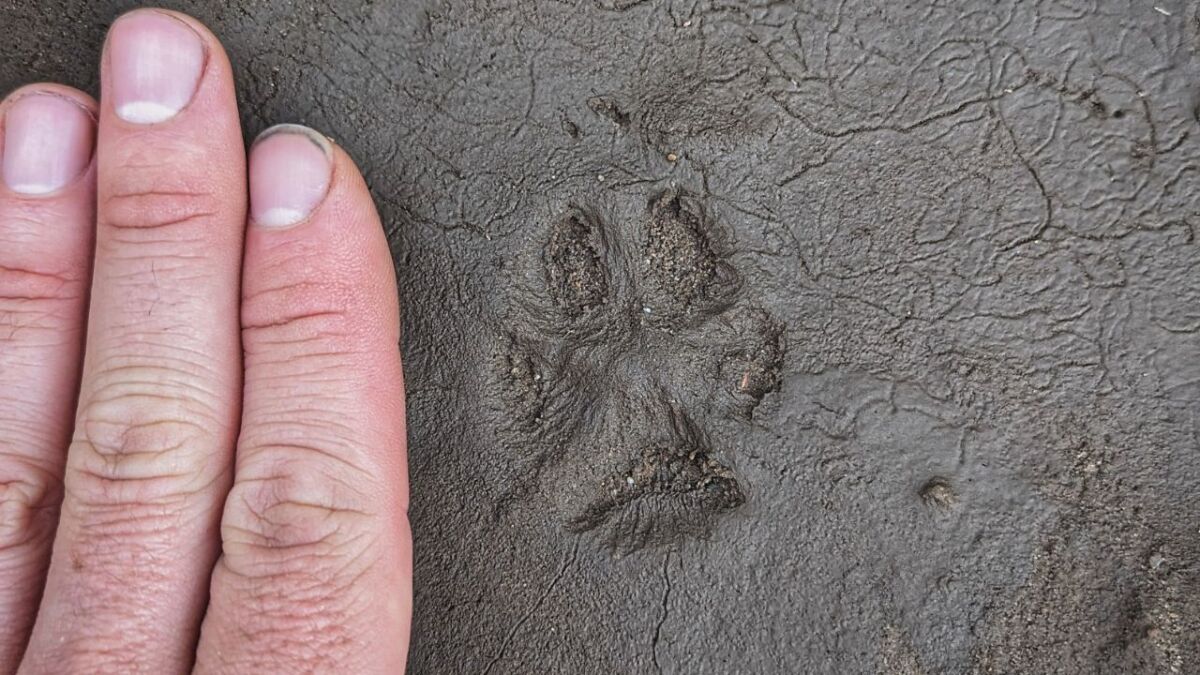
- Touch: Feel the depth of a footprint in the snow or mud.
The fox is a walking sensory training workshop.
4. Storytelling at its best
What other local wild animal has so many stories?
- Reynard the Fox (Goethe 1794) – the cunning outsider
- Aesop's Fables – "The Fox and the Grapes"
- Kitsune in Japan – messenger of the rice goddess Inari, with nine tails. Anyone who wants to know more about this will find a nice overview of Kitsune mythology at Japanwelt.de.
- The Little Prince – the fox as the teacher of Saint-Exupéry's Little Prince ("You become responsible, forever, for what you have tamed")
- Coyote stories of the Navajo, Apache, Lakota
If you engage in Coyote-style storytelling, you have endless material with the fox.
Tracking: How to recognize the fox
The footprint
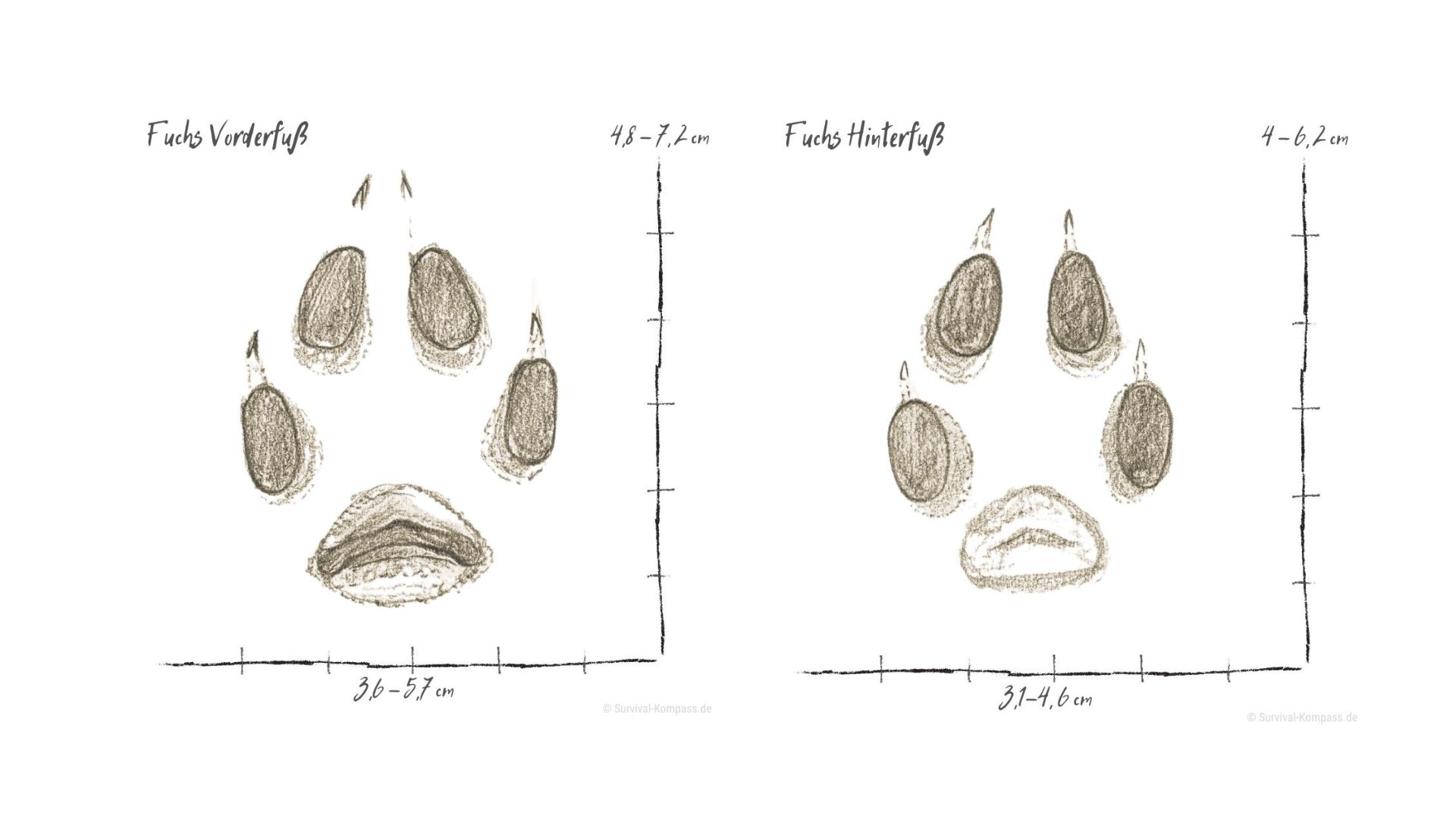
- 4 visible toe pads (the 5th toe is higher up)
- Approx. 5 × 4.5 cm in size (front and hind feet vary)
- Narrow, symmetrical oval shape
- Claws are visible (unlike with cats)
- Characteristic: the "bar" in the metacarpal pad of the front foot – the most distinct feature
The cross test: With fox tracks, you can mentally draw a cross between the pads without cutting them. With dogs, this usually doesn't work.
You can find a detailed guide with pictures here: Animal tracks of the fox
The famous Trotting
This is my favorite fox characteristic.
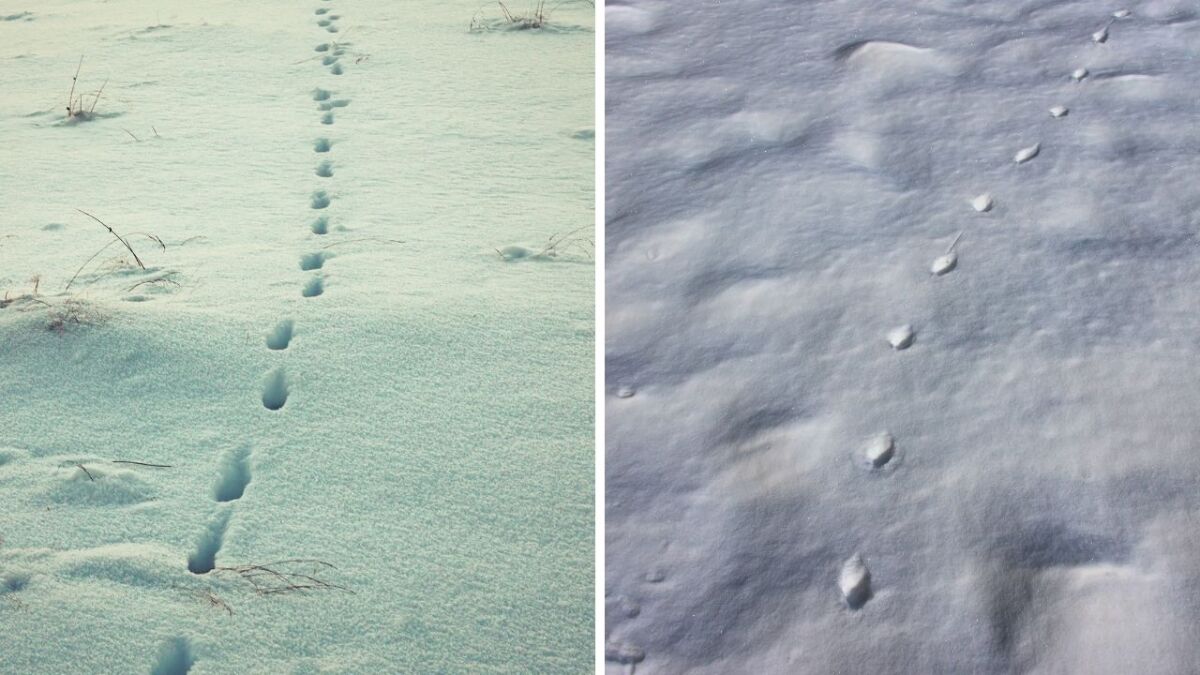
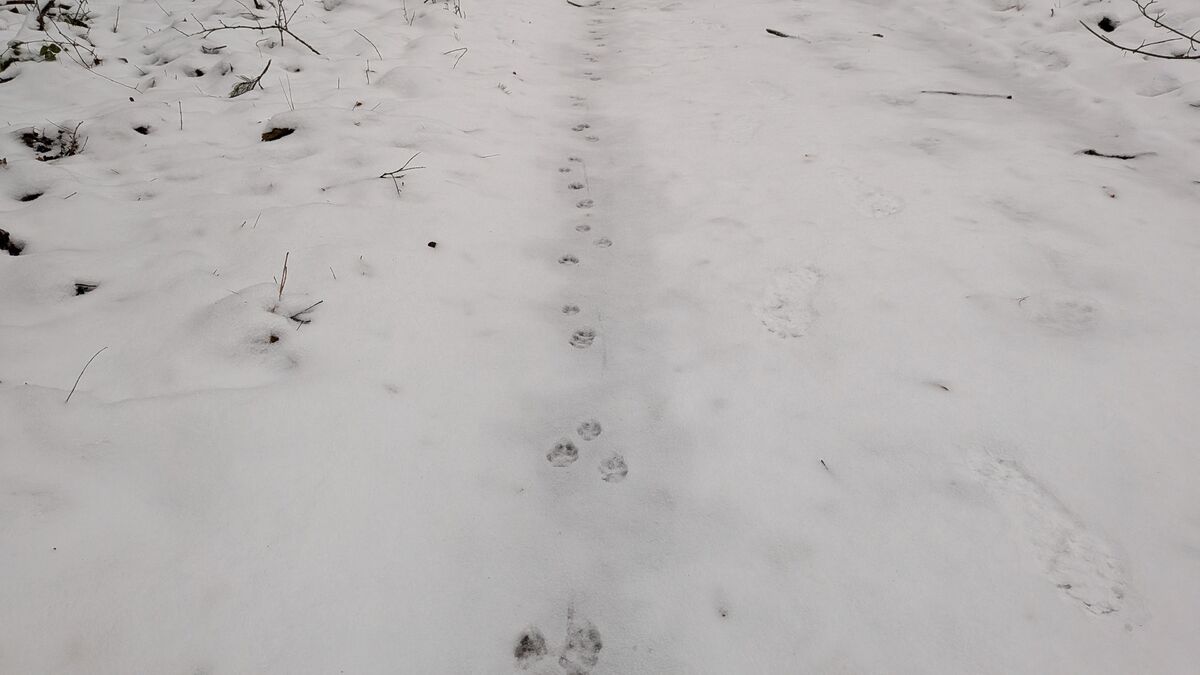
In a trot, the fox places its hind paw exactly into the print of the front paw. The result: a narrow, almost straight line of tracks, as if pulled by a string.
Dogs can't do that. They run wide-tracked, in a zigzag.
If you find a perfect trailing track – and it's not a wolf (significantly larger footprints) – you've almost certainly found a fox.
The scat
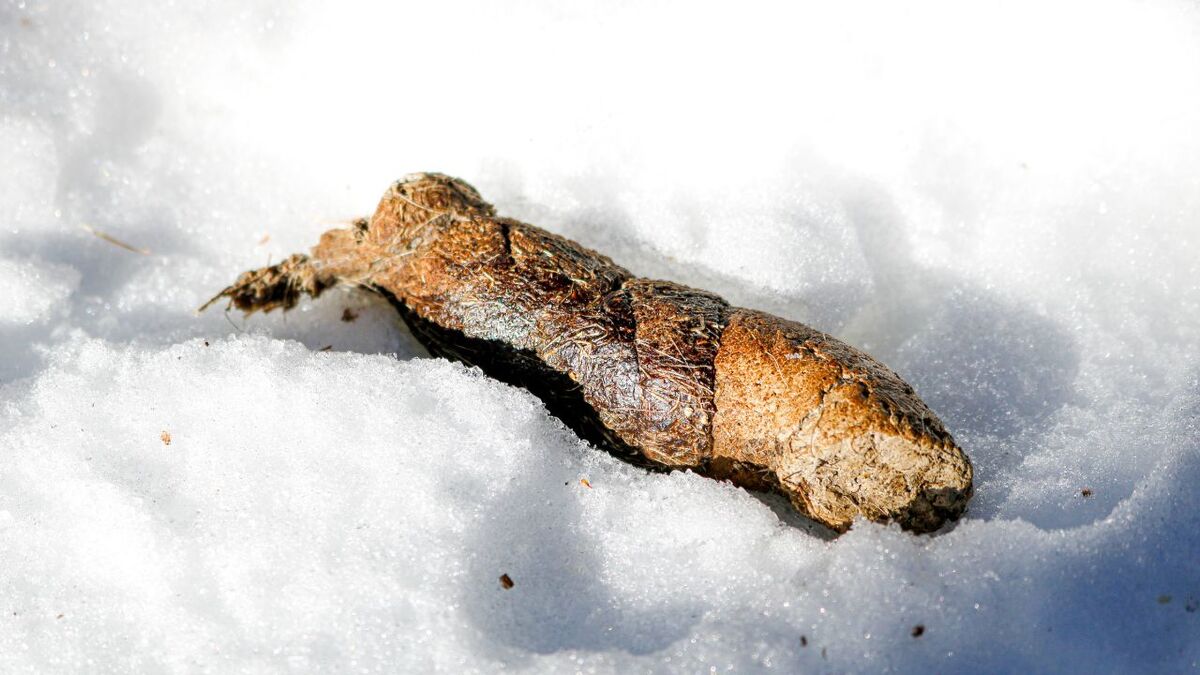
- Sausage-shaped, 8–10 cm long, approx. 2 cm thick
- Twisted and pointed at one end
- Content: mouse bones, hair, feather remains, berry seeds
- Often deposited in elevated spots – on stones, tree stumps, in the middle of the path
- Smell: intense, musky-pungent
You can find more about tracking for beginners in the linked article – including many picture examples.
The foxhole
- Multiple entrances (often 5–10)
- Main tunnels 15–20 cm in diameter
- In front of an occupied den: prey remains, feathers, bones (a badger sett, on the other hand, is "tidy")
- In spring: cub play area
Stalking tip: 30–50 m safety distance. With the wind. Wait in cover in the evening.
Typical fears – put into perspective
I need to set something straight here. Because we are often confronted with fears. And most of them are unfounded.
Rabies – a solved problem
Germany has officially been free of terrestrial rabies since September 28, 2008 (declaration by the World Organisation for Animal Health). Jagd-Fakten.de has documented the path to being rabies-free in detail.
Last rabies case in a fox: February 3, 2006, in the Mainz-Bingen district.
That was 20 years ago.
This was made possible by oral vaccination with vaccine baits (1983–2008). A triumph of veterinary medicine.
Anyone who is still afraid of rabies in foxes hasn't kept up with the news of the last two decades.
The fox tapeworm – real, but rare
Yes, it exists. Echinococcus multilocularis. It causes alveolar echinococcosis – a serious disease.
But: in Germany, we are talking about 30–50 reported cases per year (RKI data). Out of 84 million inhabitants.
The Pharmazeutische Zeitung examined the topic in detail and writes clearly: berries and mushrooms are not a significant risk. The Würzburg echinococcosis expert Prof. Klaus Brehm puts it this way: "Winning the lottery is more likely than becoming infected with fox tapeworm by eating wild berries."
Incidentally, the main route of infection is not the fox directly, but insufficiently dewormed dogs that eat mice. 70% of those affected owned a dog or a cat.
Sensible hygiene is completely sufficient:
- Wash your hands after the forest, garden, or animal contact
- Wash or heat wild fruits found near the ground (above 60 °C kills the eggs)
- Deworm free-roaming dogs regularly
- Do not touch fox scat with bare hands
That's all.
More on this also in the article: Dangers when collecting wild plants
Aggressiveness – a myth
Even urban foxes practically never attack humans. The NABU Berlin expressly emphasizes: urban foxes show "no aggressive behavior." Bite wounds to humans are extreme exceptions – usually in connection with feeding, illness, or harassment.
Children are not in danger.
By the way, this applies to most native wild animals. I have described elsewhere what to consider with wild boars and how to behave correctly when encountering a wolf.
Concrete practical ideas for your wilderness courses
Here are a few exercises that I regularly use in my own courses:
Sit spot practice with a fox focus: Have your participants sit regularly in one place and watch for fox tracks or bird alarms. Bird language often shows the presence of a fox before you see it. More on this: Learning bird language
Tracking with the cross test: In snow or soft ground. Let the participants learn to distinguish between dog and fox. Kids love this.
Imitating the mouse pounce: A funny exercise for every age group. Promotes body awareness and provides laughs. Join in yourself – that's important.
Magnetic field experiment: Simulate "mouse pounces" with a compass and blindfold. Direct reference to the Burda study. Aha-moment guaranteed.
The story of the fox through the year: Mating season (January) → Cubs (April) → Family life (summer) → Dispersal (autumn) → Solitary (winter). Perfect as a seasonal cycle narrative.
The "fox walk" as a movement meditation: Silent. Mindful. Shifting weight over the outer edge of the foot. Not a single twig may snap. Best done barefoot.
The fox as a mirror for ourselves
When I was sitting at my sit spot and the fox looked at me, something dawned on me.
We – meaning we adults, we educators, we nature mentors – are often so serious.
So controlled.
So eager to do everything right.
The fox is none of those things.
He is curious. He is playful. He is adaptable. He makes mistakes and learns from them. He takes what is there – and doesn't complain when nothing is there.
And he has this one quality that impresses me the most: He cannot be grasped.
You cannot tame him. You cannot own him. You can only follow him – and hope that he shows himself briefly.
That is exactly what wilderness is.
That is undoubtedly what wilderness education is, too.
We don't teach content. We teach a mindset. We awaken curiosity. We invite.
We are foxes ourselves if we do it right.
What you can do this week
Go out.
Look for fox tracks. In the park, in the forest, at the edge of the woods.
If you find a trailing track, stop. Breathe. See where it comes from and where it goes.
Follow it for a bit. Using the fox walk. Silent. Mindful.
Maybe you'll find scat. Maybe a foxhole. Maybe – if you're lucky – you'll see him yourself.
And the next time you lead a group, tell them about the fox.
About the magnetic field in his head. About the mouse pounce. About the urban fox running through S-Bahn stations. About the Kitsune in Japan. About the Little Prince.
You will be amazed at how eyes open up.
With the children. And with the adults.
The fox is there. On four soft paws. Teacher, trickster, connector.
We just have to learn to follow him.

Sources for the guide
Biologie, Steckbriefe & Fachportale
- NABU Untertaunus – Rotfuchs (Vulpes vulpes): https://www.nabu-untertaunus.de/flora-fauna-im-gebiet-nabu-untertaunus/rotfuchs/
- NABU Berlin – Fuchs: https://berlin.nabu.de/tiere-und-pflanzen/saeugetiere/fuchs/index.html
- Deutsche Wildtier Stiftung – Fuchs: https://www.deutschewildtierstiftung.de/wildtiere/fuchs
- Tierenzyklopädie – Rotfuchs (Vulpes vulpes): https://www.tierenzyklopaedie.de/rotfuchs
- Biologie-Seite.de – Rotfuchs: https://biologie-seite.de/Biologie/Rotfuchs
- Biologie-Schule.de – Fuchs Steckbrief: https://www.biologie-schule.de/fuchs-steckbrief.php
- StudySmarter – Rotfuchs: https://www.studysmarter.de/schule/biologie/zoologie/rotfuchs/
- Mein-Lernen.at – Rotfuchs Steckbrief: https://www.mein-lernen.at/biologie/saeugetiere/fuchs
- Waidwissen.com – Fuchs (Jägerprüfung): https://waidwissen.com/fuchs
- Deutscher Jagdverband – Fuchs (Vulpes vulpes): https://www.jagdverband.de/zahlen-fakten/tiersteckbriefe/fuchs-vulpes-vulpes
Stadtfuchs & Wissenschaft
- Wissenschaft.de – Stadtfüchse sind anders: https://www.wissenschaft.de/erde-umwelt/stadtfuechse-sind-anders/
- Leibniz-Institut für Zoo- und Wildtierforschung (IZW) Berlin – Stadtfuchs und Landfuchs: https://www.izw-berlin.de/de/pressemitteilung/stadtfuchs-und-landfuchs-genetische-analysen-zeigen-unterschiedliche-fuchs-populationen-in-und-um-berlin-auf.html
- Mit:forschen! – Füchse in der Stadt: https://www.mitforschen.org/projekt/fuechse-der-stadt
- Stuttgarter Zeitung – Stadtfüchse in Berlin: https://www.stuttgarter-zeitung.de/inhalt.stadtfuechse-in-berlin-grossstadtfuechse-leben-wild-und-gefaehrlich.09fbec27-dcde-4a97-bcf3-e9388c781e63.html
Magnetfeld & Sinnesleistungen
- Spektrum der Wissenschaft – Das Erdmagnetfeld, Freund des hungrigen Fuchses?: https://www.spektrum.de/news/das-erdmagnetfeld-freund-des-hungrigen-fuchses/1059962
- Waldeckische Landeszeitung – Füchse jagen mithilfe des Magnetfeldes: https://www.wlz-online.de/magazin/digital/fuechse-jagen-offenbar-mithilfe-magnetfeldes-5459602.html
Tollwut & Fuchsbandwurm
- Jagd-Fakten.de – Tollwut beim Fuchs offiziell verdrängt: https://www.jagd-fakten.de/jf-news/tollwut-beim-fuchs-offiziell-verdr%C3%A4ngt-fuchsjagd-weiterhin-n%C3%B6tig
- Pharmazeutische Zeitung – Fuchsbandwurm: Beeren und Pilze kein Risiko: https://www.pharmazeutische-zeitung.de/2018-08/fuchsbandwurm-beeren-und-pilze-kein-risiko/
- Herbalista.eu – Keine Angst vor dem Fuchsbandwurm!: https://www.herbalista.eu/keine-angst-vor-dem-fuchsbandwurm-2/
- Deutsche Gesellschaft für Mykologie – Gefahr durch Fuchsbandwurm: https://www.dgfm-ev.de/de/ueber-uns/news/gefahr-durch-fuchsbandwurm
Fuchsstimme & Lautsprache
- Fuchssprache (WordPress) – Die geheime Sprache der Füchse: https://fuchssprache.wordpress.com/2021/03/24/fuchssprache-die-geheime-sprache-der-fuechse/
Kulturelle Bedeutung & Mythologie
- Fuechse.info – Füchse in Religion und Mythologie: https://fuechse.info/fragen-und-antworten/7-1-fuchse-religion-mythen-legenden-glauben-kitsune/
- Japanwelt.de – Die Kitsune Mythologie: https://www.japanwelt.de/blog/kitsune-mythologie
- TheDotBlog – Kitsune, der Fuchs in der japanischen Mythologie: https://theschool.blog/de/kitsune-japanischen-mythologie/
- Dr. Kathrin Voss – Was es mit dem Fuchs auf sich hat: https://www.kathrinvoss.de/fuchs

Author of the guide
Martin Gebhardt
Hey, I'm Martin. On my blog, you will learn the basics and numerous details about living in the wild. I think survival, bushcraft and the good life in nature are the keys to happiness. Find me here on Instagram or on YouTube. You can find more about my mission on the About Me page.
Was this guide helpful?
15 people found this guide helpful.
5.00 out of 5 points (15 Ratings)
Comments (0)
This post may contain affiliate links. So if you click on the links and make a purchase, I will receive a small commission at no additional cost to you. Click here, to learn more about it.