

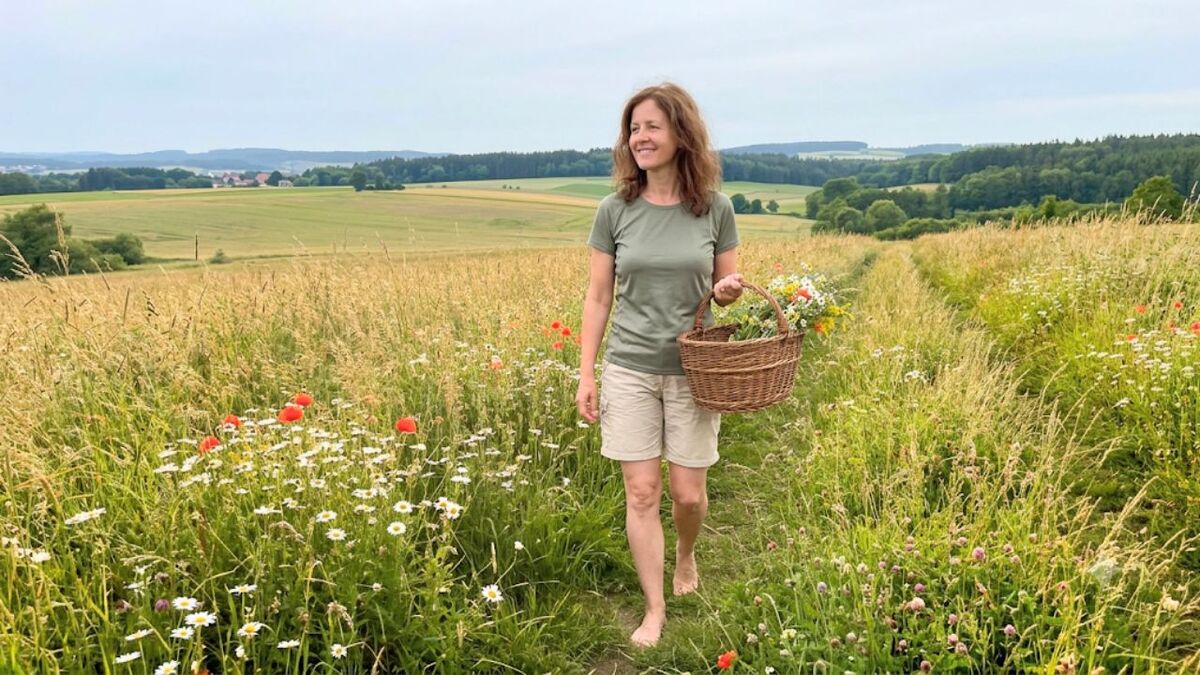
7 wild plants and herbs at their peak in July – and in three weeks, it’s over

Free 35 Survival Hacks you'll love!
You will get 35 easy-to-implement survival hacks so that you don't have to stand aimlessly in the forest from tomorrow when things get tough. Take your skills to the next level!
DOWNLOAD HERE FOR FREE👉 The key facts from this guide
- July is the most bountiful month of the herbal year – many plants are at their peak all at once.
- The 7 plants: Meadowsweet, St. John’s wort, true chamomile, wild strawberry, white goosefoot, chicory, and mugwort.
- The most common mistake: Harvesting mugwort when it is in bloom. It turns bitter then. The right time is just *before* it flowers.
- The quickest identification trick: Crush a St. John’s wort blossom – if it stains your fingers dark red, you have the genuine plant.
- Chicory opens its blue flowers only in the morning. If you sleep in, you won’t see them.
- The one overriding rule: Harvest only what you can identify with one hundred percent certainty. Not ninety. One hundred.
July is the most generous month of the herb year. Everything blooms at the same time. Everything wants to be harvested at the same time.
But it holds nothing back for later.
I was outside yesterday. The wild strawberries are getting fewer. The chamomile is at its absolute peak. And mugwort has exactly its window right now – for one, two weeks.
After that, it turns bitter. And the harvest goes down the drain.
That's what's unfair about July: It's wasteful and scarce at the same time. What you don't collect now, you won't see again until next July.
So let's go.
1. Meadowsweet – the meadow queen
Recognize: White flower clouds in damp meadows, stream banks, and ditches. Tall perennial, up to 1.5 meters. The scent is unmistakable – honey and almond.
If you smell a flower spike and think "That smells like marzipan", you're right.
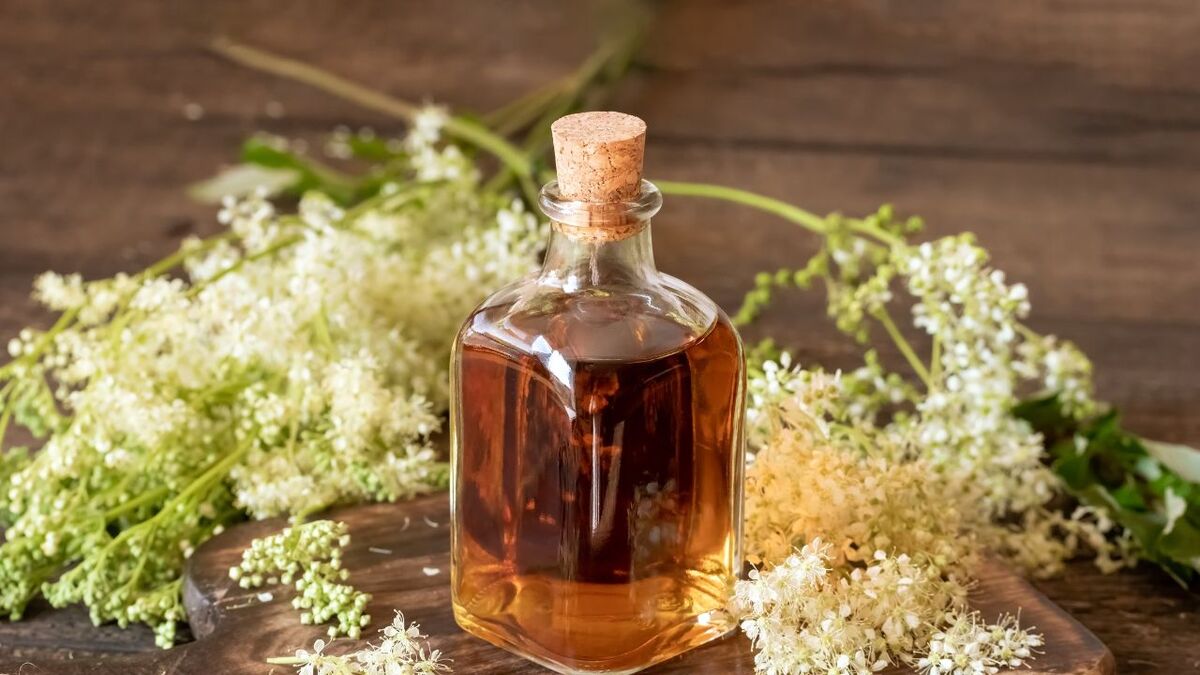
Uses: Syrup and jelly are the classics. Dried, meadowsweet makes a wonderful winter tea for colds – the plant contains natural salicylic acid, the precursor to aspirin.
Caution: Not for those with salicylate intolerance, during pregnancy, or for children under 12.
Time window: About three more weeks.
More about the plant in my detailed profile: Meadowsweet – Wild herb and medicinal plant
2. St. John's Wort – the finger test
Recognize: Here comes one of my favorite identification tricks of all time.
Rub a yellow flower between your fingers.
If it colors your fingertips dark red, you have the true St. John's Wort. No other herb does that.
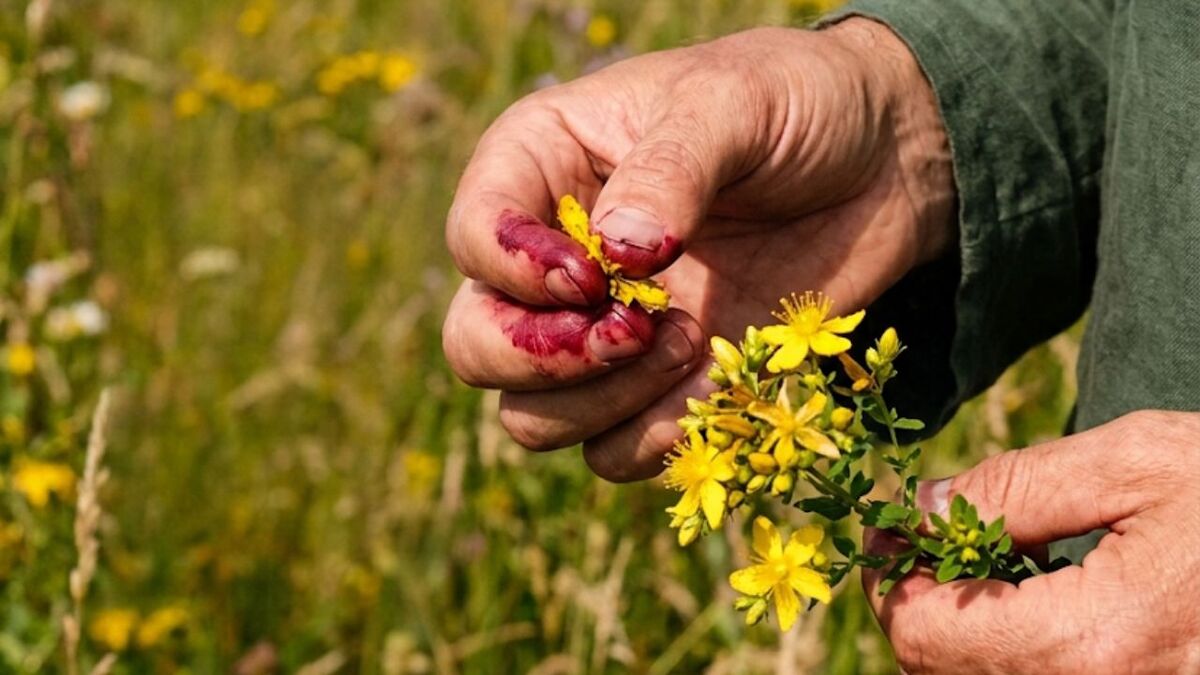
Second check: Hold a leaf up to the sun. You see tiny bright dots – those are oil glands. That's why the plant is botanically called Hypericum perforatum, the "perforated" one.
Uses: The deep red St. John's Wort oil. Put flowers in good plant oil, place in the sun for six weeks, strain. Helps with tense muscles and rough skin.
Important: Prepare it now. If you wait until August, there will be no flowers left.
Time window: About two to three more weeks.
[IMAGE: Close-up of fingertips stained dark red from crushed St. John's Wort. Blurred yellow flowers in the background. Amateur smartphone shot 16:9, natural daylight.]
3. True Chamomile – the hollow base
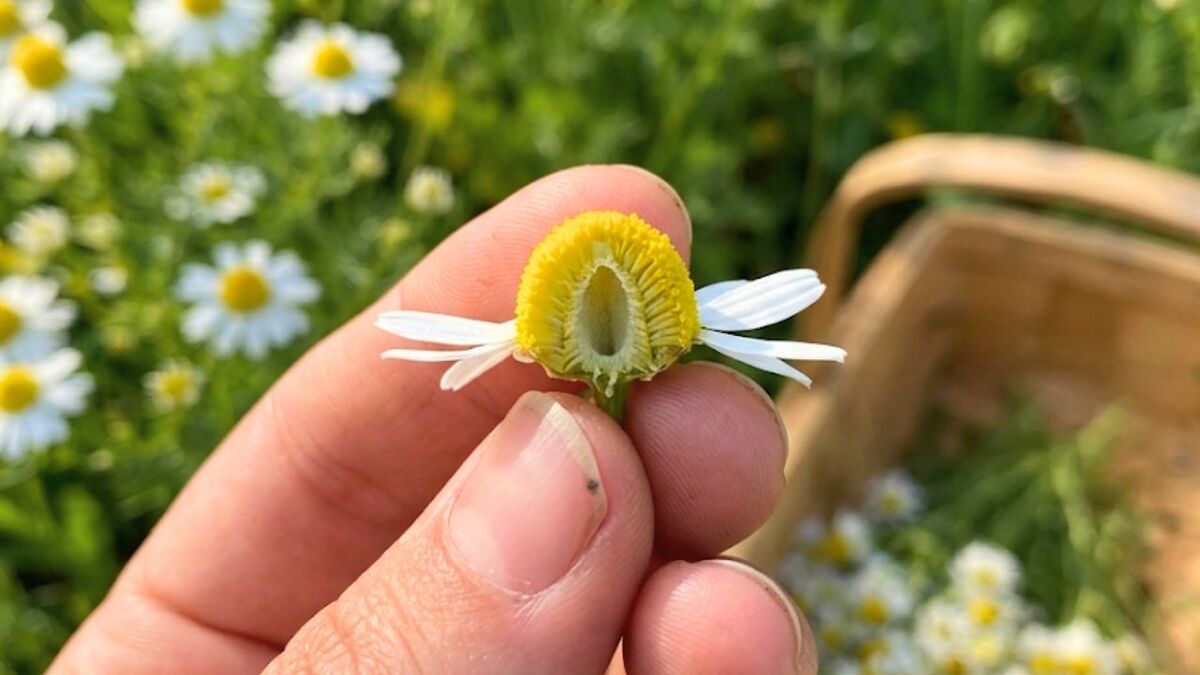
Recognize: Chamomile has several look-alikes – dog chamomile, rayless chamomile, daisies. The safe test is simple:
Cut a flower in half lengthwise. If the flower base is hollow, you have true chamomile. All the look-alikes have a filled base.
Plus the scent: intense, sweet, unmistakably chamomile-like.
Uses: Stomach and nerves. Freshly brewed chamomile is a different world from any supermarket tea bag – try it once, and you'll understand why our grandmothers valued it so much.
Time window: About three more weeks.
4. Wild Strawberry – the last ones are hanging now
Recognize: Tiny. Deep red. Hidden under the leaf in light forest edges, slopes, and wayside verges.
If you find one, you usually find twenty more. You just have to learn to see them.
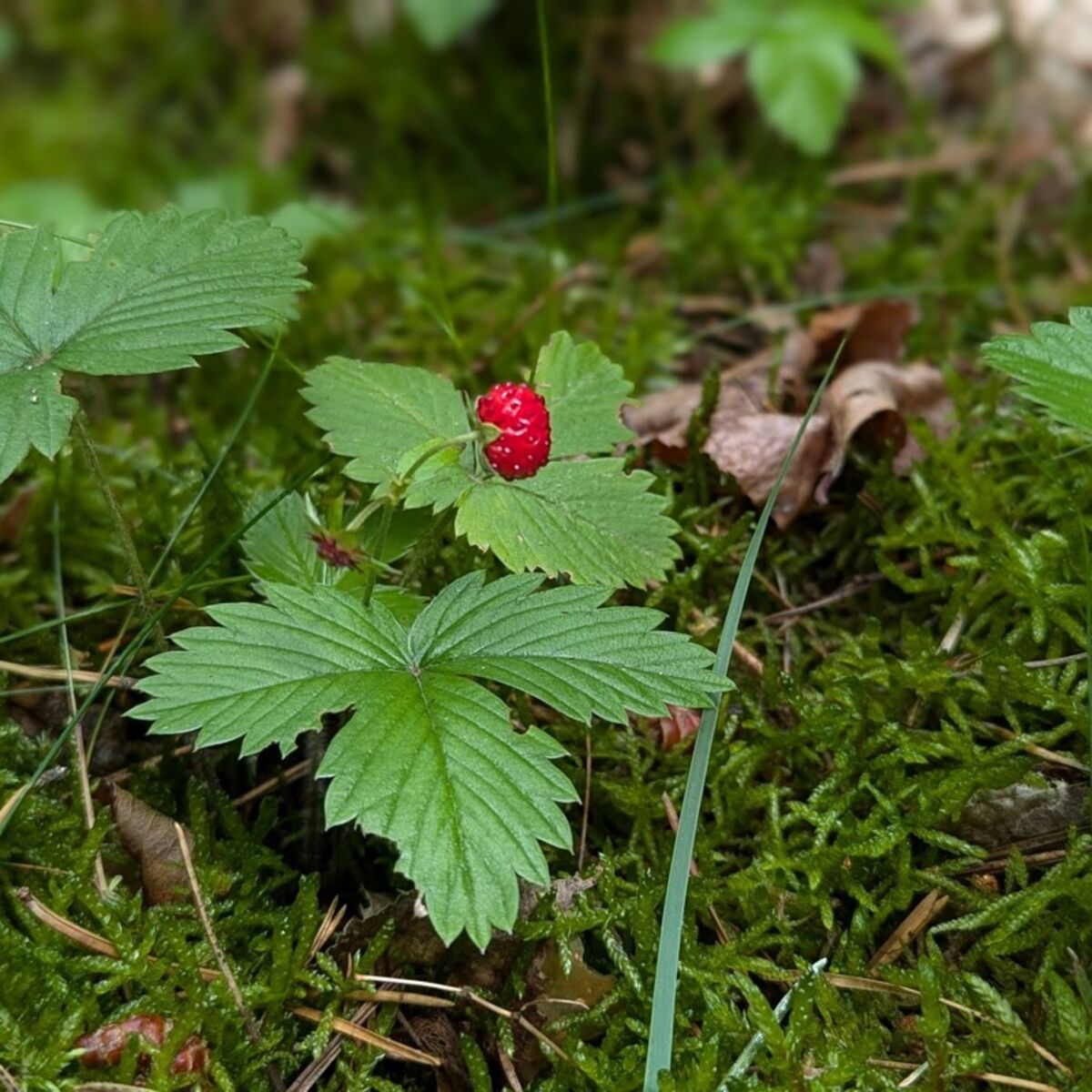
Uses: Eat immediately. Honestly. Wild strawberry is sweeter and more aromatic than any cultivated strawberry you've ever bought.
The leaves, by the way, are the basis for a mild herbal tea – gladly mixed with blackberry leaves.
Time window: The last ones are hanging now.
And a tip between us: If you find a good spot, don't tell anyone.
5. Lamb's Quarters – the weed in your bed
Recognize: Is probably growing right now in your vegetable bed. Upright plant, serrated leaves – and the decisive feature: The leaf underside looks dusted with flour.
Rub your finger over it. The whitish coating comes off.
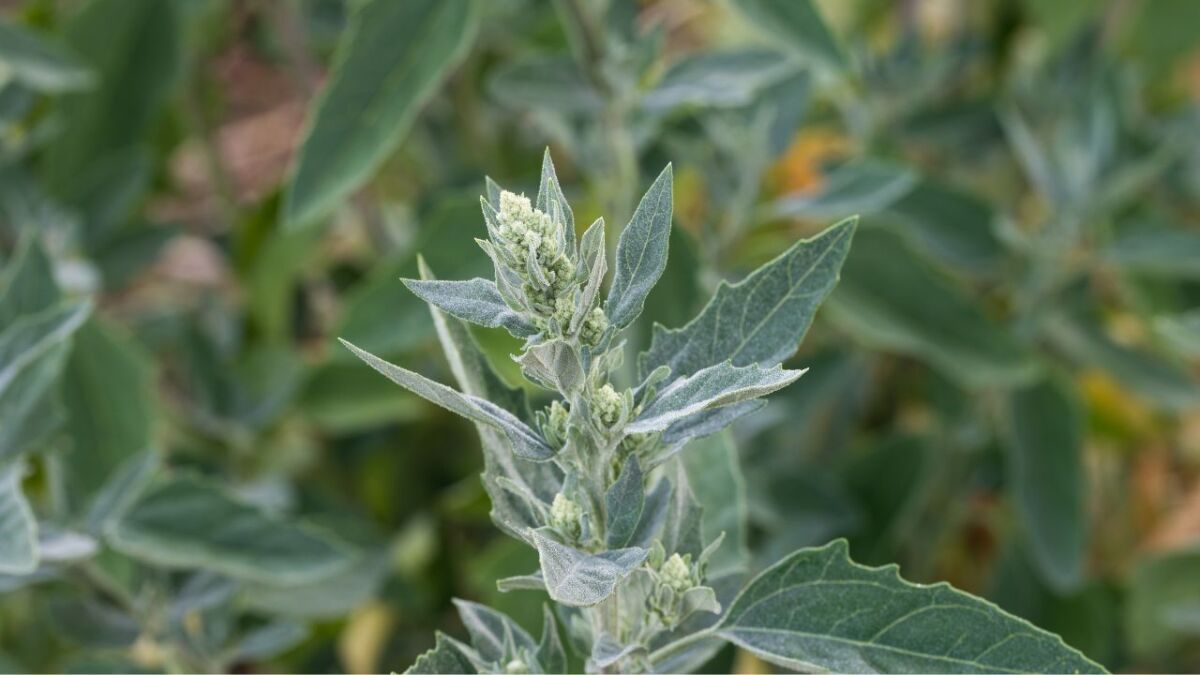
Uses: Salad, smoothie, sautéed like spinach. And here's the punchline: Lamb's quarters has more vitamin C, iron, and zinc than most of what you've planted next to it.
So: Harvest instead of weeding.
Time window: The leaves are most tender now.
More about it: Lamb's Quarters - ancient edible medicinal herb
6. Chicory – only in the morning
Recognize: Bright light blue ray flowers on sparse, almost woody-looking stems. Wayside verges, slopes, fallow land.
But: The flowers only open in the morning. By noon they're closed.
If you want to see chicory, you have to go out in the morning. This is not a recommendation, it's a condition.
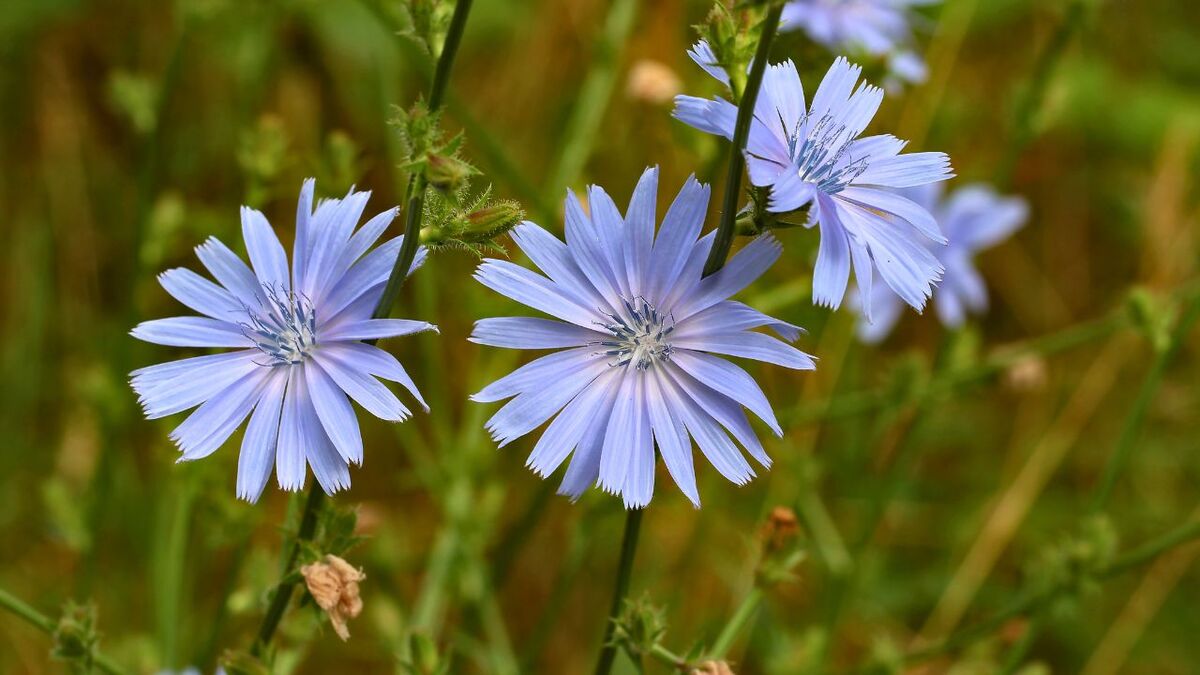
Uses: You can candy the flowers or dry them for tea. The bitter compounds get digestion and liver going.
And the roasted root? That's your grandparents' chicory coffee – the coffee substitute from times when there were no beans. The root is classically dug up in autumn, not now.
Time window: Just blooming. But only in the morning.
7. Mugwort – the mistake almost everyone makes
And now the point I wanted to write this article about in the first place.
The most common mistake with mugwort: Most people collect it when it's blooming.
Then it's bitter. And the whole harvest is ruined.
The right way: Just before flowering, when the buds are still closed. Then the aroma is full and the bitterness hasn't kicked in yet.
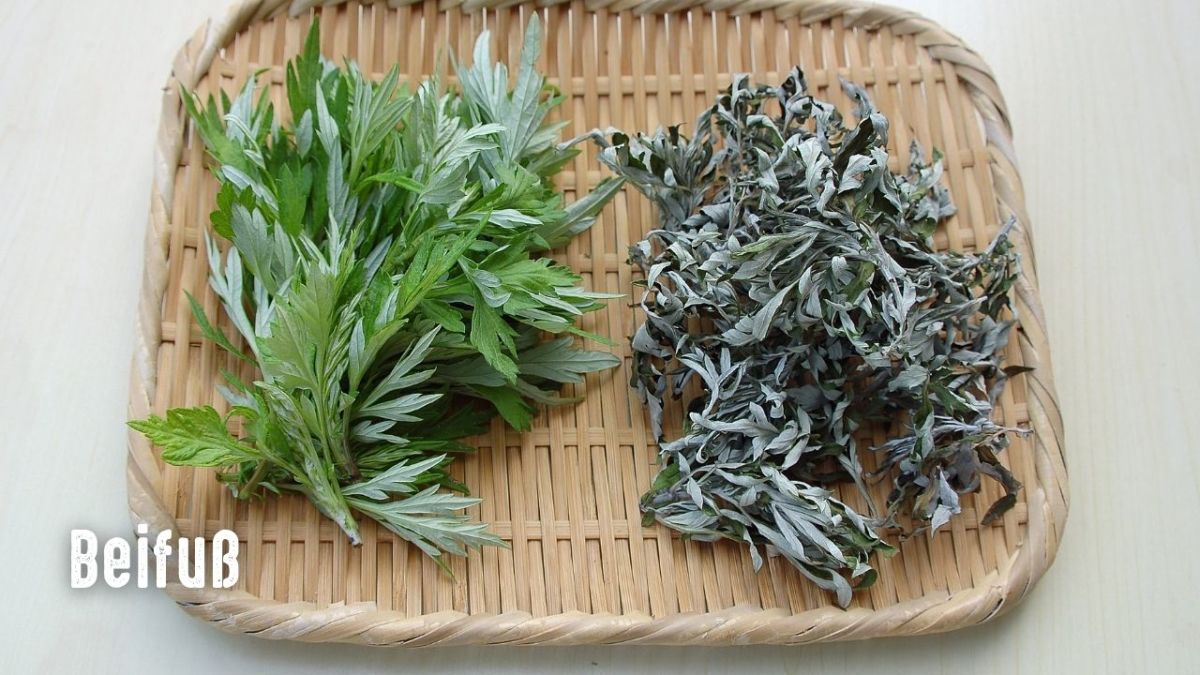
Recognize: Tall, upright perennial. Leaves dark green on top, distinctly silvery-white felted underneath. The bud spikes look silvery and closed.
Uses: Mugwort is THE seasoning herb for everything fatty. Roasts, goose, duck, mushroom pan. It makes heavy meals more digestible – our ancestors knew this long before any nutritional science.
Caution: Not during pregnancy.
Time window: Exactly these one, two weeks. Now.
The one rule that overrides everything
Before you head out:
Only collect what you recognize one hundred percent.
Not ninety percent. Hundred.
If you're uncertain about a plant – leave it standing. It's not going anywhere. Next year it will be there again, and maybe you'll know it better by then.
This rule sounds strict. But it's the reason I've been foraging for years and never had a problem.
If you're unsure about identification, my article "Learn to safely identify edible wild plants" can help. And I've summarized the typical risks here: Foraging wild plants without risk
The cheat sheet for foraging
When to forage? Late morning, after a dry day. By then the dew is gone and the aroma is strongest. (Exception: chicory – that has to be earlier.)
What to forage in? Basket or cloth bag. In a plastic bag everything sweats to death.
How much to forage? Never more than a third of a stand. The meadow wants to come back next year.
Where to forage? Not by the roadside, not on dog parks, not on sprayed fields. And respect the legal boundaries – all about it in my article on the hand bunch rule.
You don't have to know all seven
I know how it is.
You read an article like this, think "Wow, seven plants" – and then do nothing in the end because it's too much all at once.
So here's my suggestion:
Pick ONE.
The one that appeals to you most. Or the one you think grows near you.
Go out this week. Look for it. Smell it. Take a handful with you.
That's all it takes to start.
And when you go out again in two weeks, you'll already know one more plant than you do now. That's how it grows.
If you want to build this systematically: I've written down the diary method for learning wild herbs – in my experience the best way to really retain plants.
August is coming for sure
August brings new plants. September too.
That's the beauty of the herb year: It never stops. It just shifts.
Whoever knows what's in season when never misses a window again.
And if you already know what you want to do with your harvest: In 9 recipes with wild herbs for camping and outdoor you'll find ideas for outdoors.
But now: get out.
The meadowsweet won't wait.


Author of the guide
Martin Gebhardt
Hey, I'm Martin. On my blog, you will learn the basics and numerous details about living in the wild. I think survival, bushcraft and the good life in nature are the keys to happiness. Find me here on Instagram or on YouTube. You can find more about my mission on the About Me page.
Was this guide helpful?
13 people found this guide helpful.
5.00 out of 5 points (13 Ratings)
Comments (0)
This post may contain affiliate links. So if you click on the links and make a purchase, I will receive a small commission at no additional cost to you. Click here, to learn more about it.