


Edible Wildflowers: My Practical Guide to Cooking with Wild Blossoms
Free 35 Survival Hacks you'll love!
You will get 35 easy-to-implement survival hacks so that you don't have to stand aimlessly in the forest from tomorrow when things get tough. Take your skills to the next level!
DOWNLOAD HERE FOR FREE👉 The key facts from this guide
- Approximately 20 safe species are available to you from March to October—free of charge, diverse, and deeply rooted in cultural tradition.
- Three Ironclad Rules: Identify with 100% certainty; harvest only from uncontaminated locations; never take more than one-third of the available growth.
- Beginners can get far with just 6–8 unmistakable species: elder, dandelion, daisy, wild rose, linden, red clover, yarrow, and dead-nettle.
- Umbellifers are strictly for experts—cow parsley, wild carrot, and burnet saxifrage are edible, but they are difficult to distinguish from hemlock and dog parsley.
- "When in doubt, do not eat it" is the most important rule in the entire realm of wild herb foraging.
- Three Seasonal Peaks: April/May (violets, dandelions), May/June (elder, black locust, linden), and July/August (meadowsweet, mullein, mallow).
I remember it clearly.
It was one of our first early summers together in Berlin. My wife Sarah had read somewhere that you can eat elderflowers.
"Really? Fried in beer batter?"
I was skeptical. I knew elderberry as a source for syrup, but deep-frying elderberry umbels? It sounded like one of those ideas that fall somewhere between "nice theory" and "culinary catastrophe."
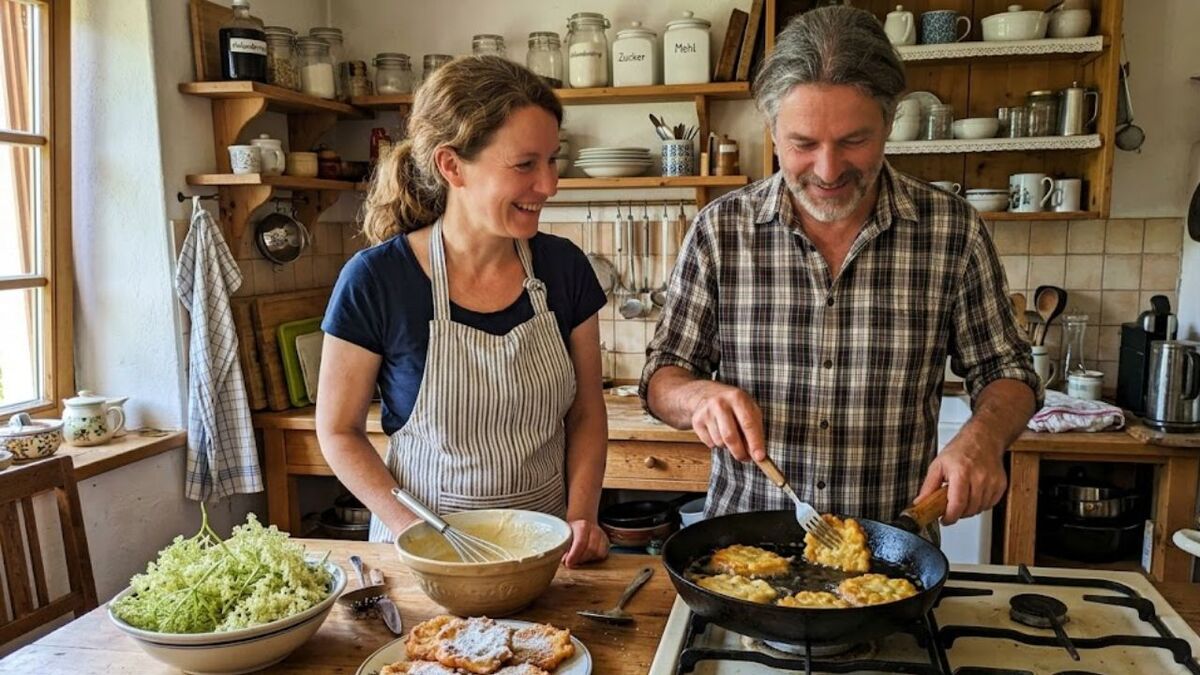
We picked the umbels. Right on the outskirts of Berlin, far away from the road. Sarah prepared the beer batter – I was in charge of the frying.
And then, there it was.
These wonderfully crispy, slightly sweet "Hollerküchle," embraced by the scent of pollen. We sprinkled them with powdered sugar while they were still hot and just ate them with our fingers.
I was floored.
There I was – in my mid-30s, freshly in wilderness pedagogy mode – only to realize: I had been walking past one of the most delicious early summer gifts for 35 years.
Since then, the elderberry has been one of my best friends.
And it's just the beginning.
Why edible wild blossoms change your natural year
When you start collecting and processing wild blossoms, something happens to you.
You no longer just walk through the world – you move through it.
Suddenly, you see. You notice that the black locust on your street is blooming. That the daisies in the park are unmistakable. That what you always considered "weeds" could be your next salad topping.
It’s a different way of being in the world. And that is exactly what connects wild herb cooking with wilderness pedagogy: it makes us attentive again.
👉 More on why a connection to nature is so important: Building and strengthening a connection to nature
The 20 most important edible wild blossoms – a compact introduction
I won't go into every detail here. If you want detailed profiles, you can find them in any field guide. I’m interested in practice – what you actually need.
The unmistakable classics (for beginners)
1. Black Elderberry (Sambucus nigra) – Woody shrub, white plate-shaped flower panicles, drooping. The classic for syrup, Hollerküchle, sparkling wine, jelly. More on this: Elderberry: What wilderness mentors know about the elder bush
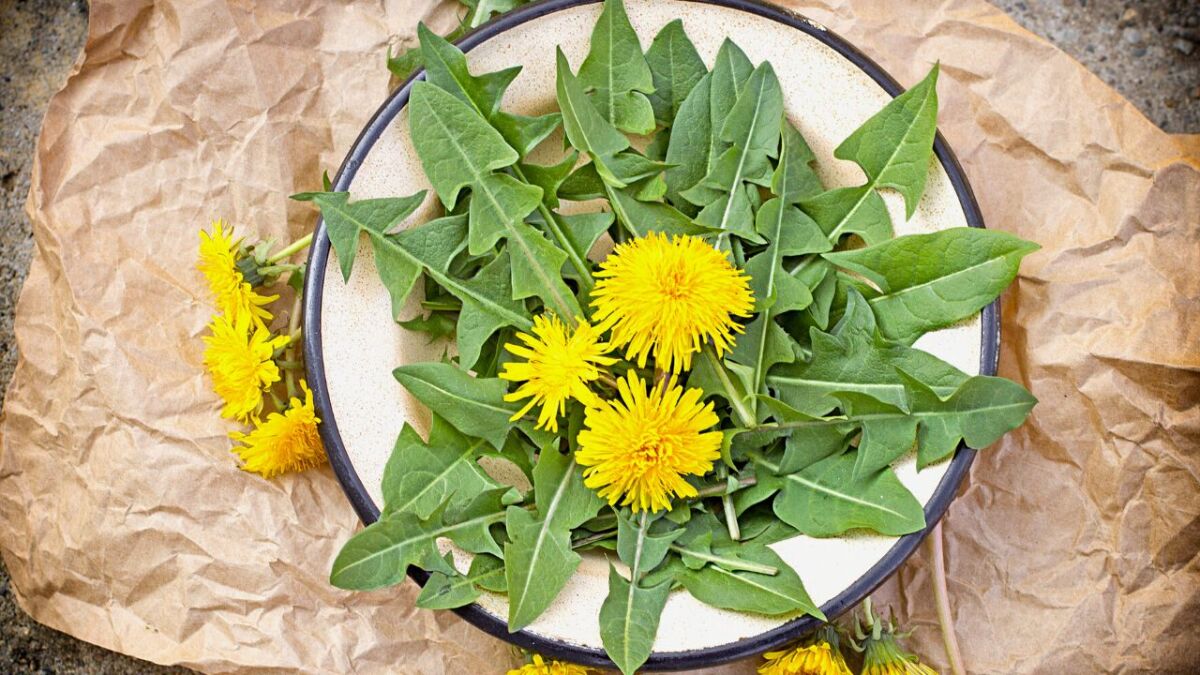
2. Dandelion (Taraxacum officinale) – Bright yellow blossoms, hollow stems with milky sap. Classic: Dandelion honey (syrup with sugar and lemon, boiled down for a long time). More on the plant: Survival artist dandelion
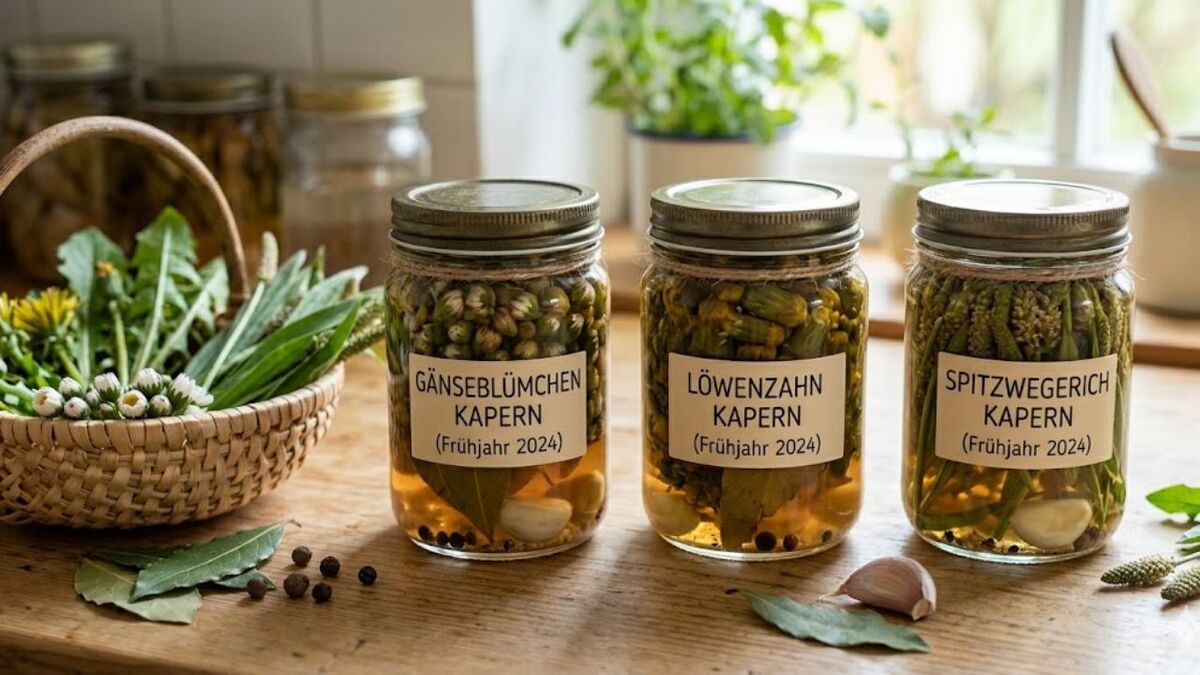
3. Daisy (Bellis perennis) – White ray florets with a yellow center. Buds can be pickled as "false capers." One of the most common and unmistakable wild herbs. More details: Versatile daisy
4. Wild Rose / Dog Rose (Rosa canina) – Thorny, simple pink-white blossoms. Sweetly floral, perfumed. Perfect for syrup, jelly, candied petals. In autumn, there are rose hips as a vitamin C bomb.
5. Sweet Violet (Viola odorata) – Deep violet small blossoms, heart-shaped leaves, blooming March to April in partial shade. Classic: candied violets (with egg white and powdered sugar, let dry for 1-2 days).
6. Red Clover (Trifolium pratense) – Spherical pink-purple flower heads. Honey-sweet, mild. Raw in salads, as tea, in syrup. Tip for kids: Red clover lemonade changes color with lemon juice.
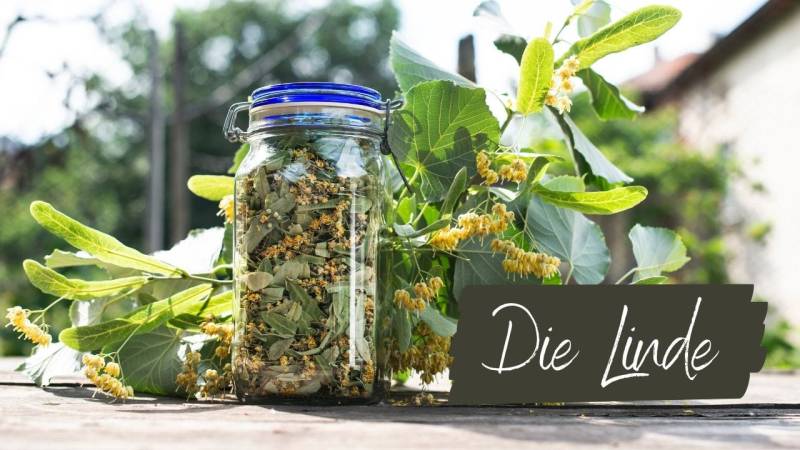
7. Linden / Lime (Tilia platyphyllos / cordata) – Large tree, yellowish blossoms on a typical bract. Honey-sweet, floral. Classic linden blossom tea for colds.
8. Dead-nettle (Lamium album / purpureum) – Square stem, leaves resemble stinging nettles but don't sting. The sweet nectar in the calyx is a childhood classic for sucking out.
Plants for the advanced
9. Meadow Sage (Salvia pratensis) – Blue-violet labiate flowers, May to August. Mildly sage-like, spicy.
10. Yarrow (Achillea millefolium) – Finely feathery leaves, white flat-topped clusters. Spicy-bitter. More details: The common yarrow
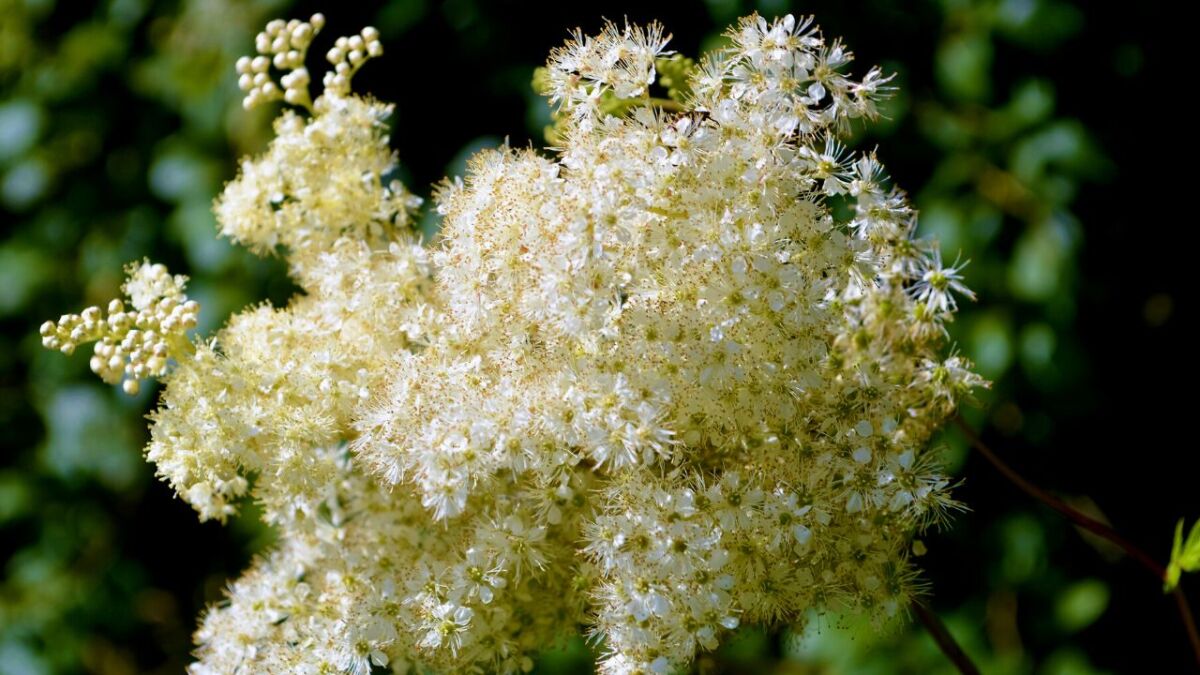
11. Meadowsweet (Filipendula ulmaria) – Tall perennial on damp meadows, white cloudy clusters with a honey-almond scent. Contains natural salicylic acid. Caution: Not for those with salicylate intolerance, during pregnancy, or for children under 12. More: Meadowsweet as a wild herb and medicinal plant
12. Mullein (Verbascum densiflorum) – Up to 2.5 m tall flower spike, golden yellow blossoms. Classic remedy for coughs and bronchitis. Tip: Always strain tea through a coffee filter because of fine hairs.
13. Common Mallow (Malva sylvestris) – Pink-violet blossoms with dark veins. Mild, mucilaginous. Tea is best as a cold infusion (12 hours) for the valuable mucilage.
14. Ground Ivy (Glechoma hederacea) – Low creeping, blue-violet labiate flowers. Spicy-peppery, strongly aromatic. Use sparingly.
15. Chicory (Cichorium intybus) – Light blue ray flowers on a scraggy stem. Slightly bitter, tart. Root used as a coffee substitute.
16. Cornflower (Centaurea cyanus) – Bright cornflower blue flower heads. Neutral in taste, primarily used visually in salads and teas.
17. Black Locust / False Acacia (Robinia pseudoacacia) – White drooping flower clusters, bergamot-jasmine scent. Important: Only use the open blossoms – bark, leaves, and seeds are toxic. More on the black locust and its downsides: Toxic woods in carving, at the campfire, and in the wilderness kitchen
18. Cowslip (Primula veris) – Golden yellow bell-shaped blossoms. Attention: Protected in many regions! Only harvest in your own garden.
19. Garlic Mustard (Alliaria petiolata) – Small white cruciferous flowers. Garlic-peppery. More: Garlic mustard
20. Wild Pansy / Heartsease (Viola tricolor) – Multicolored blossoms, mildly sweet. Perfect for salads and ice cubes.
Harvesting – my rules
Here are the harvesting rules I’ve been sharing with my course participants for years:
✅ Where to say yes:
- Unfertilized natural meadows
- Forest edges
- Orchards
- Your own organic garden
- Nutrient-poor grasslands
❌ Where to say no:
- Roadsides (at least 5 m, better 10 m distance)
- Dog walking areas
- Sprayed fields
- Industrial areas
- Railway embankments (herbicides)
🕰️ When:
- Late morning to early noon, once the dew is gone
- After 24 hours without rain
- Freshly bloomed – not in bud (except for "capers"), not overripe
🧺 How:
- Basket or cloth bag instead of plastic bags
- Harvest a maximum of one third of the population
- Better not to wash blossoms, just shake them out (pollen = aroma)
- 100% identification – otherwise, leave it be
In Germany, the "hand-bouquet rule" applies (§ 39 Federal Nature Conservation Act). Roughly: what you can grasp with one hand, you may take for personal use outside of protected areas.
The most important toxic look-alikes
Now for the serious part. Most poisoning cases in Germany and Austria happen while harvesting wild garlic in spring due to confusion with lily of the valley or autumn crocus.
| Edible | Toxic Look-alike | Most Important Feature |
|---|---|---|
| Wild Garlic (Bärlauch) | Lily of the Valley | Smell test: Wild garlic smells clearly of garlic when rubbed. The underside of wild garlic leaves is matte, while lily of the valley is glossy. Wild garlic leaves have their own distinct stem growing individually from the ground. |
| Wild Garlic | Autumn Crocus | Highly toxic; as little as 60 g can be fatal. Wild garlic leaves are thin, soft, and matte on the underside. Autumn crocus leaves are firmer, leathery, and glossy on both sides. No garlic smell. Autumn crocus leaves grow directly from the ground, often 2–3 leaves nested within each other, appearing "stemless." |
| Wild Garlic | Cuckoo-pint (Aronstab) | Wild garlic leaves have parallel veins. Cuckoo-pint leaves have net-like branched veins. Wild garlic leaves grow individually from their own stem. Cuckoo-pint leaves often grow in multiples from a sheath. Wild garlic leaves are lanceolate and pointed. Young cuckoo-pint leaves are often arrow- or spear-shaped and form small "ears" at the base of the stem. |
| Black Elderberry | Dwarf Elder / Danewort | Elderberry is woody, up to 5 m. Dwarf elder is herbaceous, max 1.5 m, berries stand upright (elderberry hangs). |
| Cow Parsley | Hemlock | Hemlock has red-brown spots on the hairless stem and smells like mouse urine. Cow parsley has a hairy, unspotted stem. |
| Cow Parsley / Parsley | Fool’s Parsley | Fool’s parsley has long, drooping bracteoles on the partial umbel and an unpleasant smell. |
| Yarrow | Hemlock | Yarrow is significantly smaller (up to 60 cm), leaves are "a thousand times" finely feathery. |
Completely forbidden (always): Monkshood, Laburnum, Deadly Nightshade, Thorn Apple, Foxglove, Greater Celandine, Angel’s Trumpet, Giant Hogweed (phototoxic!), Rhododendron, Chinese Lantern.
A detailed guide for identification can also be found here: Wild Garlic: Identification, Collection, Harvesting and Use - Tips and Recipes
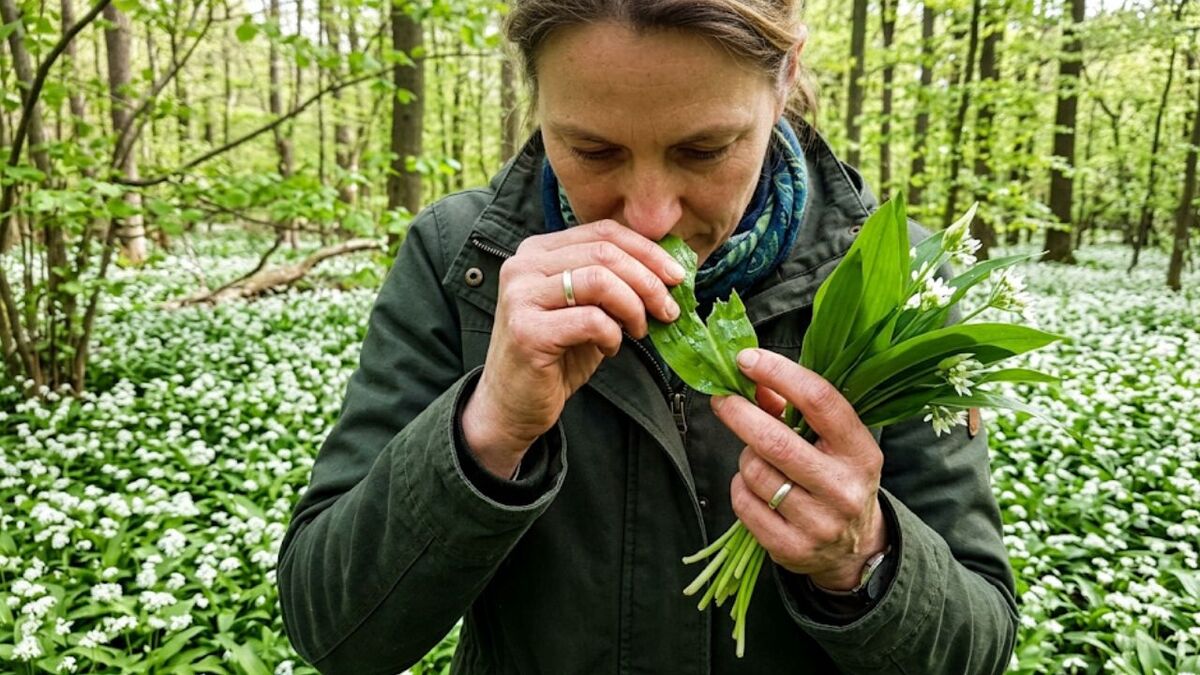
When in doubt, do not eat. This rule appears in every reputable source. If you are unsure – leave the plant where it is.
👉 More on the risks: Collecting wild plants without risk and Learning to identify edible wild plants safely
Preparation – the wild blossom kitchen
Fresh and raw
The simplest form: pluck blossoms directly from the stem and sprinkle over salads, soups, quark, or buttered bread. You eat with your eyes first – and many blossoms provide a delicate aroma at the same time.
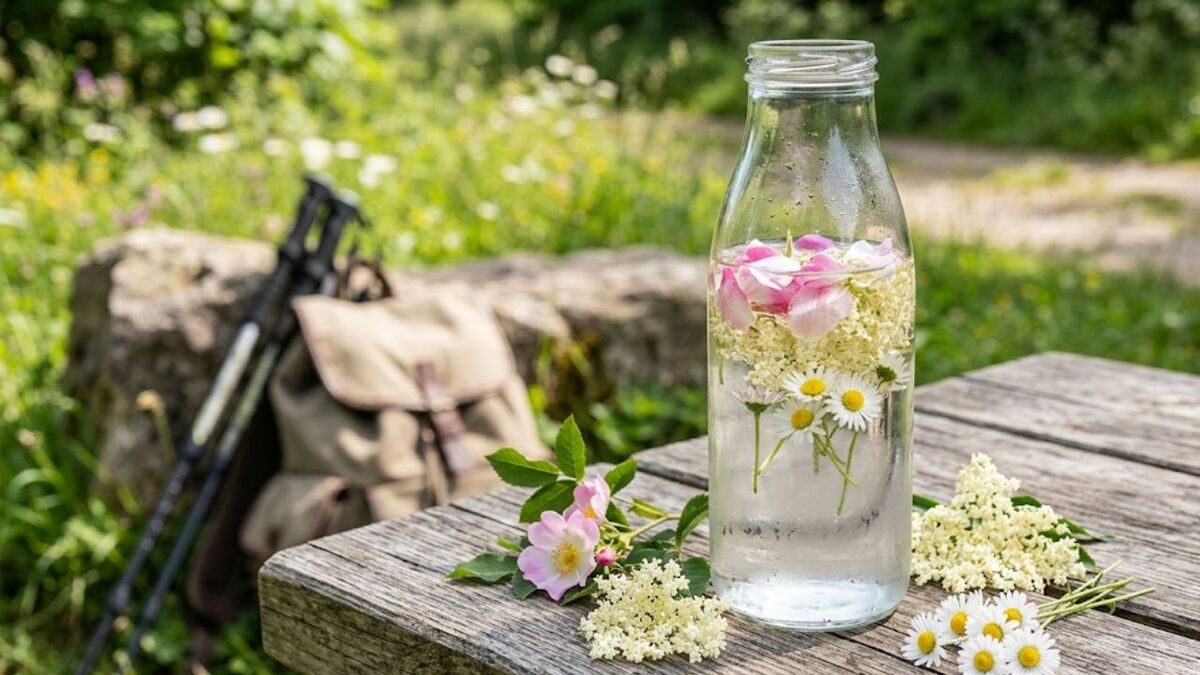
My tip from wilderness pedagogy: Aroma water for your hike. Let still water sit with a few wild roses, elderflowers, and daisies for at least an hour. It tastes delicately floral and invites you to drink more slowly.
Deep-fried – the Hollerküchle
My favorite classic. I’m sharing my proven method here:
Beer batter:
- 125 g flour
- 125 ml milk
- 100 ml pale beer
- 2 eggs (whites separated)
- Pinch of salt
- 1 tbsp sugar
Whisk egg yolks with flour, milk, beer, salt, and sugar until smooth. Beat egg whites until stiff and fold them in – this makes the batter airy.
Preparation: Hold the elderberry umbel by the stem, dip it into the batter, and fry in hot clarified butter (160–190°C) until golden brown. Drain on paper towels and sprinkle with powdered sugar.
This also works wonderfully with black locust and sage blossoms.
Syrup, jelly, liqueur
The conservation trio used by grandmothers.
Elderflower syrup (classic):
- 25 umbels
- 2 kg sugar
- 2 l water
- 50 g citric acid
- 2-3 organic lemons, sliced
Let it steep covered for three days, strain, boil briefly, and fill into sterilized bottles. Unopened, it keeps for 6-12 months in a cool, dark place.
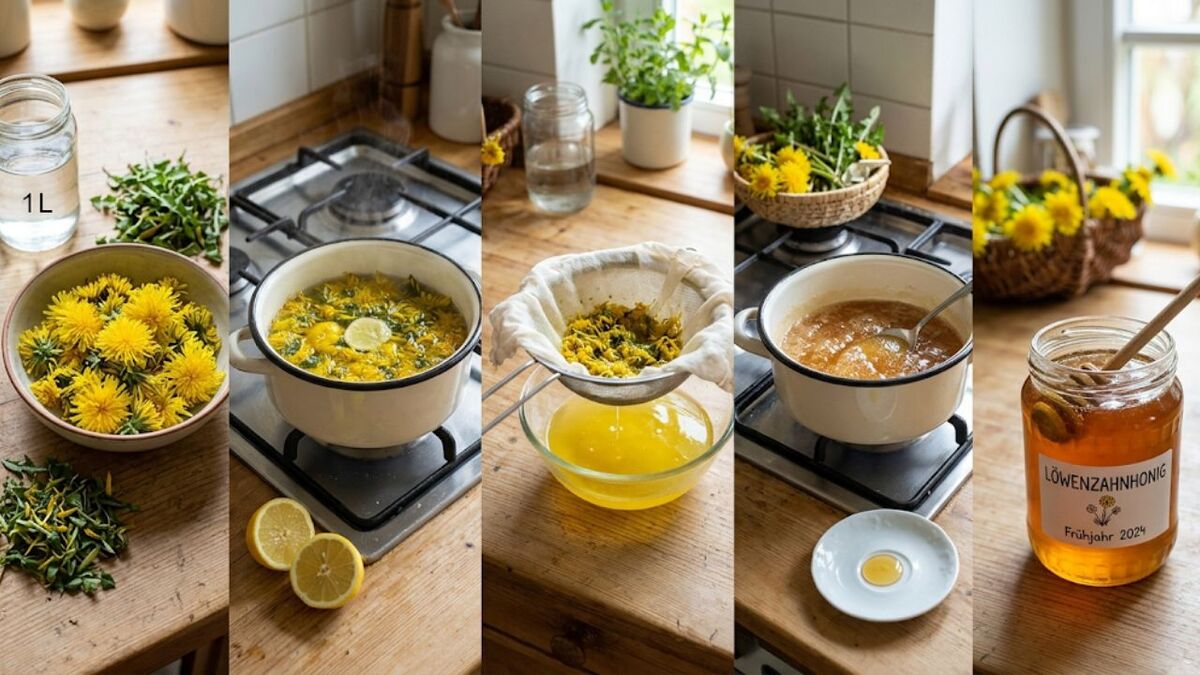
Dandelion honey:
- 4 handfuls of dandelion blossoms (only twist out the yellow petals, otherwise it will be bitter)
- 1 l water
- Juice and zest of one organic lemon
- 1 kg sugar (or jam sugar 2:1)
Boil the blossoms briefly, let steep overnight, strain, and boil down slowly with sugar to a honey consistency (1-2 hours). Test the gelling on a cold plate.
Pickled – false capers
Mix closed buds (best harvested in the morning before they open) of daisies, dandelions, or ribwort plantain with salt, let steep for a few hours, then add to hot vinegar (with bay leaf, peppercorns, garlic). Let rest in screw-top jars for 2-4 weeks.
Mediterranean look without the import route.
Candied
Two methods:
Egg white method: Lightly beat egg white, brush the blossom with a brush, dip in fine powdered sugar, and let dry for 1-2 days.
Syrup method: Boil sugar syrup, dip the blossom briefly, let drain, roll in sugar, and dry.
Classics: candied violets, rose petals, borage blossoms. Keeps for months.
Drying for tea
Dry on a sieve or rack in the shade, ideally at a maximum of 30-40°C. This preserves the color and essential oils.
Classic cough and cold helpers: mullein, linden, elderberry, meadowsweet.
Seasonal calendar for harvesting wild blossoms
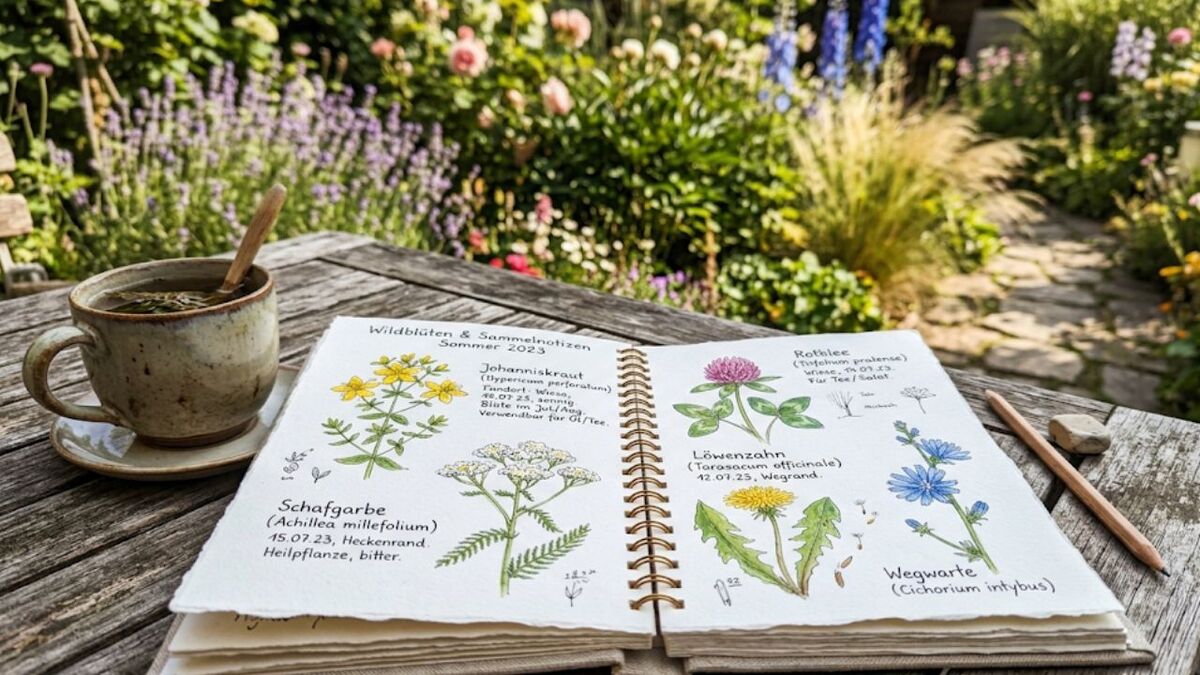
Early spring (February–March): First daisies, sweet violets, blackthorn blossoms
Mid-spring (March–April): Wild garlic (leaves), dandelion, violet, cowslip, ground ivy, dead-nettle, cuckoo flower, garlic mustard, cherry and apple blossoms
Late spring (May): Dandelion at its peak, black locust from mid-May, elderberry towards the end, meadow sage begins, red clover, yarrow, ox-eye daisy
Early summer (June): Elderberry, black locust, linden from mid-June, wild roses, cornflower, poppy, meadowsweet from late June, mullein begins, borage, marigold, mallow
Mid-summer (July): Mullein, meadowsweet, linden, chicory, common mallow, yarrow, wild carrot, clover, borage
Late summer (August): Chicory, mullein, yarrow, meadowsweet second wave, hops, goldenrod, late mallows
Autumn (September–October): Last chicory, late clover and daisy blossoms, rose hips ripen, elderberries (must be cooked!)
What you can do this week
Go out.
Find ONE wild blossom. One that you know for sure.
Maybe the daisy in front of your door. Maybe the dandelion on the playground. Maybe – if you’re lucky – an elderberry bush in the neighborhood.
Pick a small handful. No more.
And then make ONE recipe out of it. Doesn't matter what. A few daisies on buttered bread. A few dandelion petals in a salad. Three candied violets on a cupcake.
You will see: something happens.
You aren't just eating a plant. You are eating a meadow. A season. A piece of history that your grandmothers knew as a matter of course and that has been lost to us on the way to the supermarket world.
We cannot bring back the old world.
But we can experience it again for a few bites.
And who knows – maybe you’ll develop a little addiction, like I did back then with Sarah and the first Hollerküchle.
A wonderful addiction.

Sources for the guide
NABU – Blumen pflücken: verboten oder erlaubt? – https://www.nabu.de/tiere-und-pflanzen/pflanzen/pflanzen-schuetzen/blumen-pfluecken.html
Apotheken-Umschau – Bärlauch: Verwechslungsgefahr mit giftigen Doppelgängern – https://www.apotheken-umschau.de/gesund-bleiben/ernaehrung/baerlauch-achtung-verwechslungsgefahr-mit-giftigen-doppelgaengern-779343.html
ÖKO-TEST – Bärlauch erkennen und ernten – https://www.oekotest.de/essen-trinken/Baerlauch-erkennen-und-ernten-So-verwechseln-Sie-ihn-nicht-mit-giftigen-Doppelgaengern_600879_1.html
Flora Incognita (TU Ilmenau / Max-Planck-Institut) – https://floraincognita.com/de/
PlantNet – https://identify.plantnet.org/de
Botanik & Pflanzenbestimmung
Plantura – Essbare Blüten: https://www.plantura.garden/gruenes-leben/ernaehrung/essbare-blueten
Plantura – Wegwarte Pflanzenporträt: https://www.plantura.garden/blumen-stauden/wegwarte/wegwarte-pflanzenportrait
Pflanzen-Vielfalt – Übersicht S-Z: https://www.pflanzen-vielfalt.net/wildpflanzen-kraeuter-a-z/uebersicht-pflanzen-s-z/
Pflanzen-Vielfalt – Großblütige Königskerze: https://www.pflanzen-vielfalt.net/wildpflanzen-kraeuter-a-z/uebersicht-pflanzen-h-k/koenigskerze-grossbluetige/
Kräuter-Buch – Wiesensalbei: https://www.kraeuter-buch.de/kraeuter/Wiesensalbei.html
Kräuter-Buch – Rotklee: https://www.kraeuter-buch.de/kraeuter/Rotklee.html
Kräuter-Buch – Königskerze: https://www.kraeuter-buch.de/kraeuter/Koenigskerze.html
Kostbare Natur – Großblütige Königskerze: https://www.kostbarenatur.net/anwendungen-und-inhaltsstoffe/grossbluetige-koenigskerze/
Kräuterkiste – Königskerze: https://kraeuterkiste.de/koenigskerze/
WildKrautWelt – Mädesüß erkennen und verwenden: https://wildkrautwelt.de/maedesuess-erkennen-und-verwenden/
Wikipedia – Echtes Mädesüß: https://de.wikipedia.org/wiki/Echtes_M%C3%A4des%C3%BC%C3%9F
Gesund mit Kräutern – Essbare Wildkräuter Liste: https://gesund-mit-kraeutern.de/essbare-wildkraeuter/essbare-wildkraeuter-liste-mit-bildern-33-heimische-vertreter/
Gesund mit Kräutern – Wildpflanzen am Wegesrand: https://gesund-mit-kraeutern.de/essbare-wildkraeuter/wildpflanzen-am-wegesrand-entdecke-sie-in-wald-wiese/
Grün & Gesund – Essbare Blüten: https://gruenundgesund.de/magazin/naturgarten-selbstversorgung/essbare-blueten/
GartenFlora – Essbare Blüten: https://www.gartenflora.de/gartenwissen/nutzgarten/kraeuter/essbare-blueten/
Gartenbaumschulen – Essbare Pflanzen Monatsliste: https://www.gartenbaumschulen.com/garten-ratgeber/essbare-pflanzen-monatsliste/
Bad Heilbrunner – Rotklee: https://bad-heilbrunner.de/welt-der-kraeuter/kraeuterlexikon/rotklee/
be fabulous – Bekannte essbare Wildblumen: https://be-fabulous.de/posts/2021/bekannte-essbare-wildblumen.html
Urkraut – 23 essbare Blüten: https://urkraut.ch/wissen/foodlexikon/23-essbare-blueten-aus-wiese-garten-und-vom-balkon/
SONNENTOR – Essbare Blüten: https://www.sonnentor.com/de-at/rezepte-tipps/tipps/essbare-blueten
EAT SMARTER – Essbare Wildpflanzen und Blüten: https://eatsmarter.de/ernaehrung/gesund-ernaehren/essbare-wildpflanzen-essbare-blueten
Wir leben nachhaltig – Essbare Blüten: https://www.wir-leben-nachhaltig.at/essbare-blueten/
Nina Gold – Essbare Blüten im Sommersalat: https://www.nina-gold.de/essbare-blueten-im-sommersalat-loewenzahn-superfoods/
Holunder & Verwechslung mit Attich
Thüringen FM – Gefährliche Verwechslung Attich und Schwarzer Holunder: https://thueringenfm.de/blog/tipps/gefaehrliche-verwechslung-attich-und-schwarzer-holunder-1028343
Selbstversorger – Holunder und Zwergholunder: https://www.selbstversorger.de/holunder-und-zwergholunder/
Krautgeschwister – Zwerg-Holunder Heilpflanzenportrait: https://krautgeschwister.de/2024/08/04/zwerg-holunder-heilpflanzenportrait/
T-Online – Ist Holunder giftig? Vorsicht bei Attich: https://www.t-online.de/heim-garten/garten/id_69224020/ist-holunder-giftig-vorsicht-bei-attich.html
Bärlauch & Verwechslungsgefahr
Lubera – Bärlauch Verwechslung: https://www.lubera.com/de/gartenbuch/baerlauch-verwechslung-p4583
Rezepte – Holunder
Maria es schmeckt mir – Holunderblütensirup: https://www.mariaesschmecktmir.com/holunderbluetensirup/
Gutekueche.at – Holundersirup Rezept: https://www.gutekueche.at/holundersirup-rezept-910
Teepod – Holunderblüten für Hollerküchle: https://www.teepod.de/holunderblueten-fuer-hollerkuechle/
BBQPit – Gebackene Holunderblüten: https://bbqpit.de/rezepte/gebackene-holunderblueten/
Mönchshof – Bierteig Hollerküchle: https://www.xn--mnchshof-n4a.de/bierblog/detail/moenchshof-bierteig-hollerkuechle
Mamas Rezepte – Hollerküchle: https://www.mamas-rezepte.de/rezept_Hollerkuechle___Hollunder-4-115.html
Rezepte – Löwenzahn
Wildpflanzen-Logbuch – Löwenzahnhonig selber machen: https://wildpflanzen-logbuch.de/loewenzahnhonig-selber-machen-rezept/
Heilkräuter-Seiten – Löwenzahn-Honig: https://heilkraeuter.de/kochen/loewenzahn-honig.htm
Familienkost – Löwenzahnhonig: https://www.familienkost.de/rezept_loewenzahnhonig.html
Jucker Farm – Löwenzahnhonig selber machen: https://www.juckerfarm.ch/farmticker/rezepte/loewenzahn-honig-selbermachen/
Rezepte – Gänseblümchen
Smarticular – Gänseblümchen essen Rezepte: https://www.smarticular.net/gaensebluemchen-essen-rezepte/
House No 37 – Eingelegte Gänseblümchen-Kapern: https://houseno37.de/eingelegte-gaensebluemchen-oder-gaensebluemchenkapern/
Servus – Rezepte mit Gänseblümchen: https://www.servus.com/r/2-rezepte-mit-gaensebluemchen
Utopia – Gänseblümchen-Kapern Rezept: https://rezepte.utopia.de/gaensebluemchen-kapern-rezept-fuer-eingelegte-knospen-49846
Rezepte – Veilchen
Oma Kocht – Kandierte Veilchen Rezept: https://www.oma-kocht.de/kandierte-veilchen-rezept/
Umweltberatung – Kandierte Veilchen: https://www.umweltberatung.at/kandierte-veilchen
Ich Koche – Kandierte Veilchen Rezept: https://www.ichkoche.at/kandierte-veilchen-rezept-66670
Rezepte – Rotklee
Utopia – Rotklee von der Wiese essen: https://utopia.de/ratgeber/rotklee-von-der-wiese-essen-so-verwendest-du-die-blueten_520597/
Utopia – Rotklee Wirkung und Anwendung: https://utopia.de/ratgeber/rotklee-wirkung-und-anwendung-als-heilmittel_124787/
Vom Achterhof – Rotkleeblüten: https://vom-achterhof.de/rotkleeblueten-250g.html
Rezepte – Robinie / Akazie
Naturix24 – Akazienblüten ganz: https://www.naturix24.de/pflanzliche-einzelprodukte/blueten/akazienblueten-ganz
Xceranis – Akazienblüten geschnitten: https://www.xceranis.de/akazienblueten-geschnitten-50-gramm.html
Schafgarbe & weitere
Gartenjournal – Schafgarbe essbar: https://www.gartenjournal.net/schafgarbe-essbar
Scharbockskraut
Mein Kräuterkeller – Scharbockskraut giftig: https://mein-kraeuterkeller.de/scharbockskraut-giftig-maerz
Sammeln & Erntezeit
BioMarkt – Wildkräuter sammeln leicht gemacht: https://www.biomarkt.de/bio-wissen/lebensmittelkunde/wildkraeuter-sammeln-leicht-gemacht
Mein Kräuterkeller – Erntezeit Wildkräuter: https://mein-kraeuterkeller.de/erntezeit-wildkraeuter
Kraut & Rüben – Kräuter ernten: https://www.krautundrueben.de/kraeuter-ernten
Waldsamkeit – Wann ist die beste Zeit Wildkräuter zu sammeln: https://waldsamkeit.de/wann-ist-die-beste-zeit-um-wildkraeuter-zu-sammeln/
Recht & Lebensmittelsicherheit
Lebensmittelbuch.at – Österreichische Liste essbarer Wildpflanzen und Blüten: https://www.lebensmittelbuch.at/beschluesse/leitlinien-richtlinien-empfehlungen-usw-der-codexkommission/essbare-wildpflanzen-und-blueten/empfehlung-oesterreichische-liste-essbarer-wildpflanzen-und-blueten
Apps & Bestimmungswerkzeuge
App Store – Flora Incognita: https://apps.apple.com/de/app/flora-incognita/id1297860122

Author of the guide
Martin Gebhardt
Hey, I'm Martin. On my blog, you will learn the basics and numerous details about living in the wild. I think survival, bushcraft and the good life in nature are the keys to happiness. Find me here on Instagram or on YouTube. You can find more about my mission on the About Me page.
Was this guide helpful?
14 people found this guide helpful.
5.00 out of 5 points (14 Ratings)
Comments (0)
This post may contain affiliate links. So if you click on the links and make a purchase, I will receive a small commission at no additional cost to you. Click here, to learn more about it.