


14 types of wood and what you can do with them – a compass for the outdoors
Free 35 Survival Hacks you'll love!
You will get 35 easy-to-implement survival hacks so that you don't have to stand aimlessly in the forest from tomorrow when things get tough. Take your skills to the next level!
DOWNLOAD HERE FOR FREE👉 The key facts from this guide
- When you're outdoors, it’s incredibly practical to know which wood to use for what – whether it’s for carving, making fire, or building tools!
- Basically, you distinguish between softwoods (like linden, willow, and poplar), medium-hard woods (birch, maple, cherry), and hardwoods (beech, oak, ash), and each variety has its strengths.
- For your first carvings or a bow drill, softwoods like linden or willow are perfect because they are easy to work with, but remember: they don't last forever.
- If you want to make something sturdy like a durable spoon or a tool handle, medium-hard woods like maple or ash are your friends – they offer a good compromise between workability and durability.
- When it comes to the campfire, beech and oak heat best and provide long-lasting embers; for a quick fire or as tinder, spruce, pine (keyword: fatwood!), and birch bark are unbeatable.
- The best part: this knowledge grows with every outdoor experience! Look at, smell, and feel the wood – that’s how you develop a real connection to nature and its materials.
Recently, I was standing in the forest with a group. One participant held up a branch and asked: "Can I carve a spoon out of this?"
I looked at the wood. Oak. Bone hard. I said: "You can. But you will curse."
She laughed. And right then it became clear to me: This is missing knowledge. Not because it’s complicated. But because no one passes it on anymore.
Which wood burns well? Which can be carved? Which lasts forever, and which breaks after two weeks?
If you are outdoors or working with groups, you need this knowledge. Not as a theory. But as a compass in your jacket pocket.
Here is mine.
First of all: Soft, medium, hard – what does that even mean?
Before we dive into the individual types of wood, a quick orientation.
- Softwoods are trees that grow quickly – linden, willow, poplar, for example. Their cell structure is large, the cell walls thin. Less mass, less resistance. Perfect for learning to carve, for the bow drill, for quick projects. But: they also wear out quickly.
- Medium-hard woods like birch, maple, or cherry are the golden middle ground. Good to work with, but they last longer. Ideal for tools you use more often.
- Hardwoods like beech, oak, or ash grow slowly. Very slowly. Their cell walls are thick, the wood massive and heavy. Every cut takes strength. But what you make from it lasts for generations.
The art is: Knowing when you need what.

The Softwoods – your friends for the quick stuff
1. Linden (Basswood)
My absolute favorite for beginners.
The wood is so soft that even a less-than-sharp knife still makes shavings. The fibers are short and even. Hardly any grain to get in your way.
Location: Linden loves nutrient-rich soils and grows happily in parks, avenues, and at the edges of forests. In villages, you often find old "village lindens" in the marketplace.
What for:
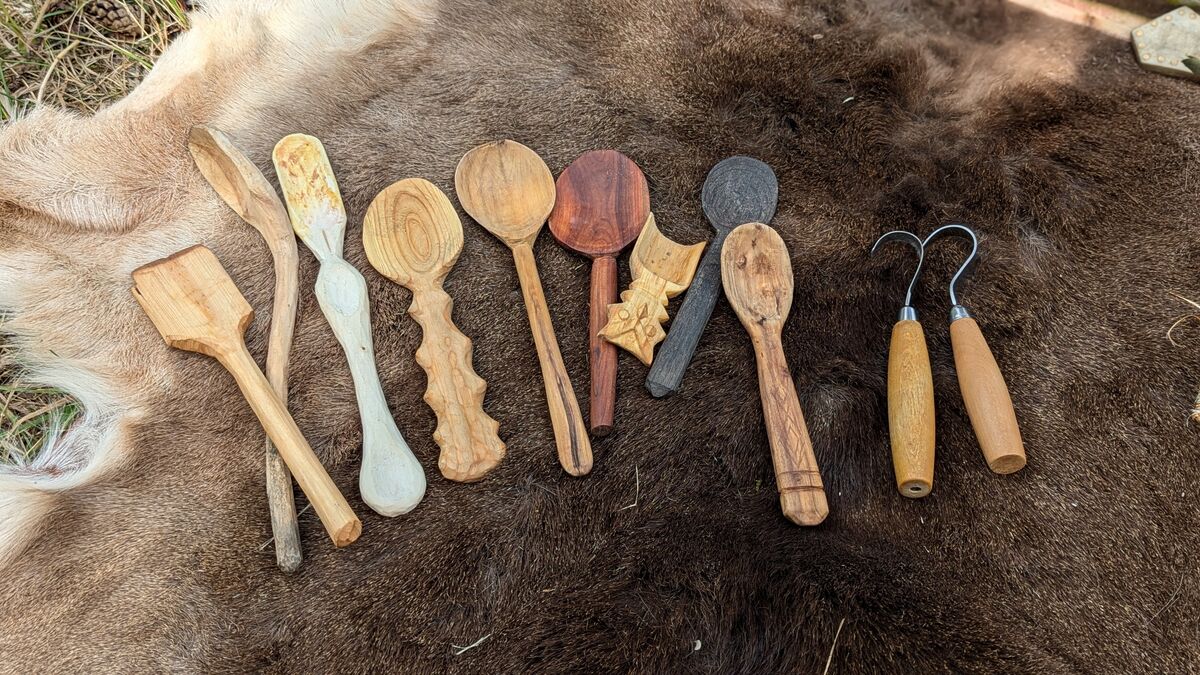
First spoons, carving figures, printing blocks for stamps, wooden needles for sewing, practice pieces of all kinds. I have summarized which wood is best suited for carving in a separate article.
Caution: Not suitable for long-term outdoor use. Rots quickly and becomes soft when exposed to moisture.
2. Willow
You find it at every stream, every pond, every damp ditch. The long, flexible rods are a gift.
Location: Everywhere it’s damp. Watercourses, pond edges, wet meadows. Willow needs water nearby.
What for:
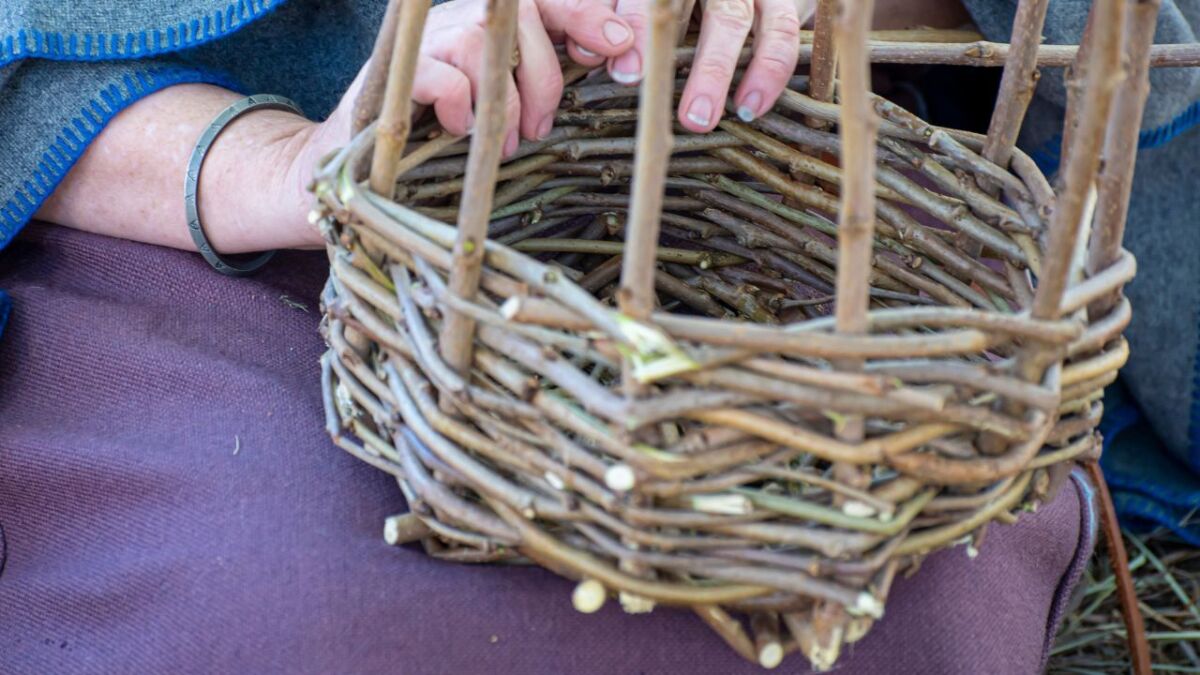
Basket weaving (the classic osier willow), living structures like tipis and tunnels, fences, wooden pegs for tents and tarps. The wood itself is soft and can be carved – but it likes to crack. It is also one of the best woods for the bow drill.
Special feature: The bark contains salicin – the substance from which aspirin was originally developed. In the past, willow bark tea was used for fever and pain. However: dosage is difficult and not suitable for pregnant women. So, it's more of an interesting fact than a practical tip.
3. Poplar
Grows fast, is light, floats well.
Location: Poplars love damp soils and often stand on riverbanks, in floodplain forests, and along canals. They are also planted as windbreaks at the edges of fields.
What for: Building rafts (if you ever need one), models, practice projects. Similar to linden, but with a slightly coarser fiber.
Fire: Burns away quickly, little embers. Good as tinder or for starting a fire, but not for heating.
The Conifers – more versatile than you think
4. Spruce
The most common tree in German forests. You practically stumble over it.
Location: Originally a mountain tree, spruce was planted all over Germany. You find it in almost every forest, especially in monocultures.
What for: Construction timber for shelters, frames, tripods, wooden pegs, tree hooks for hanging gear. Rich in resin, so good for making fire. The resin itself is worth its weight in gold: glue, wound closure, incense.
Fire: Burns quickly and hot, but short. Spits sparks because of the resin. Be careful with your fireplace.
Carving: Possible, but the growth rings are hard while the wood in between is soft. Uneven.
5. Pine
Even resinier than spruce. The smell alone is a therapy.
Location: Pine likes sandy, dry soils. Common in Brandenburg, the Lüneburg Heath, on dunes, and poor soils.
What for: Fatwood! The resin-soaked wood from the center of the trunk burns like a torch. One of the best natural fire starters ever. Also: construction timber, stakes, fence posts.
Fire: Like spruce – hot, fast, sparking. Fatwood is unbeatable for lighting fires.
Special feature: The heartwood is surprisingly durable. Old pine stakes can last decades.

6. Larch
The exception among conifers: it sheds its needles in autumn. This is how you identify conifers by their needles.
Location: Originally an Alpine tree, but also planted in the lowlands. Likes bright locations and handles cold well.
What for: The most durable native conifer wood. Perfect for everything that is meant to stay outside. Benches, posts, boat parts.
Fire: Burns well, fewer sparks than spruce.
Processing: Harder than spruce, but still good to carve.

The Medium-Hard Woods – the all-rounder range
7. Birch
When the sun falls through a birch forest, you understand why it used to be considered sacred.
Location: Birch is a pioneer tree. It grows everywhere there is space – in clearings, fallow land, at the edges of forests. Unpretentious and fast.
What for: The bark! Birch bark is water-repellent, can be peeled off in layers, and burns even when wet. Perfect for tinder, containers, roofing – you can even build a matchbox out of birch bark. The wood itself is medium-hard and can be turned and carved well – small bowls, spatulas, and wooden forks turn out well with it.
Fire: Excellent firewood. The bark burns even when damp; the wood itself must be dry like any other. Gives good embers.
Sap: Tapped in spring, birch provides a sweetish, nutritious sap. These trees can be tapped for syrup.

8. Maple
Fine, even, almost white. This is how you distinguish Norway, Sycamore, and Field Maple.
Location: Sycamore in mountain forests and by streams, Norway maple in mixed forests and parks, field maple at forest edges and in hedges.
What for: Kitchen utensils! Spoons, cutting boards, ladles, spatulas, wooden forks. The wood doesn't impart any flavor, is hard enough for daily use, but still good to work with.
Fire: Good firewood, long-lasting embers.
9. Cherry
Beautiful. Reddish, fragrant, with a fine grain.
Location: Wild cherries can be found at forest edges, in hedges, and sparse deciduous forests. Cultivated cherries, of course, in gardens and orchards.
What for: More valuable carving projects. When the spoon is meant to be a gift. Also excellent for knife handles and tool handles – the grain makes every handle unique. Also good for pipe stems and small bowls.
Fire: Burns well, smells fantastic.

10. Alder
Grows by the water, often overlooked.
Location: Always near water. Stream courses, marshlands, damp hollows. Alder even withstands waterlogging.
What for: Charcoal! Alder charcoal is the best for drawing charcoal. The fresh wood is orange – almost like blood. Carves well. This is how you make your own charcoal for tinder.
Fire: Burns away quickly, low heat value. But: excellent charcoal.

The Hardwoods – for eternity
11. Beech
The queen of the German forest. Beech is one of the trees every survivalist should know.
Location: Beech dominates many German forests. It likes shady, damp locations with nutrient-rich soils.
What for:
Everything that has to last. Tool handles, workbenches, spoons for daily use, wooden wedges for splitting, robust bowls. Beech spoons last for years.
Fire: The best firewood overall. Long, steady embers. Perfect for cooking over the campfire.
Carving: Hard. You need a sharp tool and patience. But it's worth it.
Fruits: The beechnuts are edible – a crunchy snack from the forest.

12. Oak
The hardest native wood. Symbol of strength. For good reason.
Location: Oaks grow in mixed forests, at forest edges, and as standalone trees in pastures. They like deep soils and plenty of light.
What for: Everything meant to survive centuries. Half-timbering, shipbuilding, barrels (the tannic acid gives flavor to wine and whisky), wooden wedges that withstand extreme stress. Tools only if you have plenty of time and sharp blades.
Fire: Burns slowly, extremely long-lasting embers. But: hard to ignite. Start the fire with other wood first.
Caution: The tannic acid attacks metal. Iron nails in oak turn black. By the way: oak bark is excellent for tanning leather.

13. Ash
The best compromise between hardness and workability.
Location: Ash trees like damp, nutrient-rich soils. Common along streams, in floodplain forests, and at forest edges.
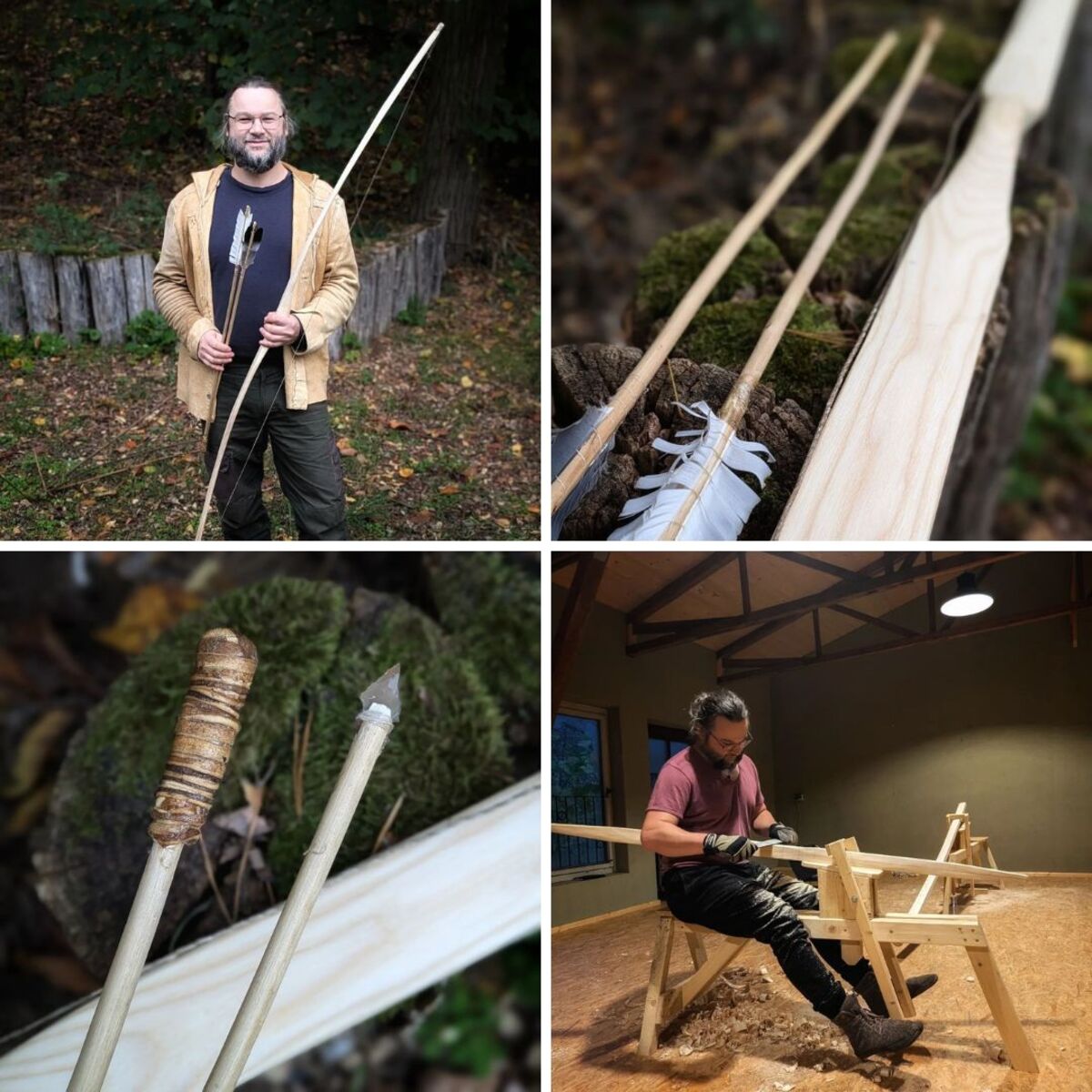
What for: Tool handles! Axes, hatchets, hammers, mallets – ash is elastic and dampens shocks. Also bows (if you ever venture into that).
Fire: Good firewood, even burns relatively fresh.
Carving: Demanding, but doable. The long fiber makes it tough.
14. Hazelnut
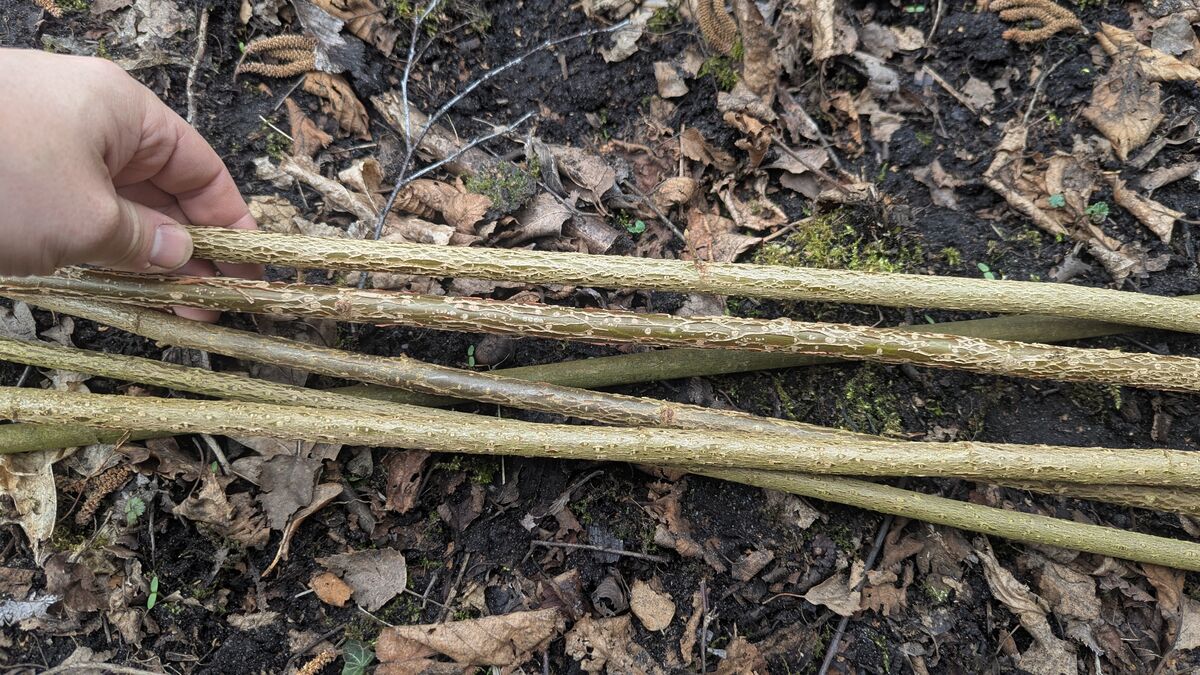
Technically a shrub. But what a shrub. Hazel is one of the most versatile woods for bushcraft.
Location: At forest edges, in hedges, in sparse forests. Hazel needs light and likes to grow in the company of other shrubs.
What for: Sticks! Walking sticks, tent poles, stakes. The straight rods are made for it. Also: bow making for beginners, arrow shafts, wooden pegs, tree hooks. You can even build a flute out of hazel – although knotweed is even easier.
Special feature: Hazel rods can be bent without breaking. Perfect for curved structures.
Fire: Burns well, but rarely enough mass for heating.
The Bow Drill – which wood works?
This is a question I get asked constantly – and the answer is so important that I have dedicated a separate, detailed article to it.
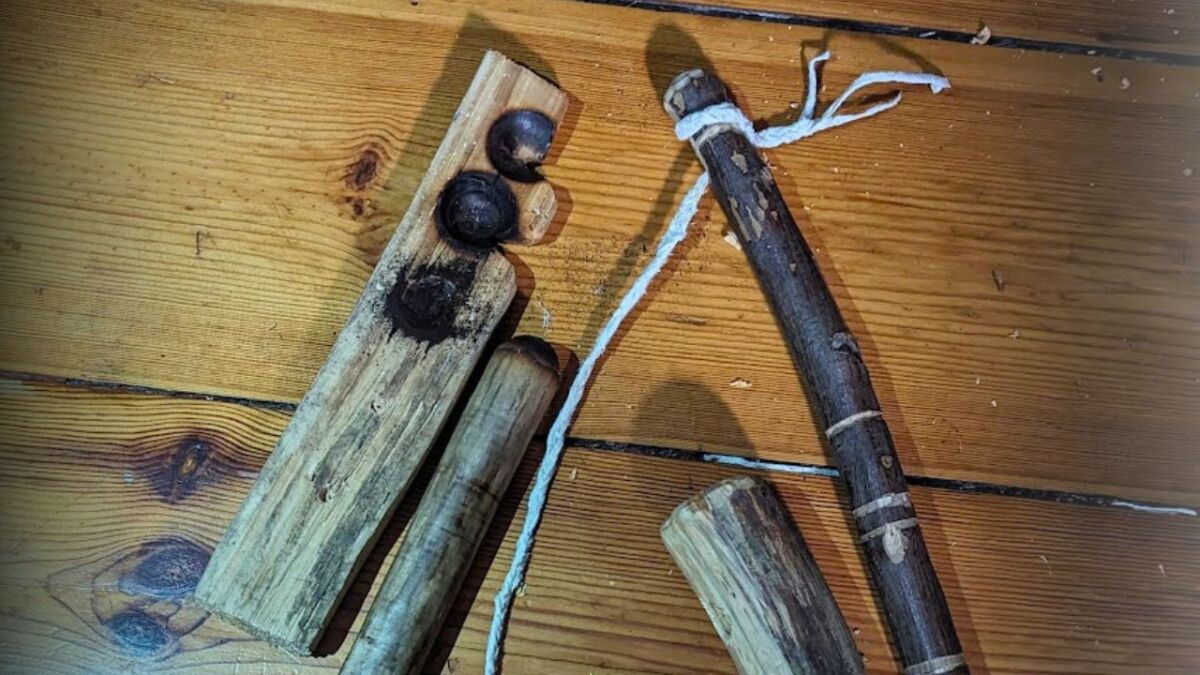
In short: You need soft, dry wood. Both parts – spindle and hearth board – should be from the same wood. Poplar, willow, and linden work best.
Here you can find my complete guide: Which wood for the bow drill?
A small decision-making aid
| What do you want? | Take this wood |
|---|---|
| Carve first spoon | Linden, Poplar, or Willow |
| Spoon that lasts | Beech or Maple |
| Spatula / Wooden fork | Maple or Birch |
| Weave a basket | Willow |
| Bow drill | Poplar, Willow, or Linden |
| Campfire that warms | Beech or Oak |
| Fire that burns quickly | Spruce, Pine, Birch |
| Tool handle | Ash or Cherry |
| Knife handle | Cherry or Birch |
| Wooden wedges for splitting | Beech or Oak |
| Wooden pegs | Hazel, Willow, or Spruce |
| Mallet | Ash, Beech, Pine, Spruce |
| Small bowl | Birch or Beech |
| Tree hook | Beech, Pine, Spruce |
| Wooden needle | Hardwood scraps |
| Build a shelter | Spruce or Pine |
| Tinder | Birch bark or Fatwood |

What I actually want to tell you
You don't have to know all of this by heart.
But the next time you stand in the forest with a group and someone holds up a branch, then look closely. Smell it. Press your thumbnail into it. Remember what worked and what didn't.
This is knowledge that grows. With every time you're outside.
And perhaps – when you hold a beech spoon in your hand that you carved yourself, a spoon that will be just as good in five years as it is today – then you will understand what this wood knowledge really is.
It's not an encyclopedia.
It's a relationship.
Further Articles:
- Carving wooden spoons: how to start and what you need
- The best wood for the campfire
- Which wood for the bow drill?
- 6 trees that give you a home in the forest
- The 4 most important notches for bushcrafting


Author of the guide
Martin Gebhardt
Hey, I'm Martin. On my blog, you will learn the basics and numerous details about living in the wild. I think survival, bushcraft and the good life in nature are the keys to happiness. Find me here on Instagram or on YouTube. You can find more about my mission on the About Me page.
Was this guide helpful?
26 people found this guide helpful.
5.00 out of 5 points (26 Ratings)
Comments (0)
This post may contain affiliate links. So if you click on the links and make a purchase, I will receive a small commission at no additional cost to you. Click here, to learn more about it.